 Theocracy compels self-sacrifice from the people. From left, Emperor Hirohito, Chairman Kim Jong Un, and Supreme Leader Khamenei.
What is happening in Iran now is not simply the collapse of a regime, but a war of systems. 'Theocracy' ultimately proved to be 'human rule,' and its actual operation has always been the same.
It is a structure where an individual and a select stratum surrounding them monopolize special authority and benefits, brand opponents as traitors, and sacrifice the lives of residents for the regime's prestige.
Theocracy Compels the Aesthetics of Self-Sacrifice Even in Obvious Defeat
The 21st century has allowed us to observe the reality of theocracy more starkly. When the diplomatic corps attempts to find a way out, the Revolutionary Guard and hardline clerics overturn it. Instead of seeking a way to survive through negotiation, the pattern of clinging to hostages and threats until the end to shake things up is reported through new media. It is difficult to find this in mainstream media.
The fact that negotiators must return under escort of foreign fighter jets, and that diplomacy itself is plagued by suspicions of 'betrayal' from within, reveals the inner workings of Iranian theocracy. It is not a country ruled by God, but a country where human rulers, leaning on the name of God, aim for each other's throats.
In this regard, the Islamic Republic of Iran, a theocracy, can be placed in the same category as the former Japanese imperial system and today's North Korean absolute personality cult. Their commonality is that they compel the aesthetics of self-sacrifice, even when defeat is evident.
Imperial Japan glorified the spirit of 'gyokusai' (death before surrender) and 'kamikaze' as noble loyalty. In North Korea's case, it is conveyed through Ukrainian POWs that soldiers have been indoctrinated with self-sacrifice as a heroic duty.
Absolute regimes always cling to the narrative of the system rather than preserving human life, and their end always takes the form of fanatical struggle.
The Opposite of Theocracy is Not Human Rule, but the Rule of Law
There is a saying in the Old Testament book of Proverbs: "The lot is cast into the lap, but its every decision is from the LORD." This is a passage that gets to the heart of modern politics.
Humans are imperfect. It is difficult to escape desires, biases, and self-interest. Therefore, instead of entrusting power to one person, one group, or one doctrine, we have established a system where the majority casts a vote under predetermined rules.
The ancient lots and modern ballots are similar in that they are devices that acknowledge human limitations. The saying 'the people's will is God's will' has likely survived for this reason.
Humankind has gone through desperate twists and turns, including revolutions, civil wars, resistance, and bloody suppression, to move beyond an era where political participation was determined by status, wealth, or gender, and to establish the principle of universal suffrage. Universal suffrage is, in fact, a system achieved through sacrifice, and a format that civilization has arduously invented to curb power.
The possibility that the majority might be slightly wrong, versus the risk of the entire community collapsing when a small privileged class is absolutely wrong—which of these is more bearable? Modern civilization has concluded that the former is preferable.
This is where elections and the rule of law meet. In a system governed by law, even those in power are confined within the system. With elections and the separation of powers, a path for regime change to overcome misgovernance is open.
It is not perfect. It is often noisy and inefficient. However, the reason why free democratic republics have fewer side effects than any other system is clear. It is because it is difficult for those in power to sacrifice their citizens as martyrs for their own prestige.
Conversely, theocratic, absolute imperial, and absolute personality cult regimes uphold a specific individual and a certain group around them as infallible beings. If there is supra-legal, unjudged power and the outcome is predetermined, it is not an election but merely a loyalty confirmation procedure.
Collapse is a Foregone Conclusion... Minimizing the Scale of Sacrifice is Key
The essence of the situation surrounding present-day Iran is a struggle of systems on a historical scale—in other words, the question of whether we can end political forms that consume human beings under the guise of God, nation, or revolution. Therefore, interpretations like 'another Middle East conflict' or 'Iran will endure' are cowardly.
The collapse of Iranian theocracy will be remembered as the fall of a major pillar of modern absolute regimes. It is a great historical event, comparable to the dissolution of the Soviet Union. Its impact is bound to be a direct blow to North Korea, another de facto theocratic state.
The bankruptcy of theocracy is the bankruptcy of idol worship politics. Now, only the question of how to reduce futile sacrifices until the collapse of Iranian theocracy is complete remains.
Our task is to focus on minimizing the costs. We must support efforts to suppress the final struggles of hardliners and to strike at their nuclear and strait threats, as well as their proxy warfare capabilities. The longer the free democratic bloc hesitates before 'human rule in the name of God,' the greater the price will be.
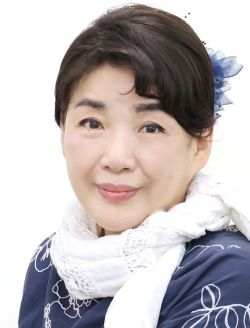
◆ Dr. Lim Myung-shin
Ph.D. in Chinese Studies, Northeast Asia Researcher
Former Deputy Director of International Affairs, Sky Daily

 Iranian Foreign Ministry: "Continuing Message Exchanges with the U.S. and Activities of Mediating Countries"
Esmaeil Baghaei, Spokesperson for the Iranian Ministry of Foreign Affairs [Xinhua, Yonhap News file photo]Esmaeil Baghaei, spokesperson for the Iranian Ministry of Foreign Affairs, stated on the 26th
Iranian Foreign Ministry: "Continuing Message Exchanges with the U.S. and Activities of Mediating Countries"
Esmaeil Baghaei, Spokesperson for the Iranian Ministry of Foreign Affairs [Xinhua, Yonhap News file photo]Esmaeil Baghaei, spokesperson for the Iranian Ministry of Foreign Affairs, stated on the 26th
 President Yoon: "Do You Think You Are Safe from the Special Counsel?"... Final Statement Video Released
President Yoon Suk Yeol rebuking the special prosecutor on the 24th. [Court video / @birds_justice X account subtitle GIF] A video of President Yoon Suk Yeol's closing statement at his trial rega
President Yoon: "Do You Think You Are Safe from the Special Counsel?"... Final Statement Video Released
President Yoon Suk Yeol rebuking the special prosecutor on the 24th. [Court video / @birds_justice X account subtitle GIF] A video of President Yoon Suk Yeol's closing statement at his trial rega
 President Yoon, regarding the first-instance ruling on the Public Official Election Act: “An excessive political verdict that distorts the facts… We will appeal immediately.”
The first-instance sentencing hearing for President Yoon Suk Yeol regarding violations of the Public Official Election Act is being broadcast live at Seoul Station on the 27th. [Photo=Yonhap News]Pres
President Yoon, regarding the first-instance ruling on the Public Official Election Act: “An excessive political verdict that distorts the facts… We will appeal immediately.”
The first-instance sentencing hearing for President Yoon Suk Yeol regarding violations of the Public Official Election Act is being broadcast live at Seoul Station on the 27th. [Photo=Yonhap News]Pres
 WSJ: "SK Hynix ADR Premium Is a Sign of AI Trading Overheat"
Advertisement for SK Hynix ADR listing in New York's Times Square [Reuters=Yonhap News file photo]The Wall Street Journal (WSJ) has pointed out that the price of SK Hynix’s American Depositary Recei
WSJ: "SK Hynix ADR Premium Is a Sign of AI Trading Overheat"
Advertisement for SK Hynix ADR listing in New York's Times Square [Reuters=Yonhap News file photo]The Wall Street Journal (WSJ) has pointed out that the price of SK Hynix’s American Depositary Recei
 'Godfather of Japanese Mystery Novels' Keigo Higashino Passes Away After Battle with Cancer at 68
Famous Japanese mystery novelist Keigo Higashino [AFP=Yonhap News]It has been belatedly reported that Keigo Higashino, the "godfather of Japanese mystery novels" and author of bestsellers such as "The
'Godfather of Japanese Mystery Novels' Keigo Higashino Passes Away After Battle with Cancer at 68
Famous Japanese mystery novelist Keigo Higashino [AFP=Yonhap News]It has been belatedly reported that Keigo Higashino, the "godfather of Japanese mystery novels" and author of bestsellers such as "The
 [Park Pil-kyu Security Column] To the Ignorant Trying to Clothe a Beast in Sheep's Clothing
Rep. Kim Byung-joo of the Democratic Party of Korea [Photo=Yonhap News]“The Air Force Academy doesn't teach you how to fly a plane!” “The Army, Navy, and Air Force academies are exactly the
[Park Pil-kyu Security Column] To the Ignorant Trying to Clothe a Beast in Sheep's Clothing
Rep. Kim Byung-joo of the Democratic Party of Korea [Photo=Yonhap News]“The Air Force Academy doesn't teach you how to fly a plane!” “The Army, Navy, and Air Force academies are exactly the
 [Issue Diagnosis] Two Effects of the Election Petition Review
 [Photo] Evidence of Election Fraud Flooding U.S. Media… Trump Had 2.7 Million Votes Stolen
 [Video] U.S. Semiquincentennial Air Show... 'Art in the Sky' streaks across New York
 [Editorial Cartoon] A Draconian Law That Undermines Freedom of Expression

 List
List









