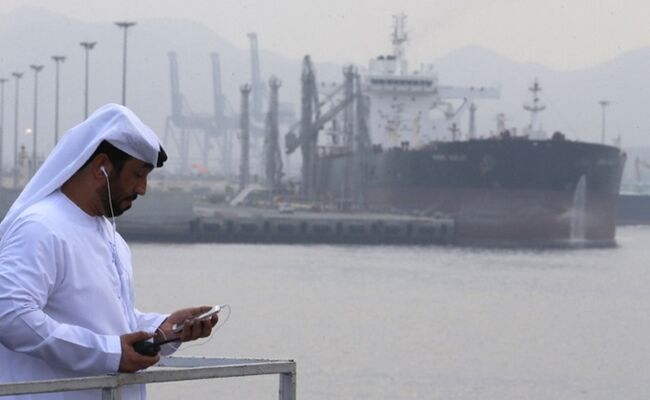
Starting May 1st, the United Arab Emirates (UAE) will withdraw from OPEC (Organization of the Petroleum Exporting Countries) and the OPEC+ alliance of 10 oil-producing nations, including Russia. This marks a turning point in OPEC's 66-year history. The UAE stated that this decision reflects "changing energy landscapes, including long-term strategies and visions, and accelerating investment in domestic energy production," adding that they have gained "flexibility by being freed from production obligations."
As Cartels Weaken, the Market Gains Prominence
The current situation can be viewed as an extension of accumulated policy conflicts. While Saudi Arabia, the de facto leader of OPEC, has prioritized defending oil prices through production cuts, the UAE has consistently demanded an upward revision of production baselines and the possibility of increasing output, aligning with its expanded production capacity. This highlights a conflict between a price-focused strategy and a drive for increased volume. However, this alone doesn't fully explain the situation.
The UAE accounts for around 10% of OPEC's total production, ranking third behind Saudi Arabia and Iraq. The UAE's move signals a significant shift in the structure of the world's largest oil cartel, drawing considerable attention. This is fundamentally different from Qatar's departure in 2019, which was a departure from the periphery.
Consider Dubai, known as the "New York of the Middle East" and the "Mirage in the Desert." This modern, luxurious financial hub symbolizes the UAE's pragmatic approach and its survival strategy. Highly sensitive to international dynamics, the UAE is keenly observing the new landscape shaped by the Trump administration. On April 28th (local time), the UK's Financial Times reported that the Abu Dhabi National Oil Company (ADNOC) plans to invest tens of billions of dollars in establishing natural gas businesses in the United States.
The weakening of OPEC is likely to benefit the US-led maintenance of the energy and financial order. It will lead individual oil-producing countries to seek more trading partners and a wider array of financial instruments, and capital will more easily flow to the most liquid market, which is the US. The power to set prices will shift from "political agreements" to the "market," with the dollar and the US financial system at the center of that market.
The term "petrodollar" signifies more than just the principle of settling oil purchases in dollars. What is crucial is that the entire process of energy trading, investment, settlement, and hedging operates within a US-centric financial network.
Trump Criticizes "Politically Manufactured Oil Prices"
President Donald Trump has publicly criticized the phenomenon of fluctuating oil prices despite ample supply on numerous occasions.
On April 20, 2018, he tweeted his discontent, stating, "OPEC is at it again. You have to do something to get prices down!" On June 30th of the same year, he wrote, "Spoke to King of Saudi Arabia and told him, 'We want you to increase oil production for the world, maybe as much as 2 million barrels.'" On February 25, 2019, he urged, "Oil prices are too high, everywhere! OPEC needs to relax and lower them."
Trump viewed the rise in oil prices amidst sufficient supply, and the production cut agreements behind it, as a "political distortion." His pressure on Saudi Arabia to increase production and the expansion of the US shale industry are consistent with this view. He sought to leave prices to the market.
As more countries leave OPEC, the cartel's ability to control prices will naturally weaken. This signifies the gradual collapse of the "politically manufactured oil price" structure that Trump criticized. The UAE's departure can strengthen this trend.
The Power of the Dollar
In recent years, some oil-producing nations have experimented with alternative currency settlements, such as the yuan, and sanctioned countries have attempted to avoid the dollar, but these efforts have clear limitations. Energy trading involves complex interdependencies with insurance, transportation, futures markets, and derivatives, and only the US-centric financial network can simultaneously provide all these functions. The dollar is not merely a reserve currency; it is a "system." As oil cartels weaken, reliance on this system increases.
This pattern of volatility can be summarized in three points:
△ Since the shale revolution, the US itself has become the world's largest oil producer, making it less susceptible to international oil price fluctuations. △ The dollar is a safe-haven asset. As global markets become unstable, capital flows into the US. △ With the increase in demand for financial hedging instruments like futures and options, the influence of New York and Chicago, the hubs for related transactions, grows.
Although the proportion of oil will decrease due to the expansion of renewable energy and the transition to electric vehicles, these changes are not fatal to the dollar's status, as energy investment and technological finance are concentrated in the US market. While the petrodollar was central to the oil era, "financial dollars" will increasingly take its place.
The UAE's withdrawal from OPEC is not a dismantling of the petrodollar order but rather a signal of structural realignment. As cartels weaken, the market gains power, and as the market strengthens, so does the US's financial and monetary dominance. The "oil prices dictated by cartels" are losing power, and dispersed production and integrated finance are taking their place. And the dollar remains at the center of it all.
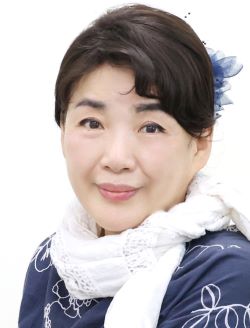
◆ Dr. Im Myung-shin
Ph.D. in Chinese Language and Literature, Northeast Asian Studies Researcher
Former Deputy Director, International Affairs, The SKY Daily

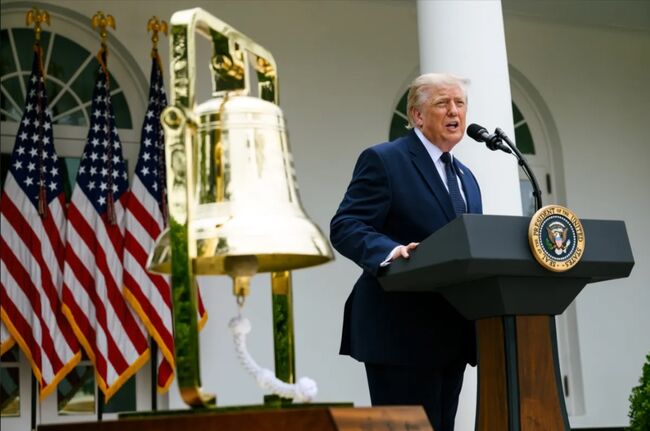 Trump pressures for rate cut again ahead of FOMC... "Should be the lowest in the world"
U.S. President Donald Trump. [Photo = The White House] U.S. President Donald Trump once again pressured the Federal Reserve, the U.S. central bank, to lower interest rates on the 27th (local time
Trump pressures for rate cut again ahead of FOMC... "Should be the lowest in the world"
U.S. President Donald Trump. [Photo = The White House] U.S. President Donald Trump once again pressured the Federal Reserve, the U.S. central bank, to lower interest rates on the 27th (local time
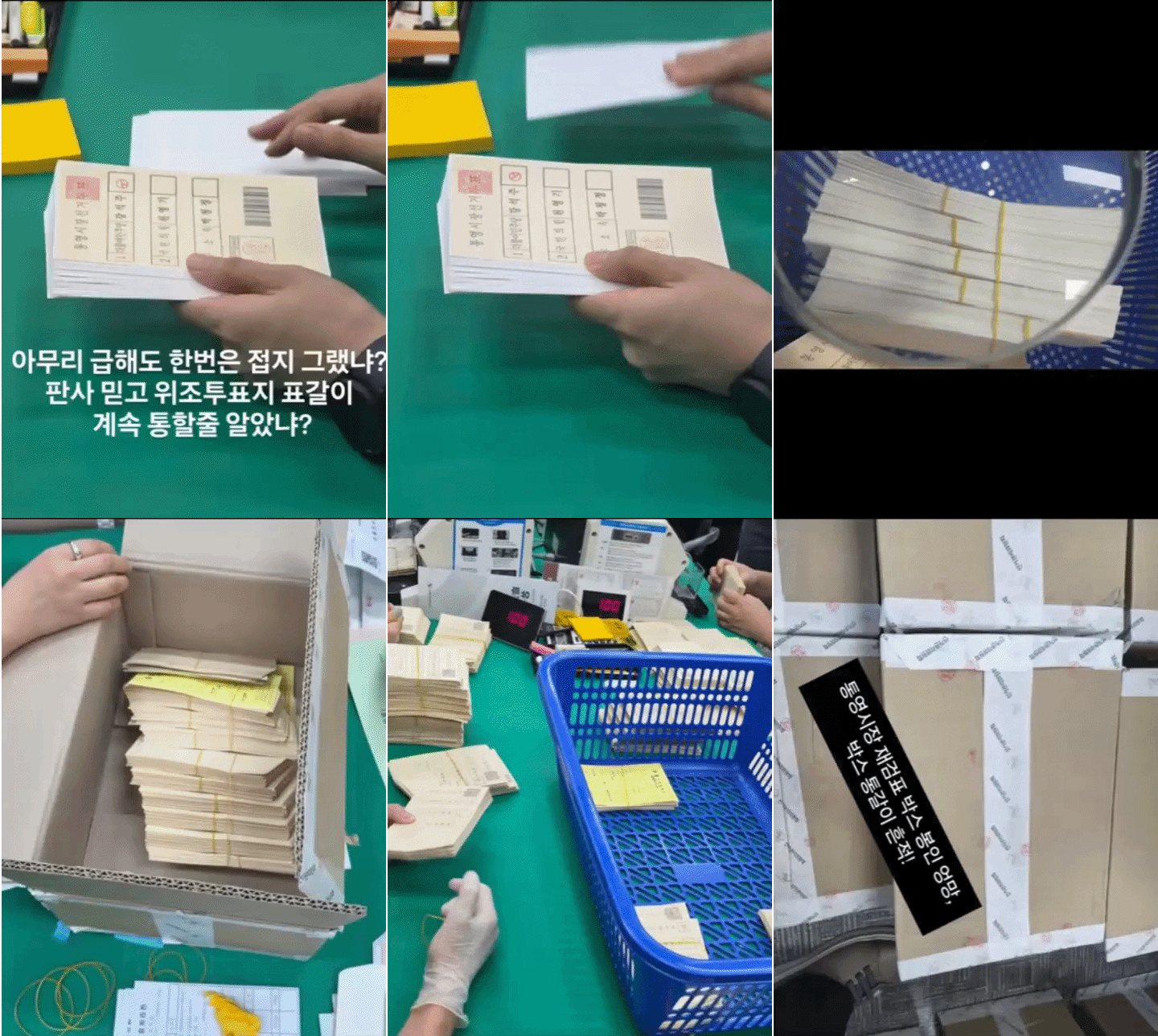 “Ignoring crisp ballots and damaged seals”… Tongyeong mayoral recount concludes with ‘no change in outcome,’ leaving suspicions and public outrage behind
Suspected counterfeit ballots discovered in Tongyeong [GIF from social media of Representative Hwang Kyo-ahn / Attorney Park Joo-hyun]During a recount of the Tongyeong mayoral election in South Gyeong
“Ignoring crisp ballots and damaged seals”… Tongyeong mayoral recount concludes with ‘no change in outcome,’ leaving suspicions and public outrage behind
Suspected counterfeit ballots discovered in Tongyeong [GIF from social media of Representative Hwang Kyo-ahn / Attorney Park Joo-hyun]During a recount of the Tongyeong mayoral election in South Gyeong
 President Yoon, regarding the first-instance ruling on the Public Official Election Act: “An excessive political verdict that distorts the facts… We will appeal immediately.”
The first-instance sentencing hearing for President Yoon Suk Yeol regarding violations of the Public Official Election Act is being broadcast live at Seoul Station on the 27th. [Photo=Yonhap News]Pres
President Yoon, regarding the first-instance ruling on the Public Official Election Act: “An excessive political verdict that distorts the facts… We will appeal immediately.”
The first-instance sentencing hearing for President Yoon Suk Yeol regarding violations of the Public Official Election Act is being broadcast live at Seoul Station on the 27th. [Photo=Yonhap News]Pres
 WSJ: "SK Hynix ADR Premium Is a Sign of AI Trading Overheat"
Advertisement for SK Hynix ADR listing in New York's Times Square [Reuters=Yonhap News file photo]The Wall Street Journal (WSJ) has pointed out that the price of SK Hynix’s American Depositary Recei
WSJ: "SK Hynix ADR Premium Is a Sign of AI Trading Overheat"
Advertisement for SK Hynix ADR listing in New York's Times Square [Reuters=Yonhap News file photo]The Wall Street Journal (WSJ) has pointed out that the price of SK Hynix’s American Depositary Recei
 'Godfather of Japanese Mystery Novels' Keigo Higashino Passes Away After Battle with Cancer at 68
Famous Japanese mystery novelist Keigo Higashino [AFP=Yonhap News]It has been belatedly reported that Keigo Higashino, the "godfather of Japanese mystery novels" and author of bestsellers such as "The
'Godfather of Japanese Mystery Novels' Keigo Higashino Passes Away After Battle with Cancer at 68
Famous Japanese mystery novelist Keigo Higashino [AFP=Yonhap News]It has been belatedly reported that Keigo Higashino, the "godfather of Japanese mystery novels" and author of bestsellers such as "The
 [Park Pil-kyu Security Column] To the Ignorant Trying to Clothe a Beast in Sheep's Clothing
Rep. Kim Byung-joo of the Democratic Party of Korea [Photo=Yonhap News]“The Air Force Academy doesn't teach you how to fly a plane!” “The Army, Navy, and Air Force academies are exactly the
[Park Pil-kyu Security Column] To the Ignorant Trying to Clothe a Beast in Sheep's Clothing
Rep. Kim Byung-joo of the Democratic Party of Korea [Photo=Yonhap News]“The Air Force Academy doesn't teach you how to fly a plane!” “The Army, Navy, and Air Force academies are exactly the
 [Issue Diagnosis] Two Effects of the Election Petition Review
 [Photo] Evidence of Election Fraud Flooding U.S. Media… Trump Had 2.7 Million Votes Stolen
 [Video] U.S. Semiquincentennial Air Show... 'Art in the Sky' streaks across New York
 [Editorial Cartoon] A Draconian Law That Undermines Freedom of Expression

 List
List