 The "Cairo Declaration Monument" erected by China at the Mena House Hotel in Cairo, Egypt. In November 1943, the leaders of the United States, Britain, and China met at the Mena House Hotel and announced the "Cairo Declaration." [Photo=Yonhap News]
China has suddenly begun to extensively reference the "Cairo Declaration." The Cairo Declaration is the framework for the post-World War II international order discussed in November 1943 in Cairo, Egypt, by U.S. President Franklin Roosevelt, British Prime Minister Winston Churchill, and President Chiang Kai-shek of the Republic of China.
According to the Chinese Embassy in Egypt on the 3rd, a monument was erected 83 years ago at the Mena House Hotel in Cairo, the site of the summit meeting of the three leaders. The monument is inscribed in Chinese: "The return of Taiwan to China is a victory of World War II and an important component of the post-war international order." This is based on the provision in the 1943 declaration stating, "Japan will return territories such as Manchuria and Taiwan, which it has seized, to China."
"Victorious Nation China" is Different from "Chinese Communist Party China"
However, a significant logical leap is evident. First, the "China" that was a party to the Cairo Conference was Chiang Kai-shek's Republic of China (ROC), not Mao Zedong's People's Republic of China (PRC), and the agenda of the conference was the disposition of Japanese imperialism. In other words, it was about returning Taiwan, ceded to Japan after the Sino-Japanese War, to a victorious China, not an international endorsement of the Chinese Communist Party regime's right to govern Taiwan. In U.S. political circles and European academia, the interpretation that "UN General Assembly Resolution 2758 only concerns China's representation, not the determination of Taiwan's sovereignty" is gaining traction. The resolution does not contain any passage explicitly stating Taiwan as "territory of the People's Republic of China."
In various parts of China, related monuments and exhibition spaces have been maintained, and state-controlled media repeatedly present interpretations such as "the international community has already confirmed Taiwan's return to China." This suggests China's psychological impatience.
- The Growing "Taiwanese Identity" and China's Sense of Crisis
In recent years, international public opinion surrounding Taiwan has not been favorable to China. Even views sympathetic to Taiwan, overlapping with the Ukraine war despite being vastly different contexts, are gaining momentum. The Western world repeatedly urges "peace in the Taiwan Strait," and in some segments of the international community, perspectives such as "Taiwan's future should be decided by the will of the Taiwanese people" are spreading. Most importantly, the rapid and strong emergence of a "Taiwanese" identity rather than a "Chinese" identity within Taiwan has likely amplified the Chinese Communist Party's sense of crisis.
The unification of Taiwan is both a confirmation of the Communist Party's legitimacy and a means to rectify all past errors. They may have judged the Cairo Declaration to be the best material, given its symbolism as a joint Allied declaration issued by the United States, Britain, and China. Their intention to push the Taiwan issue as "already settled by the international community" is evident.
China Rewrites the Narrative of "Victory Against Japan"
The Chinese Communist Party, while criticizing the Nationalist government as "reactionary," now utilizes the victorious nation status and diplomatic achievements obtained by that government for its own legitimacy. In particular, as the United States and Japan approach the Taiwan issue as a matter of "maintaining the status quo" and "defending liberal democracy," China has begun to counter with the frame of "defending the post-war order." This is a calculation to make their pressure on Taiwan appear not as modern hegemonic behavior but as "restoring the post-war order."
China's emphasis on its "anti-Japanese" narrative is a stark contrast to its stance before the Reform and Opening Up. The main force fighting Japan during the War of Resistance against Japanese Aggression was Chiang Kai-shek's Nationalist government. Mao Zedong's Communist Party's victory was achieved by overwhelming the Nationalist government, exhausted from the war, in the Chinese Civil War. The fact that Mao later abandoned the right to demand reparations from Japan, which had sufficient grounds, and his statements implying that "the Communist Party won thanks to Japanese invasion" are well-known facts among researchers in the field.
Amidst exploding internal contradictions such as economic downturn, youth unemployment, real estate crisis, and worsening local government finances, China urgently needs a historical narrative for internal cohesion. Especially under the Xi Jinping regime, the Chinese Communist Party has overtly shown a tendency to seek legitimacy not only from economic growth but also from "national rejuvenation" and "overcoming historical humiliation." In this context, they have, strictly speaking, stolen the history of victory over Japanese imperialism, which would be their strongest political asset.
Taiwan Has Already Taken a Different Path
The attempt to make "Taiwan unification" the completion of the War of Resistance against Japanese Aggression is fraught with difficulties. First, the Chinese Communist Party was not the main actor in the War of Resistance against Japanese Aggression. Furthermore, Taiwanese (Min Nan) is the furthest from Mandarin Chinese, the standard Chinese language, among the seven major Chinese dialect groups. Mutual comprehension in spoken language is virtually impossible. Taiwan, which was on the periphery of Chinese history, modernized through the Japanese colonial period and achieved high-speed industrialization and democratization after the war. South Korea and Taiwan are among the rare cases of former colonies that have risen to developed nation status.
There is no doubt that China's summoning of the Cairo Declaration is an attempt to accumulate historical logic and legitimacy. As military pressure alone has not brought international prestige, they are trying to recycle an old diplomatic document into a modern geopolitical weapon. It is necessary to view these movements coolly as a member of the international community and as a neighboring country.

◆ Dr. Lim Myung-shin
Ph.D. in Chinese Language and Literature, Northeast Asia Researcher
Former Deputy Director of International Desk, Sky Daily

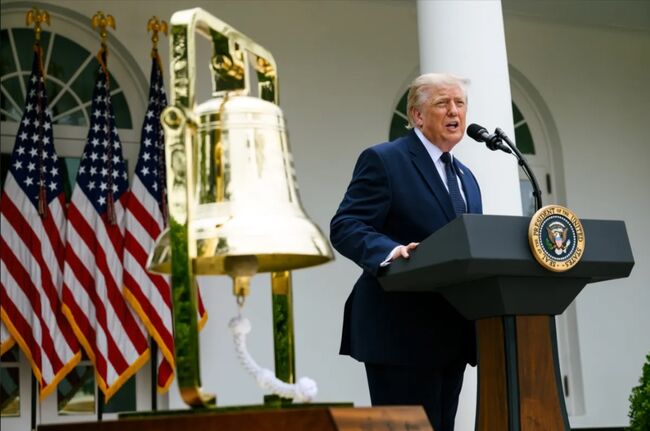 Trump pressures for rate cut again ahead of FOMC... "Should be the lowest in the world"
U.S. President Donald Trump. [Photo = The White House] U.S. President Donald Trump once again pressured the Federal Reserve, the U.S. central bank, to lower interest rates on the 27th (local time
Trump pressures for rate cut again ahead of FOMC... "Should be the lowest in the world"
U.S. President Donald Trump. [Photo = The White House] U.S. President Donald Trump once again pressured the Federal Reserve, the U.S. central bank, to lower interest rates on the 27th (local time
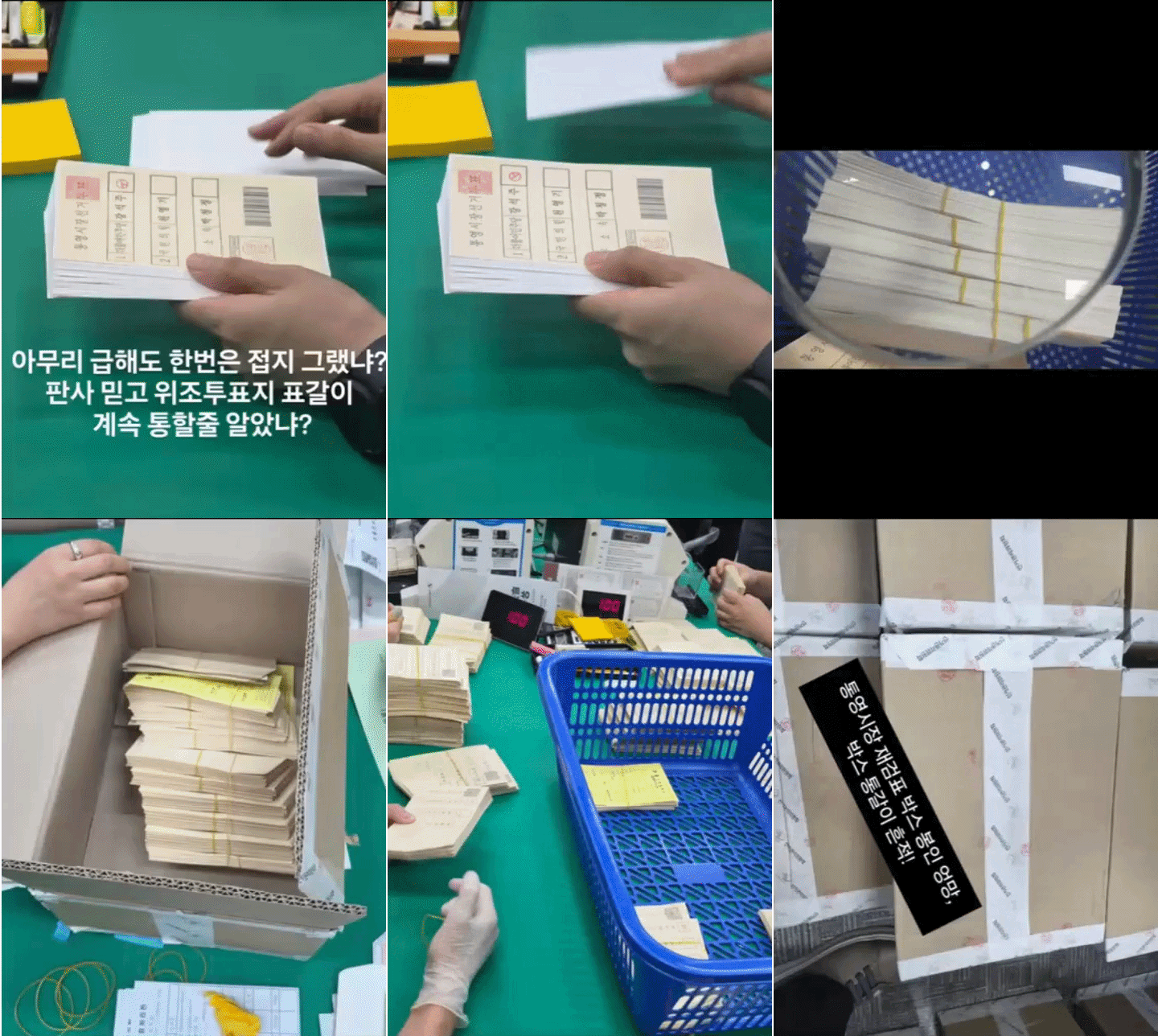 “Ignoring crisp ballots and damaged seals”… Tongyeong mayoral recount concludes with ‘no change in outcome,’ leaving suspicions and public outrage behind
Suspected counterfeit ballots discovered in Tongyeong [GIF from social media of Representative Hwang Kyo-ahn / Attorney Park Joo-hyun]During a recount of the Tongyeong mayoral election in South Gyeong
“Ignoring crisp ballots and damaged seals”… Tongyeong mayoral recount concludes with ‘no change in outcome,’ leaving suspicions and public outrage behind
Suspected counterfeit ballots discovered in Tongyeong [GIF from social media of Representative Hwang Kyo-ahn / Attorney Park Joo-hyun]During a recount of the Tongyeong mayoral election in South Gyeong
 President Yoon, regarding the first-instance ruling on the Public Official Election Act: “An excessive political verdict that distorts the facts… We will appeal immediately.”
The first-instance sentencing hearing for President Yoon Suk Yeol regarding violations of the Public Official Election Act is being broadcast live at Seoul Station on the 27th. [Photo=Yonhap News]Pres
President Yoon, regarding the first-instance ruling on the Public Official Election Act: “An excessive political verdict that distorts the facts… We will appeal immediately.”
The first-instance sentencing hearing for President Yoon Suk Yeol regarding violations of the Public Official Election Act is being broadcast live at Seoul Station on the 27th. [Photo=Yonhap News]Pres
 WSJ: "SK Hynix ADR Premium Is a Sign of AI Trading Overheat"
Advertisement for SK Hynix ADR listing in New York's Times Square [Reuters=Yonhap News file photo]The Wall Street Journal (WSJ) has pointed out that the price of SK Hynix’s American Depositary Recei
WSJ: "SK Hynix ADR Premium Is a Sign of AI Trading Overheat"
Advertisement for SK Hynix ADR listing in New York's Times Square [Reuters=Yonhap News file photo]The Wall Street Journal (WSJ) has pointed out that the price of SK Hynix’s American Depositary Recei
 'Godfather of Japanese Mystery Novels' Keigo Higashino Passes Away After Battle with Cancer at 68
Famous Japanese mystery novelist Keigo Higashino [AFP=Yonhap News]It has been belatedly reported that Keigo Higashino, the "godfather of Japanese mystery novels" and author of bestsellers such as "The
'Godfather of Japanese Mystery Novels' Keigo Higashino Passes Away After Battle with Cancer at 68
Famous Japanese mystery novelist Keigo Higashino [AFP=Yonhap News]It has been belatedly reported that Keigo Higashino, the "godfather of Japanese mystery novels" and author of bestsellers such as "The
 [Park Pil-kyu Security Column] To the Ignorant Trying to Clothe a Beast in Sheep's Clothing
Rep. Kim Byung-joo of the Democratic Party of Korea [Photo=Yonhap News]“The Air Force Academy doesn't teach you how to fly a plane!” “The Army, Navy, and Air Force academies are exactly the
[Park Pil-kyu Security Column] To the Ignorant Trying to Clothe a Beast in Sheep's Clothing
Rep. Kim Byung-joo of the Democratic Party of Korea [Photo=Yonhap News]“The Air Force Academy doesn't teach you how to fly a plane!” “The Army, Navy, and Air Force academies are exactly the
 [Issue Diagnosis] Two Effects of the Election Petition Review
 [Photo] Evidence of Election Fraud Flooding U.S. Media… Trump Had 2.7 Million Votes Stolen
 [Video] U.S. Semiquincentennial Air Show... 'Art in the Sky' streaks across New York
 [Editorial Cartoon] A Draconian Law That Undermines Freedom of Expression

 List
List









