Singer Choi Hee-joon's "20 Years of Liberation" is not just a commemorative song. This song is a political pop song that encapsulates how Korean society viewed itself in the late 1960s.
Although outwardly a song commemorating "20 Years of Liberation," it actually embodies the confusion, fatigue, expectations, and resignation experienced by Koreans in the 20 years following liberation. Just a few lines of lyrics reveal the inner state of Korean society in the late 1960s.
“When the dark clouds clear, the starlight shines brighter/ In twenty years of turmoil, that person, that name/ Has flowed away with the wind and rain.”
From the very first line, the mood is not bright. Liberation is a cause for celebration, yet the song doesn't begin with cheers or jubilation. "Dark clouds," "turmoil," and "wind and rain" come first. This signifies that the reflection on 20 years of liberation is closer to fatigue than joy.
While the liberation in 1945 was undoubtedly a moment of emotion, the following 20 years were immediately chaotic. The turbulent period, encompassing the US military government, left-right confrontation, establishment of a separate government, the Yeosu-Suncheon Rebellion, the Korean War, post-war poverty, the April 19 Revolution, and the May 16 coup, is encapsulated in the five words, "twenty years of turmoil." For the audience of the time listening to this song, liberation was not a memory of celebration but a recollection after too many events had passed.
Here, "that person, that name" is crucial. This phrase evokes everyone without directly naming a specific individual. Syngman Rhee, Kim Gu, Yeo Un-hyeong, Cho Bong-am, Shin Ik-hui, Cho Byung-ok, Park Chung-hee. There were many names that shook politics after liberation, but the public in the late 1960s no longer heard these names as mere heroic tales. There was respect, but also fatigue.
Most of the names they had placed their hopes in were either dead or sidelined, leaving only evaluations and debates. The line "that person, that name has flowed away with the wind and rain" expresses the public's disillusionment with personality-driven politics. It's a cold reflection that while there were many heroes, they did not bring peace to the nation.
“Ah, glory and disgrace are fleeting, twenty years of liberation.”
This single line best captures the core sentiment of Korean society in the late 1960s. "Glory and disgrace" refers to both honor and shame. There was liberation and war, nation-building and revolution, and even a coup. There were things to be proud of and things to hide.
Yet, the song categorizes it as "fleeting." This carries two meanings. One is resignation. So many events have occurred, so many names have risen and fallen, that the attitude now is to view them with composure.
The other is distancing. Koreans in the late 1960s had already stepped back somewhat from political fervor. After experiencing the passion of the April 19 Revolution and the shock of the May 16 coup, the public was shifting from easily getting excited about politics to observing, "Who will rise next, and who will disappear next?"
“When the dark night passes, does the morning come?/ For twenty years, that person, that name,/ Is it reflected in the dawn?”
This section shows that it's not just resignation. Korea in the late 1960s was weary but not despairing. "Dark night" is the memory of colonialism, war, chaos, and poverty. "Morning" and "dawn" are expectations of industrialization and stability.
1967-1968 was a period when the Park Chung-hee regime was pushing forward with the Five-Year Economic Development Plans. The construction of the Gyeongbu Expressway, export expansion, industrialization, and urbanization were fully underway. The public already knew that the ideals of democracy alone could not fill their stomachs.
The politics of the 1950s and early 1960s were passionate but poor. Therefore, in the late 1960s, society began to prioritize order and growth as much as freedom. "Does the morning come?" was less a question of democratic victory and more a question of whether they could finally make a living.
The fact that this song was the theme song for the TBC political documentary drama "20 Years of Liberation" is also significant. This song was not just a hit tune but the gateway to a program that retold modern history to the public after liberation. In other words, Koreans in the late 1960s learned modern history through radio dramas rather than textbooks.
And that historical narrative was not a heroic anthem but a method of uncovering "buried stories." This is very important. While the late 1960s was a period when the state was pushing for industrialization, the public was simultaneously consuming the post-liberation political history as a drama, a history of power, and a cast of human characters. Politics was shifting from a sacred doctrine to an interpretable story.
The Korean society of the late 1960s, as depicted by this song, had three faces.
First, it was an anti-communist state. The memory of 20 years of liberation was intrinsically linked to the memory of division and war, and the basic order of Korean society was already built on strong anti-communism. The left-right confrontation had not ended but had been settled with a victor and a vanquished.
Second, it was a politically and socially weary society. Politics since liberation had left behind too many names and events, and the public had learned political fatigue before political passion. The "fleetingness" in this song is precisely the language of that fatigue.
Third, it was a society with expectations for growth. While illusions about politics had diminished, expectations for the economy had grown. People were no longer waiting for great leaders but for their meals to improve tomorrow. "Dawn" was closer to the light of industrialization than the light of ideology.
Therefore, "20 Years of Liberation" is a song that commemorates liberation while simultaneously summing up the fatigue of liberation. A society where recollection precedes jubilation, where fatigue remains more than heroes, and where livelihood takes precedence over ideology. That is the Korea of the late 1960s illuminated by this song. The Korea of 20 years of liberation was still poor and still rough, but at least the public's gaze had already tilted towards cold reality rather than fervent revolution.
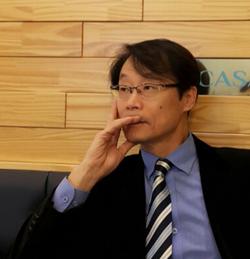
◆ Song San
A poet and researcher of history and philosophy. Former director of the Syngman Rhee Academy. Currently serves as a research advisor for the Korean Modern and Contemporary History Research Society and as the representative of the philosophy forum Lykeion. He has published four poetry collections, co-translated "Heroes of Hokkō," and authored "Joseon, a Myth" and "Humanities on the Tatami." He is actively engaged in the research and practice of the liberal cultural movement. Song San is a pen name.

 Trump pressures for rate cut again ahead of FOMC... "Should be the lowest in the world"
U.S. President Donald Trump. [Photo = The White House] U.S. President Donald Trump once again pressured the Federal Reserve, the U.S. central bank, to lower interest rates on the 27th (local time
Trump pressures for rate cut again ahead of FOMC... "Should be the lowest in the world"
U.S. President Donald Trump. [Photo = The White House] U.S. President Donald Trump once again pressured the Federal Reserve, the U.S. central bank, to lower interest rates on the 27th (local time
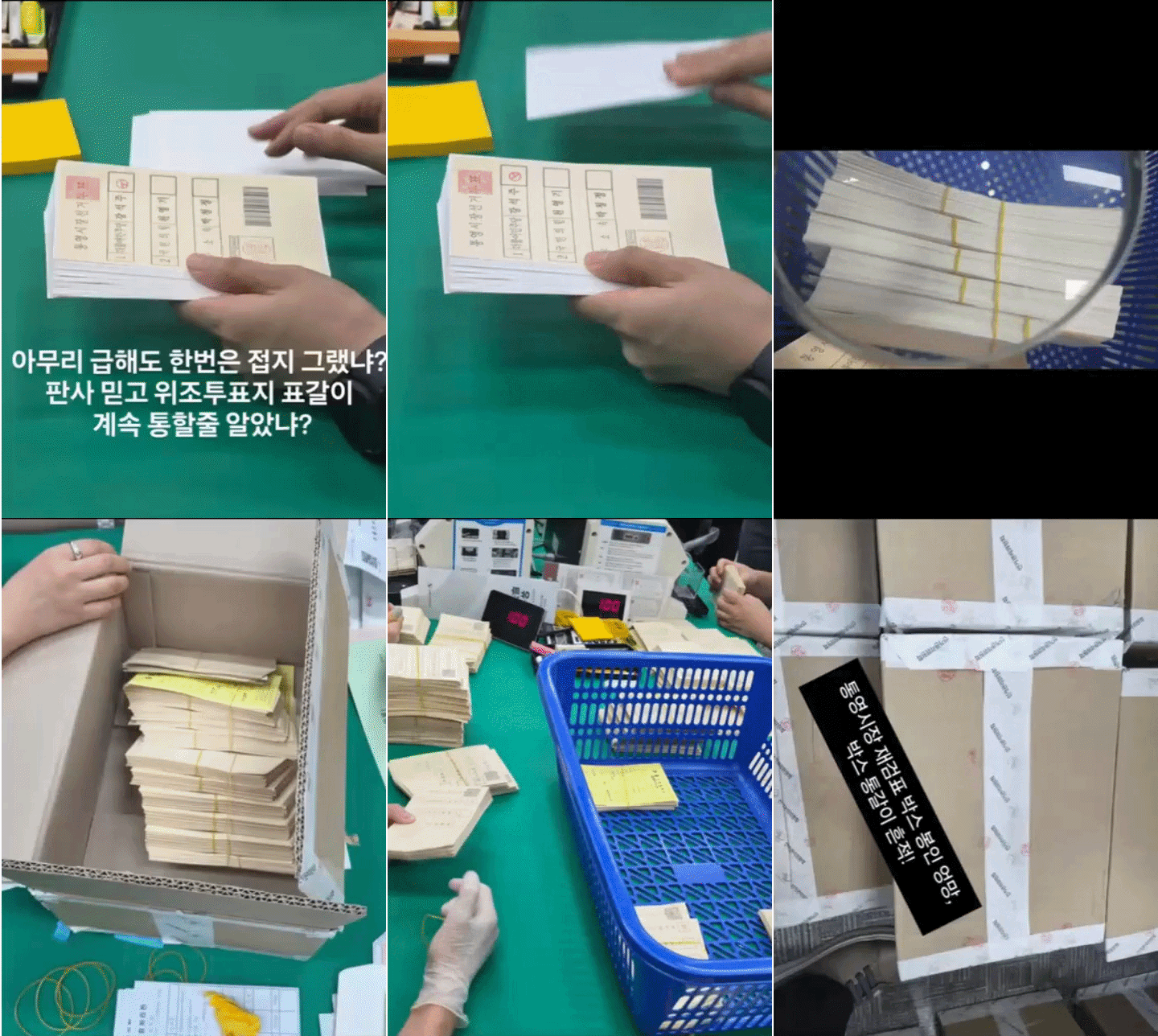 “Ignoring crisp ballots and damaged seals”… Tongyeong mayoral recount concludes with ‘no change in outcome,’ leaving suspicions and public outrage behind
Suspected counterfeit ballots discovered in Tongyeong [GIF from social media of Representative Hwang Kyo-ahn / Attorney Park Joo-hyun]During a recount of the Tongyeong mayoral election in South Gyeong
“Ignoring crisp ballots and damaged seals”… Tongyeong mayoral recount concludes with ‘no change in outcome,’ leaving suspicions and public outrage behind
Suspected counterfeit ballots discovered in Tongyeong [GIF from social media of Representative Hwang Kyo-ahn / Attorney Park Joo-hyun]During a recount of the Tongyeong mayoral election in South Gyeong
 President Yoon, regarding the first-instance ruling on the Public Official Election Act: “An excessive political verdict that distorts the facts… We will appeal immediately.”
The first-instance sentencing hearing for President Yoon Suk Yeol regarding violations of the Public Official Election Act is being broadcast live at Seoul Station on the 27th. [Photo=Yonhap News]Pres
President Yoon, regarding the first-instance ruling on the Public Official Election Act: “An excessive political verdict that distorts the facts… We will appeal immediately.”
The first-instance sentencing hearing for President Yoon Suk Yeol regarding violations of the Public Official Election Act is being broadcast live at Seoul Station on the 27th. [Photo=Yonhap News]Pres
 WSJ: "SK Hynix ADR Premium Is a Sign of AI Trading Overheat"
Advertisement for SK Hynix ADR listing in New York's Times Square [Reuters=Yonhap News file photo]The Wall Street Journal (WSJ) has pointed out that the price of SK Hynix’s American Depositary Recei
WSJ: "SK Hynix ADR Premium Is a Sign of AI Trading Overheat"
Advertisement for SK Hynix ADR listing in New York's Times Square [Reuters=Yonhap News file photo]The Wall Street Journal (WSJ) has pointed out that the price of SK Hynix’s American Depositary Recei
 'Godfather of Japanese Mystery Novels' Keigo Higashino Passes Away After Battle with Cancer at 68
Famous Japanese mystery novelist Keigo Higashino [AFP=Yonhap News]It has been belatedly reported that Keigo Higashino, the "godfather of Japanese mystery novels" and author of bestsellers such as "The
'Godfather of Japanese Mystery Novels' Keigo Higashino Passes Away After Battle with Cancer at 68
Famous Japanese mystery novelist Keigo Higashino [AFP=Yonhap News]It has been belatedly reported that Keigo Higashino, the "godfather of Japanese mystery novels" and author of bestsellers such as "The
 [Park Pil-kyu Security Column] To the Ignorant Trying to Clothe a Beast in Sheep's Clothing
Rep. Kim Byung-joo of the Democratic Party of Korea [Photo=Yonhap News]“The Air Force Academy doesn't teach you how to fly a plane!” “The Army, Navy, and Air Force academies are exactly the
[Park Pil-kyu Security Column] To the Ignorant Trying to Clothe a Beast in Sheep's Clothing
Rep. Kim Byung-joo of the Democratic Party of Korea [Photo=Yonhap News]“The Air Force Academy doesn't teach you how to fly a plane!” “The Army, Navy, and Air Force academies are exactly the
 [Issue Diagnosis] Two Effects of the Election Petition Review
 [Photo] Evidence of Election Fraud Flooding U.S. Media… Trump Had 2.7 Million Votes Stolen
 [Video] U.S. Semiquincentennial Air Show... 'Art in the Sky' streaks across New York
 [Editorial Cartoon] A Draconian Law That Undermines Freedom of Expression

 List
List