Park Pil-gyu, Columnist
KMA Class 40, Guest Editorial WriterThe recent incident where the presidential office and the Ministry of Foreign Affairs rushed to issue clarifications following the Foreign Minister’s interview with the Washington Post—in which he stated that "China is becoming somewhat of a problem for its neighbors"—may appear to be a swift response on the surface. However, it is merely a pathetic display of "pro-China sycophancy," showing a government overly concerned with appeasing Beijing and being dragged along by it.
A nation’s foreign policy should reflect its core values, national strength, and national consensus. Our current foreign policy, characterized by "ad-hoc diplomacy" that shifts according to the situation while gauging the reactions of major powers, severely undermines the country's international credibility. Even though 90% of the public dislikes China, the fact that all sectors of our society have fallen under Chinese influence and effectively become a political colony has been laid bare.
When political forces that succumb to foreign pressure prevail, the nation slides into an invisible colony; sovereignty vanishes, and internal democracy is threatened. When democracy falters, the voice of the people, their legitimate rights, and South Korea’s stature in the international community all disappear. It is not just the "pro-China" stance of the presidential office and the Foreign Ministry that is problematic; the fact that this pro-China orientation permeates everything from the operation of the three branches of government to national security creates a grave sense of crisis.
1. A pro-China policy cannot protect the Republic of Korea.
The government remains consistently silent even in the face of blatant acts of sovereignty infringement by China, such as the construction of "artificial islands" in the West Sea and interference with maritime surveys. Even when Chinese research vessels challenge the Ieodo Ocean Research Station, there is no sign of decisive action to protect our territory, national pride, and security. The government’s silence on China’s security encroachment—aimed at turning even the "West Sea" into its "internal waters"—is proof that it no longer has the will to protect the people, the state, and our sovereignty.
As long as the current government cannot escape this "pro-China" framework, finding a fundamental solution to our security issues remains a distant goal. Ambiguous diplomatic strategies like the long-standing "security with the U.S., economy with China" (An-mi-gyeong-jung) no longer work. South Korea must now distance itself from the "China that is a problem for its neighbors," as the Foreign Minister suggested, and clearly communicate our own position and arguments in the modernization of the ROK-U.S. alliance.
The modernization of the ROK-U.S. alliance should evolve from a focus on military and security, based on expanding strategic flexibility—including the role of U.S. Forces Korea in countering China—into a "comprehensive strategic alliance" that cooperates in various fields such as technology, economy, and global crisis response. It should be reviewed and developed to maximize the alliance's strategic value, including joint development of cutting-edge technology, building multilateral networks, and joint responses to pandemics. For the ROK-U.S. alliance, the question of function must take precedence over the question of cost.
2. Election fraud is a joint product of China’s interference in domestic affairs and pro-China traitors.
Beyond being a mere economic partner, China has done everything possible to influence our internal systems. They have openly expressed support for specific political factions in Korea, had the Chinese ambassador to Korea call in key figures to offer political advice, and exerted pressure on domestic media reports that did not align with their interests, constituting blatant interference in our internal affairs.
Knowing that such overt interference faces public resistance, China has sought the most effective, invisible method of meddling since diplomatic ties were established: orchestrating election fraud as part of "unrestricted warfare." It is now evident that this has evolved into a stage where they select politicians that align with China's preferences. Pro-China lawmakers who sell out their country for personal gain are entrenched in both ruling and opposition parties.
In particular, despite claims by figures such as former Ambassador-at-Large for Global Criminal Justice "Morse Tan" and former U.S. National Security Advisor "Michael Flynn" that China intervened in South Korea’s elections, the government has not initiated a thorough investigation or diplomatic response. This provides the public with decisive evidence that the current government remains unable to break free from Chinese influence. Unless the "early voting" system, implemented in 2012, is completely abolished and the identified perpetrators of election fraud are punished, the controversy will never be resolved.
3. Redesigning South Korea through "Political Change," not just Regime Change
First, building a "Citizen Coalition Platform" that transcends existing political parties.
This platform, focused on national interest and fairness rather than specific interests, should bring together experts and citizens from all walks of life. By utilizing Artificial Intelligence (AI), it must realize a democracy where citizens participate directly, operating all processes transparently from policy proposal to voting.
Second, promoting a "National Leader Discovery Project."
We must break away from the parties' nomination systems and discover talented individuals with exceptional ability and integrity from various fields, including academia and industry. By ensuring they undergo fair verification and receive the public’s mandate, we can infuse politics with fresh vitality.
For South Korea to take another leap forward, we must purge the traitorous pro-China elements who sell out the nation for their own political gain and abandon pro-China policies and institutions. We must redesign the Republic of Korea into a true democracy where the people are the masters, characterized by "citizen-led politics" in which the public directly participates. I look forward to an awakening and transformation on the scale of a national revolution.

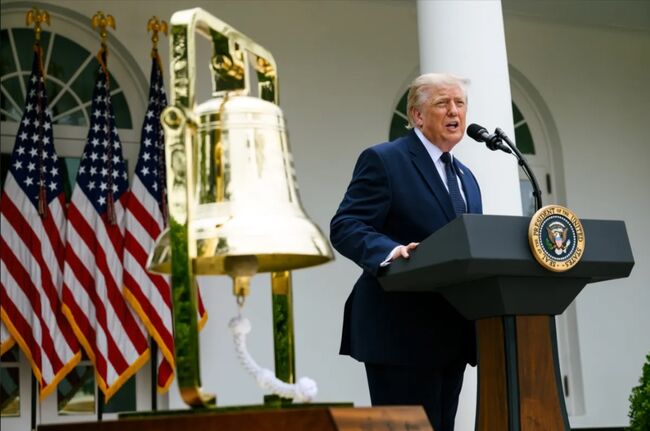 Trump pressures for rate cut again ahead of FOMC... "Should be the lowest in the world"
U.S. President Donald Trump. [Photo = The White House] U.S. President Donald Trump once again pressured the Federal Reserve, the U.S. central bank, to lower interest rates on the 27th (local time
Trump pressures for rate cut again ahead of FOMC... "Should be the lowest in the world"
U.S. President Donald Trump. [Photo = The White House] U.S. President Donald Trump once again pressured the Federal Reserve, the U.S. central bank, to lower interest rates on the 27th (local time
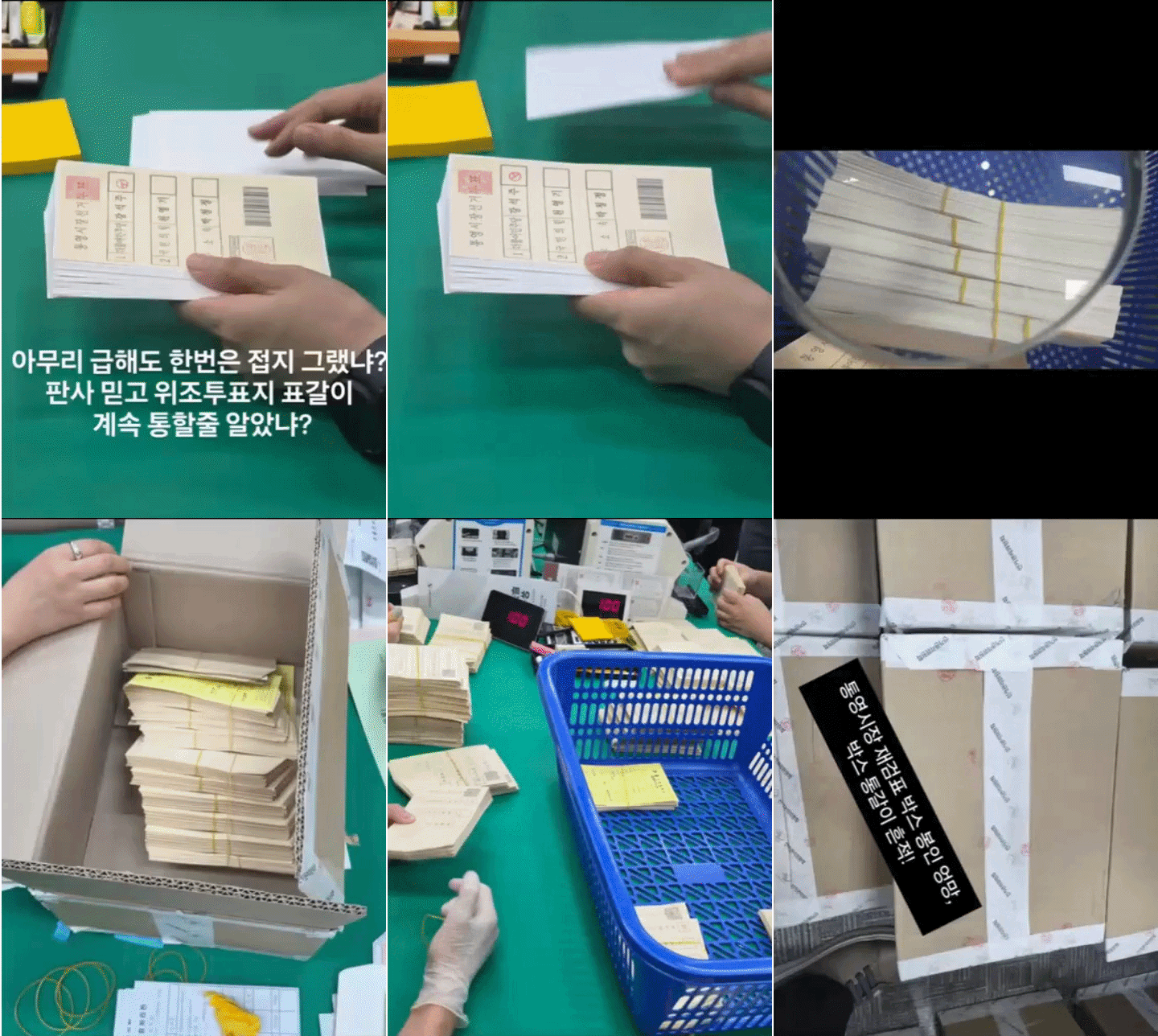 “Ignoring crisp ballots and damaged seals”… Tongyeong mayoral recount concludes with ‘no change in outcome,’ leaving suspicions and public outrage behind
Suspected counterfeit ballots discovered in Tongyeong [GIF from social media of Representative Hwang Kyo-ahn / Attorney Park Joo-hyun]During a recount of the Tongyeong mayoral election in South Gyeong
“Ignoring crisp ballots and damaged seals”… Tongyeong mayoral recount concludes with ‘no change in outcome,’ leaving suspicions and public outrage behind
Suspected counterfeit ballots discovered in Tongyeong [GIF from social media of Representative Hwang Kyo-ahn / Attorney Park Joo-hyun]During a recount of the Tongyeong mayoral election in South Gyeong
 President Yoon, regarding the first-instance ruling on the Public Official Election Act: “An excessive political verdict that distorts the facts… We will appeal immediately.”
The first-instance sentencing hearing for President Yoon Suk Yeol regarding violations of the Public Official Election Act is being broadcast live at Seoul Station on the 27th. [Photo=Yonhap News]Pres
President Yoon, regarding the first-instance ruling on the Public Official Election Act: “An excessive political verdict that distorts the facts… We will appeal immediately.”
The first-instance sentencing hearing for President Yoon Suk Yeol regarding violations of the Public Official Election Act is being broadcast live at Seoul Station on the 27th. [Photo=Yonhap News]Pres
 WSJ: "SK Hynix ADR Premium Is a Sign of AI Trading Overheat"
Advertisement for SK Hynix ADR listing in New York's Times Square [Reuters=Yonhap News file photo]The Wall Street Journal (WSJ) has pointed out that the price of SK Hynix’s American Depositary Recei
WSJ: "SK Hynix ADR Premium Is a Sign of AI Trading Overheat"
Advertisement for SK Hynix ADR listing in New York's Times Square [Reuters=Yonhap News file photo]The Wall Street Journal (WSJ) has pointed out that the price of SK Hynix’s American Depositary Recei
 'Godfather of Japanese Mystery Novels' Keigo Higashino Passes Away After Battle with Cancer at 68
Famous Japanese mystery novelist Keigo Higashino [AFP=Yonhap News]It has been belatedly reported that Keigo Higashino, the "godfather of Japanese mystery novels" and author of bestsellers such as "The
'Godfather of Japanese Mystery Novels' Keigo Higashino Passes Away After Battle with Cancer at 68
Famous Japanese mystery novelist Keigo Higashino [AFP=Yonhap News]It has been belatedly reported that Keigo Higashino, the "godfather of Japanese mystery novels" and author of bestsellers such as "The
 [Park Pil-kyu Security Column] To the Ignorant Trying to Clothe a Beast in Sheep's Clothing
Rep. Kim Byung-joo of the Democratic Party of Korea [Photo=Yonhap News]“The Air Force Academy doesn't teach you how to fly a plane!” “The Army, Navy, and Air Force academies are exactly the
[Park Pil-kyu Security Column] To the Ignorant Trying to Clothe a Beast in Sheep's Clothing
Rep. Kim Byung-joo of the Democratic Party of Korea [Photo=Yonhap News]“The Air Force Academy doesn't teach you how to fly a plane!” “The Army, Navy, and Air Force academies are exactly the
 [Issue Diagnosis] Two Effects of the Election Petition Review
 [Photo] Evidence of Election Fraud Flooding U.S. Media… Trump Had 2.7 Million Votes Stolen
 [Video] U.S. Semiquincentennial Air Show... 'Art in the Sky' streaks across New York
 [Editorial Cartoon] A Draconian Law That Undermines Freedom of Expression

 List
List