Oil terminal in Qingdao, China [AFP Yonhap News file photo]
China has protested as the United States imposed sanctions on Chinese oil importers from Iran ahead of a summit between the two countries.
The U.S. Department of State and the Treasury Department announced in press releases on the 1st (local time) that they are sanctioning Chinese companies and individuals identified as conduits for importing Iranian oil products.
The sanctioned entities include Qingdao Haiye Petroleum Terminal in Shandong Province, China, its representative Li Xinchen, and vessel operating companies of the "shadow fleet" that ship Iranian oil products with their fleets registered in Hong Kong and third countries.
The State Department pointed out that Haiye imported tens of millions of barrels of Iranian crude oil and petroleum products on dozens of occasions last year, resulting in billions of dollars flowing to Iran.
The State Department determined that the company imported Iranian crude oil and petroleum products through ship-to-ship (STS) transfers off the coast of Singapore.
The State Department also sanctioned vessels and ship management companies registered in the UK, Panama, and Hong Kong involved in the transport of Iranian oil products.
Assets in the United States of the sanctioned companies and individuals will be frozen. This also applies to entities that directly or indirectly own 50% or more of their shares. Sanctions will also be imposed on institutions that conduct transactions of funds, goods, or services with them.
Separately, the Treasury Department designated three Iranian exchange houses that broker billions of dollars in foreign exchange transactions annually, along with their front companies, effectively blocking their transactions with other financial institutions.
These companies played a role in bringing in Chinese yuan from oil and petroleum product sales to Iran and converting it into other currencies that could be used for the military funding of Iran and its proxy forces, the Treasury Department stated.
The sanctions are intended to block Iran's oil exports, thereby cutting off its war funding, while also impacting China's energy supply and demand, as China imports about 90% of Iran's oil.
The U.S. Department of State and Treasury Department had previously announced on the 24th of last month that they were sanctioning Hengli Group, a major Chinese refining conglomerate that imports oil from Iran.
Hengli has a crude oil processing capacity of approximately 400,000 barrels per day through its refining facilities in the northeastern Chinese port city of Dalian, making it the largest among individual refiners in China, often referred to as "teapots."
In addition, the Treasury Department froze virtual currency worth approximately $344 million (about 500 billion won) believed to be linked to Iran.
The Treasury Department had previously launched an "economic rage" operation to exert economic pressure on Iran, hinting at the possibility of "secondary boycotts" against two Chinese banks where Iranian funds were found to have flowed.
The U.S. sanctions targeting both China and Iran are seen as a move to pressure China in anticipation of a summit between U.S. President Donald Trump and Chinese President Xi Jinping, scheduled to be held in Beijing around November 14-15.
President Trump appears to be seeking China's involvement in a breakthrough in the stalled peace negotiations with Iran. The sanctions can also be interpreted as having the meaning of a "bargaining chip" to be used at the summit.
China immediately protested and issued a "sanctions prohibition order."
On the 2nd, China's Ministry of Commerce stated, "After a comprehensive evaluation of the U.S. sanctions imposed on companies such as Hengli Petrochemical (Dalian) Petrochemical Co., Ltd. for participating in oil transactions with Iran, including placing them on the Specially Designated Nationals and Blocked Persons (SDN) list and imposing asset freezes and transaction bans, we have confirmed the existence of an unfair extraterritorial application of U.S. sanctions against these companies." The ministry then issued a "prohibition order" stating that the U.S. sanctions should not be approved, enforced, or complied with.
A spokesperson for China's Ministry of Commerce stated on its website that the U.S. sanctions "unfairly prohibit and restrict Chinese companies from conducting normal economic and trade and related activities with third countries (regions) and their nationals, legal persons, or other organizations, and violate the basic norms of international law and international relations."
The spokesperson added, "We will closely monitor situations where the laws and measures of relevant countries are unfairly applied extraterritorially, and will carry out related work in accordance with the law."
According to the "Measures for the Prevention and Response to Unfair Extraterritorial Application of Foreign Laws and Measures" formulated by China's Ministry of Commerce in 2021, the Chinese government can issue a "prohibition order" stating that relevant foreign laws and measures should not be recognized, enforced, or complied with, after assessing whether they could affect China's sovereignty, security, or development interests.

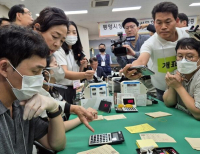
 [Statement by the Seobeokka KMA Patriots Association] ㉛ Recount the ballots openly, as the previous recount covered up election fraud
Recount of the Tongyeong mayoral election [Photo=Yonhap News]South Korea's liberal democracy is dying. The National Election Commission (NEC), which has degraded into a criminal organization through t
[Statement by the Seobeokka KMA Patriots Association] ㉛ Recount the ballots openly, as the previous recount covered up election fraud
Recount of the Tongyeong mayoral election [Photo=Yonhap News]South Korea's liberal democracy is dying. The National Election Commission (NEC), which has degraded into a criminal organization through t
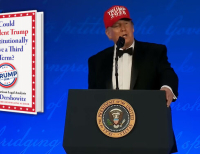
 What is the significance of the "Trump 2028" red hat that keeps reappearing?
It is noteworthy that while it is "highly likely" that President Donald Trump is "seriously considering" a run for the presidency in 2028, he is also "deliberately" fueling speculation regarding wheth
What is the significance of the "Trump 2028" red hat that keeps reappearing?
It is noteworthy that while it is "highly likely" that President Donald Trump is "seriously considering" a run for the presidency in 2028, he is also "deliberately" fueling speculation regarding wheth
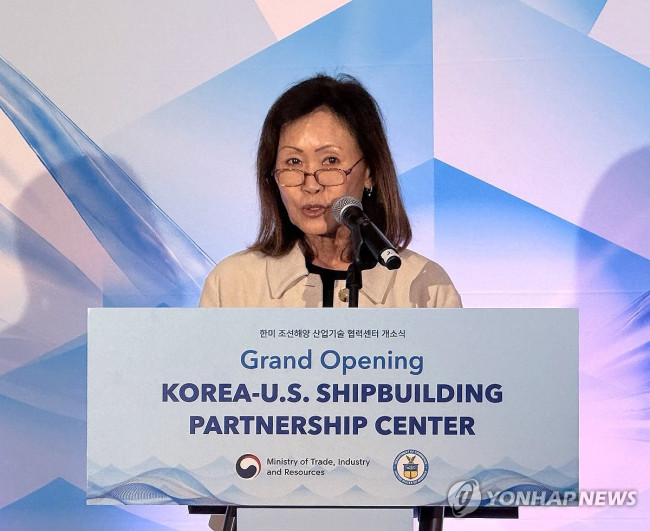 First U.S. Ambassador of Trump's Second Term to Arrive This Week… Will It Provide Momentum to Resolve Pending Issues?
U.S. Ambassador to South Korea Michelle Steel speaks at the opening ceremony of the Korea-U.S. Shipbuilding Cooperation Center held at the Mayflower Hotel in Washington, D.C., on the 23rd (local time)
First U.S. Ambassador of Trump's Second Term to Arrive This Week… Will It Provide Momentum to Resolve Pending Issues?
U.S. Ambassador to South Korea Michelle Steel speaks at the opening ceremony of the Korea-U.S. Shipbuilding Cooperation Center held at the Mayflower Hotel in Washington, D.C., on the 23rd (local time)
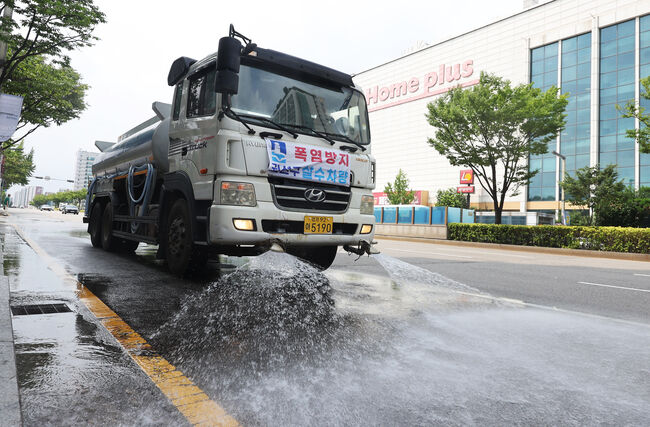 The Korean Peninsula wrapped in a thick blanket of scorching high pressure… Will the 1994 record be broken?
On the 28th, as the heatwave continues, a water sprinkler truck sprays water on Hyowon-ro, Gwonseon-gu, Suwon, Gyeonggi Province. [Photo = Yonhap News]The hottest years on record are considered to be
The Korean Peninsula wrapped in a thick blanket of scorching high pressure… Will the 1994 record be broken?
On the 28th, as the heatwave continues, a water sprinkler truck sprays water on Hyowon-ro, Gwonseon-gu, Suwon, Gyeonggi Province. [Photo = Yonhap News]The hottest years on record are considered to be
 Stock Market Crash 'Black Tuesday'… KOSPI down 10.8%, KOSDAQ down 7.7%
The KOSPI fell by more than 5% in early trading on the 28th, triggering a sell-side sidecar.On the 28th, the KOSPI plunged by more than 10%.Due to the sharp decline, a sell-side sidecar—a temporary
Stock Market Crash 'Black Tuesday'… KOSPI down 10.8%, KOSDAQ down 7.7%
The KOSPI fell by more than 5% in early trading on the 28th, triggering a sell-side sidecar.On the 28th, the KOSPI plunged by more than 10%.Due to the sharp decline, a sell-side sidecar—a temporary
 [World Heritage Committee] 25 New World Heritage Sites Inscribed in Busan… South Korea Successfully Expands 'Getbol' Listing
The Chairperson of the World Heritage Committee speaks at the plenary session of the 48th session of the World Heritage Committee, held at BEXCO in Busan on the 20th. [Photo: Yonhap News]A total of 25
[World Heritage Committee] 25 New World Heritage Sites Inscribed in Busan… South Korea Successfully Expands 'Getbol' Listing
The Chairperson of the World Heritage Committee speaks at the plenary session of the 48th session of the World Heritage Committee, held at BEXCO in Busan on the 20th. [Photo: Yonhap News]A total of 25
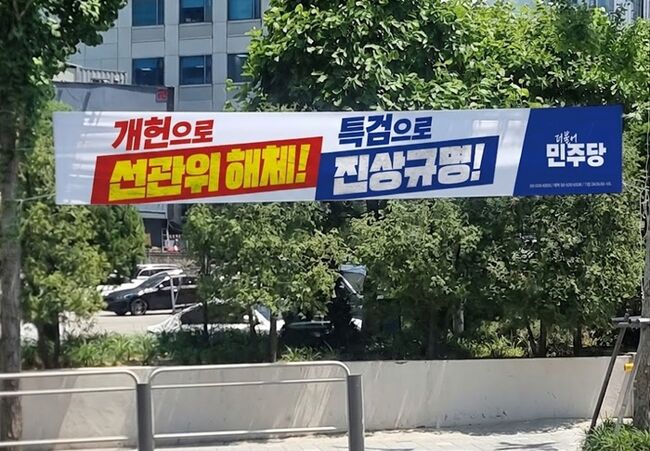 [Cho Yang-geon Column] The NEC: Facing a Fate of "Discarding the Dog After the Hunt"
Banner calling for the "dissolution of the NEC" posted by the Democratic Party. [AI-generated image]Banners calling for the "dissolution of the National Election Commission (NEC)" posted by the Democr
[Cho Yang-geon Column] The NEC: Facing a Fate of "Discarding the Dog After the Hunt"
Banner calling for the "dissolution of the NEC" posted by the Democratic Party. [AI-generated image]Banners calling for the "dissolution of the National Election Commission (NEC)" posted by the Democr
 [Photo] Evidence of Election Fraud Flooding U.S. Media… Trump Had 2.7 Million Votes Stolen
 [Video] U.S. Semiquincentennial Air Show... 'Art in the Sky' streaks across New York
 [Editorial Cartoon] A Draconian Law That Undermines Freedom of Expression

 List
List