Middle Eastern oil field (not directly related to the article) [AFP Yonhap News photo]
Iran, whose crude oil export routes have been blocked by U.S. maritime sanctions, has begun to reduce its production as its oil storage tanks are rapidly filling up, Bloomberg reported on the 2nd (local time).
A senior Iranian official told Bloomberg, "Iran is preemptively reducing its crude oil production to manage its capacity in advance rather than waiting for its oil storage tanks to be full."
However, Bloomberg pointed out that the U.S. overlooked Iran's extensive experience in preparing for similar scenarios due to decades of sanctions.
U.S. President Donald Trump expects to win a confrontation with Iran by targeting its oil sector, its main source of revenue. The calculation is that if Iran cannot export crude oil due to maritime sanctions, it will eventually have to reduce production due to saturated oil storage tanks, which could cause permanent damage to its oil wells.
Indeed, once oil production is reduced, it is difficult to recover and can even lead to the complete disablement of oil wells. However, Iranian officials told Bloomberg that Iran has acquired the know-how to quickly restart wells without causing permanent damage, as they have frequently experienced production interruptions due to sanctions.
In particular, Bloomberg explained that when the Trump administration in 2018 withdrew from the nuclear deal and reinstated sanctions on Iran, Iran had to significantly reduce its oil production, and during that time, it further honed its "well restart" technology.
There are also views that the situation is different this time.
In the past, Iran was able to export some crude oil to China and other countries using a "shadow fleet" despite sanctions, but it is argued that this method will not work now due to U.S. maritime sanctions.
Bloomberg explained, "Iran also acknowledges that the effort to continue producing crude oil is only valid for a certain period," adding, "The key for them is whether they can last longer than the U.S. suffers from high oil prices."
Forecasts vary on when Iran's oil storage tanks will be full, forcing it to shut down its oil wells, a situation known as "tank top."
President Trump claimed a week ago that Iran's oil infrastructure would be paralyzed within three days, but this was not true. JP Morgan and others estimate that there is about a month left. According to Vortexa, Iran still has 65 to 75 million barrels of offshore storage capacity.
Brett Erickson of Obsidian Risk Advisors predicted, "The U.S. is operating under the assumption that Iran will absorb the pressure and collapse on a predictable timeline," adding, "Iran adapts rather than succumbing."
On the other hand, Miad Maleki, who worked for the Office of Foreign Assets Control (OFAC) during the first Trump administration, said, "Back then (first term), we barely avoided tank top with the help of tankers and foreign ports, but this time, we will truly face a forced shutdown situation."
If storage tanks are full, Iran will have no choice but to reduce its daily production by about 1 million barrels, excluding domestic consumption (about 2 million barrels per day). Crude oil exports through land borders with Turkey, Pakistan, and other countries are known to be less than 300,000 barrels per day, and exports to China via rail are not economically viable.
Claire Jutshman, Senior Marine Risk Information Specialist at Vortexa, explained, "Iran's oil export infrastructure is built on flexibility," describing it as a "constrained but functioning system" that maintains flow in the short term through various means such as floating storage facilities, transshipment, and older tankers.
Of course, the biggest variables are the potential for a U.S.-Iran ceasefire negotiation and the U.S.'s willingness to maintain maritime sanctions.

 [Statement by the Seobeokka KMA Patriots Association] ㉛ Recount the ballots openly, as the previous recount covered up election fraud
Recount of the Tongyeong mayoral election [Photo=Yonhap News]South Korea's liberal democracy is dying. The National Election Commission (NEC), which has degraded into a criminal organization through t
[Statement by the Seobeokka KMA Patriots Association] ㉛ Recount the ballots openly, as the previous recount covered up election fraud
Recount of the Tongyeong mayoral election [Photo=Yonhap News]South Korea's liberal democracy is dying. The National Election Commission (NEC), which has degraded into a criminal organization through t
 What is the significance of the "Trump 2028" red hat that keeps reappearing?
It is noteworthy that while it is "highly likely" that President Donald Trump is "seriously considering" a run for the presidency in 2028, he is also "deliberately" fueling speculation regarding wheth
What is the significance of the "Trump 2028" red hat that keeps reappearing?
It is noteworthy that while it is "highly likely" that President Donald Trump is "seriously considering" a run for the presidency in 2028, he is also "deliberately" fueling speculation regarding wheth
 First U.S. Ambassador of Trump's Second Term to Arrive This Week… Will It Provide Momentum to Resolve Pending Issues?
U.S. Ambassador to South Korea Michelle Steel speaks at the opening ceremony of the Korea-U.S. Shipbuilding Cooperation Center held at the Mayflower Hotel in Washington, D.C., on the 23rd (local time)
First U.S. Ambassador of Trump's Second Term to Arrive This Week… Will It Provide Momentum to Resolve Pending Issues?
U.S. Ambassador to South Korea Michelle Steel speaks at the opening ceremony of the Korea-U.S. Shipbuilding Cooperation Center held at the Mayflower Hotel in Washington, D.C., on the 23rd (local time)
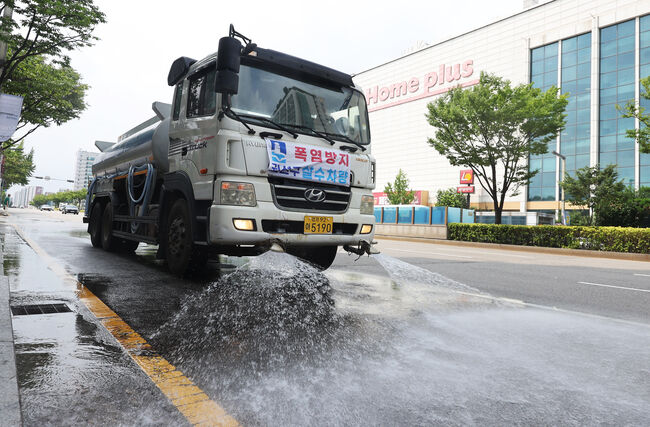 The Korean Peninsula wrapped in a thick blanket of scorching high pressure… Will the 1994 record be broken?
On the 28th, as the heatwave continues, a water sprinkler truck sprays water on Hyowon-ro, Gwonseon-gu, Suwon, Gyeonggi Province. [Photo = Yonhap News]The hottest years on record are considered to be
The Korean Peninsula wrapped in a thick blanket of scorching high pressure… Will the 1994 record be broken?
On the 28th, as the heatwave continues, a water sprinkler truck sprays water on Hyowon-ro, Gwonseon-gu, Suwon, Gyeonggi Province. [Photo = Yonhap News]The hottest years on record are considered to be
 Stock Market Crash 'Black Tuesday'… KOSPI down 10.8%, KOSDAQ down 7.7%
The KOSPI fell by more than 5% in early trading on the 28th, triggering a sell-side sidecar.On the 28th, the KOSPI plunged by more than 10%.Due to the sharp decline, a sell-side sidecar—a temporary
Stock Market Crash 'Black Tuesday'… KOSPI down 10.8%, KOSDAQ down 7.7%
The KOSPI fell by more than 5% in early trading on the 28th, triggering a sell-side sidecar.On the 28th, the KOSPI plunged by more than 10%.Due to the sharp decline, a sell-side sidecar—a temporary
 [World Heritage Committee] 25 New World Heritage Sites Inscribed in Busan… South Korea Successfully Expands 'Getbol' Listing
The Chairperson of the World Heritage Committee speaks at the plenary session of the 48th session of the World Heritage Committee, held at BEXCO in Busan on the 20th. [Photo: Yonhap News]A total of 25
[World Heritage Committee] 25 New World Heritage Sites Inscribed in Busan… South Korea Successfully Expands 'Getbol' Listing
The Chairperson of the World Heritage Committee speaks at the plenary session of the 48th session of the World Heritage Committee, held at BEXCO in Busan on the 20th. [Photo: Yonhap News]A total of 25
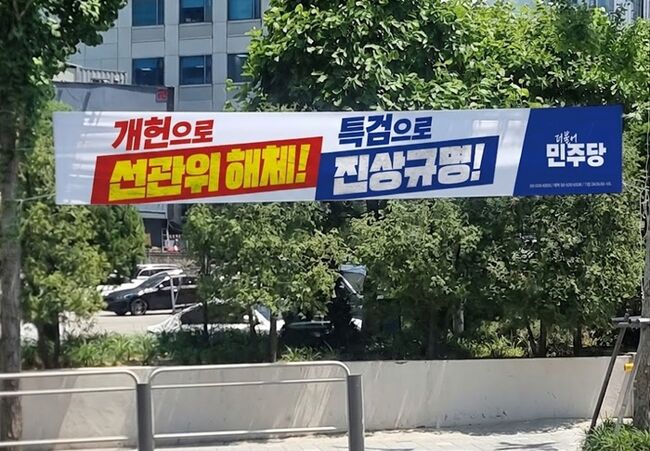 [Cho Yang-geon Column] The NEC: Facing a Fate of "Discarding the Dog After the Hunt"
Banner calling for the "dissolution of the NEC" posted by the Democratic Party. [AI-generated image]Banners calling for the "dissolution of the National Election Commission (NEC)" posted by the Democr
[Cho Yang-geon Column] The NEC: Facing a Fate of "Discarding the Dog After the Hunt"
Banner calling for the "dissolution of the NEC" posted by the Democratic Party. [AI-generated image]Banners calling for the "dissolution of the National Election Commission (NEC)" posted by the Democr
 [Photo] Evidence of Election Fraud Flooding U.S. Media… Trump Had 2.7 Million Votes Stolen
 [Video] U.S. Semiquincentennial Air Show... 'Art in the Sky' streaks across New York
 [Editorial Cartoon] A Draconian Law That Undermines Freedom of Expression

 List
List