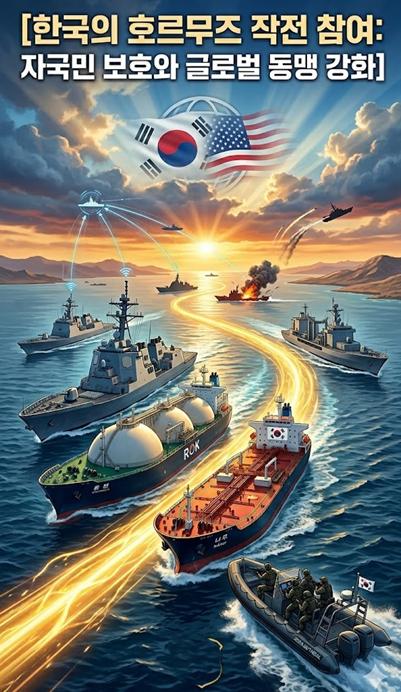
On May 4th, the United States has designated Iran as responsible for the explosion of the Korean vessel "Namoo" in the Strait of Hormuz and is pressuring South Korea to join the maritime security operation "Project Freedom."
While there were no casualties among the 24 crew members, the government is proceeding cautiously in determining the cause. Our government, which has provided humanitarian aid to Iran, must be feeling a sense of bewilderment.
US President Donald Trump's demand for participation in this operation appears to be both an opportunity to strengthen the ROK-US alliance and a critical test that could draw Korea into a struggle for dominance in the Middle East and a religious war.
However, the reasons why the Korean government should consider deploying troops and participating in the operation are based on multifaceted judgments: the constitutional value of protecting its citizens, the trust and responsibility as a strategic ally, and the securing of national interests and independent military autonomy.
Consideration for Troop Deployment for Citizen Protection and Energy Security
Troop deployment requires parliamentary approval due to the stationing of forces abroad for a certain period, whereas participation in operations is flexible cooperation such as information and material support. If troop deployment means sending troops directly, operation participation means supporting operations with various contributions like information and cyber sharing or logistical support. If the government had the will, it would have already deployed troops to rescue our sailors.
The Strait of Hormuz is a critical energy supply route through which over 70% of the crude oil and over 30% of LNG imported by Korea pass. If, as President Trump claims, Korean ships have become targets of Iranian attacks, this has become an 'existential issue for us' that can no longer be left as a mere bystander to international conflict.
If the passage of ships is restricted for a long period or insurance premiums skyrocket, it could lead to an economic disaster of domestic price hikes and widespread industrial shutdowns. Therefore, direct troop deployment by our military goes beyond simply responding to the US demand; it is part of a survival strategy to protect the nation's energy arteries.
Immediate Operation Participation for Alliance Responsibility and Trust Maintenance
President Trump has consistently emphasized allies' cost-sharing for defense and military contributions, stating, "Security is not free." Given that the US has spent vast sums to manage the safety of maritime routes worldwide, criticism that Korea, one of the largest beneficiaries, does not share the risks could narrow our position in future defense cost-sharing negotiations and the issue of the US Forces Korea's stationing.
Participation in the "Project Freedom" operation is possible through the decision of the Commander-in-Chief and an agreement at the Ministry of National Defense level, without parliamentary approval. Operation participation will be an opportunity to evolve the ROK-US alliance from a passive relationship limited to Korean Peninsula defense to a 'global comprehensive strategic alliance' that contributes to global peace. In the long term, it can be utilized as a strategic card to alleviate diplomatic and trade pressure from the US.
Dispatch of Naval Task Force for National Interest and Military Autonomy
The Republic of Korea Navy is assessed to possess a force ranked among the top 5 globally, exceeding its economic size (top 10 worldwide). Remaining silent on maritime terrorism or attacks on civilian vessels that violate international norms is inconsistent with maintaining national dignity, national interest, and alliance trust.
By proactively participating in multinational joint operations, we contribute to establishing international maritime order. The international support gained through this will serve as a moral and practical basis for drawing international assistance in the event of a crisis on the Korean Peninsula.
To realize these tangible national interests, the government must dispatch a "Naval Task Force" ready for immediate deployment or a "Naval Task Group" capable of independent operations. This is a key means of responding to alliance demands while preserving our military's autonomy.
This task group should be established with a Sejong the Great-class Aegis destroyer or a Chungmugong Yi Sun-sin-class destroyer as its flagship, and include minesweeper helicopters to create a powerful air, anti-ship, and anti-submarine defense system. Given the nature of maritime operations, it must secure practical strike capabilities by forming attack teams from the Naval Special Warfare Flotilla, which are crucial for immediate response to unexpected provocations and for vessel inspection, search, and hostage rescue operations.
Furthermore, the independence of operations should be completed by accompanying a combat support ship (AOE) to allow for self-supply on the high seas and sustained long-term operations without relying on other countries. This advanced supply system will prove to the international community that our military is a technology-intensive strong force leading maritime mobile warfare, thereby crushing the will of adversaries to provoke and benefiting defense exports.
In conclusion, by participating in maritime security operations, we must seize this golden opportunity to expand the operational scope of the Republic of Korea Navy globally, re-establish alliance trust and status, and build independent military technological capabilities and strategic autonomy.
Protecting its citizens is the primary duty of a nation. If the government, for political reasons, turns away from this last opportunity with obstinacy and trickery, the ensuing security and economic disasters will be entirely the responsibility of the current administration.
We hope that the government and its national security line will set aside political calculations and overcome the multifaceted crisis in security, diplomacy, and politics through participation in maritime security operations with insight and strategic decisions that prioritize national interests.
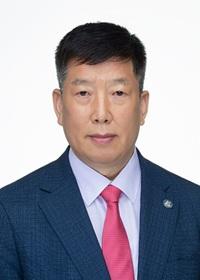
◆ Park Pil-kyu
Editorial Board Member, Hankook Ilbo
40th graduating class, Korea Military Academy

 Trump pressures for rate cut again ahead of FOMC... "Should be the lowest in the world"
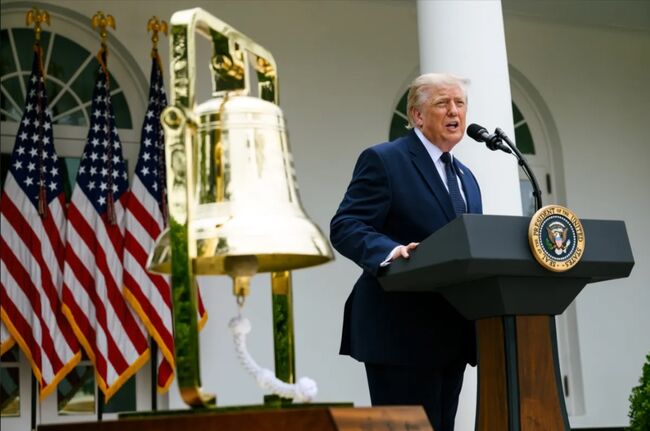
U.S. President Donald Trump. [Photo = The White House] U.S. President Donald Trump once again pressured the Federal Reserve, the U.S. central bank, to lower interest rates on the 27th (local time
Trump pressures for rate cut again ahead of FOMC... "Should be the lowest in the world"
U.S. President Donald Trump. [Photo = The White House] U.S. President Donald Trump once again pressured the Federal Reserve, the U.S. central bank, to lower interest rates on the 27th (local time
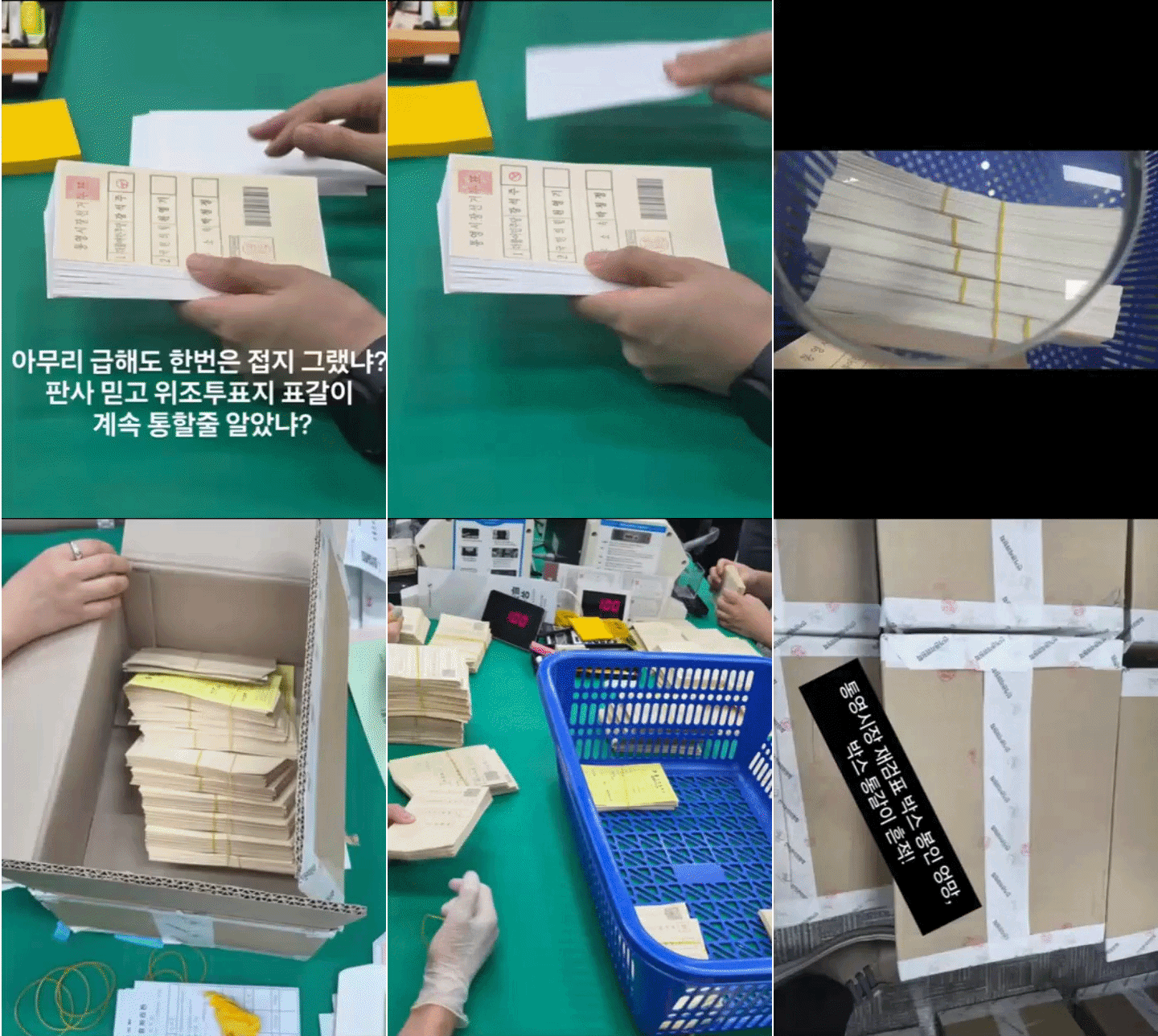 “Ignoring crisp ballots and damaged seals”… Tongyeong mayoral recount concludes with ‘no change in outcome,’ leaving suspicions and public outrage behind
Suspected counterfeit ballots discovered in Tongyeong [GIF from social media of Representative Hwang Kyo-ahn / Attorney Park Joo-hyun]During a recount of the Tongyeong mayoral election in South Gyeong
“Ignoring crisp ballots and damaged seals”… Tongyeong mayoral recount concludes with ‘no change in outcome,’ leaving suspicions and public outrage behind
Suspected counterfeit ballots discovered in Tongyeong [GIF from social media of Representative Hwang Kyo-ahn / Attorney Park Joo-hyun]During a recount of the Tongyeong mayoral election in South Gyeong
 President Yoon, regarding the first-instance ruling on the Public Official Election Act: “An excessive political verdict that distorts the facts… We will appeal immediately.”
The first-instance sentencing hearing for President Yoon Suk Yeol regarding violations of the Public Official Election Act is being broadcast live at Seoul Station on the 27th. [Photo=Yonhap News]Pres
President Yoon, regarding the first-instance ruling on the Public Official Election Act: “An excessive political verdict that distorts the facts… We will appeal immediately.”
The first-instance sentencing hearing for President Yoon Suk Yeol regarding violations of the Public Official Election Act is being broadcast live at Seoul Station on the 27th. [Photo=Yonhap News]Pres
 WSJ: "SK Hynix ADR Premium Is a Sign of AI Trading Overheat"
Advertisement for SK Hynix ADR listing in New York's Times Square [Reuters=Yonhap News file photo]The Wall Street Journal (WSJ) has pointed out that the price of SK Hynix’s American Depositary Recei
WSJ: "SK Hynix ADR Premium Is a Sign of AI Trading Overheat"
Advertisement for SK Hynix ADR listing in New York's Times Square [Reuters=Yonhap News file photo]The Wall Street Journal (WSJ) has pointed out that the price of SK Hynix’s American Depositary Recei
 'Godfather of Japanese Mystery Novels' Keigo Higashino Passes Away After Battle with Cancer at 68
Famous Japanese mystery novelist Keigo Higashino [AFP=Yonhap News]It has been belatedly reported that Keigo Higashino, the "godfather of Japanese mystery novels" and author of bestsellers such as "The
'Godfather of Japanese Mystery Novels' Keigo Higashino Passes Away After Battle with Cancer at 68
Famous Japanese mystery novelist Keigo Higashino [AFP=Yonhap News]It has been belatedly reported that Keigo Higashino, the "godfather of Japanese mystery novels" and author of bestsellers such as "The
 [Park Pil-kyu Security Column] To the Ignorant Trying to Clothe a Beast in Sheep's Clothing
Rep. Kim Byung-joo of the Democratic Party of Korea [Photo=Yonhap News]“The Air Force Academy doesn't teach you how to fly a plane!” “The Army, Navy, and Air Force academies are exactly the
[Park Pil-kyu Security Column] To the Ignorant Trying to Clothe a Beast in Sheep's Clothing
Rep. Kim Byung-joo of the Democratic Party of Korea [Photo=Yonhap News]“The Air Force Academy doesn't teach you how to fly a plane!” “The Army, Navy, and Air Force academies are exactly the
 [Issue Diagnosis] Two Effects of the Election Petition Review
 [Photo] Evidence of Election Fraud Flooding U.S. Media… Trump Had 2.7 Million Votes Stolen
 [Video] U.S. Semiquincentennial Air Show... 'Art in the Sky' streaks across New York
 [Editorial Cartoon] A Draconian Law That Undermines Freedom of Expression

 List
List