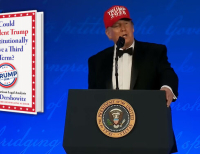
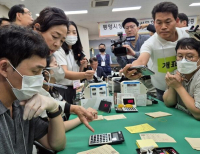
Those holding cash can observe the market further, but those holding credit have entered the adjustment timeline. [Photo=Hanmi Ilbo Composite]
The theme of this week's trend is 'Time Lag Between Cash and Credit.'
This week's market focus was not solely on the surge in semiconductors. A more significant development was the market's resilience despite foreign selling.
In the past, massive foreign selling was an immediate signal of panic in the Korean stock market. However, this week was different. Despite large sell-offs in major semiconductor stocks, domestic funds absorbed them, and the index did not collapse easily.
This week, Money Insight has one question.
Is the Korean market transitioning from a market that collapses with foreign selling to one where individual liquidity absorbs foreign selling?
Three structures were confirmed in this week's market.
First, the nature of semiconductors is changing.
Memory chips used to be a cyclical industry. Price increases were followed by capacity expansion, and increased supply led to price declines. However, with the prolonged investment in AI infrastructure, some memory products are now being evaluated not as commodity parts but as bottleneck assets.
Companies controlling bottlenecks have pricing power. This change has led to a re-evaluation of the valuations of SK Hynix and Samsung Electronics.
Second, the strength of supply and demand has changed.
The market's resilience despite massive foreign selling is not mere coincidence. Individual funds have grown larger than before and move more rapidly, shifting between ETFs and direct investments.
As of May 7th, investor deposits amounted to 136.989 trillion won. On the same day, credit transaction balances were 35.5072 trillion won. A simple calculation shows that the ratio of credit transactions to deposits is approximately 25.9%.
While the credit transaction balance is at an all-time high in absolute terms, it has not yet reached 30% of the total individual funds.
Third, however, this buffer is not room for new credit but a cushioning zone to adjust existing credit.
30% of the 136.989 trillion won in deposits is approximately 41 trillion won. Compared to the current credit transaction balance of around 35.5 trillion won, there is room for about 5 to 6 trillion won until the 30% mark. However, 30% is not a legal limit but a primary market boundary.
From this point on, credit transactions transform from a mere supplementary tool for individual investment into an independent variable that amplifies overall market volatility.
Therefore, the question in the market now is not "Is the credit transaction balance at an all-time high?" In a market where the total amount of individual funds has grown to record levels, credit balances are bound to increase as well.
What we truly need to observe is the proportion of credit relative to the total individual funds, the speed of credit increase, collateral capacity, and the range that could lead to forced selling in the event of a stock price correction.
At this juncture, the timelines for cash holders and credit holders diverge.
Those holding cash can observe the market further.
There is room to see whether the re-evaluation of semiconductors will continue, whether funds will spread to securities and infrastructure sectors, and whether foreign selling is a short-term rebalancing act.
However, credit holders are in a different situation.
In a market where foreign selling, increased short-selling balances, and potential profit-taking after the surge in major semiconductor stocks converge, the collateral capacity of credit accounts can shrink rapidly.
According to Korea Exchange data, short-selling balances reached a record high of 180.6284 trillion won on May 6th. This indicates a market where both bullish bets and bearish hedges are increasing simultaneously.
The one-sentence conclusion for this week's market is as follows:
Those holding cash can observe the market further, but those holding credit have already entered the adjustment timeline.
Next week's checkpoints are threefold.
First, we need to see whether foreign selling of semiconductors stops or continues.
Second, we need to check if the credit transaction balance approaches the early 40 trillion won range, i.e., around 30% of deposits.
Third, we need to assess whether the rally in securities stocks extends beyond simple transaction volume benefits to a re-evaluation of Korea's capital market infrastructure.
This week's market was strong. However, the stronger the market, the colder the questions must be. Is the semiconductor re-evaluation valid? Is foreign selling rebalancing? Is individual liquidity a sign of strength or overheating? The market next week must answer these three questions.
※ This article is not an investment recommendation but a reference analysis to help understand market trends and the article. Actual markets and stock prices may vary depending on oil prices, exchange rates, interest rates, corporate earnings, supply and demand, and policy variables. The final investment decision rests with the investor.

 [Statement by the Seobeokka KMA Patriots Association] ㉛ Recount the ballots openly, as the previous recount covered up election fraud
Recount of the Tongyeong mayoral election [Photo=Yonhap News]South Korea's liberal democracy is dying. The National Election Commission (NEC), which has degraded into a criminal organization through t
[Statement by the Seobeokka KMA Patriots Association] ㉛ Recount the ballots openly, as the previous recount covered up election fraud
Recount of the Tongyeong mayoral election [Photo=Yonhap News]South Korea's liberal democracy is dying. The National Election Commission (NEC), which has degraded into a criminal organization through t
 What is the significance of the "Trump 2028" red hat that keeps reappearing?
It is noteworthy that while it is "highly likely" that President Donald Trump is "seriously considering" a run for the presidency in 2028, he is also "deliberately" fueling speculation regarding wheth
What is the significance of the "Trump 2028" red hat that keeps reappearing?
It is noteworthy that while it is "highly likely" that President Donald Trump is "seriously considering" a run for the presidency in 2028, he is also "deliberately" fueling speculation regarding wheth
 First U.S. Ambassador of Trump's Second Term to Arrive This Week… Will It Provide Momentum to Resolve Pending Issues?
U.S. Ambassador to South Korea Michelle Steel speaks at the opening ceremony of the Korea-U.S. Shipbuilding Cooperation Center held at the Mayflower Hotel in Washington, D.C., on the 23rd (local time)
First U.S. Ambassador of Trump's Second Term to Arrive This Week… Will It Provide Momentum to Resolve Pending Issues?
U.S. Ambassador to South Korea Michelle Steel speaks at the opening ceremony of the Korea-U.S. Shipbuilding Cooperation Center held at the Mayflower Hotel in Washington, D.C., on the 23rd (local time)
 President Yoon, regarding the first-instance ruling on the Public Official Election Act: “An excessive political verdict that distorts the facts… We will appeal immediately.”
The first-instance sentencing hearing for President Yoon Suk Yeol regarding violations of the Public Official Election Act is being broadcast live at Seoul Station on the 27th. [Photo=Yonhap News]Pres
President Yoon, regarding the first-instance ruling on the Public Official Election Act: “An excessive political verdict that distorts the facts… We will appeal immediately.”
The first-instance sentencing hearing for President Yoon Suk Yeol regarding violations of the Public Official Election Act is being broadcast live at Seoul Station on the 27th. [Photo=Yonhap News]Pres
 91% of Net Influx of MZ Generation Goes to Seoul Metropolitan Area… Population Migration Also Shows 'K-shaped Polarization' by Industry
[Provided by Leaders Index]Over the past four years, the MZ generation population has become increasingly concentrated in the Seoul metropolitan area and the Chungcheong region. While cities cen
91% of Net Influx of MZ Generation Goes to Seoul Metropolitan Area… Population Migration Also Shows 'K-shaped Polarization' by Industry
[Provided by Leaders Index]Over the past four years, the MZ generation population has become increasingly concentrated in the Seoul metropolitan area and the Chungcheong region. While cities cen
 'Godfather of Japanese Mystery Novels' Keigo Higashino Passes Away After Battle with Cancer at 68
Famous Japanese mystery novelist Keigo Higashino [AFP=Yonhap News]It has been belatedly reported that Keigo Higashino, the "godfather of Japanese mystery novels" and author of bestsellers such as "The
'Godfather of Japanese Mystery Novels' Keigo Higashino Passes Away After Battle with Cancer at 68
Famous Japanese mystery novelist Keigo Higashino [AFP=Yonhap News]It has been belatedly reported that Keigo Higashino, the "godfather of Japanese mystery novels" and author of bestsellers such as "The
 [Cho Yang-geon Column] The NEC: Facing a Fate of "Discarding the Dog After the Hunt"
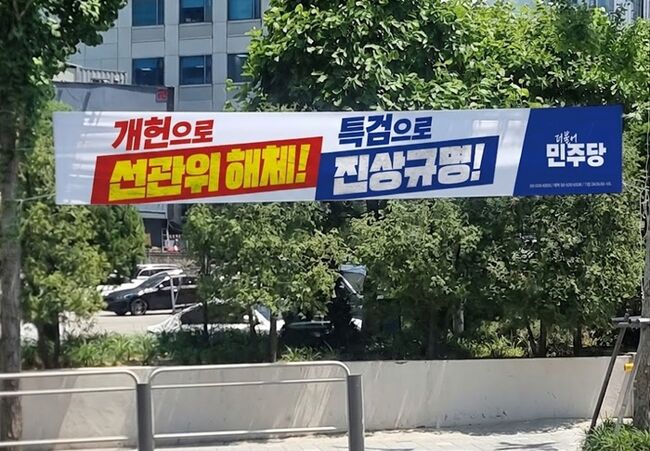
Banner calling for the "dissolution of the NEC" posted by the Democratic Party. [AI-generated image]Banners calling for the "dissolution of the National Election Commission (NEC)" posted by the Democr
[Cho Yang-geon Column] The NEC: Facing a Fate of "Discarding the Dog After the Hunt"
Banner calling for the "dissolution of the NEC" posted by the Democratic Party. [AI-generated image]Banners calling for the "dissolution of the National Election Commission (NEC)" posted by the Democr
 [Photo] Evidence of Election Fraud Flooding U.S. Media… Trump Had 2.7 Million Votes Stolen
 [Video] U.S. Semiquincentennial Air Show... 'Art in the Sky' streaks across New York
 [Editorial Cartoon] A Draconian Law That Undermines Freedom of Expression

 List
List