Actor Cho Jin-woong, who appeared as an inspector. [Yonhap News] Journalists who were first reported on actor Cho Jin-woong's juvenile offender history and were subsequently indicted for violating the Juvenile Act have been cleared of charges five months after the investigation began.
The case traces back to December of last year, when allegations surfaced that actor Cho Jin-woong had been involved in crimes related to vehicle theft and sexual assault during his high school years (around 1994) and had received juvenile protection dispositions.
The public was deeply shocked by the allegations of serious crimes against an actor beloved for his solid acting skills. The disappointment was even greater because the allegations involved school bullying, theft, and sexual offenses, not just common assault incidents. Moreover, the situation became irreversible when his history of assault and drunk driving as an adult also came to light. Cho Jin-woong immediately announced his retirement.
Regarding this incident, public opinion was sharply divided between sympathy, arguing it was "a mistake from 30 years ago," and criticism, stating "mistakes are not all the same."
Kim Won-i, a member of the Democratic Party of Korea, defended him, asking, "How long must one be held responsible for mistakes made during adolescence?" arguing that completely suspending public activities due to a transgression from 30 years ago was excessive.
Lawyer Kim Kyung-ho also accused Dispatch reporters, who first reported Cho Jin-woong's juvenile offender history, of violating the Juvenile Act, criticizing the digging into a high school student's mistakes from 30 years ago as a violation of the 'right to be forgotten' and an impediment to rehabilitation.
However, the public, feeling a great sense of betrayal that a person with a history of serious offenses had played a righteous role, reminded others that even after 30 years, victims are still living in pain.
Furthermore, they countered with arguments of fairness, suggesting that forgiving Cho Jin-woong would be equivalent to giving a blanket pardon to all celebrities with school violence records. Most importantly, the public focused on Cho Jin-woong's criminal history as an adult.
In conclusion, Cho Jin-woong retired, and on May 11, the police decided not to forward the case to prosecutors, finding the reporters "not guilty" of violating the Juvenile Act and defamation.
Article 70 of the Juvenile Act stipulates that institutions related to juvenile protection cases shall not respond to any inquiries about the case details, except when necessary for trials, investigations, or military purposes. Violations are subject to imprisonment for up to one year or a fine of up to 10 million won.
The reason the reporters were cleared of charges is that Article 70 of the Juvenile Act applies to "institutions." This means that public institutions such as courts, prosecution offices, police, and probation offices must not leak or arbitrarily access juvenile offender records to the outside. It does not mean that private media outlets like Dispatch must remain silent.
Additionally, for defamation charges under the Act on Promotion of Information and Communications Network Utilization and Information Protection, etc., to be established, there must be an intent to slander the individual and harm the public interest.
Famous celebrities and public figures are always subject to public attention. It is natural for the public to be curious about their past records. As the proverb "Smoke does not rise from a chimney without fire" suggests, when there is a victim, rumors are bound to arise. In such cases, reporters investigate the truth for the public's right to know, as there is a possibility that these rumors are false. Ultimately, these rumors were not unfounded.
Of course, the Juvenile Act has a separate provision, Article 68 (Prohibition of Reporting), which prohibits the disclosure of juvenile offenders' identities in articles or broadcasts.
However, this provision is intended to protect the privacy of minors currently under investigation or undergoing trial. It does not extend to protecting the records of individuals who are already adults, like Cho Jin-woong, and their past transgressions from long ago.
Most importantly, Cho Jin-woong himself admitted, "I made wrongful choices as a minor." The content of the articles was not false.
The police's decision to clear the reporters of charges (non-referral to prosecution) after five months was based on the fact that the reporters are not public institutions obligated to protect juvenile offender secrets, that it was a valid factual report concerning a public figure related to the public's right to know, and that there are no clear legal provisions to punish the reporting of past deeds of an adult.
Reporter Lim Yo-hee

 [Statement by the Seobeokka KMA Patriots Association] ㉛ Recount the ballots openly, as the previous recount covered up election fraud
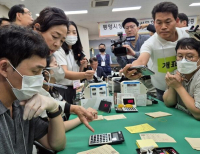
Recount of the Tongyeong mayoral election [Photo=Yonhap News]South Korea's liberal democracy is dying. The National Election Commission (NEC), which has degraded into a criminal organization through t
[Statement by the Seobeokka KMA Patriots Association] ㉛ Recount the ballots openly, as the previous recount covered up election fraud
Recount of the Tongyeong mayoral election [Photo=Yonhap News]South Korea's liberal democracy is dying. The National Election Commission (NEC), which has degraded into a criminal organization through t
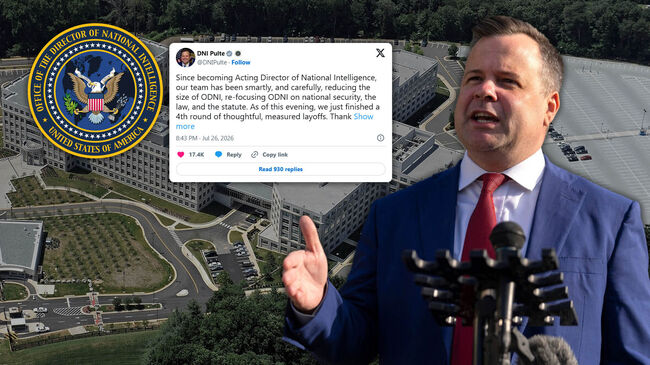 Bill Pulte to Restructure ‘Deep State’… Announces 4th Round of Layoffs at the Office of the Director of National Intelligence
Acting Director of National Intelligence Bill Pulte announced Sunday that he has carried out a fourth "deliberate and measured" reduction in personnel since taking office on June 19, as part of the Tr
Bill Pulte to Restructure ‘Deep State’… Announces 4th Round of Layoffs at the Office of the Director of National Intelligence
Acting Director of National Intelligence Bill Pulte announced Sunday that he has carried out a fourth "deliberate and measured" reduction in personnel since taking office on June 19, as part of the Tr
 First U.S. Ambassador of Trump's Second Term to Arrive This Week… Will It Provide Momentum to Resolve Pending Issues?
U.S. Ambassador to South Korea Michelle Steel speaks at the opening ceremony of the Korea-U.S. Shipbuilding Cooperation Center held at the Mayflower Hotel in Washington, D.C., on the 23rd (local time)
First U.S. Ambassador of Trump's Second Term to Arrive This Week… Will It Provide Momentum to Resolve Pending Issues?
U.S. Ambassador to South Korea Michelle Steel speaks at the opening ceremony of the Korea-U.S. Shipbuilding Cooperation Center held at the Mayflower Hotel in Washington, D.C., on the 23rd (local time)
 President Yoon, regarding the first-instance ruling on the Public Official Election Act: “An excessive political verdict that distorts the facts… We will appeal immediately.”
The first-instance sentencing hearing for President Yoon Suk Yeol regarding violations of the Public Official Election Act is being broadcast live at Seoul Station on the 27th. [Photo=Yonhap News]Pres
President Yoon, regarding the first-instance ruling on the Public Official Election Act: “An excessive political verdict that distorts the facts… We will appeal immediately.”
The first-instance sentencing hearing for President Yoon Suk Yeol regarding violations of the Public Official Election Act is being broadcast live at Seoul Station on the 27th. [Photo=Yonhap News]Pres
 91% of Net Influx of MZ Generation Goes to Seoul Metropolitan Area… Population Migration Also Shows 'K-shaped Polarization' by Industry
[Provided by Leaders Index]Over the past four years, the MZ generation population has become increasingly concentrated in the Seoul metropolitan area and the Chungcheong region. While cities cen
91% of Net Influx of MZ Generation Goes to Seoul Metropolitan Area… Population Migration Also Shows 'K-shaped Polarization' by Industry
[Provided by Leaders Index]Over the past four years, the MZ generation population has become increasingly concentrated in the Seoul metropolitan area and the Chungcheong region. While cities cen
 'Godfather of Japanese Mystery Novels' Keigo Higashino Passes Away After Battle with Cancer at 68
Famous Japanese mystery novelist Keigo Higashino [AFP=Yonhap News]It has been belatedly reported that Keigo Higashino, the "godfather of Japanese mystery novels" and author of bestsellers such as "The
'Godfather of Japanese Mystery Novels' Keigo Higashino Passes Away After Battle with Cancer at 68
Famous Japanese mystery novelist Keigo Higashino [AFP=Yonhap News]It has been belatedly reported that Keigo Higashino, the "godfather of Japanese mystery novels" and author of bestsellers such as "The
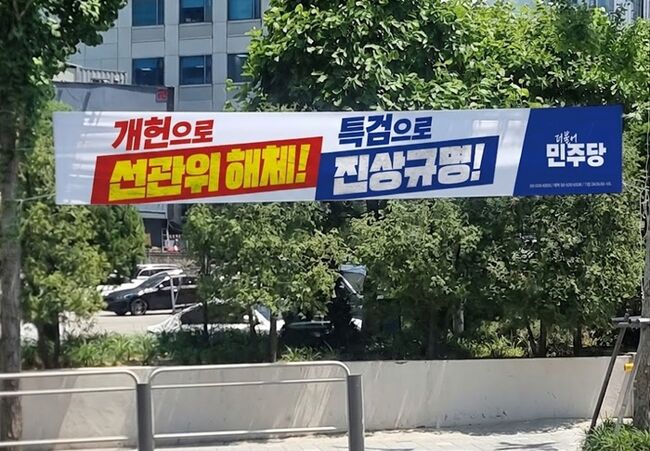 [Cho Yang-geon Column] The NEC: Facing a Fate of "Discarding the Dog After the Hunt"
Banner calling for the "dissolution of the NEC" posted by the Democratic Party. [AI-generated image]Banners calling for the "dissolution of the National Election Commission (NEC)" posted by the Democr
[Cho Yang-geon Column] The NEC: Facing a Fate of "Discarding the Dog After the Hunt"
Banner calling for the "dissolution of the NEC" posted by the Democratic Party. [AI-generated image]Banners calling for the "dissolution of the National Election Commission (NEC)" posted by the Democr
 [Photo] Evidence of Election Fraud Flooding U.S. Media… Trump Had 2.7 Million Votes Stolen
 [Video] U.S. Semiquincentennial Air Show... 'Art in the Sky' streaks across New York
 [Editorial Cartoon] A Draconian Law That Undermines Freedom of Expression

 List
List