The Korean stock market is simultaneously benefiting from the AI infrastructure cycle and facing the burden of high interest rates and exchange rates. The next market benchmark will likely be actual profits, foreign investor inflows, and exchange rate stability, rather than just expectations. [Photo=Yonhap News]
Can semiconductor profits overcome the burden of interest rates and exchange rates?
While AI infrastructure investment continues, the rise in long-term interest rates has amplified market volatility.
The benchmark for the next phase will be actual cash flow and foreign investor flows, not growth expectations.
The theme of this week's market movement is "The Korean Test of the AI Cycle."
The volatility in interest rates and oil prices originating from the US market arrived in the Korean stock market in a different form.
In the US market, it manifested as a valuation burden for AI large-cap stocks, while in the Korean market, it translated into issues concerning semiconductor large caps, the won/dollar exchange rate, and foreign investor flows.
Ultimately, the key question for the Korean stock market this week was not whether the US market was up or down. It was whether the expectation of improved profits for Korean semiconductors could overcome the burden of high interest rates and exchange rates, amidst ongoing AI infrastructure investment.
This week, Money Insight poses a single question:
Is the Korean stock market a beneficiary of the AI infrastructure cycle, or is it a market trapped by the burdens of high exchange rates and interest rates?
The answer is still closer to the former, but with conditions attached.
Expectations of improved semiconductor profits are clearly alive. The expansion of AI data centers stimulates demand for HBM, DRAM, NAND, storage, and power equipment. The Korean stock market is deeply integrated into this value chain.
However, if interest rates and exchange rates remain at high levels simultaneously, foreign capital will inevitably slow down.
Consequently, the Korean stock market has entered a phase where it's not just about "good industry conditions," but rather about "how much good industry conditions can offset the burden of exchange rates and interest rates."
Three structural factors were confirmed in this week's market.
First, AI is no longer a mere technology stock theme.
AI is a real investment cycle that simultaneously drives data centers, semiconductors, power grids, storage, communication networks, and cooling systems.
This is why the Korean stock market is sensitive to this trend. Samsung Electronics and SK Hynix supply key components for AI data centers through memory and HBM. Power equipment and data center-related companies can benefit from the downstream effects of AI infrastructure expansion.
Second, rising interest rates are a variable that amplifies market volatility.
Duration in the bond market refers to how sensitively bond prices move in response to interest rate changes.
When interest rates rise, if investors reduce their holdings of long-term bonds with high duration, or interest rate sensitivity, bond prices can become more volatile, and interest rates can move faster.
This trend also affects the stock market. Rapid increases in long-term interest rates increase the valuation burden for technology and semiconductor stocks with high growth expectations.
Third, the ultimate variable for the Korean stock market is foreign investor flows.
Even if the domestic semiconductor industry outlook is positive, index growth will be limited if foreign investors do not enter the market.
Foreign investors consider not only semiconductor profit forecasts but also exchange rates. If the won/dollar exchange rate fails to stabilize in the 1500 won range, foreign spot buying may become cautious.
Conversely, if the exchange rate stabilizes and US interest rates decline, strong capital inflows into Korean semiconductor large caps could resume.
The strong movement of EWY, a Korea-related ETF, this week is a positive sign.
However, it is difficult to conclude that foreign spot flows have fully returned based solely on ETF rebounds.
The next step is to see if the expectations confirmed in futures and ETFs translate into actual buying in the KOSPI spot market. In particular, a resurgence in demand for large-cap stocks centered on Samsung Electronics and SK Hynix is necessary for the overall direction of the Korean stock market to become clear.
Another change is the scalability of AI infrastructure.
The market is moving beyond just looking at GPUs. It is beginning to broadly consider the physical foundations of AI, including memory, storage, power, satellite communications, and data center infrastructure.
The Korean stock market has strengths in memory and power infrastructure among these areas. Therefore, the next opportunity for the Korean stock market may arise not only from semiconductor large caps but also from the downstream value chain of AI infrastructure.
In conclusion, this week's market was not the end of the AI rally, but rather a period of reconfirmation of the Korean stock market's position within the AI infrastructure cycle.
Interest rates and exchange rates are a burden. However, the trend leading to memory, HBM, storage, and power infrastructure still leaves opportunities for the Korean stock market.
The next market will not be one driven solely by expectations. It will be a market where companies and sectors that demonstrate actual profits, actual orders, and actual foreign investor flows will survive.
Next week's points to watch are threefold:
First, whether the won/dollar exchange rate falls below 1500 won, reducing the burden on foreign buyers.
Second, whether US long-term interest rates stabilize around 4.6%.
Third, whether the rotation in AI infrastructure expands to Samsung Electronics, SK Hynix, and the domestic power/data center value chain.
※ This article is for reference and analysis to help understand market structure and fund flows, not investment advice. Actual market conditions and stock prices may vary depending on interest rates, oil prices, exchange rates, corporate earnings, and policy changes, and the final investment decision is the responsibility of the investor.

 [Statement by the Seobeokka KMA Patriots Association] ㉛ Recount the ballots openly, as the previous recount covered up election fraud
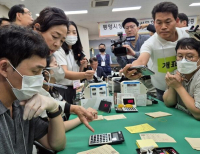
Recount of the Tongyeong mayoral election [Photo=Yonhap News]South Korea's liberal democracy is dying. The National Election Commission (NEC), which has degraded into a criminal organization through t
[Statement by the Seobeokka KMA Patriots Association] ㉛ Recount the ballots openly, as the previous recount covered up election fraud
Recount of the Tongyeong mayoral election [Photo=Yonhap News]South Korea's liberal democracy is dying. The National Election Commission (NEC), which has degraded into a criminal organization through t
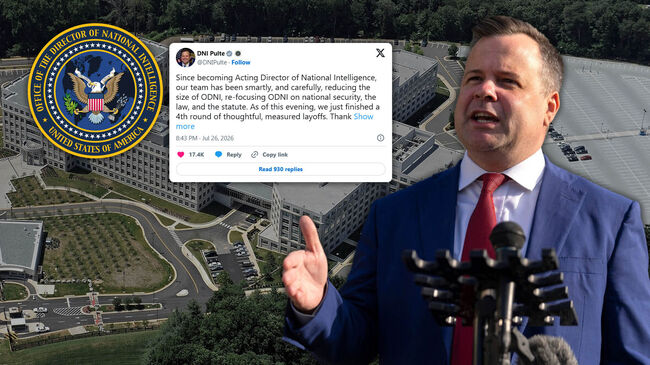 Bill Pulte to Restructure ‘Deep State’… Announces 4th Round of Layoffs at the Office of the Director of National Intelligence
Acting Director of National Intelligence Bill Pulte announced Sunday that he has carried out a fourth "deliberate and measured" reduction in personnel since taking office on June 19, as part of the Tr
Bill Pulte to Restructure ‘Deep State’… Announces 4th Round of Layoffs at the Office of the Director of National Intelligence
Acting Director of National Intelligence Bill Pulte announced Sunday that he has carried out a fourth "deliberate and measured" reduction in personnel since taking office on June 19, as part of the Tr
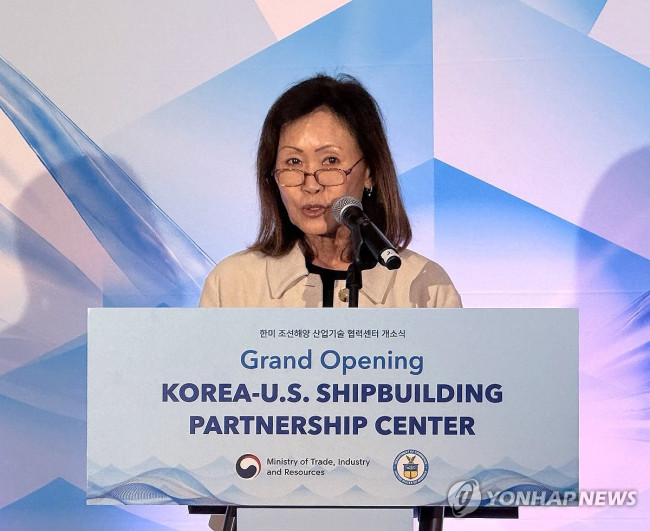 First U.S. Ambassador of Trump's Second Term to Arrive This Week… Will It Provide Momentum to Resolve Pending Issues?
U.S. Ambassador to South Korea Michelle Steel speaks at the opening ceremony of the Korea-U.S. Shipbuilding Cooperation Center held at the Mayflower Hotel in Washington, D.C., on the 23rd (local time)
First U.S. Ambassador of Trump's Second Term to Arrive This Week… Will It Provide Momentum to Resolve Pending Issues?
U.S. Ambassador to South Korea Michelle Steel speaks at the opening ceremony of the Korea-U.S. Shipbuilding Cooperation Center held at the Mayflower Hotel in Washington, D.C., on the 23rd (local time)
 President Yoon, regarding the first-instance ruling on the Public Official Election Act: “An excessive political verdict that distorts the facts… We will appeal immediately.”
The first-instance sentencing hearing for President Yoon Suk Yeol regarding violations of the Public Official Election Act is being broadcast live at Seoul Station on the 27th. [Photo=Yonhap News]Pres
President Yoon, regarding the first-instance ruling on the Public Official Election Act: “An excessive political verdict that distorts the facts… We will appeal immediately.”
The first-instance sentencing hearing for President Yoon Suk Yeol regarding violations of the Public Official Election Act is being broadcast live at Seoul Station on the 27th. [Photo=Yonhap News]Pres
 91% of Net Influx of MZ Generation Goes to Seoul Metropolitan Area… Population Migration Also Shows 'K-shaped Polarization' by Industry
[Provided by Leaders Index]Over the past four years, the MZ generation population has become increasingly concentrated in the Seoul metropolitan area and the Chungcheong region. While cities cen
91% of Net Influx of MZ Generation Goes to Seoul Metropolitan Area… Population Migration Also Shows 'K-shaped Polarization' by Industry
[Provided by Leaders Index]Over the past four years, the MZ generation population has become increasingly concentrated in the Seoul metropolitan area and the Chungcheong region. While cities cen
 'Godfather of Japanese Mystery Novels' Keigo Higashino Passes Away After Battle with Cancer at 68
Famous Japanese mystery novelist Keigo Higashino [AFP=Yonhap News]It has been belatedly reported that Keigo Higashino, the "godfather of Japanese mystery novels" and author of bestsellers such as "The
'Godfather of Japanese Mystery Novels' Keigo Higashino Passes Away After Battle with Cancer at 68
Famous Japanese mystery novelist Keigo Higashino [AFP=Yonhap News]It has been belatedly reported that Keigo Higashino, the "godfather of Japanese mystery novels" and author of bestsellers such as "The
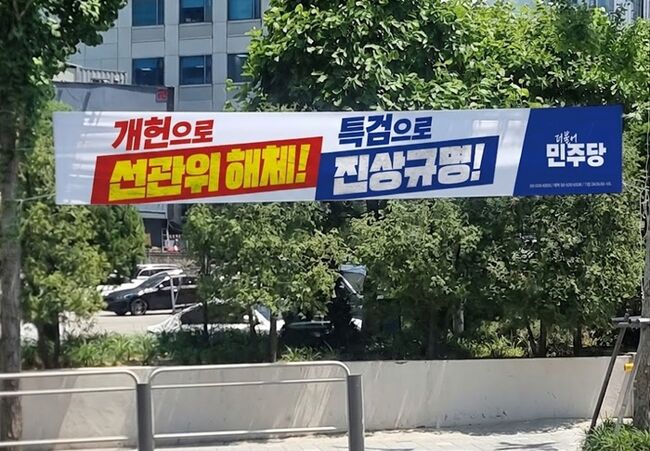 [Cho Yang-geon Column] The NEC: Facing a Fate of "Discarding the Dog After the Hunt"
Banner calling for the "dissolution of the NEC" posted by the Democratic Party. [AI-generated image]Banners calling for the "dissolution of the National Election Commission (NEC)" posted by the Democr
[Cho Yang-geon Column] The NEC: Facing a Fate of "Discarding the Dog After the Hunt"
Banner calling for the "dissolution of the NEC" posted by the Democratic Party. [AI-generated image]Banners calling for the "dissolution of the National Election Commission (NEC)" posted by the Democr
 [Photo] Evidence of Election Fraud Flooding U.S. Media… Trump Had 2.7 Million Votes Stolen
 [Video] U.S. Semiquincentennial Air Show... 'Art in the Sky' streaks across New York
 [Editorial Cartoon] A Draconian Law That Undermines Freedom of Expression

 List
List