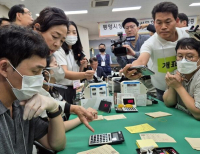
Tehran citizens counting dollar bills [WANA/Reuters=Yonhap News Agency File Photo]
As the memorandum of understanding (MOU) for a ceasefire between the United States and Iran enters its final stages, the unfreezing of Iran's frozen assets has emerged as a "hidden obstacle."
While some in the U.S. state that Iran's frozen assets will only be released after specific conditions are met, Iran insists that the unfreezing must happen simultaneously with the MOU agreement. The release of frozen assets has been a consistently emphasized demand by the Iranian side, but confusion has arisen regarding the timing of its implementation.
Tasnim News Agency of Iran reported on the 24th (local time) that "frozen assets must be unfrozen as soon as the MOU agreement is announced and Iran must have full access to them," adding that "the U.S. continues to object to some provisions, including the unfreezing of Iranian frozen assets."
It further warned that "the possibility of the MOU agreement being canceled still exists," stating, "If the frozen assets are not unfrozen, it will be crossing one of Iran's red lines, and if that happens, there will be no agreement."
An Iranian official told The Washington Post (WP) that in the first stage of implementing the agreement, the U.S. would release $12 billion (approximately 18 trillion won) of frozen Iranian assets, mine-clearing operations would begin in the Strait of Hormuz, and the U.S. blockade would be lifted.
It appears that Iran has demanded the release of frozen assets, which can be quickly implemented and carries less political burden, to increase the feasibility of the MOU agreement and create minimal trust. Iran is also in urgent need of substantial foreign currency assets that it can readily access for post-war reconstruction, stabilization of public livelihood, and exchange rate management.
Iran's overseas frozen assets are estimated to be $100 billion (approximately 150 trillion won).
However, CNN reported the previous day, citing a U.S. official, that the easing of sanctions against Iran and the unfreezing of frozen assets would only be possible if the Strait of Hormuz is reopened and Iran fulfills the nuclear deal, such as abandoning highly enriched uranium.
Some Israeli media also reported that the U.S. government's policy is that frozen assets will only be unfrozen after Iran exports highly enriched uranium overseas.
In response, Iranian media strongly denied these reports, stating they were entirely untrue. They emphasized that nuclear issues are outside the scope of discussions at the MOU stage.
Amidst this, high-ranking Iranian officials, including Parliament Speaker and chief negotiator with the U.S., Mohammad Bagher Ghalibaf, and Foreign Minister Abbas Araghchi, visited Doha, Qatar, on the 25th, drawing attention.
Reuters reported that they would meet with Qatari Prime Minister and Foreign Minister Sheikh Mohammed bin Abdulrahman Al Thani to primarily discuss the Strait of Hormuz and highly enriched uranium issues. However, the presence of Iran's Central Bank Governor, Abdolnaser Hemmati, alongside them focused attention on the unfreezing of frozen funds, as Qatar holds a significant amount of Iran's assets in cash.
Among these are funds that were frozen in South Korea as a consequence of U.S. sanctions against Iran.
South Korea had purchased Iranian crude oil through a won-denominated settlement account opened in the name of the Central Bank of Iran at Woori Bank and IBK Industrial Bank in 2010. However, following the U.S. withdrawal from the Iran nuclear deal (JCPOA - Joint Comprehensive Plan of Action) in 2018, approximately $6 billion (about 9 trillion won at current exchange rates) accumulated in this account was self-frozen.
In September 2023, as a result of the prisoner exchange between the U.S. and Iran, these funds were all transferred to the Central Bank of Iran's account at Qatar National Bank (QNB) and used for the purchase of humanitarian goods for Iran. However, they were frozen again a month later due to the outbreak of the Gaza war.
In the future, if the U.S. and Iran reach a ceasefire agreement, Qatar could serve as a neutral channel where Iran's frozen assets abroad could be deposited, similar to the South Korean case.

 [Statement by the Seobeokka KMA Patriots Association] ㉛ Recount the ballots openly, as the previous recount covered up election fraud
Recount of the Tongyeong mayoral election [Photo=Yonhap News]South Korea's liberal democracy is dying. The National Election Commission (NEC), which has degraded into a criminal organization through t
[Statement by the Seobeokka KMA Patriots Association] ㉛ Recount the ballots openly, as the previous recount covered up election fraud
Recount of the Tongyeong mayoral election [Photo=Yonhap News]South Korea's liberal democracy is dying. The National Election Commission (NEC), which has degraded into a criminal organization through t
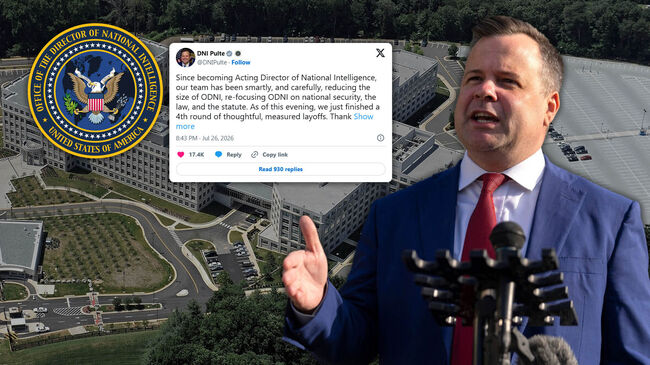 Bill Pulte to Restructure ‘Deep State’… Announces 4th Round of Layoffs at the Office of the Director of National Intelligence
Acting Director of National Intelligence Bill Pulte announced Sunday that he has carried out a fourth "deliberate and measured" reduction in personnel since taking office on June 19, as part of the Tr
Bill Pulte to Restructure ‘Deep State’… Announces 4th Round of Layoffs at the Office of the Director of National Intelligence
Acting Director of National Intelligence Bill Pulte announced Sunday that he has carried out a fourth "deliberate and measured" reduction in personnel since taking office on June 19, as part of the Tr
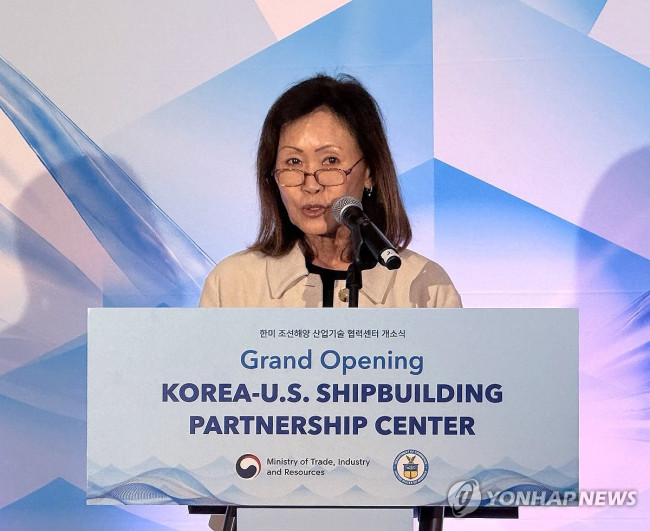 First U.S. Ambassador of Trump's Second Term to Arrive This Week… Will It Provide Momentum to Resolve Pending Issues?
U.S. Ambassador to South Korea Michelle Steel speaks at the opening ceremony of the Korea-U.S. Shipbuilding Cooperation Center held at the Mayflower Hotel in Washington, D.C., on the 23rd (local time)
First U.S. Ambassador of Trump's Second Term to Arrive This Week… Will It Provide Momentum to Resolve Pending Issues?
U.S. Ambassador to South Korea Michelle Steel speaks at the opening ceremony of the Korea-U.S. Shipbuilding Cooperation Center held at the Mayflower Hotel in Washington, D.C., on the 23rd (local time)
 President Yoon, regarding the first-instance ruling on the Public Official Election Act: “An excessive political verdict that distorts the facts… We will appeal immediately.”
The first-instance sentencing hearing for President Yoon Suk Yeol regarding violations of the Public Official Election Act is being broadcast live at Seoul Station on the 27th. [Photo=Yonhap News]Pres
President Yoon, regarding the first-instance ruling on the Public Official Election Act: “An excessive political verdict that distorts the facts… We will appeal immediately.”
The first-instance sentencing hearing for President Yoon Suk Yeol regarding violations of the Public Official Election Act is being broadcast live at Seoul Station on the 27th. [Photo=Yonhap News]Pres
 91% of Net Influx of MZ Generation Goes to Seoul Metropolitan Area… Population Migration Also Shows 'K-shaped Polarization' by Industry
[Provided by Leaders Index]Over the past four years, the MZ generation population has become increasingly concentrated in the Seoul metropolitan area and the Chungcheong region. While cities cen
91% of Net Influx of MZ Generation Goes to Seoul Metropolitan Area… Population Migration Also Shows 'K-shaped Polarization' by Industry
[Provided by Leaders Index]Over the past four years, the MZ generation population has become increasingly concentrated in the Seoul metropolitan area and the Chungcheong region. While cities cen
 'Godfather of Japanese Mystery Novels' Keigo Higashino Passes Away After Battle with Cancer at 68
Famous Japanese mystery novelist Keigo Higashino [AFP=Yonhap News]It has been belatedly reported that Keigo Higashino, the "godfather of Japanese mystery novels" and author of bestsellers such as "The
'Godfather of Japanese Mystery Novels' Keigo Higashino Passes Away After Battle with Cancer at 68
Famous Japanese mystery novelist Keigo Higashino [AFP=Yonhap News]It has been belatedly reported that Keigo Higashino, the "godfather of Japanese mystery novels" and author of bestsellers such as "The
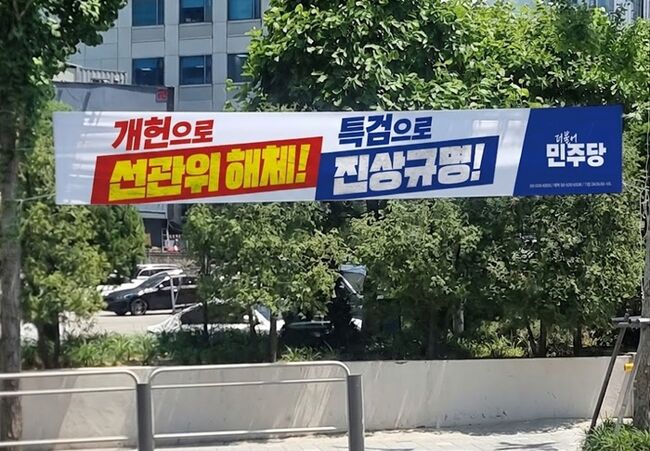 [Cho Yang-geon Column] The NEC: Facing a Fate of "Discarding the Dog After the Hunt"
Banner calling for the "dissolution of the NEC" posted by the Democratic Party. [AI-generated image]Banners calling for the "dissolution of the National Election Commission (NEC)" posted by the Democr
[Cho Yang-geon Column] The NEC: Facing a Fate of "Discarding the Dog After the Hunt"
Banner calling for the "dissolution of the NEC" posted by the Democratic Party. [AI-generated image]Banners calling for the "dissolution of the National Election Commission (NEC)" posted by the Democr
 [Photo] Evidence of Election Fraud Flooding U.S. Media… Trump Had 2.7 Million Votes Stolen
 [Video] U.S. Semiquincentennial Air Show... 'Art in the Sky' streaks across New York
 [Editorial Cartoon] A Draconian Law That Undermines Freedom of Expression

 List
List