The Chongryon headquarters building in Tokyo, Japan [Photo=Yonhap News]
North Korea is erasing "unification." The General Association of Korean Residents in Japan (Chongryon), a pro-North Korean group in Japan, has removed unification-related expressions from its platform and key tasks at its general assembly, held for the first time in four years.
Conversely, the South Korean government announced that its stance of preemptively and gradually restoring the September 19 Military Agreement remains unchanged.
North Korea is solidifying inter-Korean relations not as relations between compatriots, but as relations between "two hostile states." Meanwhile, the South Korean government is still pursuing the restoration of past inter-Korean agreements predicated on tension reduction and trust-building.
Chongryon held its 26th General Assembly on October 23-24 at the Korean Cultural Center in Tokyo, Japan, but expressions related to unification, which were repeatedly mentioned in the past, were absent from this report. Compared to the 25th General Assembly in 2022, when "independent unification movement" was mentioned as a key task, the shift in policy is clear.
"Unification" Disappears from Chongryon's Platform
North Korean leader Kim Jong Un defined inter-Korean relations as "relations between two hostile states" and "relations between two warring nations" at the plenary meeting of the Workers' Party of Korea Central Committee at the end of 2023.
Since then, North Korea has been restructuring its policy to remove unification-related expressions from its organizations and propaganda systems targeting the South, and to define the South as a separate state and an adversarial target.
This Chongryon General Assembly is noteworthy in that the change has extended to the platform and operational policies of overseas Korean organizations.
Chongryon has long served as a channel connecting North Korea's united front strategy towards the South with the organization of Korean residents in Japan. The fact that Chongryon is now prioritizing the protection of rights and the preservation of national identity instead of unification shows that North Korea's "two-state theory" is also being reflected in the management of overseas Korean communities.
The omission of expressions of cooperation with Mindan (The Federation of Korean Residents in Japan) is in the same vein.
Four years ago, Chongryon mentioned unity projects with compatriots from various strata, including Mindan. However, such expressions were absent from this assembly. This signifies a retreat from the existing united front paradigm that viewed inter-Korean relations as internal relations within a single nation.
Government Reaffirms Stance on Restoring September 19 Agreement
On the same day, the Ministry of Unification stated that there was no change in its policy to restore the September 19 Military Agreement.
In response to media reports on October 26 that negotiations to restore the September 19 Agreement, including the establishment of no-fly zones, had been completely suspended, a Ministry of Unification official stated, "We are consulting with relevant ministries on concrete restoration measures." However, regarding the suspension of consultations with the UN Command, the official said, "I am not aware."
President Lee Jae-myung announced a policy to preemptively and gradually restore the September 19 Military Agreement in his Liberation Day congratulatory address in August last year. Subsequently, Minister of Unification Chung Dong-young announced in February this year that the government would pursue the restoration of the no-fly zone provisions of the September 19 Agreement first.
However, no tangible measures have been taken for over three months since the announcement.
No-fly zones are measures that restrict military activities of aircraft and unmanned aerial vehicles near the Military Demarcation Line.
While they have the effect of easing tensions, concerns have also been raised that they could restrict our military's surveillance and reconnaissance operations and the ROK-US combined readiness posture in a situation where North Korean threats from drones, missiles, and artillery continue.
Diverging Realities of Inter-Korean Policies
The issue lies in the gap between the paradigm of inter-Korean relations that the restoration of the September 19 Military Agreement presupposes and the policy that North Korea has currently adopted towards the South.
The September 19 Military Agreement is based on the premise that South and North Korea will cease hostile actions to ease military tensions and prevent accidental clashes.
It is a structure that can only function with a minimum level of trust, believing that the other party is a participant in the agreement's implementation. However, North Korea now defines the South not as a partner for unification, but as an enemy state.
The disappearance of unification-related expressions from Chongryon's platform indicates that this policy is not just rhetoric but is also being reflected in institutions, organizations, and the management of overseas Korean communities.
In this situation, if the South Korean government continues to pursue the restoration of the September 19 Agreement, it will be difficult to avoid the question of "how realistically does this reflect the inter-Korean relations paradigm that North Korea has already changed?"
The "unification" that disappeared from Chongryon's platform and the "September 19 restoration" reaffirmed by the Ministry of Unification are not separate news items.
One is a signal that North Korea has changed the fundamental grammar of inter-Korean relations, and the other is a scene that questions what kind of realistic perception the South Korean government's North Korea policy holds in the face of that change.
Peace is necessary, but for measures to achieve peace to work, a sober judgment of the opponent's strategic changes must come first.

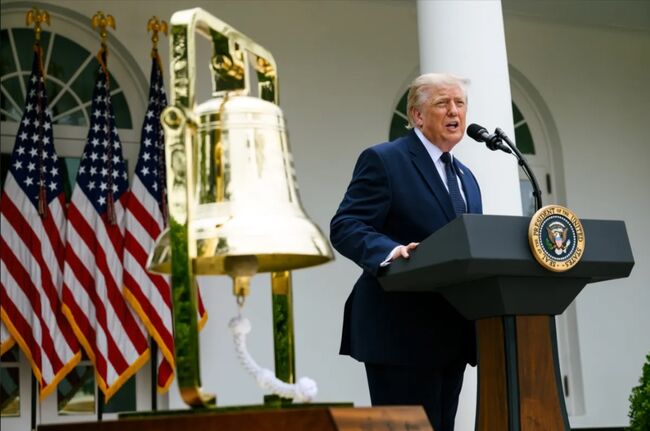 Trump pressures for rate cut again ahead of FOMC... "Should be the lowest in the world"
U.S. President Donald Trump. [Photo = The White House] U.S. President Donald Trump once again pressured the Federal Reserve, the U.S. central bank, to lower interest rates on the 27th (local time
Trump pressures for rate cut again ahead of FOMC... "Should be the lowest in the world"
U.S. President Donald Trump. [Photo = The White House] U.S. President Donald Trump once again pressured the Federal Reserve, the U.S. central bank, to lower interest rates on the 27th (local time
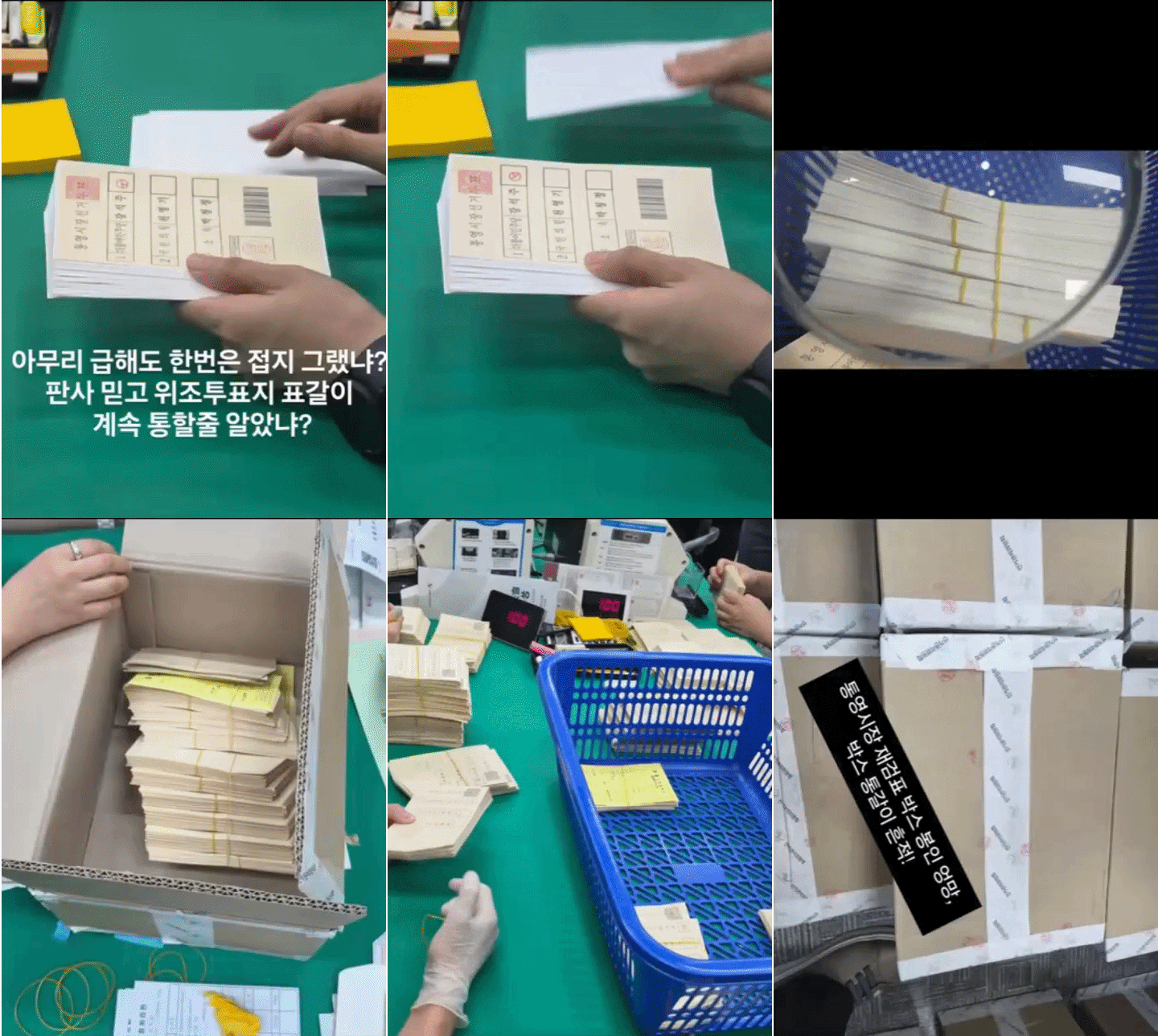 “Ignoring crisp ballots and damaged seals”… Tongyeong mayoral recount concludes with ‘no change in outcome,’ leaving suspicions and public outrage behind
Suspected counterfeit ballots discovered in Tongyeong [GIF from social media of Representative Hwang Kyo-ahn / Attorney Park Joo-hyun]During a recount of the Tongyeong mayoral election in South Gyeong
“Ignoring crisp ballots and damaged seals”… Tongyeong mayoral recount concludes with ‘no change in outcome,’ leaving suspicions and public outrage behind
Suspected counterfeit ballots discovered in Tongyeong [GIF from social media of Representative Hwang Kyo-ahn / Attorney Park Joo-hyun]During a recount of the Tongyeong mayoral election in South Gyeong
 President Yoon, regarding the first-instance ruling on the Public Official Election Act: “An excessive political verdict that distorts the facts… We will appeal immediately.”
The first-instance sentencing hearing for President Yoon Suk Yeol regarding violations of the Public Official Election Act is being broadcast live at Seoul Station on the 27th. [Photo=Yonhap News]Pres
President Yoon, regarding the first-instance ruling on the Public Official Election Act: “An excessive political verdict that distorts the facts… We will appeal immediately.”
The first-instance sentencing hearing for President Yoon Suk Yeol regarding violations of the Public Official Election Act is being broadcast live at Seoul Station on the 27th. [Photo=Yonhap News]Pres
 WSJ: "SK Hynix ADR Premium Is a Sign of AI Trading Overheat"
Advertisement for SK Hynix ADR listing in New York's Times Square [Reuters=Yonhap News file photo]The Wall Street Journal (WSJ) has pointed out that the price of SK Hynix’s American Depositary Recei
WSJ: "SK Hynix ADR Premium Is a Sign of AI Trading Overheat"
Advertisement for SK Hynix ADR listing in New York's Times Square [Reuters=Yonhap News file photo]The Wall Street Journal (WSJ) has pointed out that the price of SK Hynix’s American Depositary Recei
 'Godfather of Japanese Mystery Novels' Keigo Higashino Passes Away After Battle with Cancer at 68
Famous Japanese mystery novelist Keigo Higashino [AFP=Yonhap News]It has been belatedly reported that Keigo Higashino, the "godfather of Japanese mystery novels" and author of bestsellers such as "The
'Godfather of Japanese Mystery Novels' Keigo Higashino Passes Away After Battle with Cancer at 68
Famous Japanese mystery novelist Keigo Higashino [AFP=Yonhap News]It has been belatedly reported that Keigo Higashino, the "godfather of Japanese mystery novels" and author of bestsellers such as "The
 [Park Pil-kyu Security Column] To the Ignorant Trying to Clothe a Beast in Sheep's Clothing
Rep. Kim Byung-joo of the Democratic Party of Korea [Photo=Yonhap News]“The Air Force Academy doesn't teach you how to fly a plane!” “The Army, Navy, and Air Force academies are exactly the
[Park Pil-kyu Security Column] To the Ignorant Trying to Clothe a Beast in Sheep's Clothing
Rep. Kim Byung-joo of the Democratic Party of Korea [Photo=Yonhap News]“The Air Force Academy doesn't teach you how to fly a plane!” “The Army, Navy, and Air Force academies are exactly the
 [Issue Diagnosis] Two Effects of the Election Petition Review
 [Photo] Evidence of Election Fraud Flooding U.S. Media… Trump Had 2.7 Million Votes Stolen
 [Video] U.S. Semiquincentennial Air Show... 'Art in the Sky' streaks across New York
 [Editorial Cartoon] A Draconian Law That Undermines Freedom of Expression

 List
List