Photo of Seoul mayoral candidate for education, Cho Jon-hyuk's banner. [Photo = Yonhap News]
The controversy surrounding Seoul mayoral candidate for education, Cho Jon-hyuk's banner, which reads "Expel Queer Homosexuality Education," has escalated into a major issue in the Seoul Superintendent of Education election.
Candidates from the progressive camp, along with teachers and civic groups, have characterized it as exclusionary and hate speech against sexual minorities and are demanding its removal.
Conversely, candidate Cho argued that the banner's target is not sexual minority students or individuals, but rather education on sexual orientation and gender identity without parental consent.
The banner, as seen in the photos confirmed by the Korea-US-Japan News, bore the phrases "Expel Queer Homosexuality Education" and "Superintendent is Cho Jon-hyuk." Taken at face value, the direct target of "expel" is "education," not sexual minority students or individuals.
Therefore, it is difficult to immediately conclude that the banner means "expel people."
However, the progressive camp finds issue with the combination of the terms "queer" and "homosexuality" with the strong word "expel."
The Korean Teachers and Education Workers Union criticized the banner in a statement on the 26th, saying it is "no different from a declaration to exclude members of sexual minorities present in the educational field."
Candidates for Seoul Superintendent of Education, including Jung Geun-sik and Han Man-jung, also defined it as an expression that promotes exclusion and hatred of sexual minorities.
The first point of verification is how candidate Cho explained the meaning of "expel."
In a phone call with the Korea-US-Japan News on the 26th, Seoul mayoral candidate for education, Cho Jon-hyuk, stated, "'Expel Queer Homosexuality Education' does not mean excluding sexual minority students or individuals."
Candidate Cho explained, "It means to exclude education on sexual orientation and gender identity from the school curriculum without parental consent," adding, "Opposition is not hatred."
This point changes the nature of the controversy.
The progressive camp interprets the word "expel" as language to exclude the existence of sexual minorities. On the other hand, candidate Cho draws a line, stating that the target is not people but educational content.
Ultimately, the issue shifts from a simple pro or con on homosexuality itself to how far sexual orientation and gender identity issues should be addressed in elementary and secondary public education, and whether parents should be given prior notification and the right to choose in that process.
The second point of contention is the rebuttal, "There is no homosexuality education in schools."
The progressive camp argues that candidate Cho has brought a non-existent educational issue into the election campaign, pointing to the deletion of the terms "sexual minorities" and "gender equality" from the 2022 revised curriculum. Indeed, the 2022 revised curriculum revision omitted the term "sexual minorities" from the existing curriculum and adjusted the term "gender equality."
However, this rebuttal is based solely on the wording of the official national curriculum. Candidate Cho questions whether school education can be solely defined by textbooks and national curriculum wording.
In a phone call with the Korea-US-Japan News, he explained, "Shouldn't content delivered to students through external instructors, supplementary materials, books, gender sensitivity education, and school events be considered part of school education?"
In reality, education in schools is not solely based on the wording of regular textbooks.
The Seoul Metropolitan Office of Education's Student Human Rights Education Center provides guidance on various cyber human rights education content, including understanding human rights, gender equality education, sexual harassment prevention education, and discrimination prevention education, for middle and high school students and their guardians.
A survey by the Korea Women's Policy Institute also showed that "external youth sex education specialists" were the most frequently cited source of school sex education providers, at 80.4%.
Therefore, the statement "there is no homosexuality education in the official curriculum" and the issue raised that "content related to sexual orientation and gender identity can be delivered to students through various channels in schools" should be distinguished.
The former is an issue of wording in the national curriculum, while the latter is an issue of the actual educational environment in schools. Candidate Cho's raised issue is closer to the latter.
The third point of contention is parental choice.
In Korean legal systems, parental rights are not to be disregarded. The Basic Education Act stipulates that parents and other guardians can express their opinions to schools regarding their children's education, and schools must respect those opinions.
However, it is difficult to consider this right as an absolute right institutionalized to always take precedence over the entire school curriculum.
The Supreme Court has also ruled that guardians' expressions of opinion must be made in a manner that respects teachers' professionalism and authority, and repeated undue interference with legitimate educational activities is not permitted.
Ultimately, the issue is whether parents can be aware of and choose the content and channels of education provided to their children.
However, practical limitations exist. Education in schools is operated through a complex interplay of regular classes, legally mandated education, external instructor programs, supplementary materials, books, counseling, and school events.
It is not easy from a school operational perspective to apply prior consent and individual choice rights for parents to every educational activity. The learning rights of students, the educational rights of teachers, and the school's curriculum operation rights must also be considered.
However, the right to know and the right to express opinions by parents do not disappear simply because of practical limitations.
Especially for topics like sexual orientation and gender identity that spark significant value debates, schools need to ensure a minimum level of transparency regarding what materials are used, how they are presented, which external instructors are involved, and to what age groups of students they are addressed.
Candidate Cho's raised issue lies precisely at this point. It is not about whether parents can control all school education, but rather the question of whether "sensitive value education related to sex can be delivered to students through channels unknown to parents."
The fourth point of verification is overseas cases.
In the United States as well, LGBTQ+ education is at the center of debates over parental rights. LGBTQ+ is an acronym encompassing lesbian, gay, bisexual, transgender, queer, or questioning individuals.
The debate over LGBTQ+ in education has expanded to include issues of sexual orientation, gender identity, family structures, pronoun usage, and restroom/changing room access.
On June 27, 2025, the U.S. Supreme Court, in the case of Mahmoud v. Taylor, concerning LGBTQ+ related book instruction in public schools in Montgomery County, Maryland, accepted the parents' request for a preliminary injunction, citing that the measure to not provide prior notification and exclusion options to parents could infringe upon their freedom of religion.
However, this ruling did not prohibit LGBTQ+ education itself but rather affirmed the right to notification and choice for parents in specific classes that conflict with their religious upbringing rights.
Fact Check Conclusion
Based on the verification, it is difficult to immediately conclude that candidate Cho's banner means "expulsion of sexual minority students."
The banner read "Expel Queer Homosexuality Education," and candidate Cho also explained to the Korea-US-Japan News that the target of expulsion is not people but education on sexual orientation and gender identity without parental consent.
However, it is clear that the word "expel" is a strong political expression. There is room for the progressive camp and teachers' and civic groups to interpret it as exclusionary and hate speech against sexual minorities.
Therefore, the precise issue of this controversy is "Is it the exclusion of people, or the exclusion of educational content?"
Based on the confirmed wording and candidate Cho's explanation so far, the direct target of the banner is closer to educational content than to people.
However, whether the expression can be read as a message of exclusion and stigmatization to sexual minority students remains a separate political and educational debate.
In the Seoul Superintendent of Education election, this issue has expanded beyond a simple banner controversy to encompass the authority of public education, parents' right to know, and prior notification and choice for sensitive value education.
A mere rebuttal of "There is no such education in schools" is insufficient to explain all the actual educational channels in schools.
Conversely, the controversy is not fully resolved by the phrase "education expulsion" alone.
The core issue lies in determining the level of transparency public education should ensure and how to institutionalize parental choice when addressing sensitive value education like sexual orientation and gender identity.
It is time for the superintendent candidates to move beyond mudslinging and present solutions.

 [Statement by the Seobeokka KMA Patriots Association] ㉛ Recount the ballots openly, as the previous recount covered up election fraud
Recount of the Tongyeong mayoral election [Photo=Yonhap News]South Korea's liberal democracy is dying. The National Election Commission (NEC), which has degraded into a criminal organization through t
[Statement by the Seobeokka KMA Patriots Association] ㉛ Recount the ballots openly, as the previous recount covered up election fraud
Recount of the Tongyeong mayoral election [Photo=Yonhap News]South Korea's liberal democracy is dying. The National Election Commission (NEC), which has degraded into a criminal organization through t
 Bill Pulte to Restructure ‘Deep State’… Announces 4th Round of Layoffs at the Office of the Director of National Intelligence
Acting Director of National Intelligence Bill Pulte announced Sunday that he has carried out a fourth "deliberate and measured" reduction in personnel since taking office on June 19, as part of the Tr
Bill Pulte to Restructure ‘Deep State’… Announces 4th Round of Layoffs at the Office of the Director of National Intelligence
Acting Director of National Intelligence Bill Pulte announced Sunday that he has carried out a fourth "deliberate and measured" reduction in personnel since taking office on June 19, as part of the Tr
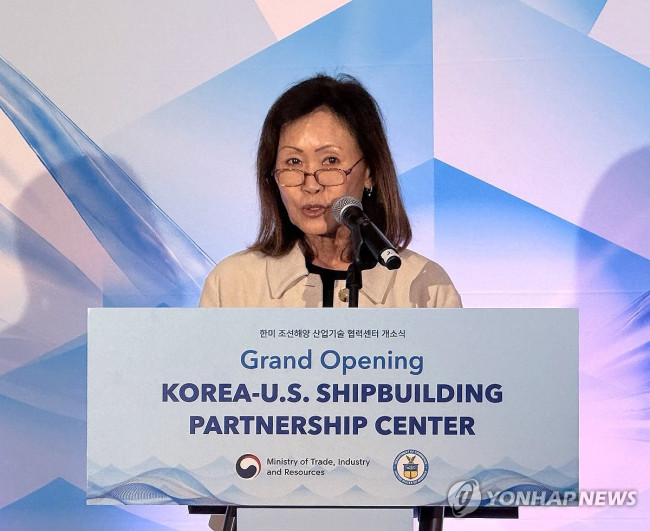 First U.S. Ambassador of Trump's Second Term to Arrive This Week… Will It Provide Momentum to Resolve Pending Issues?
U.S. Ambassador to South Korea Michelle Steel speaks at the opening ceremony of the Korea-U.S. Shipbuilding Cooperation Center held at the Mayflower Hotel in Washington, D.C., on the 23rd (local time)
First U.S. Ambassador of Trump's Second Term to Arrive This Week… Will It Provide Momentum to Resolve Pending Issues?
U.S. Ambassador to South Korea Michelle Steel speaks at the opening ceremony of the Korea-U.S. Shipbuilding Cooperation Center held at the Mayflower Hotel in Washington, D.C., on the 23rd (local time)
 President Yoon, regarding the first-instance ruling on the Public Official Election Act: “An excessive political verdict that distorts the facts… We will appeal immediately.”
The first-instance sentencing hearing for President Yoon Suk Yeol regarding violations of the Public Official Election Act is being broadcast live at Seoul Station on the 27th. [Photo=Yonhap News]Pres
President Yoon, regarding the first-instance ruling on the Public Official Election Act: “An excessive political verdict that distorts the facts… We will appeal immediately.”
The first-instance sentencing hearing for President Yoon Suk Yeol regarding violations of the Public Official Election Act is being broadcast live at Seoul Station on the 27th. [Photo=Yonhap News]Pres
 91% of Net Influx of MZ Generation Goes to Seoul Metropolitan Area… Population Migration Also Shows 'K-shaped Polarization' by Industry
[Provided by Leaders Index]Over the past four years, the MZ generation population has become increasingly concentrated in the Seoul metropolitan area and the Chungcheong region. While cities cen
91% of Net Influx of MZ Generation Goes to Seoul Metropolitan Area… Population Migration Also Shows 'K-shaped Polarization' by Industry
[Provided by Leaders Index]Over the past four years, the MZ generation population has become increasingly concentrated in the Seoul metropolitan area and the Chungcheong region. While cities cen
 'Godfather of Japanese Mystery Novels' Keigo Higashino Passes Away After Battle with Cancer at 68
Famous Japanese mystery novelist Keigo Higashino [AFP=Yonhap News]It has been belatedly reported that Keigo Higashino, the "godfather of Japanese mystery novels" and author of bestsellers such as "The
'Godfather of Japanese Mystery Novels' Keigo Higashino Passes Away After Battle with Cancer at 68
Famous Japanese mystery novelist Keigo Higashino [AFP=Yonhap News]It has been belatedly reported that Keigo Higashino, the "godfather of Japanese mystery novels" and author of bestsellers such as "The
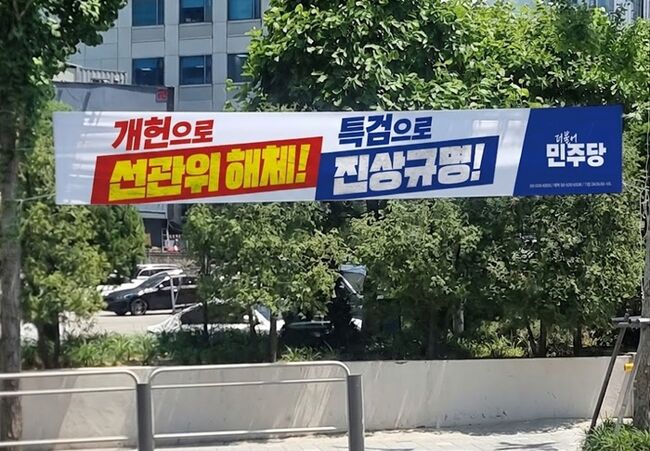 [Cho Yang-geon Column] The NEC: Facing a Fate of "Discarding the Dog After the Hunt"
Banner calling for the "dissolution of the NEC" posted by the Democratic Party. [AI-generated image]Banners calling for the "dissolution of the National Election Commission (NEC)" posted by the Democr
[Cho Yang-geon Column] The NEC: Facing a Fate of "Discarding the Dog After the Hunt"
Banner calling for the "dissolution of the NEC" posted by the Democratic Party. [AI-generated image]Banners calling for the "dissolution of the National Election Commission (NEC)" posted by the Democr
 [Photo] Evidence of Election Fraud Flooding U.S. Media… Trump Had 2.7 Million Votes Stolen
 [Video] U.S. Semiquincentennial Air Show... 'Art in the Sky' streaks across New York
 [Editorial Cartoon] A Draconian Law That Undermines Freedom of Expression

 List
List