Prime Minister Kishida of Japan [AFP=Yonhap News Agency file photo]
A bill to establish a National Intelligence Agency, dubbed Japan's "domestic CIA," passed the Japanese Diet on the 27th.
According to Nikkei and Yomiuri Shimbun, among others, a bill to create the National Intelligence Agency and its command center, the National Intelligence Council, was approved in a plenary session of the Japanese House of Councillors (Upper House) on the afternoon of the same day.
With this, the National Intelligence Council, which will serve as the command center for the Japanese government's information gathering and analysis, and the National Intelligence Agency, which will handle related practical matters, will be newly established.
The National Intelligence Council will be chaired by the Prime Minister and composed of nine relevant ministers, including the Chairman of the National Public Safety Commission, the Chief Cabinet Secretary, the Minister of Justice, and the Minister for Foreign Affairs. It will be responsible for establishing basic policies related to security and terrorism, as well as responses to foreign powers' intelligence activities.
The National Intelligence Agency will serve as the secretariat for the National Intelligence Council and will be responsible for collecting information from various intelligence agencies.
Currently, information is collected separately by the Ministry of Foreign Affairs, the Public Security Intelligence Agency, the foreign affairs and public security divisions of the National Police Agency, and the Intelligence Headquarters of the Ministry of Defense. However, this will be unified, and the command functions for collecting and analyzing information are expected to be strengthened.
The National Intelligence Agency will be established in July of this year with approximately 700 personnel, by reorganizing the Cabinet Intelligence and Research Office, which is directly under the Prime Minister.
The National Intelligence Agency and its director will hold the same status as the National Security Secretariat (NSS), which plans Japan's foreign and security policy, and the director of the NSS.
The establishment of the National Intelligence Council and the National Intelligence Agency was one of the core policies advocated by Prime Minister Kishida during the general election held in February.
The background for establishing these agencies is understood to be the recognition of the increasingly severe security environment surrounding Japan.
The intense international competition related to advanced technologies such as artificial intelligence (AI) has become a problem, as has the issue of foreign powers spreading fake news through social media (SNS) during elections.
In addition, from the perspective of economic security, the need to consolidate information across various policy areas such as diplomacy, defense, and technology has emerged within Japan.
Prime Minister Kishida has emphasized that this law is necessary to protect the safety of the people and secure national interests.
He stated in the House of Councillors' Committee on Cabinet the previous day, "To prevent critical crises, it is important to have a system in which the intelligence sector supports the policy sector's firm decision-making."
In addition to establishing the National Intelligence Council, Prime Minister Kishida is also pushing for the enactment of a "Spy Prevention Law" to prohibit the illegal collection of confidential information from the public and corporations, and the establishment of a "Foreign Intelligence Agency" to gather information abroad.
The bill for the establishment of the National Intelligence Council, etc., was smoothly passed through the House of Representatives with the support of the ruling coalition parties such as the Liberal Democratic Party and the Japan Innovation Party in April, as well as opposition parties such as the Constitutional Democratic Party and the Democratic Party for the People, which had previously shown a negative stance due to concerns about personal information infringement.
In the House of Councillors' Committee on Cabinet, the Constitutional Democratic Party, an opposition party, submitted an amendment proposing the establishment of an independent body that would report and publicize the activities of the National Intelligence Council, etc., to the Diet once a year and monitor its activities, in order to prevent human rights violations due to strengthened national secret information management and ensure political neutrality. However, this amendment was rejected.
Around the Japanese Diet on this day, citizens opposing the establishment of the National Intelligence Agency held a rally.
According to NHK, about 200 citizens (estimated by organizers) gathered, holding banners such as "Oppose National Intelligence Agency" and voicing their opposition.
In a press conference after the bill's passage, Prime Minister Kishida, regarding concerns about personal information infringement, emphasized that this law "deals with the relationship between administrative agencies" and "does not increase such risks."
He added, regarding the Spy Prevention Law, "We will review each item thoroughly and steadily."
Previously, during the deliberation process of the bill, the House of Representatives and the House of Councillors' Committee on Cabinet adopted a supplementary resolution requesting consideration for personal information protection in relation to this law. However, this resolution has no legal binding force.

 [Statement by the Seobeokka KMA Patriots Association] ㉛ Recount the ballots openly, as the previous recount covered up election fraud
Recount of the Tongyeong mayoral election [Photo=Yonhap News]South Korea's liberal democracy is dying. The National Election Commission (NEC), which has degraded into a criminal organization through t
[Statement by the Seobeokka KMA Patriots Association] ㉛ Recount the ballots openly, as the previous recount covered up election fraud
Recount of the Tongyeong mayoral election [Photo=Yonhap News]South Korea's liberal democracy is dying. The National Election Commission (NEC), which has degraded into a criminal organization through t
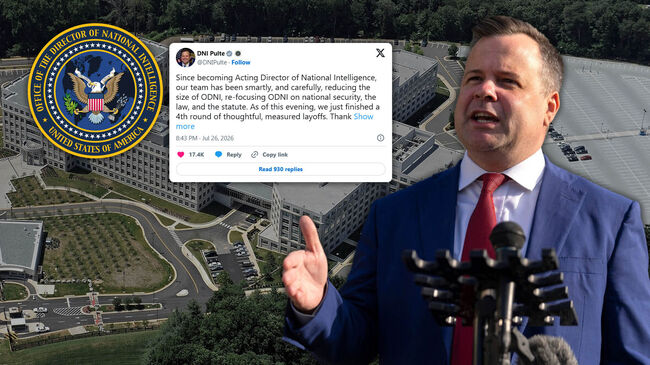 Bill Pulte to Restructure ‘Deep State’… Announces 4th Round of Layoffs at the Office of the Director of National Intelligence
Acting Director of National Intelligence Bill Pulte announced Sunday that he has carried out a fourth "deliberate and measured" reduction in personnel since taking office on June 19, as part of the Tr
Bill Pulte to Restructure ‘Deep State’… Announces 4th Round of Layoffs at the Office of the Director of National Intelligence
Acting Director of National Intelligence Bill Pulte announced Sunday that he has carried out a fourth "deliberate and measured" reduction in personnel since taking office on June 19, as part of the Tr
 First U.S. Ambassador of Trump's Second Term to Arrive This Week… Will It Provide Momentum to Resolve Pending Issues?
U.S. Ambassador to South Korea Michelle Steel speaks at the opening ceremony of the Korea-U.S. Shipbuilding Cooperation Center held at the Mayflower Hotel in Washington, D.C., on the 23rd (local time)
First U.S. Ambassador of Trump's Second Term to Arrive This Week… Will It Provide Momentum to Resolve Pending Issues?
U.S. Ambassador to South Korea Michelle Steel speaks at the opening ceremony of the Korea-U.S. Shipbuilding Cooperation Center held at the Mayflower Hotel in Washington, D.C., on the 23rd (local time)
 President Yoon, regarding the first-instance ruling on the Public Official Election Act: “An excessive political verdict that distorts the facts… We will appeal immediately.”
The first-instance sentencing hearing for President Yoon Suk Yeol regarding violations of the Public Official Election Act is being broadcast live at Seoul Station on the 27th. [Photo=Yonhap News]Pres
President Yoon, regarding the first-instance ruling on the Public Official Election Act: “An excessive political verdict that distorts the facts… We will appeal immediately.”
The first-instance sentencing hearing for President Yoon Suk Yeol regarding violations of the Public Official Election Act is being broadcast live at Seoul Station on the 27th. [Photo=Yonhap News]Pres
 91% of Net Influx of MZ Generation Goes to Seoul Metropolitan Area… Population Migration Also Shows 'K-shaped Polarization' by Industry
[Provided by Leaders Index]Over the past four years, the MZ generation population has become increasingly concentrated in the Seoul metropolitan area and the Chungcheong region. While cities cen
91% of Net Influx of MZ Generation Goes to Seoul Metropolitan Area… Population Migration Also Shows 'K-shaped Polarization' by Industry
[Provided by Leaders Index]Over the past four years, the MZ generation population has become increasingly concentrated in the Seoul metropolitan area and the Chungcheong region. While cities cen
 'Godfather of Japanese Mystery Novels' Keigo Higashino Passes Away After Battle with Cancer at 68
Famous Japanese mystery novelist Keigo Higashino [AFP=Yonhap News]It has been belatedly reported that Keigo Higashino, the "godfather of Japanese mystery novels" and author of bestsellers such as "The
'Godfather of Japanese Mystery Novels' Keigo Higashino Passes Away After Battle with Cancer at 68
Famous Japanese mystery novelist Keigo Higashino [AFP=Yonhap News]It has been belatedly reported that Keigo Higashino, the "godfather of Japanese mystery novels" and author of bestsellers such as "The
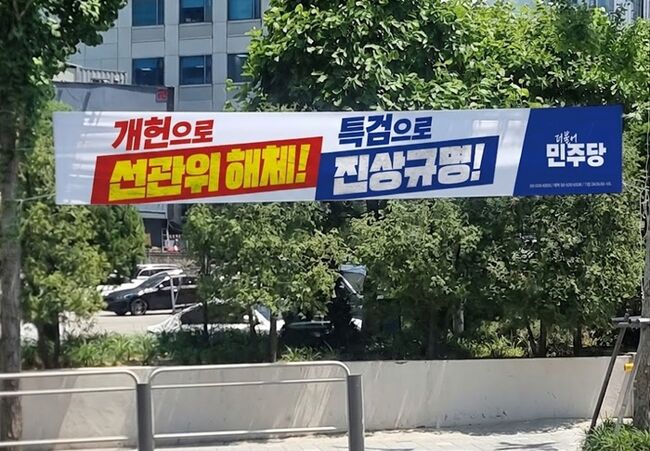 [Cho Yang-geon Column] The NEC: Facing a Fate of "Discarding the Dog After the Hunt"
Banner calling for the "dissolution of the NEC" posted by the Democratic Party. [AI-generated image]Banners calling for the "dissolution of the National Election Commission (NEC)" posted by the Democr
[Cho Yang-geon Column] The NEC: Facing a Fate of "Discarding the Dog After the Hunt"
Banner calling for the "dissolution of the NEC" posted by the Democratic Party. [AI-generated image]Banners calling for the "dissolution of the National Election Commission (NEC)" posted by the Democr
 [Photo] Evidence of Election Fraud Flooding U.S. Media… Trump Had 2.7 Million Votes Stolen
 [Video] U.S. Semiquincentennial Air Show... 'Art in the Sky' streaks across New York
 [Editorial Cartoon] A Draconian Law That Undermines Freedom of Expression

 List
List