 "Noble Class Training," a play adapted from the French playwright Molière's "Le Bourgeois Gentilhomme." Ortega argued that one must become a noble oneself to overcome the limitations of the masses. [Photo: The Beautiful Life Theater Company]
It was 1929, a time when the scars of World War I still lingered across Europe. Many people expected a better era to come, having experienced the horrors of war. However, the Spanish philosopher Ortega y Gasset presented a vastly different outlook.
In "The Rebellion of the Masses," he warned that Europe could be entering an era of greater chaos and violence. Observing the rapid growth of Fascism and Communism, he diagnosed that a catastrophe of a scale unlike any in history was approaching.
The Masses Who Absorb Civilization Like Air
In retrospect, his warning proved to be largely accurate. Germany was swept by Fascism, leading to World War II, and after the war, Communist regimes in various countries stripped countless individuals of their freedom and lives.
What's interesting is that the social pathologies Ortega pointed out are not unfamiliar even today.
He wasn't targeting a specific class. The poor, the wealthy, laborers, and professors can all become part of the masses. The masses are not a group defined by income or occupation, but rather a mindset.
The first characteristic of the masses that Ortega observed was their tendency to treat civilization as if it were nature.
We use electricity, access the internet, and buy goods at supermarkets. We travel by car and plane, and receive medical treatment at hospitals. However, we don't deeply consider the systems, rules, technologies, and accumulated efforts that sustain these things.
Civilization is not nature. It is the product of the responsibility and sacrifice of countless people, along with the creation of systems and rules. Yet, the masses take it for granted, like air. Consequently, they fail to recognize the danger even when the conditions that maintain civilization begin to crumble.
The Masses Become Spoiled Children Full of Discontent
The second characteristic is indifference to principles.
The masses consume the results but do not explore the principles behind them. This is not just a problem for the general public. Ortega viewed even the experts in modern society as increasingly becoming part of the masses.
Academia has become specialized, and experts demonstrate outstanding abilities within their narrow fields. However, they have lost interest in the overarching trends and fundamental principles that drive the world.
This is a phenomenon where people are rich in knowledge in one area but impoverished in life wisdom. He did not consider such individuals to be true intellectuals.
The third characteristic is discontent.
The masses take what they enjoy for granted. Therefore, they feel intense anger when it disappears.
The problem is that this anger is not accompanied by introspection. Instead of analyzing why the problem occurred, they demand that someone else solve it. Demands precede responsibility, and dissatisfaction precedes exploration. Ortega likened this behavior to that of spoiled children.
The fourth characteristic is self-satisfaction.
The masses do not acknowledge entities that hold higher standards than themselves. Their own thoughts and feelings become the primary criteria for judgment. True respect is impossible in this state because they do not recognize superior individuals or higher principles.
Ortega believed that the endless arguments of modern people also stem from this. It means that instead of respecting a common standard of universal reason, each person repeats their own claims.
Ultimately, society becomes increasingly noisy, and the ability to solve problems weakens. What Ortega feared most was what came after that.
Noble Self-Reliance: The Resurrection of the "Noble" is Needed
Humans who have lost higher standards and purposes eventually fall into emptiness. Humans are not merely beings who eat and live. We are beings who ask, "For what should we live?" However, when duties, responsibilities, and ideals disappear, life becomes empty.
These empty individuals begin to seek new meaning. Fascism and Communism, which emerged at the time, appeared in this process. Ortega did not see them as mere political movements. He viewed them as collective enthusiasms that the masses, having lost meaning, clung to like a new religion.
Today, the phenomenon repeats itself, albeit in different forms. On one hand, money is becoming the almost sole criterion for life. Human worth, success, and happiness are all converted into monetary terms.
On the other hand, political tribalism is intensifying. If a claim belongs to one's own camp, it is automatically deemed correct, and the opposing camp is seen as an entity to be eliminated. This too can be an easy source of meaning to fill the void.
So, what is the solution? Ortega spoke of the resurrection of the nobility. Of course, he was not referring to hereditary nobility. The noble he spoke of is someone who has earned authority through their own abilities and achievements. It is someone who can overcome their limitations and present new standards.
He did not deny democracy. In fact, he regarded liberal democracy as the most excellent political system. The problem is that democracy requires wise citizens to be sustained.
No matter how outstanding an individual emerges, if society lacks the discernment to recognize them, it cannot choose them. Ultimately, what is important is the judgment of the citizens themselves.
The fact that the voices of the majority are important and the belief that the majority is always right are entirely different matters. Healthy democracy is not a system where the majority automatically possesses authority. It is a system where the majority constantly introspects and strives to elevate its own level.
Understanding Finance Reveals the System
In this regard, the recent surge in financial education is noteworthy. More important than the interest in money itself is the fact that people are beginning to study the principles of money. As one studies money, one comes to understand finance, and by understanding finance, one begins to see systems and laws, eventually expanding one's interest to the workings of nations and the world.
This process can be an opportunity to broaden one's perspective beyond mere financial planning. The revival of intellectuals that Ortega spoke of may not be something grand.
It may simply be an increase in people who strive to understand the principles of the world, who constantly scrutinize their own thoughts, and who are willing to acknowledge higher standards. Perhaps this is the most realistic path beyond the age of the masses.
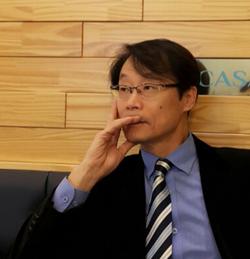
◆ Songsan
Poet and researcher of history and philosophy. Former director of the Syngman Rhee Institute. Currently serves as a research advisor for the Korean Modern and Contemporary History Research Association and as the head of the philosophy forum Lyceum. He has published four poetry collections, co-translated "Heroes of the Hookogo," and authored the humanities books "Joseon, a Myth," "Humanities on the Tatami," and "A Liberal's Reading of Gramsci." Songsan is a pen name.

 Iranian Foreign Ministry: "Continuing Message Exchanges with the U.S. and Activities of Mediating Countries"
Esmaeil Baghaei, Spokesperson for the Iranian Ministry of Foreign Affairs [Xinhua, Yonhap News file photo]Esmaeil Baghaei, spokesperson for the Iranian Ministry of Foreign Affairs, stated on the 26th
Iranian Foreign Ministry: "Continuing Message Exchanges with the U.S. and Activities of Mediating Countries"
Esmaeil Baghaei, Spokesperson for the Iranian Ministry of Foreign Affairs [Xinhua, Yonhap News file photo]Esmaeil Baghaei, spokesperson for the Iranian Ministry of Foreign Affairs, stated on the 26th
 President Yoon: "Do You Think You Are Safe from the Special Counsel?"... Final Statement Video Released
President Yoon Suk Yeol rebuking the special prosecutor on the 24th. [Court video / @birds_justice X account subtitle GIF] A video of President Yoon Suk Yeol's closing statement at his trial rega
President Yoon: "Do You Think You Are Safe from the Special Counsel?"... Final Statement Video Released
President Yoon Suk Yeol rebuking the special prosecutor on the 24th. [Court video / @birds_justice X account subtitle GIF] A video of President Yoon Suk Yeol's closing statement at his trial rega
 President Yoon, regarding the first-instance ruling on the Public Official Election Act: “An excessive political verdict that distorts the facts… We will appeal immediately.”
The first-instance sentencing hearing for President Yoon Suk Yeol regarding violations of the Public Official Election Act is being broadcast live at Seoul Station on the 27th. [Photo=Yonhap News]Pres
President Yoon, regarding the first-instance ruling on the Public Official Election Act: “An excessive political verdict that distorts the facts… We will appeal immediately.”
The first-instance sentencing hearing for President Yoon Suk Yeol regarding violations of the Public Official Election Act is being broadcast live at Seoul Station on the 27th. [Photo=Yonhap News]Pres
 WSJ: "SK Hynix ADR Premium Is a Sign of AI Trading Overheat"
Advertisement for SK Hynix ADR listing in New York's Times Square [Reuters=Yonhap News file photo]The Wall Street Journal (WSJ) has pointed out that the price of SK Hynix’s American Depositary Recei
WSJ: "SK Hynix ADR Premium Is a Sign of AI Trading Overheat"
Advertisement for SK Hynix ADR listing in New York's Times Square [Reuters=Yonhap News file photo]The Wall Street Journal (WSJ) has pointed out that the price of SK Hynix’s American Depositary Recei
 'Godfather of Japanese Mystery Novels' Keigo Higashino Passes Away After Battle with Cancer at 68
Famous Japanese mystery novelist Keigo Higashino [AFP=Yonhap News]It has been belatedly reported that Keigo Higashino, the "godfather of Japanese mystery novels" and author of bestsellers such as "The
'Godfather of Japanese Mystery Novels' Keigo Higashino Passes Away After Battle with Cancer at 68
Famous Japanese mystery novelist Keigo Higashino [AFP=Yonhap News]It has been belatedly reported that Keigo Higashino, the "godfather of Japanese mystery novels" and author of bestsellers such as "The
 [Park Pil-kyu Security Column] To the Ignorant Trying to Clothe a Beast in Sheep's Clothing
Rep. Kim Byung-joo of the Democratic Party of Korea [Photo=Yonhap News]“The Air Force Academy doesn't teach you how to fly a plane!” “The Army, Navy, and Air Force academies are exactly the
[Park Pil-kyu Security Column] To the Ignorant Trying to Clothe a Beast in Sheep's Clothing
Rep. Kim Byung-joo of the Democratic Party of Korea [Photo=Yonhap News]“The Air Force Academy doesn't teach you how to fly a plane!” “The Army, Navy, and Air Force academies are exactly the
 [Issue Diagnosis] Two Effects of the Election Petition Review
 [Photo] Evidence of Election Fraud Flooding U.S. Media… Trump Had 2.7 Million Votes Stolen
 [Video] U.S. Semiquincentennial Air Show... 'Art in the Sky' streaks across New York
 [Editorial Cartoon] A Draconian Law That Undermines Freedom of Expression

 List
List









