People who are health-conscious generally have strict standards regarding meals and food. They categorize foods into good and bad for the body and consume them selectively. Such individuals are more likely to live a healthy life, as avoiding processed foods, alcohol, and meat reduces the burden on digestion, thus distancing them from metabolic diseases. The problem is that they may also lose their right to happiness.
Among the patients who visit our Korean medicine clinic, some complain of suffering due to their parents' strict dietary management. Processed meats like ham and sausage, as well as red meat, are never served. They were once severely reprimanded for secretly eating cake. This individual mentioned that eating meals with their parents is burdensome.
For those with good digestion, hamburgers are not a major problem.
Just as a child who doesn't want to study won't, no matter how much their parents scold or urge them, it's impossible to force a child's palate to conform to a parent's standards. In such cases, it's best for parents to compromise to some extent. This doesn't mean letting children eat whatever they want.
To get straight to the point, there are no bad foods in the world. There are only foods that are difficult to digest. Ultra-processed foods like ramen, ham, sausage, and snacks, which we classify as "bad foods," pose a problem due to additives such as colorings and preservatives. These food additives are difficult for the human body to digest, so they often accumulate in the body and cause problems.
This means that for people with very good digestion, these foods are not a major issue. Young people with good digestion can eat a certain amount of processed foods without significant harm. Of course, as one ages and metabolic function declines, processed foods or red meat can become problematic. Ultimately, people will stop eating so-called "bad foods" only when they feel the negative effects themselves.
From a parent's perspective, they believe that if their children control their diet in advance before getting sick, they won't suffer from illnesses like they do. However, living life with such a precautionary attitude is not easy.
It's better to encourage eating less than to forbid it.
Ultimately, compromise with your child is the only way. Instead of declaring certain foods as "bad" and forbidding them, encourage them to eat smaller portions. The human body can digest small amounts of toxins to some extent.
It's better to find solutions like eating only half a pack of ramen with added eggs or vegetables, or sharing a Choco Pie by cutting it in half, rather than eating a whole pack.
The same applies to overeating, excessive eating, and late-night snacking, which are known to be bad for digestion. Just as eating healthy foods for one or two days doesn't suddenly improve your health, having an occasional large meal or having a drink with friends doesn't suddenly worsen it.
Even though I maintain a diet of 1.5 meals a day at home, I eat three meals a day when I travel. This is because food is a significant part of the travel experience. I don't even carefully consider whether the local food is healthy or not. This is because not all local cuisines are healthy.
However, upon returning home, I adjust my weight through methods like a "one-day fast" to compensate. After that, I return to my 1.5-meal routine and also revert to a diet primarily consisting of vegetables, fruits, mushrooms, tofu, and seaweed. The important thing is consistency. Continuously eating "bad" foods makes them truly bad, and continuously eating good foods makes them truly good.
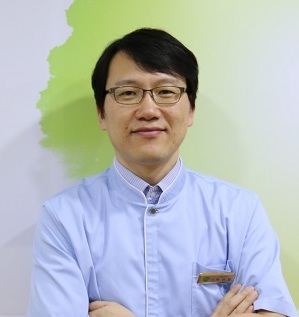
◆ Director Park Chan-young
Director of Eoseongcho Korean Medicine Clinic in Sadang-dong, Seoul. Holds a Ph.D. in Korean Medicine from Dongguk University. He caused a detoxification sensation in Korea by appearing on TV health programs such as MBN's "The Miracle Doctor." His books include 'Healed Atopy and Acne with Eoseongcho,' 'Seasonings are Medicine,' and 'The Miracle of Detoxification.'

 [Statement by the Seobeokka KMA Patriots Association] ㉛ Recount the ballots openly, as the previous recount covered up election fraud
Recount of the Tongyeong mayoral election [Photo=Yonhap News]South Korea's liberal democracy is dying. The National Election Commission (NEC), which has degraded into a criminal organization through t
[Statement by the Seobeokka KMA Patriots Association] ㉛ Recount the ballots openly, as the previous recount covered up election fraud
Recount of the Tongyeong mayoral election [Photo=Yonhap News]South Korea's liberal democracy is dying. The National Election Commission (NEC), which has degraded into a criminal organization through t
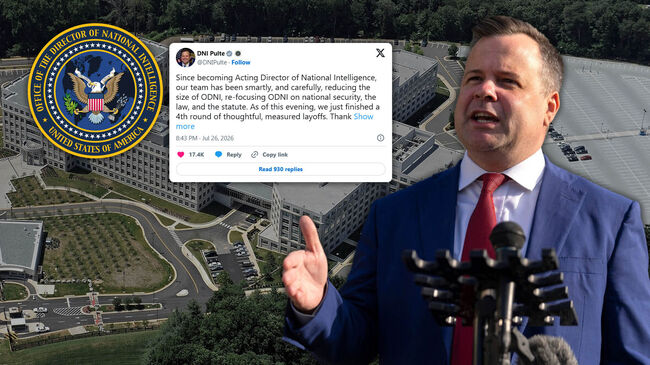 Bill Pulte to Restructure ‘Deep State’… Announces 4th Round of Layoffs at the Office of the Director of National Intelligence
Acting Director of National Intelligence Bill Pulte announced Sunday that he has carried out a fourth "deliberate and measured" reduction in personnel since taking office on June 19, as part of the Tr
Bill Pulte to Restructure ‘Deep State’… Announces 4th Round of Layoffs at the Office of the Director of National Intelligence
Acting Director of National Intelligence Bill Pulte announced Sunday that he has carried out a fourth "deliberate and measured" reduction in personnel since taking office on June 19, as part of the Tr
 First U.S. Ambassador of Trump's Second Term to Arrive This Week… Will It Provide Momentum to Resolve Pending Issues?
U.S. Ambassador to South Korea Michelle Steel speaks at the opening ceremony of the Korea-U.S. Shipbuilding Cooperation Center held at the Mayflower Hotel in Washington, D.C., on the 23rd (local time)
First U.S. Ambassador of Trump's Second Term to Arrive This Week… Will It Provide Momentum to Resolve Pending Issues?
U.S. Ambassador to South Korea Michelle Steel speaks at the opening ceremony of the Korea-U.S. Shipbuilding Cooperation Center held at the Mayflower Hotel in Washington, D.C., on the 23rd (local time)
 President Yoon, regarding the first-instance ruling on the Public Official Election Act: “An excessive political verdict that distorts the facts… We will appeal immediately.”
The first-instance sentencing hearing for President Yoon Suk Yeol regarding violations of the Public Official Election Act is being broadcast live at Seoul Station on the 27th. [Photo=Yonhap News]Pres
President Yoon, regarding the first-instance ruling on the Public Official Election Act: “An excessive political verdict that distorts the facts… We will appeal immediately.”
The first-instance sentencing hearing for President Yoon Suk Yeol regarding violations of the Public Official Election Act is being broadcast live at Seoul Station on the 27th. [Photo=Yonhap News]Pres
 91% of Net Influx of MZ Generation Goes to Seoul Metropolitan Area… Population Migration Also Shows 'K-shaped Polarization' by Industry
[Provided by Leaders Index]Over the past four years, the MZ generation population has become increasingly concentrated in the Seoul metropolitan area and the Chungcheong region. While cities cen
91% of Net Influx of MZ Generation Goes to Seoul Metropolitan Area… Population Migration Also Shows 'K-shaped Polarization' by Industry
[Provided by Leaders Index]Over the past four years, the MZ generation population has become increasingly concentrated in the Seoul metropolitan area and the Chungcheong region. While cities cen
 'Godfather of Japanese Mystery Novels' Keigo Higashino Passes Away After Battle with Cancer at 68
Famous Japanese mystery novelist Keigo Higashino [AFP=Yonhap News]It has been belatedly reported that Keigo Higashino, the "godfather of Japanese mystery novels" and author of bestsellers such as "The
'Godfather of Japanese Mystery Novels' Keigo Higashino Passes Away After Battle with Cancer at 68
Famous Japanese mystery novelist Keigo Higashino [AFP=Yonhap News]It has been belatedly reported that Keigo Higashino, the "godfather of Japanese mystery novels" and author of bestsellers such as "The
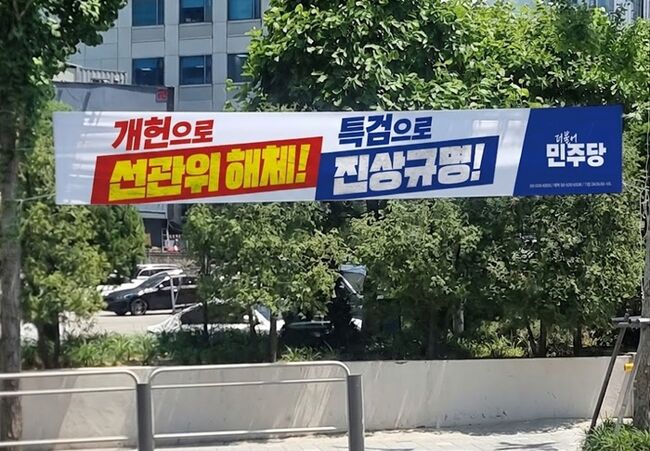 [Cho Yang-geon Column] The NEC: Facing a Fate of "Discarding the Dog After the Hunt"
Banner calling for the "dissolution of the NEC" posted by the Democratic Party. [AI-generated image]Banners calling for the "dissolution of the National Election Commission (NEC)" posted by the Democr
[Cho Yang-geon Column] The NEC: Facing a Fate of "Discarding the Dog After the Hunt"
Banner calling for the "dissolution of the NEC" posted by the Democratic Party. [AI-generated image]Banners calling for the "dissolution of the National Election Commission (NEC)" posted by the Democr
 [Photo] Evidence of Election Fraud Flooding U.S. Media… Trump Had 2.7 Million Votes Stolen
 [Video] U.S. Semiquincentennial Air Show... 'Art in the Sky' streaks across New York
 [Editorial Cartoon] A Draconian Law That Undermines Freedom of Expression

 List
List