 A meticulous copy of 'Honil Gangni Yeokdae Gukdo Jido' (Map of All Lands and Historical Regions). This recent replica of the Honil Gangni Yeokdae Gukdo Jido, housed in the Ryukoku University Library in Japan, is currently held at the Kyujanggak Institute for Korean Studies at Seoul National University. It is a world map that depicts not only East Asia and Western Asia, but also Europe and Africa. By placing China at the center of the world and exaggerating the size of Joseon, it reveals the consciousness of "So Junghwa" (Little China). [Source=National Institute of Korean History]
When discussing "So Junghwa" (Little China), many people immediately think of Joseon's diplomatic consciousness in the late period or its loyalty to the Ming dynasty.
Even after the Qing dynasty came to rule the Chinese continent following the Manchu invasions, Joseon Confucian scholars did not recognize the Qing as a legitimate dynasty. They believed that they themselves were the true inheritors of Chinese civilization. However, if "So Junghwa" is understood merely as nostalgia for the Ming dynasty or anti-Qing sentiment, its essence will be missed.
"So Junghwa" was not a loyalty to a specific country, but a way of interpreting the world. The core of this mindset was an attitude that prioritized moral superiority over actual power, a value system that valued legitimacy over capability, and a psychology that prioritized the conviction of being right over objective achievements.
Although the Joseon Dynasty has ended, the Joseon way of thinking has tenaciously left its mark throughout Korean society. Vestiges of Joseon's "So Junghwa" worldview still remain in the collective psychology that drives Korean society today.
"We Must Always Be Special"
After the Manchu invasions, Joseon suffered a complete defeat. The king surrendered to Hong Taiji of the Qing at Samjeondo, and Joseon became a tributary state of the Qing. Frankly speaking, Joseon was a weak nation, incomparable to the Qing dynasty in terms of military strength, economic power, or international influence.
However, even while acknowledging their defeat, Joseon intellectuals did not recognize the Qing as a civilized nation. This was because they believed the Qing were barbarians, and Joseon was the successor of civilization.
The logic was that while the Qing held power, Joseon possessed legitimacy and morality. A system of self-consolation was formed: "We were defeated in reality, but not in spirit."
It is not difficult to find similar psychology in contemporary Korean society. The outcomes of international sporting events are sometimes interpreted as proof of national superiority beyond mere game results, or the global success of K-pop and K-dramas is taken as an event that proves the excellence of Koreans, transcending achievements in the cultural industry.
Of course, national pride itself is a natural phenomenon. The problem arises when it weakens the ability to view objective reality. Even if economic growth rates decline and competitiveness in science and technology stagnates, if the self-conviction that "we are inherently an excellent people" begins to take precedence, sober self-diagnosis becomes difficult.
"So Junghwa" in Joseon was precisely such a psychological compensation system. It was an attempt to maintain self-esteem by emphasizing spiritual superiority rather than acknowledging inferiority in reality.
A Political Culture Where Pretexts Overwhelm Reality
One of the symbols of late Joseon politics was the "Northern Expedition" theory. This was a call to conquer the Qing and avenge the Ming dynasty. However, at that time, Joseon lacked the capacity to carry out such a war. It lacked national strength, military power, and the international environment did not support it at all.
In reality, the "Northern Expedition" was closer to a slogan with little feasibility. Despite this, the "Northern Expedition" theory functioned as an important pretext in Joseon politics for a long time. This was because the question of whether it was morally right was more important than the question of whether it was practically feasible.
This way of thinking is not unfamiliar in contemporary Korean politics. Sometimes, the declarative meaning of a policy is emphasized more than its effects or feasibility. In many cases, the fact that "we have taken a righteous stance" becomes a greater evaluation criterion than how much a policy can actually change society.
We often see instances in foreign policy where moral declarations precede calculations of realistic national interest. Of course, pretexts are important in politics. The problem arises when there are only pretexts and no reality. Pretexts that do not consider reality risk becoming mere slogans rather than policies, and risk devolving into moral self-satisfaction rather than state governance. This is why the "Northern Expedition" theory of late Joseon remained a symbol rather than leading to actual action.
The Habit of Prioritizing Legitimacy Over Competence
For Joseon Confucian scholars, the Qing was a powerful empire that ruled the real world, but it was not a legitimate state. Conversely, the already fallen Ming dynasty, though not existing in reality, was still a righteous imperial house in spirit. Joseon prioritized legitimacy over real power. It was more important "who is the rightful successor" than "who is stronger."
This way of thinking appears in various forms in contemporary Korean society. We often pay more attention to who made a claim than to the claim itself. Evaluations are frequently made based on origin, career, or affiliation rather than the validity of the logic.
In political debates, the camp that proposed an argument often becomes the criterion for judgment rather than the content of the policy. In academia and the media, the identity of the speaker is often examined before the statement itself. Of course, this tendency exists in all societies.
However, in Korean society, the tendency to strongly emphasize legitimacy and moral standing is particularly pronounced. This is not unrelated to the conceptual tradition that has continued since the Joseon era.
Viewing International Politics as a Moral Trial
The "Hwa-i Theory" (theory of civilization and barbarians) of late Joseon distinguished the world into civilized and barbarian. Huaxia (China) was good, and barbarians were evil. There was almost no gray area in between. The world was interpreted not as a conflict of complex interests, but as a matter of moral superiority.
Even today in Korean society, similar traces can be found in the way international issues are viewed. International politics is fundamentally a competition of national interests. The United States pursues its national interest, China pursues its national interest, and so do Japan and Russia.
However, in Korea, there is a tendency to interpret international issues as a confrontation between good and evil. The actions of other countries are often viewed as objects of moral evaluation rather than analyzed as strategic calculations. This pattern is repeated in debates surrounding Korea-Japan relations and in debates concerning US-China competition.
The world of real politics is intertwined with complex interests, but the "So Junghwa" worldview tends to simplify problems through moral judgment rather than enduring complexity.
A Culture That Prefers Certainty Over Criticism
Late Joseon intellectuals believed they were at the center of civilization. While the world was rapidly changing in the 18th and 19th centuries, Joseon considered itself the guardian of civilization. Even as Western science and technology advanced and the international order underwent rapid changes, many Joseon intellectuals were convinced that they already possessed the most superior civilization. They saw no reason to learn.
Contemporary Korean society also sometimes exhibits similar behavior in its response to external criticism. When evaluations from international organizations or criticisms from foreign media arise, there are many instances where people react defensively before reviewing the content. There is also a tendency to perceive criticism as an aggressive attack rather than as material for analysis.
Of course, not all criticism is valid. However, a confident society can review criticism. Conversely, a society that reacts defensively to all criticism relies on self-certainty. This is why, as "So Junghwa" strengthened in late Joseon, the perception of reality weakened.
Joseon is Gone, But Its Worldview Remains
"So Junghwa" is no longer a ideology that worships the Ming dynasty. Few Koreans today talk about the legitimacy of the Ming dynasty. However, the essence of "So Junghwa" was not loyalty to a specific country, but a way of thinking that prioritized morality over reality, legitimacy over achievement, and certainty over analysis. It is in precisely this aspect that "So Junghwa" is not a dead ideology that exists only in history books.
The Republic of Korea is a democratic republic. It is a global industrial and high-tech nation. However, when facing certain issues, there are still instances of seeking to confirm moral superiority first, prioritizing pretexts over practical achievements, and trusting internal certainty more than external criticism. This is not because the institutions of the Joseon Dynasty remain, but because the psychological legacy left by Joseon has not yet completely disappeared.
Joseon is over. The king is gone, and the yangban are gone. However, ways of thinking survive longer than institutions. The true legacy of "So Junghwa" was not loyalty to the Ming dynasty, but a habit of interpreting reality. And that habit is still alive today, taking various forms throughout Korean society.
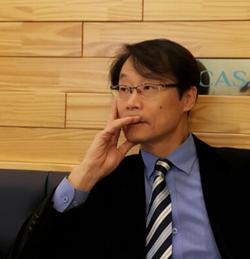
◆ Songshan (송산)
Poet and researcher of history and philosophy. Former director of the Syngman Rhee Academy. Currently serves as an advisor to the Korean Modern and Contemporary History Research Association and as the representative of the philosophy forum Lyceum. He has published four poetry collections, co-translated "Heroes of Honggeoji," and authored the humanities books "Joseon That Became a Myth," "Humanities on Tatami," and "A Liberal's Reading of Gramsci." Songshan is a pen name.

 Iranian Foreign Ministry: "Continuing Message Exchanges with the U.S. and Activities of Mediating Countries"
Esmaeil Baghaei, Spokesperson for the Iranian Ministry of Foreign Affairs [Xinhua, Yonhap News file photo]Esmaeil Baghaei, spokesperson for the Iranian Ministry of Foreign Affairs, stated on the 26th
Iranian Foreign Ministry: "Continuing Message Exchanges with the U.S. and Activities of Mediating Countries"
Esmaeil Baghaei, Spokesperson for the Iranian Ministry of Foreign Affairs [Xinhua, Yonhap News file photo]Esmaeil Baghaei, spokesperson for the Iranian Ministry of Foreign Affairs, stated on the 26th
 President Yoon: "Do You Think You Are Safe from the Special Counsel?"... Final Statement Video Released
President Yoon Suk Yeol rebuking the special prosecutor on the 24th. [Court video / @birds_justice X account subtitle GIF] A video of President Yoon Suk Yeol's closing statement at his trial rega
President Yoon: "Do You Think You Are Safe from the Special Counsel?"... Final Statement Video Released
President Yoon Suk Yeol rebuking the special prosecutor on the 24th. [Court video / @birds_justice X account subtitle GIF] A video of President Yoon Suk Yeol's closing statement at his trial rega
 President Yoon, regarding the first-instance ruling on the Public Official Election Act: “An excessive political verdict that distorts the facts… We will appeal immediately.”
The first-instance sentencing hearing for President Yoon Suk Yeol regarding violations of the Public Official Election Act is being broadcast live at Seoul Station on the 27th. [Photo=Yonhap News]Pres
President Yoon, regarding the first-instance ruling on the Public Official Election Act: “An excessive political verdict that distorts the facts… We will appeal immediately.”
The first-instance sentencing hearing for President Yoon Suk Yeol regarding violations of the Public Official Election Act is being broadcast live at Seoul Station on the 27th. [Photo=Yonhap News]Pres
 WSJ: "SK Hynix ADR Premium Is a Sign of AI Trading Overheat"
Advertisement for SK Hynix ADR listing in New York's Times Square [Reuters=Yonhap News file photo]The Wall Street Journal (WSJ) has pointed out that the price of SK Hynix’s American Depositary Recei
WSJ: "SK Hynix ADR Premium Is a Sign of AI Trading Overheat"
Advertisement for SK Hynix ADR listing in New York's Times Square [Reuters=Yonhap News file photo]The Wall Street Journal (WSJ) has pointed out that the price of SK Hynix’s American Depositary Recei
 'Godfather of Japanese Mystery Novels' Keigo Higashino Passes Away After Battle with Cancer at 68
Famous Japanese mystery novelist Keigo Higashino [AFP=Yonhap News]It has been belatedly reported that Keigo Higashino, the "godfather of Japanese mystery novels" and author of bestsellers such as "The
'Godfather of Japanese Mystery Novels' Keigo Higashino Passes Away After Battle with Cancer at 68
Famous Japanese mystery novelist Keigo Higashino [AFP=Yonhap News]It has been belatedly reported that Keigo Higashino, the "godfather of Japanese mystery novels" and author of bestsellers such as "The
 [Park Pil-kyu Security Column] To the Ignorant Trying to Clothe a Beast in Sheep's Clothing
Rep. Kim Byung-joo of the Democratic Party of Korea [Photo=Yonhap News]“The Air Force Academy doesn't teach you how to fly a plane!” “The Army, Navy, and Air Force academies are exactly the
[Park Pil-kyu Security Column] To the Ignorant Trying to Clothe a Beast in Sheep's Clothing
Rep. Kim Byung-joo of the Democratic Party of Korea [Photo=Yonhap News]“The Air Force Academy doesn't teach you how to fly a plane!” “The Army, Navy, and Air Force academies are exactly the
 [Issue Diagnosis] Two Effects of the Election Petition Review
 [Photo] Evidence of Election Fraud Flooding U.S. Media… Trump Had 2.7 Million Votes Stolen
 [Video] U.S. Semiquincentennial Air Show... 'Art in the Sky' streaks across New York
 [Editorial Cartoon] A Draconian Law That Undermines Freedom of Expression

 List
List









