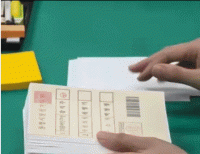
The June 3rd local elections may be over, but the public's questions regarding the election process are not.
In some polling stations, including the second polling station in Jamsil 7-dong, Songpa-gu, Seoul, a shortage of ballots led to delays or halts in voting. Voters who arrived at the polling stations were unable to cast their ballots on time due to the nation's failure in election management.
This is not a mere administrative error. It is an incident where citizens' right to vote was violated on the ground.
Elections are not justified by their results alone. The legitimacy of democratic elections rests on the procedural trust that voters could cast their ballots without obstruction at the designated time and place.
There is a question that should be asked before asking who was elected.
Why was there a shortage of ballots? If there were sufficient reserve ballots, why were they not distributed to the polling stations? Did any voters give up voting during the delays? Were all procedures for sealing, storing, transporting, and counting the ballot boxes fulfilled in the presence of observers?
To say "accept the results because they are out" without answering these questions is not democracy. It is a dangerous attitude that views procedures as subordinate to outcomes.
It is also wrong to immediately frame any criticism of election management failures as defiance or other claims. The way to reduce distrust in elections is not to suppress questions, but to resolve them through public verification.
Of course, whether to hold a re-election or nullify the election are matters to be decided based on law and evidence.
However, the responsibility of the political community precedes this. Politicians must be guardians of the electoral system before they are beneficiaries of election results.
If a politician ignores procedural flaws because the outcome was favorable to them, they have prioritized their own victory and partisan interests over the rights of voters.
The attitude shown by politicians in the face of this situation is particularly pathetic. Some were engrossed in calculating election results, while others were caught up in power struggles and debates about responsibility.
However, what the public is asking now is not which party won how many seats. If the nation conducted an election without even properly distributing a single ballot, who will take responsibility for that?
The right to vote is a constitutional right.
If citizens who went to the polling stations had to wait, protest, and feel anxious due to a shortage of ballots, the state has already failed in its basic duty.
If politicians remain silent in such a situation, it is not mere indifference. Silence is an evasion of responsibility, and evasion of responsibility is complicity in systemic failure.
The National Election Commission must immediately disclose all data.
The quantity of ballots produced, the criteria for distributing them by polling district, the location of reserve ballots, the requests for additional distribution and the actual time of delivery, the duration of voting delays and interruptions, the reporting structure for on-site supervisors, and records of ballot box sealing, storage, transportation, and counting must be presented to the public.
If the deployment of police force was unavoidable, the grounds and procedures for that decision must also be disclosed. The statement "there were no problems" is not an explanation. It must be proven with records.
The National Assembly must also act.
Whether through a parliamentary inquiry, a hearing, or, if necessary, discussions about a special prosecutor, mechanisms for investigating the procedural truth must be activated. The failure of election management is not a matter to be bartered over by the interests of the ruling and opposition parties.
It is not an issue for the winning side to cover up and only the losing side to lament. The fact that the citizens' right to vote was violated on the ground is itself a national problem.
Politicians gain power through the votes of citizens. Therefore, politicians should be the first to step forward when the process by which a citizen's vote is exercised collapses.
Politicians who remain silent in the face of the violation of the right to vote are not representatives of the people, but merely consumers of election results.
Whether they are legal accomplices will be determined by investigation and the courts.
However, the political responsibility is already clear.
Politicians who remain silent in the face of the violation of the right to vote are bystanders to democracy, and bystanders are sometimes more dangerous than accomplices.

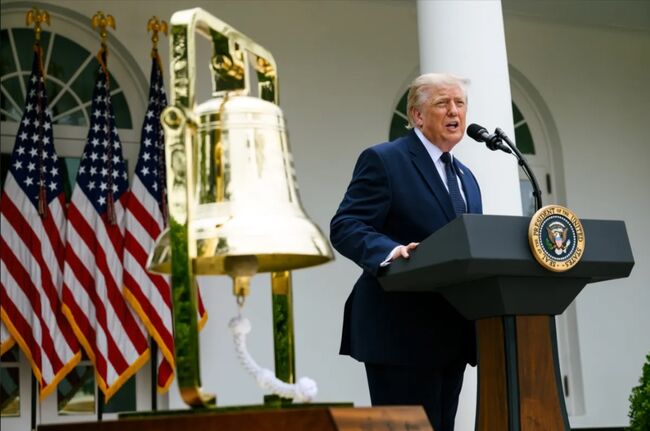 Trump pressures for rate cut again ahead of FOMC... "Should be the lowest in the world"
U.S. President Donald Trump. [Photo = The White House] U.S. President Donald Trump once again pressured the Federal Reserve, the U.S. central bank, to lower interest rates on the 27th (local time
Trump pressures for rate cut again ahead of FOMC... "Should be the lowest in the world"
U.S. President Donald Trump. [Photo = The White House] U.S. President Donald Trump once again pressured the Federal Reserve, the U.S. central bank, to lower interest rates on the 27th (local time
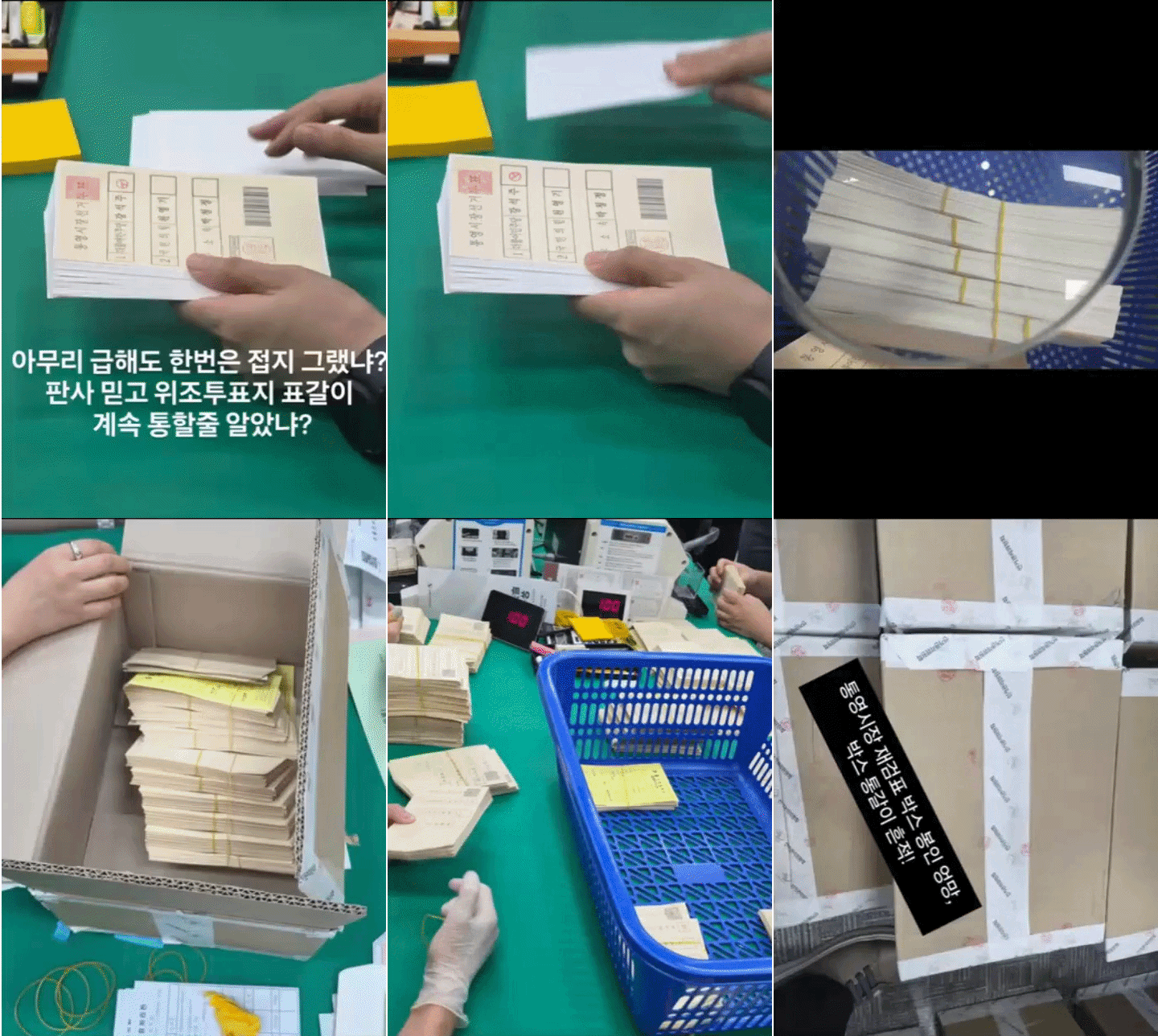 “Ignoring crisp ballots and damaged seals”… Tongyeong mayoral recount concludes with ‘no change in outcome,’ leaving suspicions and public outrage behind
Suspected counterfeit ballots discovered in Tongyeong [GIF from social media of Representative Hwang Kyo-ahn / Attorney Park Joo-hyun]During a recount of the Tongyeong mayoral election in South Gyeong
“Ignoring crisp ballots and damaged seals”… Tongyeong mayoral recount concludes with ‘no change in outcome,’ leaving suspicions and public outrage behind
Suspected counterfeit ballots discovered in Tongyeong [GIF from social media of Representative Hwang Kyo-ahn / Attorney Park Joo-hyun]During a recount of the Tongyeong mayoral election in South Gyeong
 President Yoon, regarding the first-instance ruling on the Public Official Election Act: “An excessive political verdict that distorts the facts… We will appeal immediately.”
The first-instance sentencing hearing for President Yoon Suk Yeol regarding violations of the Public Official Election Act is being broadcast live at Seoul Station on the 27th. [Photo=Yonhap News]Pres
President Yoon, regarding the first-instance ruling on the Public Official Election Act: “An excessive political verdict that distorts the facts… We will appeal immediately.”
The first-instance sentencing hearing for President Yoon Suk Yeol regarding violations of the Public Official Election Act is being broadcast live at Seoul Station on the 27th. [Photo=Yonhap News]Pres
 WSJ: "SK Hynix ADR Premium Is a Sign of AI Trading Overheat"
Advertisement for SK Hynix ADR listing in New York's Times Square [Reuters=Yonhap News file photo]The Wall Street Journal (WSJ) has pointed out that the price of SK Hynix’s American Depositary Recei
WSJ: "SK Hynix ADR Premium Is a Sign of AI Trading Overheat"
Advertisement for SK Hynix ADR listing in New York's Times Square [Reuters=Yonhap News file photo]The Wall Street Journal (WSJ) has pointed out that the price of SK Hynix’s American Depositary Recei
 'Godfather of Japanese Mystery Novels' Keigo Higashino Passes Away After Battle with Cancer at 68
Famous Japanese mystery novelist Keigo Higashino [AFP=Yonhap News]It has been belatedly reported that Keigo Higashino, the "godfather of Japanese mystery novels" and author of bestsellers such as "The
'Godfather of Japanese Mystery Novels' Keigo Higashino Passes Away After Battle with Cancer at 68
Famous Japanese mystery novelist Keigo Higashino [AFP=Yonhap News]It has been belatedly reported that Keigo Higashino, the "godfather of Japanese mystery novels" and author of bestsellers such as "The
 [Park Pil-kyu Security Column] To the Ignorant Trying to Clothe a Beast in Sheep's Clothing
Rep. Kim Byung-joo of the Democratic Party of Korea [Photo=Yonhap News]“The Air Force Academy doesn't teach you how to fly a plane!” “The Army, Navy, and Air Force academies are exactly the
[Park Pil-kyu Security Column] To the Ignorant Trying to Clothe a Beast in Sheep's Clothing
Rep. Kim Byung-joo of the Democratic Party of Korea [Photo=Yonhap News]“The Air Force Academy doesn't teach you how to fly a plane!” “The Army, Navy, and Air Force academies are exactly the
 [Issue Diagnosis] Two Effects of the Election Petition Review
 [Photo] Evidence of Election Fraud Flooding U.S. Media… Trump Had 2.7 Million Votes Stolen
 [Video] U.S. Semiquincentennial Air Show... 'Art in the Sky' streaks across New York
 [Editorial Cartoon] A Draconian Law That Undermines Freedom of Expression

 List
List