 Books exploring left-wing cultural power brokers.
Since its founding, the modern politics of the Republic of Korea have been long dominated by conservative forces. The nation's framework was shaped through the establishment of the Syngman Rhee government, the industrialization under the Park Chung-hee government, and the authoritarian regime during the Chun Doo-hwan era. Of course, there were also periods of progressive governments, such as the Kim Dae-jung and Roh Moo-hyun administrations, during that process.
However, it can be assessed that the conservative camp generally held the reins of the nation's fundamental direction and overall social leadership. Despite numerous issues and controversies, today's Republic of Korea was also built upon such historical accumulation.
Political Victory is Possible on the Foundation of Accumulated Cultural Influence
Today, the Republic of Korea is entering a new phase. With the transition through the Moon Jae-in administration to the launch of the Lee Jae-myung government, the political flow is showing a clear shift. What is important is not the mere change of government. What requires more attention is that the shift in political power is merging with changes across society.
Many conservative figures focus solely on election results. However, society does not move solely by elections. Education, publishing, media, culture and arts, civic groups, and academia shape people's thoughts and values over a long period. Politics often reflects the outcomes of these processes.
In this regard, the progressive camp has accumulated significant strengths. Even during periods when they were not in power, progressive forces consistently engaged in activities within universities, the publishing industry, civil society, and cultural spheres. Beyond specific policies or parties, they dedicated substantial effort to shaping historical perspectives, social views, and perceptions of the nation.
Political victory is not something that happens overnight; it is, to a certain extent, made possible on the foundation of cultural influence accumulated over a long time.
This is precisely why we must pay attention to the next 20 years. If the current trend continues and political power is stably combined with cultural influence, the Republic of Korea could face a period where progressive forces exercise long-term social leadership for the first time in its modern history. This is not a simple change of government. It could be a shift in values and discourse that determines the direction of society.
What is important is not whether progressives are in power. A more crucial question is this: "What kind of Republic of Korea will 20 years of progress create?"
Will the nation become more free? Or will a new form of uniformity emerge? Will the economy grow? Will it move towards a welfare state? How will the perspective on North Korea change? Will the identity of the Republic of Korea be further solidified, or will it be redefined?
No one knows the answers now. History is always judged by its outcomes. The Syngman Rhee era, the Park Chung-hee era, and the Chun Doo-hwan era are ultimately evaluated by the results they left behind. Similarly, the era after Moon Jae-in will be judged by where it led the Republic of Korea. And that evaluation will likely only be possible 20 years from now. We now stand at the starting line of that experiment.
From Now On, It's Not a Power Struggle, But a Cultural Trench Warfare
So, what should the conservative camp do going forward?
Many people believe winning elections is the entirety of politics. However, the forces that have driven South Korean society for decades were not just parliamentary seats and presidential authority. Influence accumulated in schools, publishing, broadcasting, film, civic groups, academia, and popular culture has shifted the direction of society.
The progressive camp understood this fact long ago. Even when they were not in power, they consistently engaged in activities within the cultural sphere. They strove to disseminate their concerns and worldviews in classrooms, lecture halls, books, performances, films, and broadcasts. Political victory was merely one of the outcomes of these efforts.
If an era of long-term progressive rule opens up, the conservative camp must also move away from politics that only looks at elections. Elections are held once every few years, but culture changes people's thoughts every day. Governments can change, but what is learned in school and the values formed in youth remain for a long time.
Therefore, the task ahead is not a power struggle, but cultural trench warfare. We must write more books, accumulate more research, create more content, and persuade more citizens. We must not silence the opposition, but rather embed our ideas within society. Production is more important than criticism, and accumulation is more important than anger.
Just as the progressive forces operated with a long-term perspective in the cultural sphere even during past conservative governments, conservatives must also develop long-term strategies for future generations. The competition ahead is not simply an electoral contest. It is highly likely to become a protracted cultural competition surrounding the historical narrative and national identity of the Republic of Korea, the meaning of liberal democracy, and the direction of the community.
Ultimately, the future is not decided solely in elections. It is first decided in people's minds, in classrooms, on bookshelves, and within culture. If we speak of 20 years of progress, conservatives must also prepare for a 20-year cultural trench war. That will be the most important competition surrounding the Republic of Korea going forward.
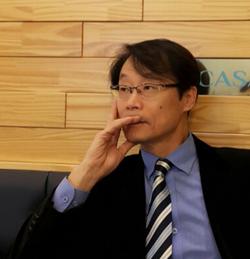
◆ Songsan (송산)
Poet and researcher of history and philosophy. Former director of the Syngman Rhee Institute. Currently serves as the senior advisor for research at the Korean Modern and Contemporary History Research Society and as the representative of the philosophy forum Lyceum. He has published four collections of poetry, co-translated "Heroes of Hukogji," and authored the humanities books "Joseon: The Nation That Became Myth," "Humanities on the Tatami," and "A Liberal's Reading of Gramsci." Songsan is a pen name.

 Iranian Foreign Ministry: "Continuing Message Exchanges with the U.S. and Activities of Mediating Countries"
Esmaeil Baghaei, Spokesperson for the Iranian Ministry of Foreign Affairs [Xinhua, Yonhap News file photo]Esmaeil Baghaei, spokesperson for the Iranian Ministry of Foreign Affairs, stated on the 26th
Iranian Foreign Ministry: "Continuing Message Exchanges with the U.S. and Activities of Mediating Countries"
Esmaeil Baghaei, Spokesperson for the Iranian Ministry of Foreign Affairs [Xinhua, Yonhap News file photo]Esmaeil Baghaei, spokesperson for the Iranian Ministry of Foreign Affairs, stated on the 26th
 President Yoon: "Do You Think You Are Safe from the Special Counsel?"... Final Statement Video Released
President Yoon Suk Yeol rebuking the special prosecutor on the 24th. [Court video / @birds_justice X account subtitle GIF] A video of President Yoon Suk Yeol's closing statement at his trial rega
President Yoon: "Do You Think You Are Safe from the Special Counsel?"... Final Statement Video Released
President Yoon Suk Yeol rebuking the special prosecutor on the 24th. [Court video / @birds_justice X account subtitle GIF] A video of President Yoon Suk Yeol's closing statement at his trial rega
 President Yoon, regarding the first-instance ruling on the Public Official Election Act: “An excessive political verdict that distorts the facts… We will appeal immediately.”
The first-instance sentencing hearing for President Yoon Suk Yeol regarding violations of the Public Official Election Act is being broadcast live at Seoul Station on the 27th. [Photo=Yonhap News]Pres
President Yoon, regarding the first-instance ruling on the Public Official Election Act: “An excessive political verdict that distorts the facts… We will appeal immediately.”
The first-instance sentencing hearing for President Yoon Suk Yeol regarding violations of the Public Official Election Act is being broadcast live at Seoul Station on the 27th. [Photo=Yonhap News]Pres
 WSJ: "SK Hynix ADR Premium Is a Sign of AI Trading Overheat"
Advertisement for SK Hynix ADR listing in New York's Times Square [Reuters=Yonhap News file photo]The Wall Street Journal (WSJ) has pointed out that the price of SK Hynix’s American Depositary Recei
WSJ: "SK Hynix ADR Premium Is a Sign of AI Trading Overheat"
Advertisement for SK Hynix ADR listing in New York's Times Square [Reuters=Yonhap News file photo]The Wall Street Journal (WSJ) has pointed out that the price of SK Hynix’s American Depositary Recei
 'Godfather of Japanese Mystery Novels' Keigo Higashino Passes Away After Battle with Cancer at 68
Famous Japanese mystery novelist Keigo Higashino [AFP=Yonhap News]It has been belatedly reported that Keigo Higashino, the "godfather of Japanese mystery novels" and author of bestsellers such as "The
'Godfather of Japanese Mystery Novels' Keigo Higashino Passes Away After Battle with Cancer at 68
Famous Japanese mystery novelist Keigo Higashino [AFP=Yonhap News]It has been belatedly reported that Keigo Higashino, the "godfather of Japanese mystery novels" and author of bestsellers such as "The
 [Park Pil-kyu Security Column] To the Ignorant Trying to Clothe a Beast in Sheep's Clothing
Rep. Kim Byung-joo of the Democratic Party of Korea [Photo=Yonhap News]“The Air Force Academy doesn't teach you how to fly a plane!” “The Army, Navy, and Air Force academies are exactly the
[Park Pil-kyu Security Column] To the Ignorant Trying to Clothe a Beast in Sheep's Clothing
Rep. Kim Byung-joo of the Democratic Party of Korea [Photo=Yonhap News]“The Air Force Academy doesn't teach you how to fly a plane!” “The Army, Navy, and Air Force academies are exactly the
 [Issue Diagnosis] Two Effects of the Election Petition Review
 [Photo] Evidence of Election Fraud Flooding U.S. Media… Trump Had 2.7 Million Votes Stolen
 [Video] U.S. Semiquincentennial Air Show... 'Art in the Sky' streaks across New York
 [Editorial Cartoon] A Draconian Law That Undermines Freedom of Expression

 List
List









