이재명정부가 추진하는 감사원 개편, 공무원 검증, 검찰 구조조정, 대법원 증원 등 일련의 제도개혁은 ‘정치적 중립 강화’라는 명분 아래 진행되고 있지만 실질적으로는 헌법이 보장한 권력 분립과 행정 견제 시스템의 재구성으로 이어지고 있다. <한미일보>는 이를 ‘개혁이라는 이름의 국가 권력 재설계’로 규정하고, 감사원·공무원·검찰·사법부의 제도 변화를 축으로 삼아 그 권력 집중의 메커니즘과 민주주의적 함의를 검증한다. 〈편집자 주〉
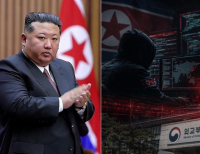
 Dictatorships no longer begin with tanks. They are designed through institutions. Venezuela, Hungary, and Turkey have demonstrated this process, and South Korea now stands at its doorstep. [Graphic=Hanmiilbo]
[Table of Contents]
① Reforms that Blinded the Board of Audit and Inspection
② A Loyal Administrative State Equals the Democratic Party's Electoral Organization
③ Those Who Seized the Prosecutor's Sword
④ Judicial Appointments Politics: The Hidden Agenda Behind the Supreme Court Justice Expansion Act
⑤ The Language of Reform, The Grammar of Dictatorship
On November 7th, the Daegang-dong appeal waiver incident concluded with no appeal being filed. The Prosecution Deliberation Committee was not convened, and the opinions of the prosecuting team were not officially recorded. The decision to drop the case was not made by the prosecution but by the Ministry of Justice. What was relinquished that day was not an appeal but prosecutorial power. The sword remains, but the structure now prevents it from being wielded.
The prosecution is a quasi-judicial body guaranteed by the Constitution. While the Corruption Investigation Office for High-ranking Officials (CIO) handles some cases involving senior public officials, the prosecution is the sole institution in the national criminal justice system that independently exercises prosecutorial authority (indictment, prosecution maintenance, and appeals). However, the Daegang-dong appeal waiver incident revealed that even this last vestige of prosecutorial power can be swayed by political judgment. The decision was not made by the prosecution but by the regime, and the prosecution merely executed it.
The essence of prosecutorial reform was not to weaken the prosecution's powers. The core objective was to maintain the prosecution's independence while preserving a structure that checks power. Therefore, the Democratic Party regime created another superior oversight body above the prosecution: the CIO. The legal community has often described this as an "oxymoron" or "redundant" structure. However, the current outcomes are moving in the opposite direction of its stated purpose.
The CIO and prosecutorial reform system were designed with the stated aim of checking the prosecution and preventing abuses of power, but they are now being used as self-protection mechanisms by the Lee Jae-myung administration. By next October, the prosecution will lose its investigative powers and effectively be reduced to a mere indictment office. If even this final prosecutorial power can be influenced by verbal directives from the regime, the prosecution will no longer be a check on power. When a system exists but ceases to function, independence becomes merely a formality.
This change is not unique to South Korea. Accumulating examples worldwide demonstrate how the repositioning of prosecutorial and judicial power has neutralized democracies. Venezuela is a prime example. The Hugo Chávez regime did not abolish the prosecution. Instead, it separated investigative powers and introduced an administrative approval process for exercising prosecutorial authority. Consequently, the prosecution devolved into an institution that did not investigate regime corruption. The prosecution remained, but it was no longer truly the prosecution.
In Hungary, political intervention in judicial appointments served as the final stage in constructing a dictatorship. Viktor Orbán's government did not abolish the constitution or dismantle existing institutions. Instead, it increased the number of Supreme Court justices and adjusted their tenure, thereby seizing "the power of legal interpretation." The laws remained the same, but the power to interpret them became the prerogative of the ruling party. This is an example of dictatorship being achieved without breaking any laws.
Turkey offers another case of dictatorship achieved without a coup. The Recep Tayyip Erdoğan government used the term "reform" to gradually readjust the prosecution, judiciary, media, and electoral systems, ultimately establishing a political system with no competition, even though elections were maintained. This is why Turkey's democracy is assessed not as having collapsed but as having retrogressed through a long process of redesign.
South Korea has passed the "first danger signal" and entered the "stage where the blueprints have begun to operate."
Modern dictatorships do not deploy tanks. They are built gradually through laws and institutions. Venezuela, Hungary, and Turkey have already shown this process, and South Korea is now at that juncture.
The Lee Jae-myung administration, which has stripped the prosecution of its sword, is now targeting "the power of interpretation."
The expansion of Supreme Court justices is not merely an administrative reform of appointments but a "redistribution of constitutional interpretation power," which is interpreted as a sign of dictatorial crisis. When judicial power is reassembled, dictatorship is achieved without violating the law. Related content will continue in Part ④, "Judicial Appointments Politics: The Supreme Court Justice Expansion Act."
#DaegangdongAppealWaiver #ProsecutorialIndependence #ProsecutorialPower #StrippedInvestigativePower #CIO #RegimeInterference #Venezuela #Hungary #Turkey #InstitutionalDictatorship #Hanmiilbo

 [Statement by the Seobeokka KMA Patriots Association] ㉛ Recount the ballots openly, as the previous recount covered up election fraud
Recount of the Tongyeong mayoral election [Photo=Yonhap News]South Korea's liberal democracy is dying. The National Election Commission (NEC), which has degraded into a criminal organization through t
[Statement by the Seobeokka KMA Patriots Association] ㉛ Recount the ballots openly, as the previous recount covered up election fraud
Recount of the Tongyeong mayoral election [Photo=Yonhap News]South Korea's liberal democracy is dying. The National Election Commission (NEC), which has degraded into a criminal organization through t
 What is the significance of the "Trump 2028" red hat that keeps reappearing?
It is noteworthy that while it is "highly likely" that President Donald Trump is "seriously considering" a run for the presidency in 2028, he is also "deliberately" fueling speculation regarding wheth
What is the significance of the "Trump 2028" red hat that keeps reappearing?
It is noteworthy that while it is "highly likely" that President Donald Trump is "seriously considering" a run for the presidency in 2028, he is also "deliberately" fueling speculation regarding wheth
 First U.S. Ambassador of Trump's Second Term to Arrive This Week… Will It Provide Momentum to Resolve Pending Issues?
U.S. Ambassador to South Korea Michelle Steel speaks at the opening ceremony of the Korea-U.S. Shipbuilding Cooperation Center held at the Mayflower Hotel in Washington, D.C., on the 23rd (local time)
First U.S. Ambassador of Trump's Second Term to Arrive This Week… Will It Provide Momentum to Resolve Pending Issues?
U.S. Ambassador to South Korea Michelle Steel speaks at the opening ceremony of the Korea-U.S. Shipbuilding Cooperation Center held at the Mayflower Hotel in Washington, D.C., on the 23rd (local time)
 The Korean Peninsula wrapped in a thick blanket of scorching high pressure… Will the 1994 record be broken?
On the 28th, as the heatwave continues, a water sprinkler truck sprays water on Hyowon-ro, Gwonseon-gu, Suwon, Gyeonggi Province. [Photo = Yonhap News]The hottest years on record are considered to be
The Korean Peninsula wrapped in a thick blanket of scorching high pressure… Will the 1994 record be broken?
On the 28th, as the heatwave continues, a water sprinkler truck sprays water on Hyowon-ro, Gwonseon-gu, Suwon, Gyeonggi Province. [Photo = Yonhap News]The hottest years on record are considered to be
 Stock Market Crash 'Black Tuesday'… KOSPI down 10.8%, KOSDAQ down 7.7%
The KOSPI fell by more than 5% in early trading on the 28th, triggering a sell-side sidecar.On the 28th, the KOSPI plunged by more than 10%.Due to the sharp decline, a sell-side sidecar—a temporary
Stock Market Crash 'Black Tuesday'… KOSPI down 10.8%, KOSDAQ down 7.7%
The KOSPI fell by more than 5% in early trading on the 28th, triggering a sell-side sidecar.On the 28th, the KOSPI plunged by more than 10%.Due to the sharp decline, a sell-side sidecar—a temporary
 [World Heritage Committee] 25 New World Heritage Sites Inscribed in Busan… South Korea Successfully Expands 'Getbol' Listing
The Chairperson of the World Heritage Committee speaks at the plenary session of the 48th session of the World Heritage Committee, held at BEXCO in Busan on the 20th. [Photo: Yonhap News]A total of 25
[World Heritage Committee] 25 New World Heritage Sites Inscribed in Busan… South Korea Successfully Expands 'Getbol' Listing
The Chairperson of the World Heritage Committee speaks at the plenary session of the 48th session of the World Heritage Committee, held at BEXCO in Busan on the 20th. [Photo: Yonhap News]A total of 25
 [Cho Yang-geon Column] The NEC: Facing a Fate of "Discarding the Dog After the Hunt"
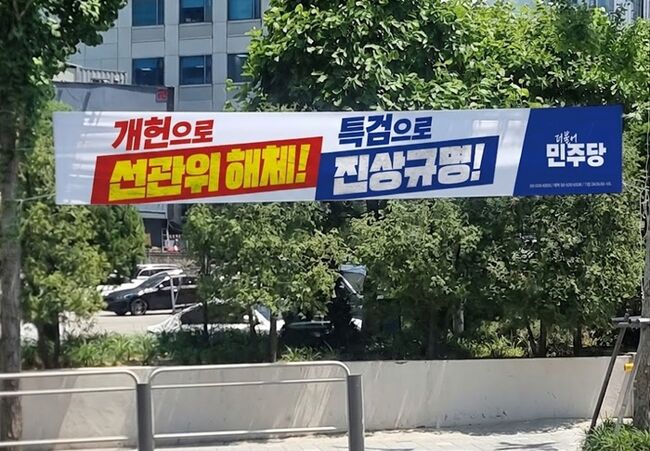
Banner calling for the "dissolution of the NEC" posted by the Democratic Party. [AI-generated image]Banners calling for the "dissolution of the National Election Commission (NEC)" posted by the Democr
[Cho Yang-geon Column] The NEC: Facing a Fate of "Discarding the Dog After the Hunt"
Banner calling for the "dissolution of the NEC" posted by the Democratic Party. [AI-generated image]Banners calling for the "dissolution of the National Election Commission (NEC)" posted by the Democr
 [Photo] Evidence of Election Fraud Flooding U.S. Media… Trump Had 2.7 Million Votes Stolen
 [Video] U.S. Semiquincentennial Air Show... 'Art in the Sky' streaks across New York
 [Editorial Cartoon] A Draconian Law That Undermines Freedom of Expression

 List
List