General Paul LaCamera, Commander of the ROK-US Combined Forces Command and U.S. Forces Korea, stated on the 17th that one can feel the strategic necessity for cooperation among South Korea, Japan, and the Philippines by flipping the map of East Asia. The photo shows an inverted map of the Korean Peninsula. [Photo courtesy of U.S. Forces Korea. Reproduction and database prohibited] Yonhap News
The "East-Up" posture, emphasized by General Paul LaCamera, Commander of U.S. Forces Korea, is expanding beyond the discussions of the ROK-US Security Consultative Meeting (SCM) to become a strategic message directly targeting the narrative of President Lee Jae-myung's administration regarding the return of wartime operational control (OPCON).
The fact that the operational and command concepts discussed at the 50th ROK-US SCM, held in Seoul on November 3rd, were disclosed in a manner that directly explains them to the Korean public, rather than the Korean government, suggests this written interview is, in fact, an official stance approved by Washington.
In written responses to an interview with the ROK Ministry of National Defense press corps on the 17th, General LaCamera stated, "Even as OPCON transition progresses, the fundamental basis of our combined defense will not change." This is drawing political attention as it fundamentally clashes with the framing of the Lee Jae-myung administration, which has equated OPCON with "sovereignty restoration."
His explanation of OPCON transition not as a "transfer of command" but as an "adjustment of the existing combined operational system" is significant because it effectively refutes the simplistic domestic political narrative that the return of OPCON will inevitably lead to "South Korean forces' independent command."
This is because LaCamera's explanation goes beyond a mere difference in concepts; it declares a fundamental change in how the military alliance operates.
He emphasized, "From an 'East-Up' perspective, South Korea, Japan, and the Philippines are not three separate bilateral relationships but a single, interconnected network." This means the Korean Peninsula is no longer a vulnerable area exposed to pressure from North Korea, China, and Russia, but rather a strategic axis of operations that runs through the entire Indo-Pacific.
South Korea provides "depth from the center," Japan offers "technological superiority and maritime reach," and the Philippines grants "access to the southern maritime axis." This configuration itself, he explained, already forms the framework for regional combined operations.
This message is not a diplomatic explanation directed at the South Korean government. It is considered highly unusual that a serving four-star U.S. general, in his capacity as commander, has directly articulated the alliance structure, operational concepts, and interpretation of OPCON to the Korean public through a controlled medium like a written interview.
This is why some interpret it as a strategic intervention by the United States to bring the OPCON debate back from "political discourse" to "military reality." In particular, redefining OPCON with military terms such as "conditions" and "deterrence structure" conveys a message on a completely different level from the Lee Jae-myung administration's frame of "retrieval" or "sovereignty."
This interview holds further significance in that it bypasses the South Korean government for a "direct explanation to the people." When the U.S. changes its alliance structure, it considers the political variables of its allies. This is because domestic political conflict is the biggest factor influencing areas such as OPCON and troop presence.
Therefore, this message is seen as a preemptive move to shape public opinion, adjusting expectations regarding OPCON within South Korea and encouraging the public to embrace strategic flexibility, expanded operational radius, and trilateral cooperation.
There are times when it is safer to change a structure by speaking about it rather than by simply altering it without comment. The U.S. appears to be choosing the latter approach. At a time when the OPCON return debate was being consumed solely by political rhetoric, the final commander of the ROK-US Combined Forces has presented a military reality through the "East-Up" frame.
It is a moment when not just the map, but also the meaning of OPCON, has been inverted.
East UP is a concept symbolizing a shift in military and strategic thinking. It is not simply about rotating a map by 90 degrees, but a frame shift that completely reinterprets the strategic position of the Korean Peninsula and the alliance structure. This term was popularized by General Paul LaCamera, Commander of U.S. Forces Korea, as he used it officially for the first time.
"Depth from the center" is a military expression defining the Korean Peninsula as an operational platform rather than a defense line. This means that South Korea is viewed not as a weakness to be protected, but as a central axis from which operations can be sustained and expanded.
Maritime reach (海洋 到達性, maritime reach or maritime access) is a military and strategic term referring to a country's or military force's ability or geographical advantage to project power or extend its operational range through the sea.
#EastUp #WartimeOperationalControl #ROKUSAlliance #SCM #LaCamera #LeeJaeMyungAdministration #StrategicFlexibility #IndoPacific #USFK #ROKJapanPhilippinesTrilateralCooperation

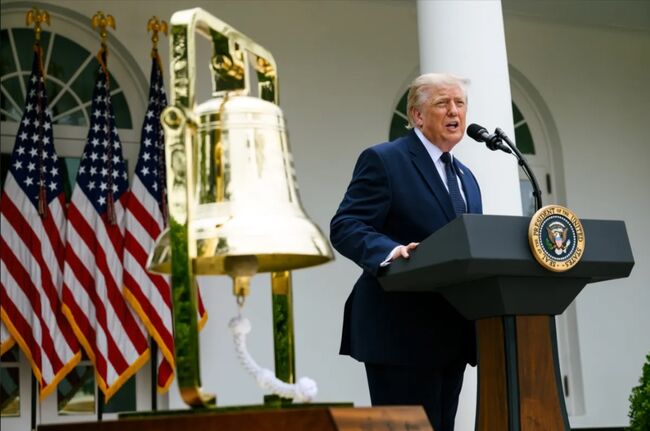 Trump pressures for rate cut again ahead of FOMC... "Should be the lowest in the world"
U.S. President Donald Trump. [Photo = The White House] U.S. President Donald Trump once again pressured the Federal Reserve, the U.S. central bank, to lower interest rates on the 27th (local time
Trump pressures for rate cut again ahead of FOMC... "Should be the lowest in the world"
U.S. President Donald Trump. [Photo = The White House] U.S. President Donald Trump once again pressured the Federal Reserve, the U.S. central bank, to lower interest rates on the 27th (local time
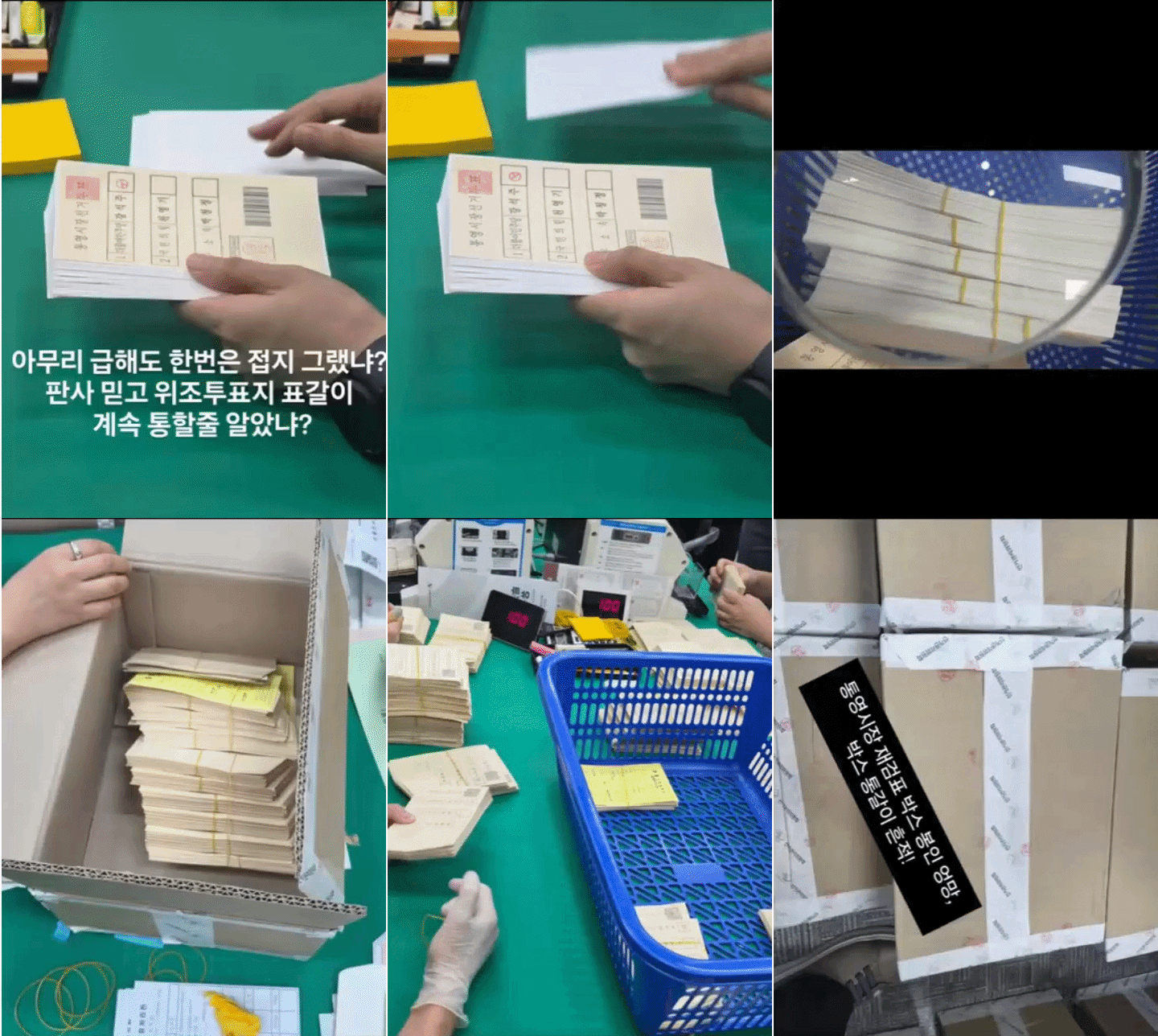 “Ignoring crisp ballots and damaged seals”… Tongyeong mayoral recount concludes with ‘no change in outcome,’ leaving suspicions and public outrage behind
Suspected counterfeit ballots discovered in Tongyeong [GIF from social media of Representative Hwang Kyo-ahn / Attorney Park Joo-hyun]During a recount of the Tongyeong mayoral election in South Gyeong
“Ignoring crisp ballots and damaged seals”… Tongyeong mayoral recount concludes with ‘no change in outcome,’ leaving suspicions and public outrage behind
Suspected counterfeit ballots discovered in Tongyeong [GIF from social media of Representative Hwang Kyo-ahn / Attorney Park Joo-hyun]During a recount of the Tongyeong mayoral election in South Gyeong
 President Yoon, regarding the first-instance ruling on the Public Official Election Act: “An excessive political verdict that distorts the facts… We will appeal immediately.”
The first-instance sentencing hearing for President Yoon Suk Yeol regarding violations of the Public Official Election Act is being broadcast live at Seoul Station on the 27th. [Photo=Yonhap News]Pres
President Yoon, regarding the first-instance ruling on the Public Official Election Act: “An excessive political verdict that distorts the facts… We will appeal immediately.”
The first-instance sentencing hearing for President Yoon Suk Yeol regarding violations of the Public Official Election Act is being broadcast live at Seoul Station on the 27th. [Photo=Yonhap News]Pres
 WSJ: "SK Hynix ADR Premium Is a Sign of AI Trading Overheat"
Advertisement for SK Hynix ADR listing in New York's Times Square [Reuters=Yonhap News file photo]The Wall Street Journal (WSJ) has pointed out that the price of SK Hynix’s American Depositary Recei
WSJ: "SK Hynix ADR Premium Is a Sign of AI Trading Overheat"
Advertisement for SK Hynix ADR listing in New York's Times Square [Reuters=Yonhap News file photo]The Wall Street Journal (WSJ) has pointed out that the price of SK Hynix’s American Depositary Recei
 'Godfather of Japanese Mystery Novels' Keigo Higashino Passes Away After Battle with Cancer at 68
Famous Japanese mystery novelist Keigo Higashino [AFP=Yonhap News]It has been belatedly reported that Keigo Higashino, the "godfather of Japanese mystery novels" and author of bestsellers such as "The
'Godfather of Japanese Mystery Novels' Keigo Higashino Passes Away After Battle with Cancer at 68
Famous Japanese mystery novelist Keigo Higashino [AFP=Yonhap News]It has been belatedly reported that Keigo Higashino, the "godfather of Japanese mystery novels" and author of bestsellers such as "The
 [Park Pil-kyu Security Column] To the Ignorant Trying to Clothe a Beast in Sheep's Clothing
Rep. Kim Byung-joo of the Democratic Party of Korea [Photo=Yonhap News]“The Air Force Academy doesn't teach you how to fly a plane!” “The Army, Navy, and Air Force academies are exactly the
[Park Pil-kyu Security Column] To the Ignorant Trying to Clothe a Beast in Sheep's Clothing
Rep. Kim Byung-joo of the Democratic Party of Korea [Photo=Yonhap News]“The Air Force Academy doesn't teach you how to fly a plane!” “The Army, Navy, and Air Force academies are exactly the
 [Issue Diagnosis] Two Effects of the Election Petition Review
 [Photo] Evidence of Election Fraud Flooding U.S. Media… Trump Had 2.7 Million Votes Stolen
 [Video] U.S. Semiquincentennial Air Show... 'Art in the Sky' streaks across New York
 [Editorial Cartoon] A Draconian Law That Undermines Freedom of Expression

 List
List