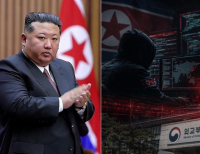
이재명정부가 추진하는 감사원 개편, 공무원 검증, 검찰 구조조정, 대법원 증원 등을 비롯한 일련의 제도개혁은 ‘정치적 중립 강화’라는 명분 아래 진행되고 있다. 하지만 실질적으로는 헌법에 보장된 권력 분립과 행정 견제 시스템의 재구성으로 이어지고 있다. <한미일보>는 이를 ‘개혁이라는 이름의 국가 권력 재설계’로 규정하고, 감사원·공무원·검찰·사법부의 제도 변화를 축으로 삼은 권력 집중의 메커니즘과 그 민주주의적 함의를 검증한다. 〈편집자 주〉
 World history tells us that the moment power begins to reinterpret laws and the constitution, the end result is dictatorship. [Graphics=Hanmi Ilbo]
[Table of Contents]
① Reforms That Blinded the Board of Audit and Inspection
② The Administrative State of Loyalty = Democratic Party Electioneering
③ Those Who Disarmed the Prosecutors
④ Judicial Personnel Politics, The Other Side of the Supreme Court Justice Expansion Act
⑤ The Language of Reform, The Grammar of Dictatorship
“We have no choice but to increase the number of Supreme Court justices to cope with the surge in cases.”
The starting point of this expansion plan proposed by the government and ruling party is efficiency. However, cases are concentrated in the first and second instance courts, not the Supreme Court, and what needs to be increased to resolve trial delays are judges, not Supreme Court justices. The moment 'Supreme Court justice expansion' is pursued, the focus of debate inevitably shifts from efficiency to the reorganization of judicial power. This is because the focus of the discussion moves from personnel issues to 'who the authority to interpret laws is concentrated with'.
While the Supreme Court is the final appellate court under the constitution, 99% of disputes are handled in the first and second instances. The proportion of cases reaching the Supreme Court is around 1% of all cases. Nevertheless, the government and ruling party are pushing for an increase in Supreme Court justices, citing 'case surges'. The idea of increasing the number of justices, knowing that the Supreme Court is not where the cases are numerous, raises suspicions that other objectives, unrelated to trial efficiency, are at play.
Supreme Court justices are appointed by the President upon the recommendation of the Chief Justice of the Supreme Court and with the consent of the National Assembly. If the current 14 justices are increased to 26, and including those whose terms are set to expire within the next 2-3 years, the Lee Jae-myung administration could appoint over 20 Supreme Court justices. Including the Chief Justice, this structure effectively creates a situation where the Supreme Court is reorganized by the administration's hands. From this point, the judiciary transforms from an 'institution that resolves cases' into a 'political institution that interprets the constitution and laws'.
Currently, the Supreme Court en banc operates with 14 justices, but with an increased number, there is a high possibility of shifting to a system centered on divisions. This is a structure where the direction of a ruling can be altered by case assignment alone, even before a majority vote. This structure signifies not just a matter of efficiency but a redistribution of 'interpretive power'. Ultimately, the law will be held in the hands of personnel appointed based on their alignment rather than efficiency.
Concerns are already surfacing in the legal community that "judicial personnel appointments based on political alignment will become a reality." Constitutional scholar Professor Hwang Do-soo of Konkuk University stated in an interview with a media outlet, "This is a dangerous signal to reconfigure the leanings of Supreme Court justices to suit the tastes of the government and ruling party." He added, "If we use trial efficiency as an excuse, the calculation would suggest increasing the number of justices to over 100. Ultimately, it's about power, not efficiency." He emphasized, "The core issue of the current discussion is not a 'shortage of judges' but the 'reorganization of interpretive authority'."
The political dispute is also intensifying. Song Eon-seok, the floor leader of the People Power Party, characterized this bill as "not judicial reform but judicial takeover" and criticized it as "a systemic design to shield President Lee Jae-myung from judicial risks." Conversely, Baek Hye-ryeon, the chairperson of the Democratic Party's Special Committee on Judicial Reform, argued, "If the current administration appoints 22 justices, the next administration will also appoint 22 justices," calling the idea of "judicial takeover an excessive interpretation."
However, this argument is premised on the political calculation of passing the Supreme Court justice expansion bill. Moreover, considering variables such as terms of office, retirement ages, and the replacement of the Chief Justice, the logic of a 'neutral structure' that Assemblywoman Baek claims still requires verification.
A more serious problem is that this personnel policy can alter the constitution without amending it. This is because a change in the Supreme Court's interpretation alters laws, and a change in laws alters the structure of democracy.
It is not that the judiciary collapses first, but that its interpretation changes, then the laws change, and finally, democracy changes. The expansion of Supreme Court justices is the first and most sophisticated step. This is because it allows for the capture of the constitution without amending it.
Several international examples clearly illustrate this.
Venezuela, Turkey, and Hungary have all dismantled their democracies through the reorganization of their Supreme Court and Constitutional Court justices. Venezuela increased the number of its Supreme Court justices and then filled them with individuals loyal to the administration, blocking dissenting rulings. Turkey, under the guise of 'judicial reform,' seized the authority to select and assign judges. Hungary lowered the retirement age for judges, leading to the mass dismissal of existing judges and their replacement with favored individuals.
There is only one commonality. A method of occupying the judiciary without attacking it… achieving dictatorship through the art of personnel appointments.
The 'improvement of judicial accessibility' and 'streamlining of cases' spoken of by the Lee Jae-myung administration are plausible words.
However, what the people desire is fair rulings, not quick ones, and judicial independence, not judicial reform. If the judiciary cannot protect its own personnel independence, the independence of its rulings cannot be guaranteed.
An increase in the number of Supreme Court justices does not necessarily reduce the number of cases. Instead, responsibility is dispersed, rulings become politicized, and the law becomes subservient to the logic of loyalty in the name of efficiency.
Power speaks of reform, but its language points towards control. Venezuela, Turkey, and Hungary all collapsed in this way. In Part ⑤, we will dissect how those words become the grammar of dictatorship.
#SupremeCourtJusticeExpansionAct #JudicialPersonnelPolitics #ChoHee-daeSupremeCourt #JudicialIndependenceCrisis #InterpretiveAuthoritySeizure #CollapseOfSeparationOfPowers #CodeJudgeControversy #PoliticizationOfTheSupremeCourt #DangerToDemocracy #HanmiIlbo

 [Statement by the Seobeokka KMA Patriots Association] ㉛ Recount the ballots openly, as the previous recount covered up election fraud
Recount of the Tongyeong mayoral election [Photo=Yonhap News]South Korea's liberal democracy is dying. The National Election Commission (NEC), which has degraded into a criminal organization through t
[Statement by the Seobeokka KMA Patriots Association] ㉛ Recount the ballots openly, as the previous recount covered up election fraud
Recount of the Tongyeong mayoral election [Photo=Yonhap News]South Korea's liberal democracy is dying. The National Election Commission (NEC), which has degraded into a criminal organization through t
 What is the significance of the "Trump 2028" red hat that keeps reappearing?
It is noteworthy that while it is "highly likely" that President Donald Trump is "seriously considering" a run for the presidency in 2028, he is also "deliberately" fueling speculation regarding wheth
What is the significance of the "Trump 2028" red hat that keeps reappearing?
It is noteworthy that while it is "highly likely" that President Donald Trump is "seriously considering" a run for the presidency in 2028, he is also "deliberately" fueling speculation regarding wheth
 First U.S. Ambassador of Trump's Second Term to Arrive This Week… Will It Provide Momentum to Resolve Pending Issues?
U.S. Ambassador to South Korea Michelle Steel speaks at the opening ceremony of the Korea-U.S. Shipbuilding Cooperation Center held at the Mayflower Hotel in Washington, D.C., on the 23rd (local time)
First U.S. Ambassador of Trump's Second Term to Arrive This Week… Will It Provide Momentum to Resolve Pending Issues?
U.S. Ambassador to South Korea Michelle Steel speaks at the opening ceremony of the Korea-U.S. Shipbuilding Cooperation Center held at the Mayflower Hotel in Washington, D.C., on the 23rd (local time)
 The Korean Peninsula wrapped in a thick blanket of scorching high pressure… Will the 1994 record be broken?
On the 28th, as the heatwave continues, a water sprinkler truck sprays water on Hyowon-ro, Gwonseon-gu, Suwon, Gyeonggi Province. [Photo = Yonhap News]The hottest years on record are considered to be
The Korean Peninsula wrapped in a thick blanket of scorching high pressure… Will the 1994 record be broken?
On the 28th, as the heatwave continues, a water sprinkler truck sprays water on Hyowon-ro, Gwonseon-gu, Suwon, Gyeonggi Province. [Photo = Yonhap News]The hottest years on record are considered to be
 Stock Market Crash 'Black Tuesday'… KOSPI down 10.8%, KOSDAQ down 7.7%
The KOSPI fell by more than 5% in early trading on the 28th, triggering a sell-side sidecar.On the 28th, the KOSPI plunged by more than 10%.Due to the sharp decline, a sell-side sidecar—a temporary
Stock Market Crash 'Black Tuesday'… KOSPI down 10.8%, KOSDAQ down 7.7%
The KOSPI fell by more than 5% in early trading on the 28th, triggering a sell-side sidecar.On the 28th, the KOSPI plunged by more than 10%.Due to the sharp decline, a sell-side sidecar—a temporary
 [World Heritage Committee] 25 New World Heritage Sites Inscribed in Busan… South Korea Successfully Expands 'Getbol' Listing
The Chairperson of the World Heritage Committee speaks at the plenary session of the 48th session of the World Heritage Committee, held at BEXCO in Busan on the 20th. [Photo: Yonhap News]A total of 25
[World Heritage Committee] 25 New World Heritage Sites Inscribed in Busan… South Korea Successfully Expands 'Getbol' Listing
The Chairperson of the World Heritage Committee speaks at the plenary session of the 48th session of the World Heritage Committee, held at BEXCO in Busan on the 20th. [Photo: Yonhap News]A total of 25
 [Cho Yang-geon Column] The NEC: Facing a Fate of "Discarding the Dog After the Hunt"
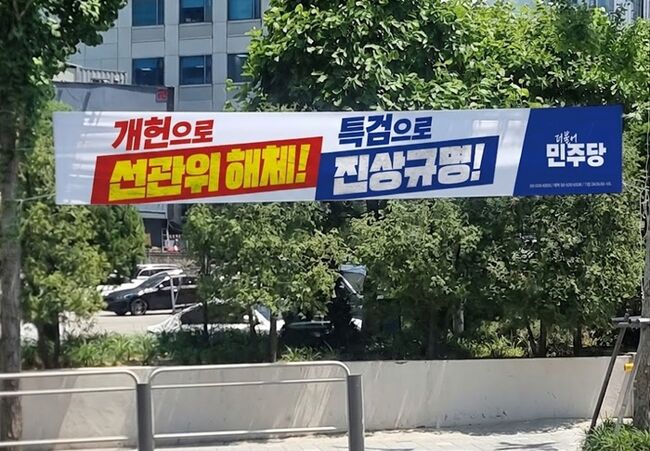
Banner calling for the "dissolution of the NEC" posted by the Democratic Party. [AI-generated image]Banners calling for the "dissolution of the National Election Commission (NEC)" posted by the Democr
[Cho Yang-geon Column] The NEC: Facing a Fate of "Discarding the Dog After the Hunt"
Banner calling for the "dissolution of the NEC" posted by the Democratic Party. [AI-generated image]Banners calling for the "dissolution of the National Election Commission (NEC)" posted by the Democr
 [Photo] Evidence of Election Fraud Flooding U.S. Media… Trump Had 2.7 Million Votes Stolen
 [Video] U.S. Semiquincentennial Air Show... 'Art in the Sky' streaks across New York
 [Editorial Cartoon] A Draconian Law That Undermines Freedom of Expression

 List
List