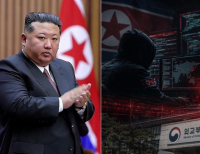
The invisible hand pushing up the stock market. A warning emerges that Chinese Yuan (CNY) will emerge as a massive buyer when public funds decide to exit. Concerns are rising that Korean companies may fall under Chinese influence. [Graphic=Hanmi Ilbo]
The KOSPI index is fluctuating around the 4000-point mark. This has led to an assessment that the market is transitioning into a phase of adjustment and structural change.
Amidst this, the analysis that an unprecedented "overlapping structure of public funds" is at the core of the rapid rally, which cannot be explained by the AI and semiconductor momentum mentioned in the media, is gaining traction. This structure involves the simultaneous inflow of the National Pension Service, private equity funds, policy funds, and overseas capital.
As of the end of August 2025, the estimated value of domestic stocks held by the National Pension Service is 196 trillion KRW. The National Pension Service holds over 5% of the shares in 281 companies and is the largest shareholder in seven listed companies.
Adding to this is 153 trillion KRW from private equity funds (PEFs) exclusively for institutional investors. As regulatory easing broadens investment scopes, a sense of caution is growing in the market, with concerns that "public funds' investment areas are extending into the private equity market."
Furthermore, the government is newly establishing policy funds totaling 150 trillion KRW, starting with the 50 trillion KRW "National Growth Fund," in which the top five financial groups have each invested 10 trillion KRW. While this fund, centered around the Korea Development Bank, will focus on strategic industries such as AI and semiconductors, it has effectively left open avenues for inflow into the stock market.
The issue lies in the "overlap" of these three fund pools—the National Pension Service, private equity funds, and the National Growth Fund—within a single market. Although not yet a reality, it is a problem that cannot be overlooked, given that the market tends to react preemptively.
This is because the combination of the National Pension Service's passive buying, private equity funds' aggressive entry, and the National Growth Fund's policy-driven capital allocation creates a liquidity structure of 450 trillion KRW in public and quasi-public funds. The change in supply and demand driven by this structure is precisely why the analysis that it has ignited the "fuse" is gaining credibility.
In addition, the combination of the stewardship code and cumulative voting system has created a structure where a mere 6-10% stake can shake the management of large corporations. This has led to overseas hedge funds viewing Korea as a "global lowest-cost corporate governance market" and aggressively entering the market. The recent surge in foreign net purchases is also analyzed to be linked with these systemic changes.
The stewardship code is a principle that encourages institutional investors to actively exercise shareholder rights under the guise of enhancing corporate value. However, in Korea, it serves as a channel that institutionally legitimizes the National Pension Service's intervention in management.
Given that the National Pension Service holds stakes of 6-12% in hundreds of companies, this effectively signifies an expansion of "public fund interference in management."
Cumulative voting is a system that allows for the appointment of directors with a minority stake. In a situation where three directors are to be elected, an investor with a 10% stake can secure one director seat by concentrating their '10% x 3 votes' on a single candidate. The introduction of this system creates a structure where overseas hedge funds, private equity funds, and the National Pension Service can influence the boards of large corporations with just a 6-10% stake, leading to governance instability and management risks.
Regarding this matter, Accountant Choi Hwan-yeol, who is leading the "Anti-Pension Socialism Movement," sharply criticized it as a "transition of the capital market towards socialism."
"The Korean stock market is not rising; it is being pushed up. When the National Pension Service, private equity funds, and the National Growth Fund enter the stock market simultaneously, the actual ownership structure of large corporations will be reorganized around public funds. If this structure solidifies, major Korean corporations will effectively be socialized, and Korean capitalism will lean towards pension socialism."
He argues that a more fundamental risk lies in the next stage: "The onslaught of Chinese capital in Korea."
"The operational objective of the National Pension Service, private equity funds, and the National Growth Fund is not to manage companies but to realize profits. Ultimately, an exit market is needed, and if the final buyer becomes Chinese capital, we will face 'Buying Korea' in reality. The current stock market rally is a precursor to this immense risk."
It is pointed out that the changes in foreign net buying and selling are not the only important factors. Private equity funds, the National Growth Fund, and overseas hedge funds all operate with the premise of "profit realization." Therefore, at a certain point, there is a high possibility of large block trades impacting management rights appearing simultaneously.
If such a phenomenon actually occurs, there is virtually no domestic capital entity capable of absorbing these volumes. Korean pension funds already have limited investment capacity, and financial institutions find it difficult to absorb block deals (large-volume trades between institutions) due to regulations and risk management.
However, Chinese state-owned enterprises and sovereign wealth funds (SWFs), with their vast dollar liquidity, are in a different position. China can function as the world's largest buyer based on its annual trade surplus of hundreds of trillions of KRW and net profits from state-owned enterprises, making it highly probable that 'Buying Korea' will become a reality the moment large stakes in listed companies flood the market.
The current surge in the Korean stock market is not merely a recovery in investment sentiment but a structural rally in supply and demand created by 450 trillion KRW in public and quasi-public funds. The longer this trend continues, the more corporate governance will be shaken, the less the private nature of the capital market will be, and the greater the risk of the Korean economy's capital power being reorganized around policy and public funds.
The causes of the abnormal surge in the stock market include not only the expansion of liquidity and changes in the system mentioned above but also factors such as an increase in the broad money supply (M2), a weaker won, and regulations on real estate loans. This is also why experts view the current stock market situation as a "speculative market due to structural reorganization."
The Korean stock market is currently not in an "era of rally" but in the midst of a governance restructuring. The statement that what is more important than the visible rise in the index is "where the central axis of capital power is heading" is worth pondering. And that change has already begun.
#KStocks #PensionSocialism #PublicFunds #CorporateGovernance #BuyingKorea #NationalPensionService #NationalGrowthFund #PrivateEquity #ChineseCapital #MarketRisk

 [Statement by the Seobeokka KMA Patriots Association] ㉛ Recount the ballots openly, as the previous recount covered up election fraud
Recount of the Tongyeong mayoral election [Photo=Yonhap News]South Korea's liberal democracy is dying. The National Election Commission (NEC), which has degraded into a criminal organization through t
[Statement by the Seobeokka KMA Patriots Association] ㉛ Recount the ballots openly, as the previous recount covered up election fraud
Recount of the Tongyeong mayoral election [Photo=Yonhap News]South Korea's liberal democracy is dying. The National Election Commission (NEC), which has degraded into a criminal organization through t
 What is the significance of the "Trump 2028" red hat that keeps reappearing?
It is noteworthy that while it is "highly likely" that President Donald Trump is "seriously considering" a run for the presidency in 2028, he is also "deliberately" fueling speculation regarding wheth
What is the significance of the "Trump 2028" red hat that keeps reappearing?
It is noteworthy that while it is "highly likely" that President Donald Trump is "seriously considering" a run for the presidency in 2028, he is also "deliberately" fueling speculation regarding wheth
 First U.S. Ambassador of Trump's Second Term to Arrive This Week… Will It Provide Momentum to Resolve Pending Issues?
U.S. Ambassador to South Korea Michelle Steel speaks at the opening ceremony of the Korea-U.S. Shipbuilding Cooperation Center held at the Mayflower Hotel in Washington, D.C., on the 23rd (local time)
First U.S. Ambassador of Trump's Second Term to Arrive This Week… Will It Provide Momentum to Resolve Pending Issues?
U.S. Ambassador to South Korea Michelle Steel speaks at the opening ceremony of the Korea-U.S. Shipbuilding Cooperation Center held at the Mayflower Hotel in Washington, D.C., on the 23rd (local time)
 The Korean Peninsula wrapped in a thick blanket of scorching high pressure… Will the 1994 record be broken?
On the 28th, as the heatwave continues, a water sprinkler truck sprays water on Hyowon-ro, Gwonseon-gu, Suwon, Gyeonggi Province. [Photo = Yonhap News]The hottest years on record are considered to be
The Korean Peninsula wrapped in a thick blanket of scorching high pressure… Will the 1994 record be broken?
On the 28th, as the heatwave continues, a water sprinkler truck sprays water on Hyowon-ro, Gwonseon-gu, Suwon, Gyeonggi Province. [Photo = Yonhap News]The hottest years on record are considered to be
 Stock Market Crash 'Black Tuesday'… KOSPI down 10.8%, KOSDAQ down 7.7%
The KOSPI fell by more than 5% in early trading on the 28th, triggering a sell-side sidecar.On the 28th, the KOSPI plunged by more than 10%.Due to the sharp decline, a sell-side sidecar—a temporary
Stock Market Crash 'Black Tuesday'… KOSPI down 10.8%, KOSDAQ down 7.7%
The KOSPI fell by more than 5% in early trading on the 28th, triggering a sell-side sidecar.On the 28th, the KOSPI plunged by more than 10%.Due to the sharp decline, a sell-side sidecar—a temporary
 [World Heritage Committee] 25 New World Heritage Sites Inscribed in Busan… South Korea Successfully Expands 'Getbol' Listing
The Chairperson of the World Heritage Committee speaks at the plenary session of the 48th session of the World Heritage Committee, held at BEXCO in Busan on the 20th. [Photo: Yonhap News]A total of 25
[World Heritage Committee] 25 New World Heritage Sites Inscribed in Busan… South Korea Successfully Expands 'Getbol' Listing
The Chairperson of the World Heritage Committee speaks at the plenary session of the 48th session of the World Heritage Committee, held at BEXCO in Busan on the 20th. [Photo: Yonhap News]A total of 25
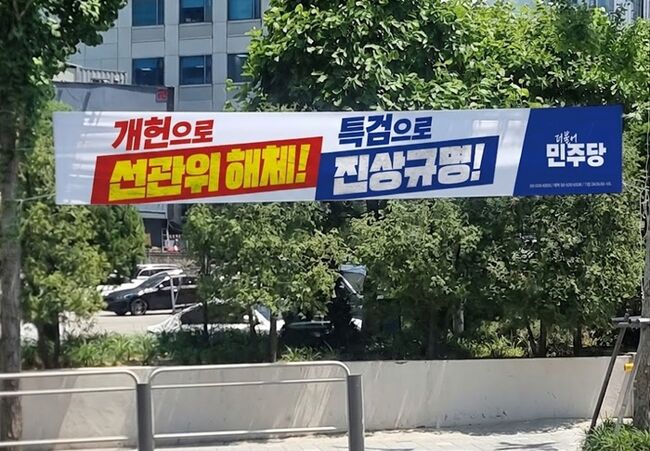 [Cho Yang-geon Column] The NEC: Facing a Fate of "Discarding the Dog After the Hunt"
Banner calling for the "dissolution of the NEC" posted by the Democratic Party. [AI-generated image]Banners calling for the "dissolution of the National Election Commission (NEC)" posted by the Democr
[Cho Yang-geon Column] The NEC: Facing a Fate of "Discarding the Dog After the Hunt"
Banner calling for the "dissolution of the NEC" posted by the Democratic Party. [AI-generated image]Banners calling for the "dissolution of the National Election Commission (NEC)" posted by the Democr
 [Photo] Evidence of Election Fraud Flooding U.S. Media… Trump Had 2.7 Million Votes Stolen
 [Video] U.S. Semiquincentennial Air Show... 'Art in the Sky' streaks across New York
 [Editorial Cartoon] A Draconian Law That Undermines Freedom of Expression

 List
List