 The embers ignited by the Moon Jae-in administration have solidified into fissures that shake the economic structure under the Lee Jae-myung administration. [Graphic=Hankyoreh Shinmun]
The long-term stagnation of the Korean economy is less the result of a single policy failure and more a consequence of the direction chosen by successive administrations. Interest rates have become ineffective, money supply has expanded abnormally through a combination of fiscal policy and credit, and household debt has ballooned to world-leading levels. The exchange rate, rather than being a key indicator, has become the dominant variable governing the Korean economy, and the population is shrinking at the fastest rate among OECD countries.
The consensus among mainstream economists is that the roots of this erosion were formed during the Moon Jae-in administration (2017-22), and under the Lee Jae-myung administration, these fissures are solidifying into a persistent structural issue.
They state, "It is not policy, but the administration that will determine what the next 30 years hold for South Korea." This implies that the future of the Korean economy will be determined by the administration the public chooses. Is this claim, then, true?
The Korean economy is not collapsing suddenly but is being undermined through "continuous erosion." This is because interest rates are failing to control the money supply, debt and real estate have taken over the financial structure, and the exchange rate has become a dominant variable rather than a key one. The population is decreasing at the fastest rate among OECD countries, and the money supply is expanding to uncontrollable levels through a combination of fiscal policy, debt, and other policies. These are the phenomena we are currently experiencing.
Mainstream scholars explain, "All these changes are not coincidental but are due to a structural shift in direction stemming from the economic operating philosophy chosen by the administration."
They diagnose, "The erosion of the Korean economy began to become significantly evident during the Moon Jae-in administration."
Indeed, key indicators of the Korean economy, such as ultra-low interest rates, excessive liquidity, a dramatic increase in household debt, abnormal expansion of real estate-backed finance, and the excessive expansion of the money supply (M2) by 46%, all deviated from normal ranges during this period. It was also at this time that the transmission of policy interest rates to the real economy began to weaken, as evidenced by Bank for International Settlements (BIS) data.
Meanwhile, the Lee Jae-myung administration, under the guise of mitigating the side effects of interest rate hikes, repeatedly expanded fiscal spending, effectively making money supply expansion the "default policy." Consequently, the money supply now expands and contracts not through interest rates, but through a channel of 'fiscal policy → credit → market liquidity'.
In a 2021 report, the Bank of Korea explicitly stated that "the transmission of policy interest rates is weakening." Around the same time, the BIS warned that South Korea's household debt exceeding 100% of its GDP could classify it as a high-risk country globally. This was not merely a sign of overheating but a signal that the economy's operating mechanism itself was beginning to collapse.
The problem with the Moon Jae-in administration lay not in the failure of individual policies but in the "liquidity and debt-centric economic operating philosophy" chosen by the administration.
It attempted to maintain growth through credit expansion rather than productivity, and it believed that the surge in real estate prices could be managed with short-term policy combinations rather than being viewed as a structural issue. Warning signs recurred, but the administration's stance remained unchanged.
As a result, the Korean economy has shifted to a structure where it is unresponsive to interest rates, and the cycles of debt and asset prices now overwhelm monetary policy.
Scholars point out, "Under the Lee Jae-myung administration, the situation is moving to a more fundamental level." While the fissures created by the previous Moon Jae-in administration might have been temporary phenomena, the current administration is solidifying that vulnerability into a persistent structure by combining it with its institutional, policy, and diplomatic direction.
"Instead of rectifying an economy where interest rate policy is ineffective, fiscal expansion has deepened the neutralization of interest rates. Instead of managing market liquidity, liquidity expansion has become the basic flow of policy. Debt has been treated not as a risk factor but as a policy tool, and income-led growth is being reactivated in a manner that is closer to the administration's agenda than economic policy."
Let us now move from assertions to data.
The institution that most accurately reflects the financial vulnerability of the Korean economy is the BIS. The BIS is the most objective body for comparing debt, credit, and financial system risks across countries. According to BIS standards, South Korea is classified as a 'high-risk country' across three key indicators.
First, household debt as a percentage of GDP is at the world's highest level, ranging from 101% to 106%.
Second, the growth rate of M2 and the pace of credit expansion are the steepest among major economies, signifying that fiscal and policy credit are combined to create 'policy-driven monetary expansion.' M2 increased by 46% over the five years of the Moon Jae-in administration. This is the fastest pace in Korean economic history, surpassing the cumulative increases during the IMF financial crisis and the global financial crisis.
Third, real estate and project financing (PF) comprise the core of all credit supply, undermining the effectiveness of interest rate policy.
While the Moon Jae-in administration worsened these three indicators in all directions, the Lee Jae-myung administration has ushered in an era where these indicators are solidifying from 'abnormal' to a 'persistent structure'.
In this process, the exchange rate has transformed from an indicator of the Korean economy to the steering wheel that drives it. From 2019 to 2024, the won was reclassified alongside Brazil and South Africa in the JP Morgan Risk Currency Index (RCI). The correlation of the won with the weakening Chinese yuan rose to 0.72, according to US Treasury Department reports.
This implies that the won is beginning to be perceived not as a developed country's currency but as a 'currency that imports Chinese risk.' The Lee Jae-myung administration's pro-China stance is solidifying this exchange rate vulnerability as a market signal.
The final pillar of long-term erosion is demographics. A total fertility rate of 0.7 was established during the Moon Jae-in administration and has been maintained without signs of recovery under the Lee Jae-myung administration. The United Nations' World Population Prospects (2024) predicts that South Korea's working-age population will decrease by more than 18 million by 2050.
This represents a structural risk that will simultaneously collapse all pillars of the economy, including consumption, tax revenue, labor, pensions, real estate, and regional economies. South Korea is aging much faster than Japan and has already become the country with the fastest population decline among major OECD nations.
The erosion situation facing the Korean economy is not the result of policy failures but of the direction chosen by the administration. This is because the values chosen by the administration, its economic outlook, and the diplomatic, investment, and monetary structures it has built have all combined into a single system.
Therefore, the question that needs to be asked now is, "Is a shift in the administration's direction possible, rather than fine-tuning policies?" This is because if the administration's direction does not change, even if policies are altered, the erosion will continue. Conversely, if the administration's stance changes, policies will naturally be realigned.
What South Korea chooses for its next 30 years depends not on technology but on direction, not on policy but on the administration.
※ Major Sources ※
“An Economy Where Interest Rates Don't Work”
→ Bank of Korea Policy Rate Report + NH Investment & Securities "Interest Rate-M2 Gap" + BIS Credit Data
“Deformity of Debt Structure (Exceeding 100% of GDP)”
→ BIS Household Debt to GDP + Bank of Korea Financial Stability Report + KB/Shinhan Real Estate Finance Risk
“Abnormal Expansion of Money Supply (M2 Up 46%)”
→ Bank of Korea Economic Statistics System (ECOS) + OECD Money/GDP Ratio Comparison
“Won Exchange Rate Vulnerability · Risk Currency Status”
→ JP Morgan Investment Grade REITs Index (RCI) + US Treasury Department Exchange Rate Report
“Pro-China Stance → Worsening Exchange Rate & Supply Chain Risks”
→ US Department of Treasury, US Department of Commerce Supply Chain Documents + Securities Firm KRW Outlook
“Collapse of Population Structure, Pensions, and Regional Economies”
→ UN Population Division Database, WPP Age/Sex Population Aggregation Combined + Statistics Korea Future Population Projections
#EconomicErosion #MoonJaeInAdministration #LeeJaeMyungAdministration #BISIndicators #DebtEconomy #MoneyExpansion #ExchangeRateVulnerability #InterestRateIneffectiveness #PopulationCollapse #HankyorehShinmunPlanning

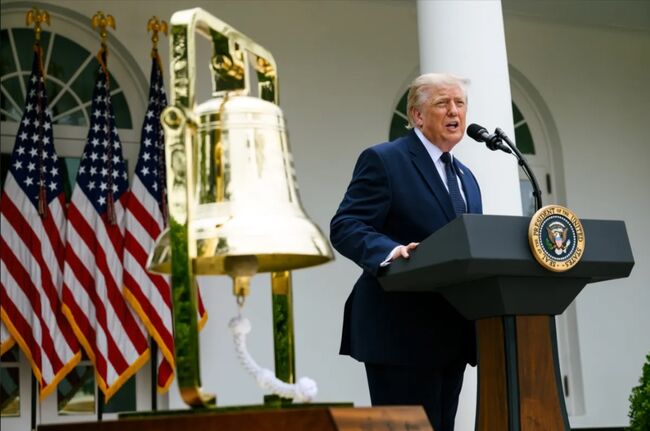 Trump pressures for rate cut again ahead of FOMC... "Should be the lowest in the world"
U.S. President Donald Trump. [Photo = The White House] U.S. President Donald Trump once again pressured the Federal Reserve, the U.S. central bank, to lower interest rates on the 27th (local time
Trump pressures for rate cut again ahead of FOMC... "Should be the lowest in the world"
U.S. President Donald Trump. [Photo = The White House] U.S. President Donald Trump once again pressured the Federal Reserve, the U.S. central bank, to lower interest rates on the 27th (local time
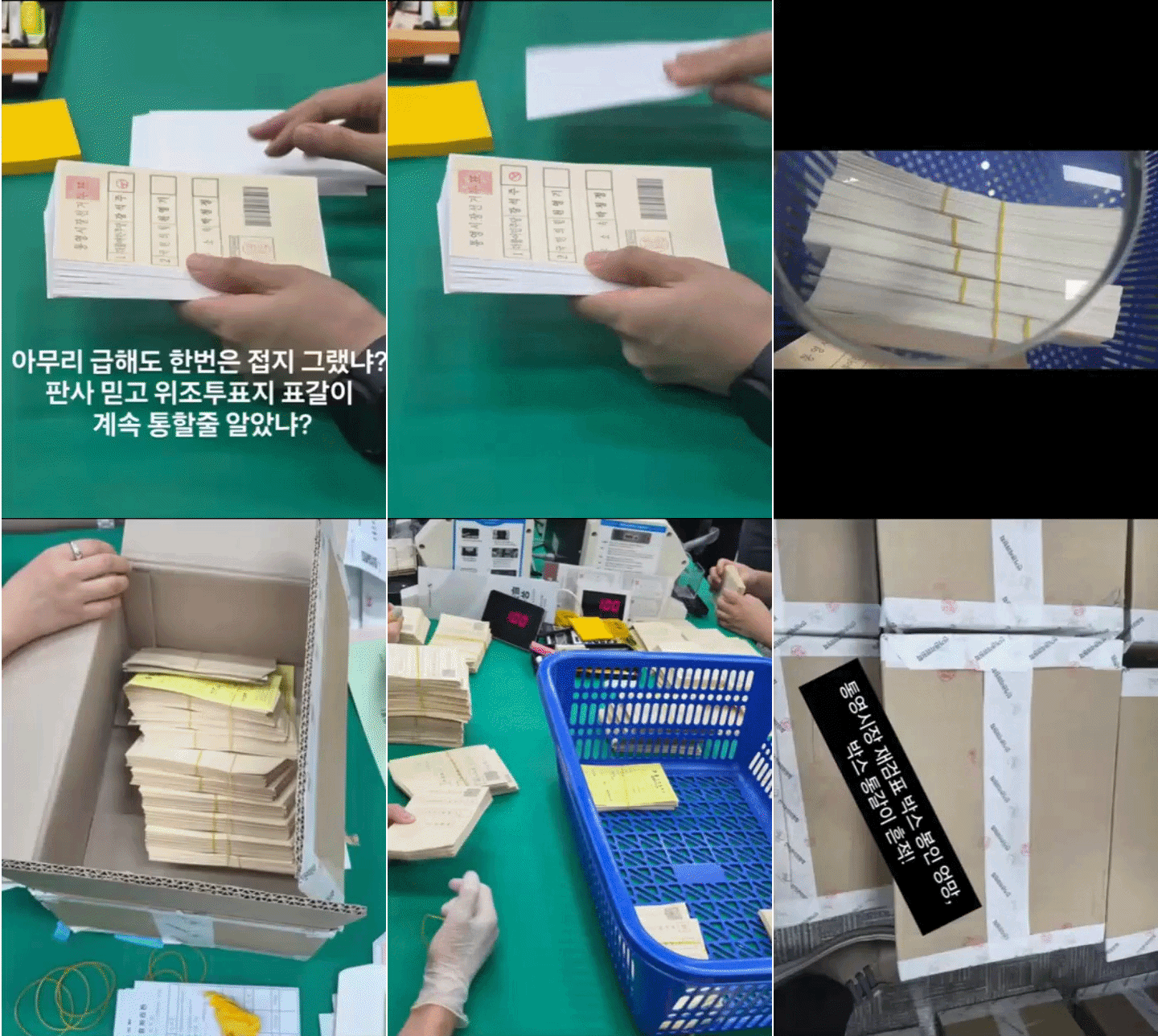 “Ignoring crisp ballots and damaged seals”… Tongyeong mayoral recount concludes with ‘no change in outcome,’ leaving suspicions and public outrage behind
Suspected counterfeit ballots discovered in Tongyeong [GIF from social media of Representative Hwang Kyo-ahn / Attorney Park Joo-hyun]During a recount of the Tongyeong mayoral election in South Gyeong
“Ignoring crisp ballots and damaged seals”… Tongyeong mayoral recount concludes with ‘no change in outcome,’ leaving suspicions and public outrage behind
Suspected counterfeit ballots discovered in Tongyeong [GIF from social media of Representative Hwang Kyo-ahn / Attorney Park Joo-hyun]During a recount of the Tongyeong mayoral election in South Gyeong
 President Yoon, regarding the first-instance ruling on the Public Official Election Act: “An excessive political verdict that distorts the facts… We will appeal immediately.”
The first-instance sentencing hearing for President Yoon Suk Yeol regarding violations of the Public Official Election Act is being broadcast live at Seoul Station on the 27th. [Photo=Yonhap News]Pres
President Yoon, regarding the first-instance ruling on the Public Official Election Act: “An excessive political verdict that distorts the facts… We will appeal immediately.”
The first-instance sentencing hearing for President Yoon Suk Yeol regarding violations of the Public Official Election Act is being broadcast live at Seoul Station on the 27th. [Photo=Yonhap News]Pres
 WSJ: "SK Hynix ADR Premium Is a Sign of AI Trading Overheat"
Advertisement for SK Hynix ADR listing in New York's Times Square [Reuters=Yonhap News file photo]The Wall Street Journal (WSJ) has pointed out that the price of SK Hynix’s American Depositary Recei
WSJ: "SK Hynix ADR Premium Is a Sign of AI Trading Overheat"
Advertisement for SK Hynix ADR listing in New York's Times Square [Reuters=Yonhap News file photo]The Wall Street Journal (WSJ) has pointed out that the price of SK Hynix’s American Depositary Recei
 'Godfather of Japanese Mystery Novels' Keigo Higashino Passes Away After Battle with Cancer at 68
Famous Japanese mystery novelist Keigo Higashino [AFP=Yonhap News]It has been belatedly reported that Keigo Higashino, the "godfather of Japanese mystery novels" and author of bestsellers such as "The
'Godfather of Japanese Mystery Novels' Keigo Higashino Passes Away After Battle with Cancer at 68
Famous Japanese mystery novelist Keigo Higashino [AFP=Yonhap News]It has been belatedly reported that Keigo Higashino, the "godfather of Japanese mystery novels" and author of bestsellers such as "The
 [Park Pil-kyu Security Column] To the Ignorant Trying to Clothe a Beast in Sheep's Clothing
Rep. Kim Byung-joo of the Democratic Party of Korea [Photo=Yonhap News]“The Air Force Academy doesn't teach you how to fly a plane!” “The Army, Navy, and Air Force academies are exactly the
[Park Pil-kyu Security Column] To the Ignorant Trying to Clothe a Beast in Sheep's Clothing
Rep. Kim Byung-joo of the Democratic Party of Korea [Photo=Yonhap News]“The Air Force Academy doesn't teach you how to fly a plane!” “The Army, Navy, and Air Force academies are exactly the
 [Issue Diagnosis] Two Effects of the Election Petition Review
 [Photo] Evidence of Election Fraud Flooding U.S. Media… Trump Had 2.7 Million Votes Stolen
 [Video] U.S. Semiquincentennial Air Show... 'Art in the Sky' streaks across New York
 [Editorial Cartoon] A Draconian Law That Undermines Freedom of Expression

 List
List










