- 'TSMC Factory' Promoting industrial clusters like Kumamoto... Tax reductions also being pursued for domestic facility investment.
 Sanae Takaichi, Prime Minister of Japan. Reuters Yonhap News
The Japanese government will designate key technologies for economic security as "National Strategic Technologies" and expand support, Nihon Keizai Shimbun (Nikkei) reported on the 25th.
The Japanese government plans to select fields from the 16 "emerging and foundational technology" areas that are expected to remain highly important in terms of technological innovation from the 2030s onwards, designate them as National Strategic Technologies, and reflect them in its five-year science and technology policy guidelines to be established before March next year.
Technologies likely to be selected as National Strategic Technologies include six fields: Artificial Intelligence (AI) and advanced robotics, quantum technology, semiconductors and communications, bio and healthcare, nuclear fusion, and space.
The Japanese government plans to expand tax benefits for research and development costs and promote investment in these fields.
Furthermore, it plans to implement various support measures such as fostering R&D talent, establishing systems for startups and management, and cooperating with friendly nations.
Nikkei explained, "The Sanae Takaichi cabinet has set the realization of 'new technology-driven nation' as one of its important policy goals," adding, "The government aims to support fields necessary for economic growth and crisis management to promote private investment."
Meanwhile, Nikkei also reported that the Japanese government is pursuing a policy to foster "industrial clusters" to revitalize regional economies.
Following the establishment of a factory by TSMC, the world's largest contract chip manufacturer, in Kumamoto Prefecture, Kyushu, Japan, the Japanese government is considering creating industrial clusters in other regions in fields such as AI, semiconductors, shipbuilding, biotechnology, and aerospace, similar to the increase in related industrial facilities around the TSMC factory.
In this regard, the government plans to establish a comprehensive strategy for regional revitalization by the end of the year and promote regulatory reforms by utilizing the special zone system.
In addition, the Japanese government plans to introduce a tax credit system that allows companies to deduct 8% of their investment in factories and software from corporate taxes, as reported by the Yomiuri Shimbun.
A plan is also being considered to provide a tax credit of up to 15% of the investment amount for companies whose exports to the US have decreased due to the tariff measures imposed by US President Donald Trump.
This measure will be implemented temporarily for five years, and the scale of tax reduction is expected to reach 500 billion yen (approximately 4.7 trillion won) annually.
Yonhap News
What do you think of this article?

 [Statement by the Seobeokka KMA Patriots Association] ㉛ Recount the ballots openly, as the previous recount covered up election fraud
Recount of the Tongyeong mayoral election [Photo=Yonhap News]South Korea's liberal democracy is dying. The National Election Commission (NEC), which has degraded into a criminal organization through t
[Statement by the Seobeokka KMA Patriots Association] ㉛ Recount the ballots openly, as the previous recount covered up election fraud
Recount of the Tongyeong mayoral election [Photo=Yonhap News]South Korea's liberal democracy is dying. The National Election Commission (NEC), which has degraded into a criminal organization through t
 What is the significance of the "Trump 2028" red hat that keeps reappearing?
It is noteworthy that while it is "highly likely" that President Donald Trump is "seriously considering" a run for the presidency in 2028, he is also "deliberately" fueling speculation regarding wheth
What is the significance of the "Trump 2028" red hat that keeps reappearing?
It is noteworthy that while it is "highly likely" that President Donald Trump is "seriously considering" a run for the presidency in 2028, he is also "deliberately" fueling speculation regarding wheth
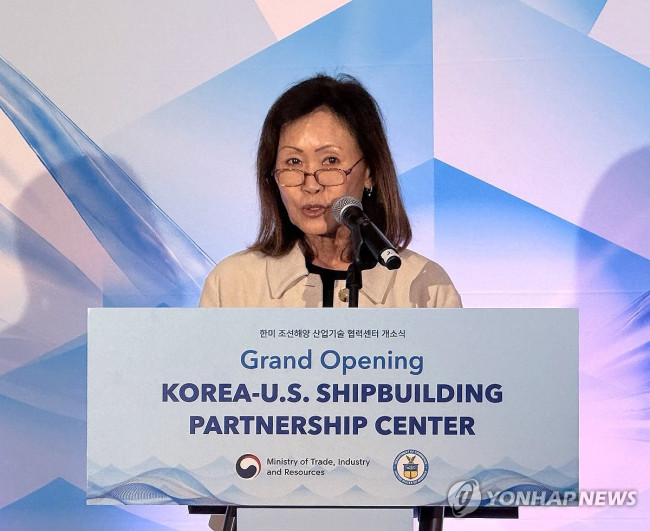 First U.S. Ambassador of Trump's Second Term to Arrive This Week… Will It Provide Momentum to Resolve Pending Issues?
U.S. Ambassador to South Korea Michelle Steel speaks at the opening ceremony of the Korea-U.S. Shipbuilding Cooperation Center held at the Mayflower Hotel in Washington, D.C., on the 23rd (local time)
First U.S. Ambassador of Trump's Second Term to Arrive This Week… Will It Provide Momentum to Resolve Pending Issues?
U.S. Ambassador to South Korea Michelle Steel speaks at the opening ceremony of the Korea-U.S. Shipbuilding Cooperation Center held at the Mayflower Hotel in Washington, D.C., on the 23rd (local time)
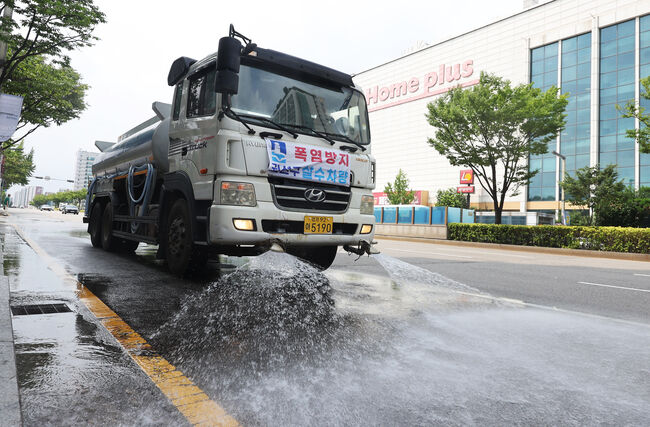 The Korean Peninsula wrapped in a thick blanket of scorching high pressure… Will the 1994 record be broken?
On the 28th, as the heatwave continues, a water sprinkler truck sprays water on Hyowon-ro, Gwonseon-gu, Suwon, Gyeonggi Province. [Photo = Yonhap News]The hottest years on record are considered to be
The Korean Peninsula wrapped in a thick blanket of scorching high pressure… Will the 1994 record be broken?
On the 28th, as the heatwave continues, a water sprinkler truck sprays water on Hyowon-ro, Gwonseon-gu, Suwon, Gyeonggi Province. [Photo = Yonhap News]The hottest years on record are considered to be
 Stock Market Crash 'Black Tuesday'… KOSPI down 10.8%, KOSDAQ down 7.7%
The KOSPI fell by more than 5% in early trading on the 28th, triggering a sell-side sidecar.On the 28th, the KOSPI plunged by more than 10%.Due to the sharp decline, a sell-side sidecar—a temporary
Stock Market Crash 'Black Tuesday'… KOSPI down 10.8%, KOSDAQ down 7.7%
The KOSPI fell by more than 5% in early trading on the 28th, triggering a sell-side sidecar.On the 28th, the KOSPI plunged by more than 10%.Due to the sharp decline, a sell-side sidecar—a temporary
 [World Heritage Committee] 25 New World Heritage Sites Inscribed in Busan… South Korea Successfully Expands 'Getbol' Listing
The Chairperson of the World Heritage Committee speaks at the plenary session of the 48th session of the World Heritage Committee, held at BEXCO in Busan on the 20th. [Photo: Yonhap News]A total of 25
[World Heritage Committee] 25 New World Heritage Sites Inscribed in Busan… South Korea Successfully Expands 'Getbol' Listing
The Chairperson of the World Heritage Committee speaks at the plenary session of the 48th session of the World Heritage Committee, held at BEXCO in Busan on the 20th. [Photo: Yonhap News]A total of 25
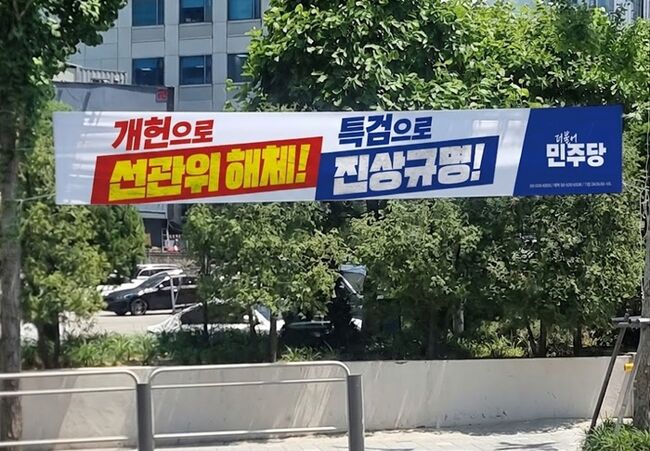 [Cho Yang-geon Column] The NEC: Facing a Fate of "Discarding the Dog After the Hunt"
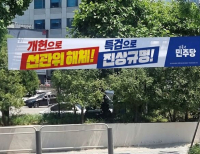
Banner calling for the "dissolution of the NEC" posted by the Democratic Party. [AI-generated image]Banners calling for the "dissolution of the National Election Commission (NEC)" posted by the Democr
[Cho Yang-geon Column] The NEC: Facing a Fate of "Discarding the Dog After the Hunt"
Banner calling for the "dissolution of the NEC" posted by the Democratic Party. [AI-generated image]Banners calling for the "dissolution of the National Election Commission (NEC)" posted by the Democr
 [Photo] Evidence of Election Fraud Flooding U.S. Media… Trump Had 2.7 Million Votes Stolen
 [Video] U.S. Semiquincentennial Air Show... 'Art in the Sky' streaks across New York
 [Editorial Cartoon] A Draconian Law That Undermines Freedom of Expression

 List
List