Hong Kong apartment fire scene. Yonhap News
A devastating fire in a high-rise apartment in Hong Kong resulted in 128 deaths and over 200 people missing as of 8 PM on the 28th. This incident starkly highlights the disaster risks inherent in high-density urban living. South Korea, where over 70% of the population resides in apartments, must also confront this tragic lesson and soberly answer the question: "Are our apartments truly safe?" South Korean apartments are evaluated as being "subject to strengthened regulatory frameworks, but largely vulnerable in terms of aging."
Our current Building Act and Fire Prevention Act mandate safety standards on par with developed countries. Apartments are designed with thorough fire compartmentation for each unit, delaying the spread of fire from one unit to another for a certain period. High-rise buildings of 11 floors or more are required to have fire compartmentation based on strict area criteria.
Furthermore, for buildings with four or more floors, the installation of in-unit fire escape facilities such as lightweight partitions, refuge areas, and downward escape chutes is mandatory. The compulsory installation of sprinklers in apartments of 10 floors or higher plays a crucial role in suppressing initial fires.
However, the problem lies with aging apartments that do not fall under these strengthened regulations and the deterioration of systems over time. In particular, a significant number of apartments completed before 2004 have a high risk of fire due to electrical short circuits because of inadequate legal regulations for electrical safety equipment.
Even more serious is the use of combustible insulation materials on the exterior walls of some older apartments. Exterior finishes like "dryvit" or certain sandwich panels can become fatal conduits for fire, rapidly spreading flames vertically when a fire breaks out, similar to Hong Kong's bamboo scaffolding, leading to a phenomenon where the 'exterior wall' becomes a 'vertical highway for fire spread'.
Additionally, cases of bicycles, potted plants, and garbage accumulating in stairwells, which are emergency escape routes, obstructing evacuation continue to occur. Fire doors are often not properly closed, or are even fixed in place for convenience, thereby compromising fire compartmentation by providing a passage for smoke to infiltrate other floors.
To significantly enhance the safety of apartments in South Korea, 'bridging the safety gap' and 'transitioning to proactive systems' are necessary.
▲ Bridging the Hardware Safety Gap: The government must legally mandate and financially support the replacement of electrical safety equipment and combustible exterior materials in aging apartments that have been in use for over 20 years. Furthermore, for apartments lacking sprinklers and automatic fire detection systems, the state should actively support the installation of wireless automatic fire detection systems, which have lower wiring costs, to ensure early response times. A policy shift considering the 'life-cycle risk of buildings' needs to be reviewed.
▲ Mandating Proactive Prevention and Response Systems: Special comprehensive inspections of high-rise buildings must be conducted at least once every two years to preemptively identify systemic flaws. Additionally, for new and renovated complexes, a fire prevention system that integrates monitoring and automatically shuts off risks such as electrical overload should be made mandatory.
▲ Introducing a 'Mobile Evacuation Awareness System': By continuously guiding residents with personalized evacuation routes and instructions on facility usage, residents' safety awareness should be technologically enhanced. Moreover, for apartments completed before 2004, a mandatory completion system should be introduced for the installation of wireless detectors, along with regular testing and reporting of their operational status.
▲ Applying a Zero-Tolerance Principle to Emergency Evacuation Route Management: Apartment management entities must establish a 'zero-tolerance principle for emergency evacuation routes' regarding items stored in corridors and stairwells. By strengthening real-time monitoring using technologies like AI video analytics, the perception that facility management is directly linked to life-saving must be disseminated.
South Korean apartments may appear as 'solid fortresses,' but within them lie aging structures, indifference, and a complacency that believes our apartments are 'safe.' We urge continuous investment, a social will prioritizing safety, and extraordinary government measures to ensure genuine residential safety, so that all apartments can be simultaneously 'strong fortresses' and 'systems that proactively respond to disasters.'

 [Statement by the Seobeokka KMA Patriots Association] ㉛ Recount the ballots openly, as the previous recount covered up election fraud
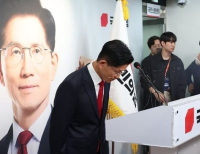
Recount of the Tongyeong mayoral election [Photo=Yonhap News]South Korea's liberal democracy is dying. The National Election Commission (NEC), which has degraded into a criminal organization through t
[Statement by the Seobeokka KMA Patriots Association] ㉛ Recount the ballots openly, as the previous recount covered up election fraud
Recount of the Tongyeong mayoral election [Photo=Yonhap News]South Korea's liberal democracy is dying. The National Election Commission (NEC), which has degraded into a criminal organization through t
 What is the significance of the "Trump 2028" red hat that keeps reappearing?
It is noteworthy that while it is "highly likely" that President Donald Trump is "seriously considering" a run for the presidency in 2028, he is also "deliberately" fueling speculation regarding wheth
What is the significance of the "Trump 2028" red hat that keeps reappearing?
It is noteworthy that while it is "highly likely" that President Donald Trump is "seriously considering" a run for the presidency in 2028, he is also "deliberately" fueling speculation regarding wheth
 First U.S. Ambassador of Trump's Second Term to Arrive This Week… Will It Provide Momentum to Resolve Pending Issues?
U.S. Ambassador to South Korea Michelle Steel speaks at the opening ceremony of the Korea-U.S. Shipbuilding Cooperation Center held at the Mayflower Hotel in Washington, D.C., on the 23rd (local time)
First U.S. Ambassador of Trump's Second Term to Arrive This Week… Will It Provide Momentum to Resolve Pending Issues?
U.S. Ambassador to South Korea Michelle Steel speaks at the opening ceremony of the Korea-U.S. Shipbuilding Cooperation Center held at the Mayflower Hotel in Washington, D.C., on the 23rd (local time)
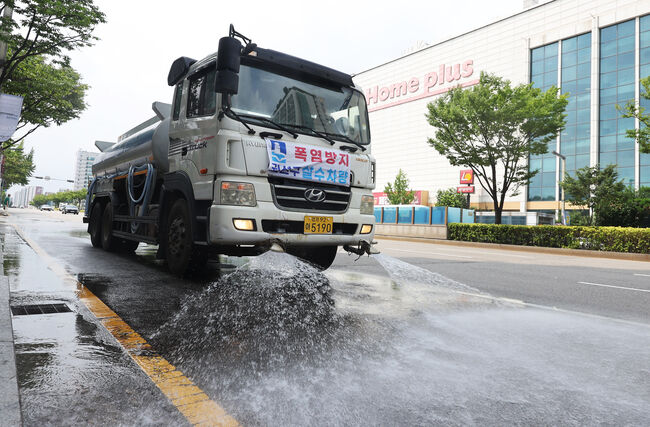 The Korean Peninsula wrapped in a thick blanket of scorching high pressure… Will the 1994 record be broken?
On the 28th, as the heatwave continues, a water sprinkler truck sprays water on Hyowon-ro, Gwonseon-gu, Suwon, Gyeonggi Province. [Photo = Yonhap News]The hottest years on record are considered to be
The Korean Peninsula wrapped in a thick blanket of scorching high pressure… Will the 1994 record be broken?
On the 28th, as the heatwave continues, a water sprinkler truck sprays water on Hyowon-ro, Gwonseon-gu, Suwon, Gyeonggi Province. [Photo = Yonhap News]The hottest years on record are considered to be
 Stock Market Crash 'Black Tuesday'… KOSPI down 10.8%, KOSDAQ down 7.7%
The KOSPI fell by more than 5% in early trading on the 28th, triggering a sell-side sidecar.On the 28th, the KOSPI plunged by more than 10%.Due to the sharp decline, a sell-side sidecar—a temporary
Stock Market Crash 'Black Tuesday'… KOSPI down 10.8%, KOSDAQ down 7.7%
The KOSPI fell by more than 5% in early trading on the 28th, triggering a sell-side sidecar.On the 28th, the KOSPI plunged by more than 10%.Due to the sharp decline, a sell-side sidecar—a temporary
 [World Heritage Committee] 25 New World Heritage Sites Inscribed in Busan… South Korea Successfully Expands 'Getbol' Listing
The Chairperson of the World Heritage Committee speaks at the plenary session of the 48th session of the World Heritage Committee, held at BEXCO in Busan on the 20th. [Photo: Yonhap News]A total of 25
[World Heritage Committee] 25 New World Heritage Sites Inscribed in Busan… South Korea Successfully Expands 'Getbol' Listing
The Chairperson of the World Heritage Committee speaks at the plenary session of the 48th session of the World Heritage Committee, held at BEXCO in Busan on the 20th. [Photo: Yonhap News]A total of 25
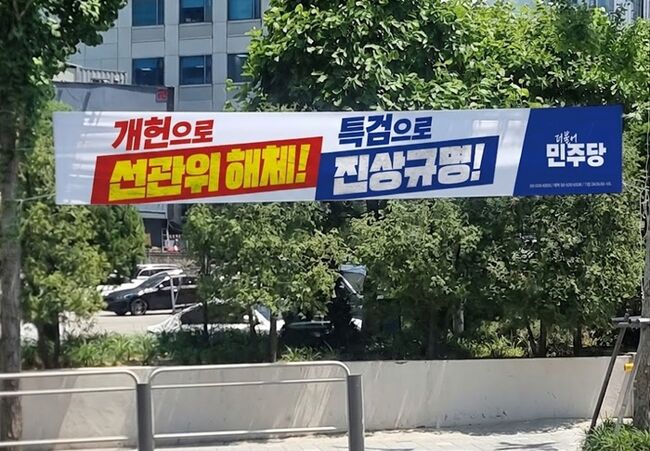 [Cho Yang-geon Column] The NEC: Facing a Fate of "Discarding the Dog After the Hunt"
Banner calling for the "dissolution of the NEC" posted by the Democratic Party. [AI-generated image]Banners calling for the "dissolution of the National Election Commission (NEC)" posted by the Democr
[Cho Yang-geon Column] The NEC: Facing a Fate of "Discarding the Dog After the Hunt"
Banner calling for the "dissolution of the NEC" posted by the Democratic Party. [AI-generated image]Banners calling for the "dissolution of the National Election Commission (NEC)" posted by the Democr
 [Photo] Evidence of Election Fraud Flooding U.S. Media… Trump Had 2.7 Million Votes Stolen
 [Video] U.S. Semiquincentennial Air Show... 'Art in the Sky' streaks across New York
 [Editorial Cartoon] A Draconian Law That Undermines Freedom of Expression

 List
List