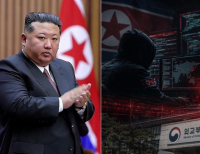
Budget season: Structure matters more than policy name. The Ministry of Economy and Finance is the starting point. [Graphic=Hanmi Ilbo]
While the government emphasizes that the National Growth Fund, expanded to 150 trillion won, will "build national highways for the AI era," the National Assembly and the financial sector are raising fundamental questions: "How does it differ from existing policy finance?" and "Who will be responsible if losses occur?"
The plan announced by the Lee Jae-myung administration is the largest in history, but its core design has not yet been revealed, leading to criticism that "the scale is the largest, but the blueprint is empty."
The National Growth Fund is designed with an umbrella structure, with contributions from the Korea Development Bank, Korea Growth Investment Corporation, and policy finance institutions, joined by pension funds and private investors.
The government's proposal is to leverage private capital through "seed money" such as contributions, guarantees, and interest subsidies. However, it remains unclear which industries, such as semiconductors, AI, and biotechnology, will receive how much funding, how private investment incentives will be designed, and how to avoid duplicate investments with existing innovation funds and ministry-specific AI budgets.
The biggest issue is whether this fund will have structural differences from existing industry and innovation funds.
While the government describes it as a "new national investment platform," the Korea Development Bank and Korea Growth Investment Corporation are already making large-scale investments in cutting-edge industries and AI. There is also considerable functional overlap with public AI transformation, ministry-specific innovation funds, and AI budgets.
Ultimately, the opposition party's claim of "rehash of policy finance" can be seen not just as a political attack, but as an issue raised in the context of structural verification.
Identifying who will be responsible for losses is also considered a key risk.
Long-term investments in high-risk industries such as semiconductors, AI, and biotechnology make it difficult to reach the break-even point. If government contributions, policy finance institution guarantees, and participation from public enterprises and pension funds are combined, there is a high possibility that losses could be transferred to taxpayer money or pension assets.
The National Pension Fund's investment principle is "appropriate returns for risk," but concerns are growing about "pension socialism," where participation could be forced in strategic industries due to political pressure, potentially overriding investment principles.
To attract large-scale private capital, the government will inevitably have to offer "stabilizers" such as expanded guarantees, increased contributions, and enhanced interest subsidies. This, in turn, leads to a structure where the government and policy finance institutions bear more risk. The Korean economy already faces vulnerabilities, including rapidly increasing national debt and a high private credit gap, making the absorption of additional risk by policy finance a direct issue for fiscal and financial stability.
Structural differences are also evident when compared to cases in major developed countries.
While the U.S. CHIPS Act and the EU's IPCEI focus on tax credits, subsidies, and public infrastructure support, largely avoiding direct government investment, Korea's National Growth Fund is structured for the government to be a direct player, combining government contributions, mobilization of policy finance institutions, and the potential participation of pension funds. While this allows for speed, the most significant risk is that any failure will directly impact the national treasury and pension funds.
Ultimately, the success or failure of the 150 trillion won National Growth Fund hinges not on "where it invests," but on "how the risk is designed to be borne." Key factors include: △ whether a command structure is in place to coordinate with existing funds and avoid overlap, △ whether transparent risk allocation is possible to prevent losses from being passed on to the public or pension funds, and △ whether structural mechanisms are in place for the private sector to bear losses.
Based on the information disclosed so far, the scale has been set, but the design remains unreleased. The fundamental risk lies not in the number "150 trillion won," but in its structure.
's conclusion is clear: Increased investment, but no control. Increased scale, but an empty blueprint.
#NationalGrowthFund #AIInnovationFund #LeeJaeMyungBudget #FiscalSustainabilityRisk #PoliticalPorkBarrel #BudgetDesignPolitics #NationalStrategicInvestment #FiscalRules #HanmiIlbo #SpecialFeature

 [Statement by the Seobeokka KMA Patriots Association] ㉛ Recount the ballots openly, as the previous recount covered up election fraud
Recount of the Tongyeong mayoral election [Photo=Yonhap News]South Korea's liberal democracy is dying. The National Election Commission (NEC), which has degraded into a criminal organization through t
[Statement by the Seobeokka KMA Patriots Association] ㉛ Recount the ballots openly, as the previous recount covered up election fraud
Recount of the Tongyeong mayoral election [Photo=Yonhap News]South Korea's liberal democracy is dying. The National Election Commission (NEC), which has degraded into a criminal organization through t
 What is the significance of the "Trump 2028" red hat that keeps reappearing?
It is noteworthy that while it is "highly likely" that President Donald Trump is "seriously considering" a run for the presidency in 2028, he is also "deliberately" fueling speculation regarding wheth
What is the significance of the "Trump 2028" red hat that keeps reappearing?
It is noteworthy that while it is "highly likely" that President Donald Trump is "seriously considering" a run for the presidency in 2028, he is also "deliberately" fueling speculation regarding wheth
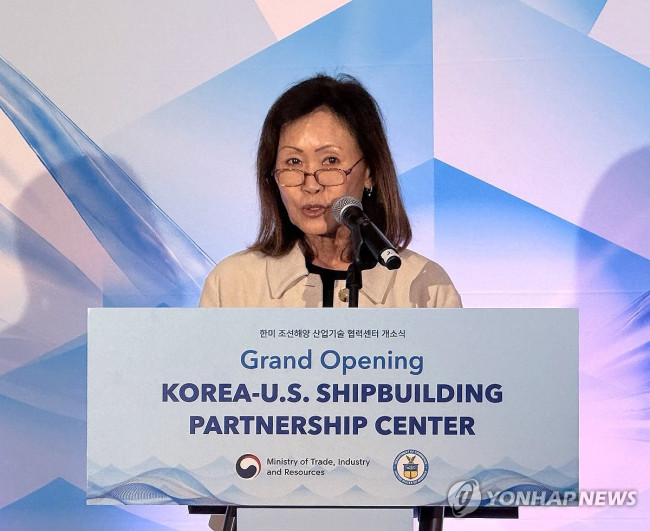 First U.S. Ambassador of Trump's Second Term to Arrive This Week… Will It Provide Momentum to Resolve Pending Issues?
U.S. Ambassador to South Korea Michelle Steel speaks at the opening ceremony of the Korea-U.S. Shipbuilding Cooperation Center held at the Mayflower Hotel in Washington, D.C., on the 23rd (local time)
First U.S. Ambassador of Trump's Second Term to Arrive This Week… Will It Provide Momentum to Resolve Pending Issues?
U.S. Ambassador to South Korea Michelle Steel speaks at the opening ceremony of the Korea-U.S. Shipbuilding Cooperation Center held at the Mayflower Hotel in Washington, D.C., on the 23rd (local time)
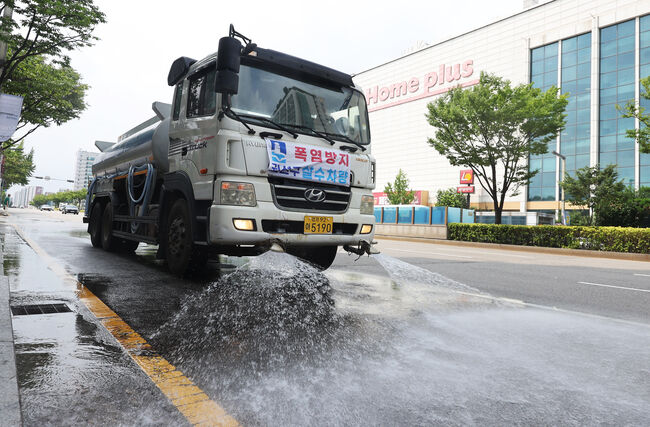 The Korean Peninsula wrapped in a thick blanket of scorching high pressure… Will the 1994 record be broken?
On the 28th, as the heatwave continues, a water sprinkler truck sprays water on Hyowon-ro, Gwonseon-gu, Suwon, Gyeonggi Province. [Photo = Yonhap News]The hottest years on record are considered to be
The Korean Peninsula wrapped in a thick blanket of scorching high pressure… Will the 1994 record be broken?
On the 28th, as the heatwave continues, a water sprinkler truck sprays water on Hyowon-ro, Gwonseon-gu, Suwon, Gyeonggi Province. [Photo = Yonhap News]The hottest years on record are considered to be
 Stock Market Crash 'Black Tuesday'… KOSPI down 10.8%, KOSDAQ down 7.7%
The KOSPI fell by more than 5% in early trading on the 28th, triggering a sell-side sidecar.On the 28th, the KOSPI plunged by more than 10%.Due to the sharp decline, a sell-side sidecar—a temporary
Stock Market Crash 'Black Tuesday'… KOSPI down 10.8%, KOSDAQ down 7.7%
The KOSPI fell by more than 5% in early trading on the 28th, triggering a sell-side sidecar.On the 28th, the KOSPI plunged by more than 10%.Due to the sharp decline, a sell-side sidecar—a temporary
 [World Heritage Committee] 25 New World Heritage Sites Inscribed in Busan… South Korea Successfully Expands 'Getbol' Listing
The Chairperson of the World Heritage Committee speaks at the plenary session of the 48th session of the World Heritage Committee, held at BEXCO in Busan on the 20th. [Photo: Yonhap News]A total of 25
[World Heritage Committee] 25 New World Heritage Sites Inscribed in Busan… South Korea Successfully Expands 'Getbol' Listing
The Chairperson of the World Heritage Committee speaks at the plenary session of the 48th session of the World Heritage Committee, held at BEXCO in Busan on the 20th. [Photo: Yonhap News]A total of 25
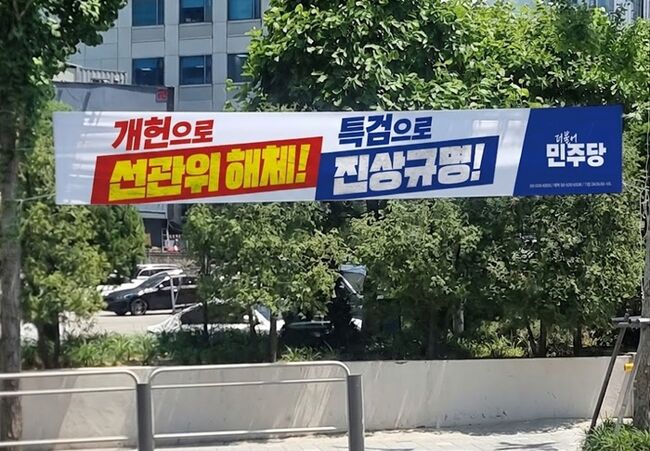 [Cho Yang-geon Column] The NEC: Facing a Fate of "Discarding the Dog After the Hunt"
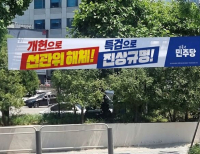
Banner calling for the "dissolution of the NEC" posted by the Democratic Party. [AI-generated image]Banners calling for the "dissolution of the National Election Commission (NEC)" posted by the Democr
[Cho Yang-geon Column] The NEC: Facing a Fate of "Discarding the Dog After the Hunt"
Banner calling for the "dissolution of the NEC" posted by the Democratic Party. [AI-generated image]Banners calling for the "dissolution of the National Election Commission (NEC)" posted by the Democr
 [Photo] Evidence of Election Fraud Flooding U.S. Media… Trump Had 2.7 Million Votes Stolen
 [Video] U.S. Semiquincentennial Air Show... 'Art in the Sky' streaks across New York
 [Editorial Cartoon] A Draconian Law That Undermines Freedom of Expression

 List
List