Coupang logistics vehicle. Yonhap News
 Korea-US-Japan Daily Columnist33.7 million people. Personal information of virtually the entire population of South Korea has been leaked. And it's sensitive information, including names, phone numbers, emails, addresses, and recent order history. A former Chinese employee stole the information over six months, and Coupang was unaware of it the entire time. It is shocking that the security of South Korea's number one e-commerce company was at this level. This is not a simple accident, but a structural collapse.
The reason for the simple signup process on Amazon in the US is not because of lax technology. Companies invest hundreds of billions of won in security because the penalties for personal information leakage are so severe that they could lead to business closure. In contrast, despite installing numerous security programs, including ActiveX, for a long time, South Korea has been plagued by security incidents. This is understandable. Even when an incident occurs, the penalty is only in the 'hundreds of millions of won' range, which is less than a week's public relations budget for a large corporation. In such a structure, why would companies invest properly in security?
The problem doesn't end there. It's the stark double standard shown by the political sphere and some factions depending on the nationality of the crime. When illegal Chinese immigrants commit crimes like voice phishing, drug trafficking, or hacking, there's silence. Instead of criticism, they repeatedly say, "Don't incite xenophobia." However, what if a Japanese person committed the same crime? The government would likely summon the Japanese ambassador to protest, the National Assembly would be in an uproar, and some organizations would hold daily protests in front of the embassy.
Why does everyone go silent when it comes to China?
Why are China-related crimes downplayed with the reason "do not incite nationalism," while Japanese issues are excessively amplified?
Why can't the media even write the word "Chinese" in their article titles?
This is not an 'suppression of anti-China sentiment,' but a silence created by political calculation. The attitude of overly protecting a certain group leads to a loss of public trust and ultimately harms public safety. Crimes should be judged by 'the crime itself,' not by nationality. Whether it's China, Japan, or the US, anyone who does wrong should be criticized equally. This is a fundamental principle of a normal country.
■ The necessary solutions now are clear
First, the Personal Information Protection Act must be strengthened to the level of the United States.
If companies are not punished with hundreds of billions of won for leaking 33.7 million people's information, security investments will not happen. Only severe penalties, to the extent that a company could go bankrupt, can prevent such incidents.
Second, the criteria for disclosing information on foreign national crimes must be completely revised.
'Crime facts + nationality' are basic information, whether it's China, Japan, or the US. Making an exception for only certain countries is not discrimination but political bias.
Third, the national cybersecurity system needs to be reorganized.
The fact that South Korea's number one e-commerce company was unaware of intrusion for six months means that cybersecurity has collapsed for both the private sector and the government. A national security control tower is needed.
Fourth, the political sphere must abandon its double standards.
If security, crime, and economic issues are approached based on nationalistic sentiments or political interests, the damage will be borne entirely by the public.
The Coupang incident is not just a hacking case.
It is a case that has collectively exposed lax regulations, corporate complacency, political double standards, and a backward culture of security.
What is needed now is not an emotional reaction, but practical reforms that change the nation's overall security level.
South Korea can no longer remain an 'undefended country' for personal information leaks.
Korea-US-Japan Daily Columnist

 [Statement by the Seobeokka KMA Patriots Association] ㉛ Recount the ballots openly, as the previous recount covered up election fraud
Recount of the Tongyeong mayoral election [Photo=Yonhap News]South Korea's liberal democracy is dying. The National Election Commission (NEC), which has degraded into a criminal organization through t
[Statement by the Seobeokka KMA Patriots Association] ㉛ Recount the ballots openly, as the previous recount covered up election fraud
Recount of the Tongyeong mayoral election [Photo=Yonhap News]South Korea's liberal democracy is dying. The National Election Commission (NEC), which has degraded into a criminal organization through t
 What is the significance of the "Trump 2028" red hat that keeps reappearing?
It is noteworthy that while it is "highly likely" that President Donald Trump is "seriously considering" a run for the presidency in 2028, he is also "deliberately" fueling speculation regarding wheth
What is the significance of the "Trump 2028" red hat that keeps reappearing?
It is noteworthy that while it is "highly likely" that President Donald Trump is "seriously considering" a run for the presidency in 2028, he is also "deliberately" fueling speculation regarding wheth
 First U.S. Ambassador of Trump's Second Term to Arrive This Week… Will It Provide Momentum to Resolve Pending Issues?
U.S. Ambassador to South Korea Michelle Steel speaks at the opening ceremony of the Korea-U.S. Shipbuilding Cooperation Center held at the Mayflower Hotel in Washington, D.C., on the 23rd (local time)
First U.S. Ambassador of Trump's Second Term to Arrive This Week… Will It Provide Momentum to Resolve Pending Issues?
U.S. Ambassador to South Korea Michelle Steel speaks at the opening ceremony of the Korea-U.S. Shipbuilding Cooperation Center held at the Mayflower Hotel in Washington, D.C., on the 23rd (local time)
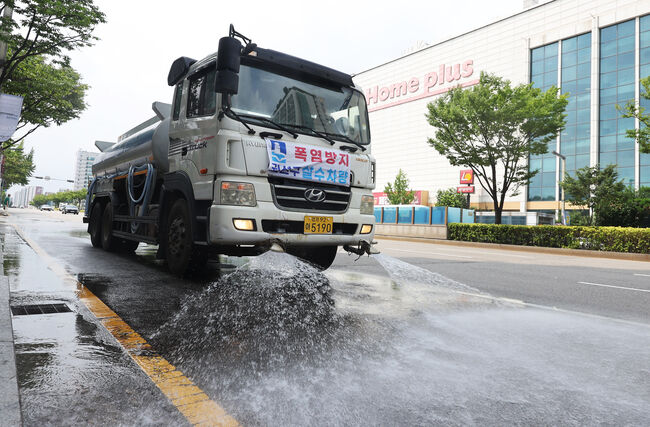 The Korean Peninsula wrapped in a thick blanket of scorching high pressure… Will the 1994 record be broken?
On the 28th, as the heatwave continues, a water sprinkler truck sprays water on Hyowon-ro, Gwonseon-gu, Suwon, Gyeonggi Province. [Photo = Yonhap News]The hottest years on record are considered to be
The Korean Peninsula wrapped in a thick blanket of scorching high pressure… Will the 1994 record be broken?
On the 28th, as the heatwave continues, a water sprinkler truck sprays water on Hyowon-ro, Gwonseon-gu, Suwon, Gyeonggi Province. [Photo = Yonhap News]The hottest years on record are considered to be
 Stock Market Crash 'Black Tuesday'… KOSPI down 10.8%, KOSDAQ down 7.7%
The KOSPI fell by more than 5% in early trading on the 28th, triggering a sell-side sidecar.On the 28th, the KOSPI plunged by more than 10%.Due to the sharp decline, a sell-side sidecar—a temporary
Stock Market Crash 'Black Tuesday'… KOSPI down 10.8%, KOSDAQ down 7.7%
The KOSPI fell by more than 5% in early trading on the 28th, triggering a sell-side sidecar.On the 28th, the KOSPI plunged by more than 10%.Due to the sharp decline, a sell-side sidecar—a temporary
 [World Heritage Committee] 25 New World Heritage Sites Inscribed in Busan… South Korea Successfully Expands 'Getbol' Listing
The Chairperson of the World Heritage Committee speaks at the plenary session of the 48th session of the World Heritage Committee, held at BEXCO in Busan on the 20th. [Photo: Yonhap News]A total of 25
[World Heritage Committee] 25 New World Heritage Sites Inscribed in Busan… South Korea Successfully Expands 'Getbol' Listing
The Chairperson of the World Heritage Committee speaks at the plenary session of the 48th session of the World Heritage Committee, held at BEXCO in Busan on the 20th. [Photo: Yonhap News]A total of 25
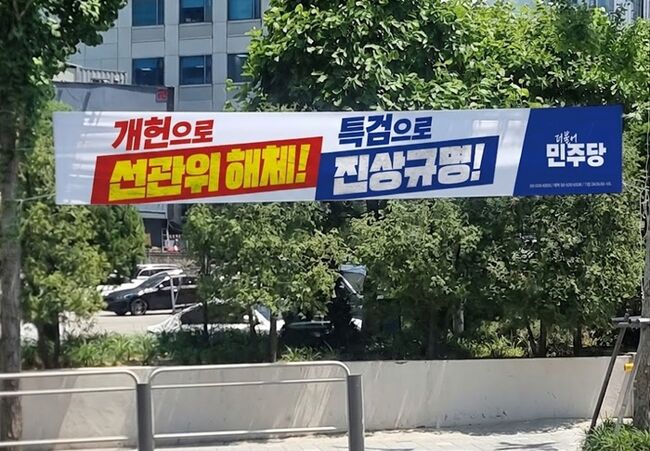 [Cho Yang-geon Column] The NEC: Facing a Fate of "Discarding the Dog After the Hunt"
Banner calling for the "dissolution of the NEC" posted by the Democratic Party. [AI-generated image]Banners calling for the "dissolution of the National Election Commission (NEC)" posted by the Democr
[Cho Yang-geon Column] The NEC: Facing a Fate of "Discarding the Dog After the Hunt"
Banner calling for the "dissolution of the NEC" posted by the Democratic Party. [AI-generated image]Banners calling for the "dissolution of the National Election Commission (NEC)" posted by the Democr
 [Photo] Evidence of Election Fraud Flooding U.S. Media… Trump Had 2.7 Million Votes Stolen
 [Video] U.S. Semiquincentennial Air Show... 'Art in the Sky' streaks across New York
 [Editorial Cartoon] A Draconian Law That Undermines Freedom of Expression

 List
List