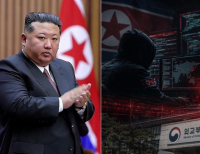
The United States has formalized a new Monroe Doctrine, asserting its claim over the "Western Hemisphere (referring to North and South America) as its domain."
This new Monroe Doctrine, also referred to as "Donroism" after President Donald Trump, can be seen as an "expanded and revised version" of the original Monroe Doctrine from the 1800s, which advocated for isolationism by refraining from intervention in European conflicts and focusing on national interests in the Americas.
The "National Security Strategy" (NSS) for the second Trump administration, released by the White House on the 5th (local time), reveals a policy of maintaining leadership in the Indo-Pacific, Europe, and the Middle East, while prioritizing the Western Hemisphere.
This strategy aims to establish the United States as the sole hegemonic power in the Americas, summarized by the phrase "restoring preeminence in the Western Hemisphere, which has been neglected for years."
The U.S. first acknowledged its "strategic mistake" of "allowing non-Western Hemisphere competitors to significantly penetrate 'our hemisphere' in ways that create economic disadvantages for us and pose future strategic damage, without serious deterrence."
The term "non-Western Hemisphere competitors" is interpreted as referring to China, implying that China has expanded its influence beyond the Middle East and Africa into various parts of Latin America through its "Belt and Road Initiative."
Indeed, China has been increasing its influence through loans, aid, and investment in several North and Central American countries, including Panama, which connects the Pacific and Atlantic oceans and divides North and South America; Venezuela, a treasure trove of natural resources; and Cuba, situated "under the nose" of the U.S.
The U.S. assesses that "low-cost foreign aid carries numerous costs, including espionage, cybersecurity, and debt traps," and that China has leveraged these "low-cost aid" to control Latin American countries and threaten the U.S.
The U.S. is concerned that the failure to strongly deter China's Belt and Road Initiative has not only strengthened peaceful and economic exchanges between China and these countries but has also potentially allowed China to gain military, economic, and intelligence superiority in case of a conflict with the U.S.
To address this situation, the U.S. has set a goal of expanding its influence in Latin America not only politically and militarily but also in terms of "soft power," thereby "reducing the influence of hostile external forces."
First, it announced plans to realign military deployments from less critical regions to Latin America, while simultaneously strengthening maritime control and border security.
A prime example is the deployment of the USS Gerald R. Ford carrier strike group and air wing in October to the areas under the jurisdiction of the U.S. Southern Command, including Latin America, the Caribbean, the Panama Canal, and parts of the Atlantic Ocean. Strategic assets, including B-1B bombers, were also flown over the Caribbean.
Furthermore, under the pretext of eradicating "drug terrorists" and blocking "illegal immigration," the U.S. is preparing to attack Venezuelan vessels and deploy ground troops. Large-scale immigration crackdowns within the U.S. can also be seen as an effort to root out "internal infiltrators."
The U.S. has also openly signaled its intention for political intervention in Latin America, stating that it "will reward and encourage regional governments, political parties, and movements that broadly align with our principles and strategy," implying a willingness to engage with anti-U.S. and pro-China regimes in Latin America.
President Trump is pressuring Brazil under the guise of assisting an "old friend" (former President Jair Bolsonaro) and is intensifying political pressure on Venezuela and Colombia.
Recently, he publicly supported a right-wing candidate in the Honduran presidential election and is actively supporting Argentina following the rise to power of President Javier Milei, often referred to as "the Trump of South America."
This political intervention clearly aims to exclude, pressure, and persuade countries with pro-China and anti-U.S. regimes, while establishing pro-U.S. regimes throughout Latin America to serve as footholds for blocking Chinese influence.
In addition, from a soft power perspective, the strategy involves using "tariffs and reciprocal trade as powerful tools," as well as leveraging "U.S. influence in finance and technology" to encourage countries to reject Chinese aid.
Through these hegemonic actions, the U.S. has stated that it will allow Latin American countries to choose whether they "want to live in a world of sovereign nations and free economies led by the United States, or under the influence of countries on the other side of the globe."
The strategy to reduce China's influence in the Western Hemisphere and establish the U.S.'s unparalleled position aims to block Chinese access to "control of military facilities, ports, and critical infrastructure" while strengthening U.S. dominance to maximize national interests.
Furthermore, the U.S., having exposed its weaknesses in rare earths and critical minerals in its trade war with China, appears to intend to leverage the abundant resources of Latin America as a stepping stone in the U.S.-China hegemonic competition.
 President Trump. AP Yonhap News

 [Statement by the Seobeokka KMA Patriots Association] ㉛ Recount the ballots openly, as the previous recount covered up election fraud
Recount of the Tongyeong mayoral election [Photo=Yonhap News]South Korea's liberal democracy is dying. The National Election Commission (NEC), which has degraded into a criminal organization through t
[Statement by the Seobeokka KMA Patriots Association] ㉛ Recount the ballots openly, as the previous recount covered up election fraud
Recount of the Tongyeong mayoral election [Photo=Yonhap News]South Korea's liberal democracy is dying. The National Election Commission (NEC), which has degraded into a criminal organization through t
 What is the significance of the "Trump 2028" red hat that keeps reappearing?
It is noteworthy that while it is "highly likely" that President Donald Trump is "seriously considering" a run for the presidency in 2028, he is also "deliberately" fueling speculation regarding wheth
What is the significance of the "Trump 2028" red hat that keeps reappearing?
It is noteworthy that while it is "highly likely" that President Donald Trump is "seriously considering" a run for the presidency in 2028, he is also "deliberately" fueling speculation regarding wheth
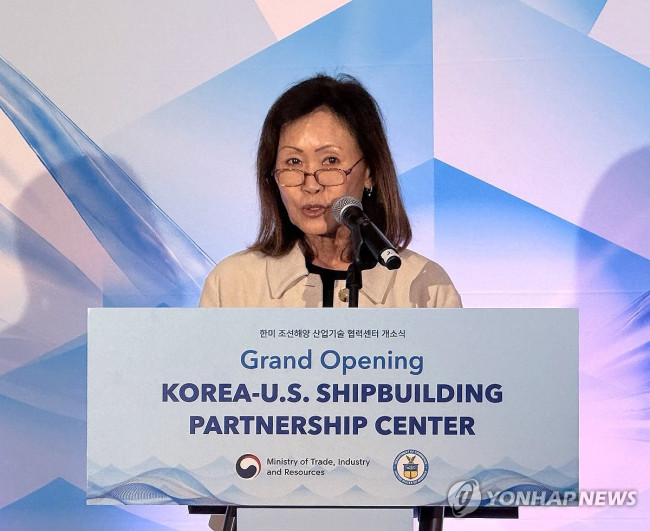 First U.S. Ambassador of Trump's Second Term to Arrive This Week… Will It Provide Momentum to Resolve Pending Issues?
U.S. Ambassador to South Korea Michelle Steel speaks at the opening ceremony of the Korea-U.S. Shipbuilding Cooperation Center held at the Mayflower Hotel in Washington, D.C., on the 23rd (local time)
First U.S. Ambassador of Trump's Second Term to Arrive This Week… Will It Provide Momentum to Resolve Pending Issues?
U.S. Ambassador to South Korea Michelle Steel speaks at the opening ceremony of the Korea-U.S. Shipbuilding Cooperation Center held at the Mayflower Hotel in Washington, D.C., on the 23rd (local time)
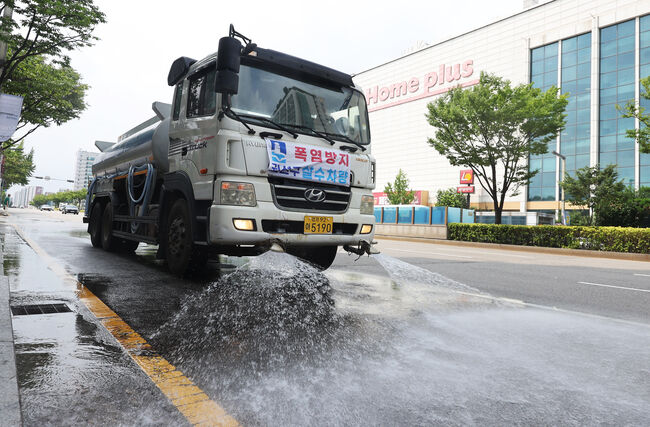 The Korean Peninsula wrapped in a thick blanket of scorching high pressure… Will the 1994 record be broken?
On the 28th, as the heatwave continues, a water sprinkler truck sprays water on Hyowon-ro, Gwonseon-gu, Suwon, Gyeonggi Province. [Photo = Yonhap News]The hottest years on record are considered to be
The Korean Peninsula wrapped in a thick blanket of scorching high pressure… Will the 1994 record be broken?
On the 28th, as the heatwave continues, a water sprinkler truck sprays water on Hyowon-ro, Gwonseon-gu, Suwon, Gyeonggi Province. [Photo = Yonhap News]The hottest years on record are considered to be
 Stock Market Crash 'Black Tuesday'… KOSPI down 10.8%, KOSDAQ down 7.7%
The KOSPI fell by more than 5% in early trading on the 28th, triggering a sell-side sidecar.On the 28th, the KOSPI plunged by more than 10%.Due to the sharp decline, a sell-side sidecar—a temporary
Stock Market Crash 'Black Tuesday'… KOSPI down 10.8%, KOSDAQ down 7.7%
The KOSPI fell by more than 5% in early trading on the 28th, triggering a sell-side sidecar.On the 28th, the KOSPI plunged by more than 10%.Due to the sharp decline, a sell-side sidecar—a temporary
 [World Heritage Committee] 25 New World Heritage Sites Inscribed in Busan… South Korea Successfully Expands 'Getbol' Listing
The Chairperson of the World Heritage Committee speaks at the plenary session of the 48th session of the World Heritage Committee, held at BEXCO in Busan on the 20th. [Photo: Yonhap News]A total of 25
[World Heritage Committee] 25 New World Heritage Sites Inscribed in Busan… South Korea Successfully Expands 'Getbol' Listing
The Chairperson of the World Heritage Committee speaks at the plenary session of the 48th session of the World Heritage Committee, held at BEXCO in Busan on the 20th. [Photo: Yonhap News]A total of 25
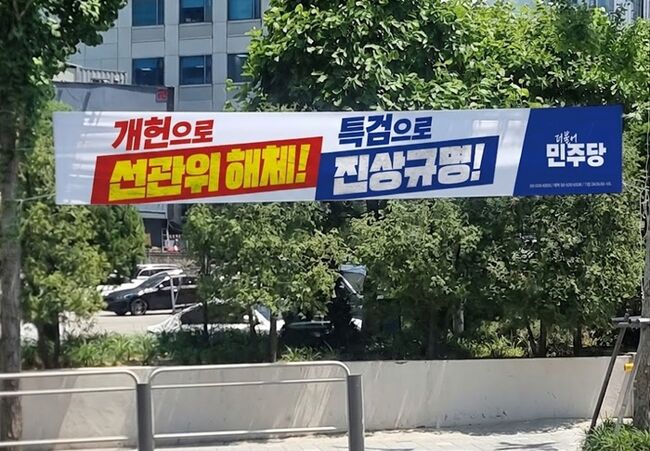 [Cho Yang-geon Column] The NEC: Facing a Fate of "Discarding the Dog After the Hunt"
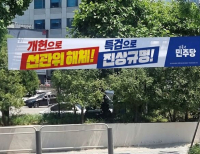
Banner calling for the "dissolution of the NEC" posted by the Democratic Party. [AI-generated image]Banners calling for the "dissolution of the National Election Commission (NEC)" posted by the Democr
[Cho Yang-geon Column] The NEC: Facing a Fate of "Discarding the Dog After the Hunt"
Banner calling for the "dissolution of the NEC" posted by the Democratic Party. [AI-generated image]Banners calling for the "dissolution of the National Election Commission (NEC)" posted by the Democr
 [Photo] Evidence of Election Fraud Flooding U.S. Media… Trump Had 2.7 Million Votes Stolen
 [Video] U.S. Semiquincentennial Air Show... 'Art in the Sky' streaks across New York
 [Editorial Cartoon] A Draconian Law That Undermines Freedom of Expression

 List
List