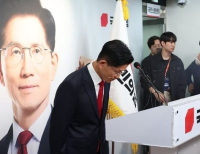
National Election Commission. Yonhap News
As of 2025, the core issue of the National Election Commission's (NEC) security is not "preventing external attacks."
If data structures, authorization structures, audit log structures, and code verification structures are absent, incidents occur not from external sources, but internally.
The personal information leak incident involving Coupang, affecting as many as 34 million individuals, serves as a case that re-establishes the fact that "security policies must extend beyond mere blocking to encompass verification."
In Korean society, personal information is no longer just data; it is a 'sovereign security asset' where national systems and individual safety intersect. The recent Coupang incident, originating from internal access rather than external intrusion, and revealing a lack of verification structures despite the presence of firewalls, carries significant implications.
At the same time, the National Election Commission, which holds information on all voters nationwide, repeatedly states that it is "safe because it is isolated from external networks." However, technically, isolation and safety are not synonymous. While isolation is akin to a firewall, safety is about structure, and this distinction highlights the fundamental difference between security awareness in the 1990s and security policies in 2025.
Examining the NEC through the lens of 2025 security policy reveals four problems.
Firstly, the fact that the NEC's systems are operated centrally rather than in a decentralized manner exacerbates structural risks.
Key systems such as the integrated voter registry, web servers, and integrated servers are concentrated in a central server. In information security, when data converges at a single point, authority also converges at that point, which is known as a 'Single Point of Failure.'
In other words, incidents do not necessarily originate externally; the stability of the entire system can be shaken by the intent of a single insider or a single mistake in authorization settings. This is not a conspiracy theory but a conceptual definition in information security.
The perception that 'blocking equals security,' centered around firewalls, is anachronistic.
Firewalls are merely devices to block external attacks and do not guarantee internal integrity. The Coupang incident clearly demonstrated this. Internal access, insider collusion, modifiable audit logs, and code changes without verification are all outside the protection of firewalls. The explanation that "it is safe because it is isolated from the outside" is merely political rhetoric lacking technical grounding.
The core of security lies in a structure that controls "who can do what."
Secondly, modern security operates under an RBAC (Role-Based Access Control) system. Authority is granted to roles, not individuals, and operational, verification, and auditing functions are separated. Systems lacking an RBAC structure allow a single administrator to perform all functions, including viewing, modifying, deleting, and accessing logs, leading to untraceability in the event of an incident.
RBAC is not an option but a minimum security requirement for 2025; however, there is no indication that the NEC operates this system.
Thirdly, the issue of audit logs is even more critical.
Audit logs must record 'who, when, and what' was changed, and properly designed logs must be immutable. They are only meaningful if administrators cannot modify or delete them. If there are no logs, tracing is impossible; if logs exist but can be deleted, they are as good as non-existent.
While the NEC emphasizes 'isolation from external networks,' there is no explanation regarding the operation of immutable audit logs.
Fourthly, code signing is also crucial for the security of election systems.
Systems operate based on code, not human commands, and modifications must undergo an approval process, signature verification, and be recorded in logs. Financial networks mandate this process, but the NEC does not disclose its code modification procedures.
This suggests not necessarily 'confidentiality' but rather a 'potential for an unpublishable structure,' as code can be directly linked to the processing of voting data.
The Coupang incident was a matter of "access," not "hacking," and system vulnerabilities stemmed from structural flaws, not technical loopholes.
Even if not currently under attack, security experts generally agree that the NEC is in a "structurally vulnerable state." The essence of the problem is that risks originate internally, not externally.
Hankyoreh, JoongAng Ilbo, and The Korea Herald pose three questions to the NEC:
First, does the NEC operate an RBAC (Role-Based Access Control) system? Is authority vested in individuals or in the structure?
Second, are audit logs designed in an immutable form? Can logs be deleted, or are they designed to be undeletable?
Third, do code changes undergo an approval process and signature verification? Are changes recorded, traceable, and designed for external verification?
Security is not about trust, but about verification. Verification is about responsibility, not attack, and that responsibility culminates in improving the verification structure of the electoral system.
Even those who dismiss suspicions of election fraud as conspiracy theories would likely agree with this point. Is there any reason why a single key employee of the NEC should have the ability to destabilize South Korea's elections? This is why the NEC's response is eagerly awaited.

 [Statement by the Seo-beo-kka Korea Military Academy Save-the-Nation Comrades Association] ㉛ Recount the Votes Publicly, as the Previous Recount Concealed Election Fraud
Tongyeong Mayoral Election Recount [Photo=Yonhap News]South Korea's liberal democracy is dying. The National Election Commission (NEC) and the judiciary, which have plummeted into criminal syndicates
[Statement by the Seo-beo-kka Korea Military Academy Save-the-Nation Comrades Association] ㉛ Recount the Votes Publicly, as the Previous Recount Concealed Election Fraud
Tongyeong Mayoral Election Recount [Photo=Yonhap News]South Korea's liberal democracy is dying. The National Election Commission (NEC) and the judiciary, which have plummeted into criminal syndicates
 What is the significance of the "Trump 2028" red hats that keep making a comeback?
It is noteworthy that President Donald Trump is "intentionally" fueling controversy over whether he can actually run in the 2028 presidential election, even though it is "highly likely he is seriously
What is the significance of the "Trump 2028" red hats that keep making a comeback?
It is noteworthy that President Donald Trump is "intentionally" fueling controversy over whether he can actually run in the 2028 presidential election, even though it is "highly likely he is seriously
 Jin Cummings: “North Korea says it will increase the number of spies, so what is the government doing?”
U.S. political columnist Gene Cummings has publicly questioned the South Korean government, asking, "North Korea is declaring that it will increase its number of spies, so what is the South Kore
Jin Cummings: “North Korea says it will increase the number of spies, so what is the government doing?”
U.S. political columnist Gene Cummings has publicly questioned the South Korean government, asking, "North Korea is declaring that it will increase its number of spies, so what is the South Kore
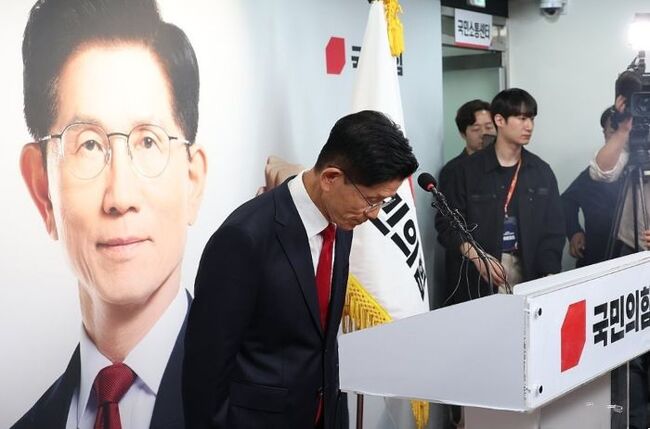 “Too little, too late?…” Kim Moon-soo, who previously conceded his presidential election defeat, now demands a special counsel investigation into ‘allegations of election fraud in the 2025 presidential election’
People Power Party presidential candidate Kim Moon-soo concedes defeat during a press conference at the party headquarters in Yeouido, Seoul, on June 4, 2025. [Joint Press Corps]As allegations emerge
“Too little, too late?…” Kim Moon-soo, who previously conceded his presidential election defeat, now demands a special counsel investigation into ‘allegations of election fraud in the 2025 presidential election’
People Power Party presidential candidate Kim Moon-soo concedes defeat during a press conference at the party headquarters in Yeouido, Seoul, on June 4, 2025. [Joint Press Corps]As allegations emerge
 Stock Market Crash 'Black Tuesday'… KOSPI down 10.8%, KOSDAQ down 7.7%
The KOSPI fell by more than 5% in early trading on the 28th, triggering a sell-side sidecar.On the 28th, the KOSPI plunged by more than 10%.Due to the sharp decline, a sell-side sidecar—a temporary
Stock Market Crash 'Black Tuesday'… KOSPI down 10.8%, KOSDAQ down 7.7%
The KOSPI fell by more than 5% in early trading on the 28th, triggering a sell-side sidecar.On the 28th, the KOSPI plunged by more than 10%.Due to the sharp decline, a sell-side sidecar—a temporary
 [World Heritage Committee] 25 New World Heritage Sites Inscribed in Busan… South Korea Successfully Expands 'Getbol' Listing
The Chairperson of the World Heritage Committee speaks at the plenary session of the 48th session of the World Heritage Committee, held at BEXCO in Busan on the 20th. [Photo: Yonhap News]A total of 25
[World Heritage Committee] 25 New World Heritage Sites Inscribed in Busan… South Korea Successfully Expands 'Getbol' Listing
The Chairperson of the World Heritage Committee speaks at the plenary session of the 48th session of the World Heritage Committee, held at BEXCO in Busan on the 20th. [Photo: Yonhap News]A total of 25
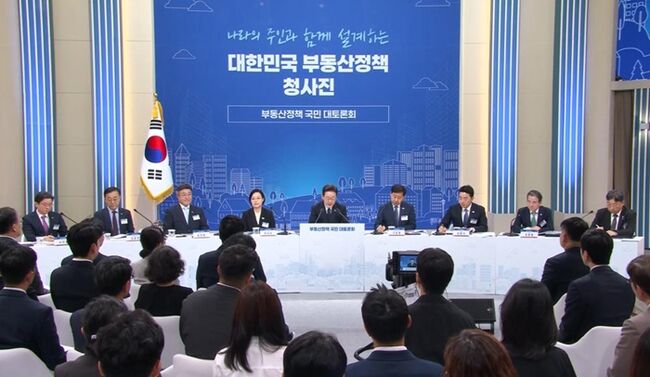 [Liberal Democratic Party Statement] Calling it a Grand Real Estate Debate… It Was Nothing More Than a Private Party Among Themselves
The 'National Grand Debate on Real Estate Policy' held on July 23rd and 27th. [Photo=Yonhap News]The 'National Grand Debate on Real Estate Policy,' hosted by the Lee Jae-myung administration under the
[Liberal Democratic Party Statement] Calling it a Grand Real Estate Debate… It Was Nothing More Than a Private Party Among Themselves
The 'National Grand Debate on Real Estate Policy' held on July 23rd and 27th. [Photo=Yonhap News]The 'National Grand Debate on Real Estate Policy,' hosted by the Lee Jae-myung administration under the
 [Photo] Evidence of Election Fraud Flooding U.S. Media… Trump Had 2.7 Million Votes Stolen
 [Video] U.S. Semiquincentennial Air Show... 'Art in the Sky' streaks across New York
 [Editorial Cartoon] A Draconian Law That Undermines Freedom of Expression

 List
List