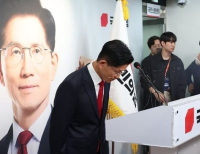
Ballot sorter. Yonhap News
Discussions about constitutional amendment are resurfacing. Along with this, various proposals are being presented, such as restructuring the power framework, a prime minister with accountability, and a bicameral legislature. However, one fundamental question is missing from these discussions. The question is, on what legitimacy is the constitutional amendment being pursued?
Constitutional amendment is not an abstract political discourse. Amending the Constitution requires the approval of more than two-thirds of the total number of National Assembly members and must go through a national referendum. In other words, constitutional amendment is also decided by the National Assembly, which is formed through elections, and by another election. Therefore, the legitimacy of constitutional amendment can only be secured when the transparency of elections is guaranteed.
There is a point that needs to be clearly addressed here. This issue being raised now is not an argument to deny the legitimacy of a specific election result, nor is it an argument to punish fraudulent acts. It is simply asking whether the electoral system, which underpins the constitutional order, can prove its own credibility when doubts arise.
What is important in a democracy is not the number of voters who participated, but how acceptable the results are.
Voter turnout is merely an indicator of the scale of participation; the core that supports the constitutional order lies in the credibility with which election results can be accepted without doubt. More important than the cheers of the winning side is the concession of the losing side, and concession cannot be achieved without trust.
The electoral system is not a mere administrative technique. A trustworthy electoral system is the most fundamental pillar supporting the constitutional order. If trust in elections collapses, the legitimacy of the legislative, executive, and judicial branches built upon it will inevitably shake as well.
Based on this criterion, developed democratic countries share a commonality in their electoral systems: they are trusted not because they are free from suspicion, but because their systems can handle suspicions when they arise.
In the United States, the exposure of votes cast by deceased individuals is evidence that the system for thoroughly storing and reviewing voting records is operating meticulously.
This is not something unique to the United States. Germany prioritizes the certainty of verification over the convenience of electronic voting, adhering to paper ballots as the principle, and makes all vote-counting processes open to citizens. The German Constitutional Court has ruled that "elections must be understandable and verifiable by citizens without special expertise."
This means that 'whether citizens can directly observe and monitor' is considered a more important constitutional principle than the convenience of technology.
The same applies to Canada. Voting and vote-counting records are preserved for extended periods, and post-election analysis by researchers, civic groups, and the media is institutionally permitted.
Election management bodies even make critical reports public and do not brand challenges to elections as refusals to accept results. Trust is maintained when there are mechanisms in place to properly verify suspicions when they arise.
The commonality among these countries is clear. They value elections themselves but do not blindly believe their results. Instead, they absolutely prioritize the procedures of record-keeping, disclosure, and verification.
Consequently, even when errors are found during the election process, they are not seen as a failure of the system but rather as evidence that the verification system worked properly.
On the other hand, the attitude of dismissing legitimate questions about the electoral system as conspiracy theories hinders the restoration of trust. The moment doubts are dismissed as conspiracy theories, the state abandons its responsibility to prove its own credibility. The reason for public opinion trials replacing the system is not because voters make unreasonable demands, but because the system is not transparent enough to inspire belief.
Court rulings are not decided by public opinion, but they gain legitimacy only when everyone can observe and review the decision-making process. Elections are similar. More important than the result of victory or defeat is a transparent verification process that everyone can accept.
In this state, rushing into constitutional amendment is a backward approach. Before changing the Constitution, trust in the process of creating the Constitution must be restored. A constitutional amendment pursued while neglecting distrust in the electoral system is likely to become a constitution of conflict, not a constitution of unity.
This does not mean that constitutional amendment is unnecessary, but rather that the conditions for its success must be clarified. The starting point is not to debate how to change the power structure. Instead, the priority is to regain trust in elections by ensuring that the election process is verifiable by everyone, that records are transparently disclosed, and that independent monitoring takes place.
The Constitution is established through elections, and elections exist based on the trust of the people.
A constitutional amendment pursued in a state of broken trust is not a design for the future but merely a formalization of distrust.

 [Statement by the Seo-beo-kka Korea Military Academy Save-the-Nation Comrades Association] ㉛ Recount the Votes Publicly, as the Previous Recount Concealed Election Fraud
Tongyeong Mayoral Election Recount [Photo=Yonhap News]South Korea's liberal democracy is dying. The National Election Commission (NEC) and the judiciary, which have plummeted into criminal syndicates
[Statement by the Seo-beo-kka Korea Military Academy Save-the-Nation Comrades Association] ㉛ Recount the Votes Publicly, as the Previous Recount Concealed Election Fraud
Tongyeong Mayoral Election Recount [Photo=Yonhap News]South Korea's liberal democracy is dying. The National Election Commission (NEC) and the judiciary, which have plummeted into criminal syndicates
 What is the significance of the "Trump 2028" red hats that keep making a comeback?
It is noteworthy that President Donald Trump is "intentionally" fueling controversy over whether he can actually run in the 2028 presidential election, even though it is "highly likely he is seriously
What is the significance of the "Trump 2028" red hats that keep making a comeback?
It is noteworthy that President Donald Trump is "intentionally" fueling controversy over whether he can actually run in the 2028 presidential election, even though it is "highly likely he is seriously
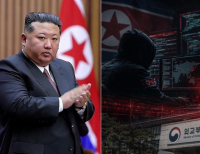
 Jin Cummings: “North Korea says it will increase the number of spies, so what is the government doing?”
U.S. political columnist Gene Cummings has publicly questioned the South Korean government, asking, "North Korea is declaring that it will increase its number of spies, so what is the South Kore
Jin Cummings: “North Korea says it will increase the number of spies, so what is the government doing?”
U.S. political columnist Gene Cummings has publicly questioned the South Korean government, asking, "North Korea is declaring that it will increase its number of spies, so what is the South Kore
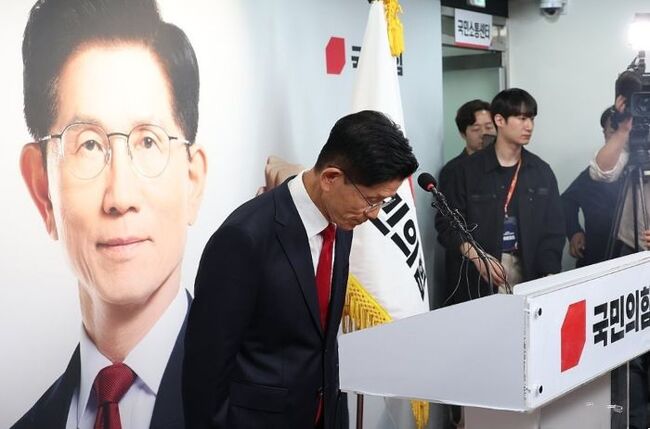 “Too little, too late?…” Kim Moon-soo, who previously conceded his presidential election defeat, now demands a special counsel investigation into ‘allegations of election fraud in the 2025 presidential election’
People Power Party presidential candidate Kim Moon-soo concedes defeat during a press conference at the party headquarters in Yeouido, Seoul, on June 4, 2025. [Joint Press Corps]As allegations emerge
“Too little, too late?…” Kim Moon-soo, who previously conceded his presidential election defeat, now demands a special counsel investigation into ‘allegations of election fraud in the 2025 presidential election’
People Power Party presidential candidate Kim Moon-soo concedes defeat during a press conference at the party headquarters in Yeouido, Seoul, on June 4, 2025. [Joint Press Corps]As allegations emerge
 Stock Market Crash 'Black Tuesday'… KOSPI down 10.8%, KOSDAQ down 7.7%
The KOSPI fell by more than 5% in early trading on the 28th, triggering a sell-side sidecar.On the 28th, the KOSPI plunged by more than 10%.Due to the sharp decline, a sell-side sidecar—a temporary
Stock Market Crash 'Black Tuesday'… KOSPI down 10.8%, KOSDAQ down 7.7%
The KOSPI fell by more than 5% in early trading on the 28th, triggering a sell-side sidecar.On the 28th, the KOSPI plunged by more than 10%.Due to the sharp decline, a sell-side sidecar—a temporary
 [World Heritage Committee] 25 New World Heritage Sites Inscribed in Busan… South Korea Successfully Expands 'Getbol' Listing
The Chairperson of the World Heritage Committee speaks at the plenary session of the 48th session of the World Heritage Committee, held at BEXCO in Busan on the 20th. [Photo: Yonhap News]A total of 25
[World Heritage Committee] 25 New World Heritage Sites Inscribed in Busan… South Korea Successfully Expands 'Getbol' Listing
The Chairperson of the World Heritage Committee speaks at the plenary session of the 48th session of the World Heritage Committee, held at BEXCO in Busan on the 20th. [Photo: Yonhap News]A total of 25
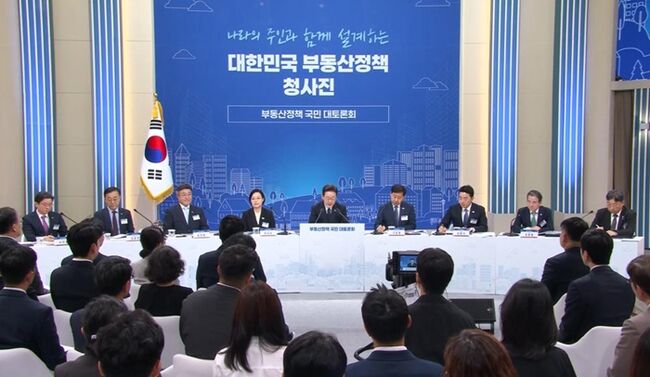 [Liberal Democratic Party Statement] Calling it a Grand Real Estate Debate… It Was Nothing More Than a Private Party Among Themselves
The 'National Grand Debate on Real Estate Policy' held on July 23rd and 27th. [Photo=Yonhap News]The 'National Grand Debate on Real Estate Policy,' hosted by the Lee Jae-myung administration under the
[Liberal Democratic Party Statement] Calling it a Grand Real Estate Debate… It Was Nothing More Than a Private Party Among Themselves
The 'National Grand Debate on Real Estate Policy' held on July 23rd and 27th. [Photo=Yonhap News]The 'National Grand Debate on Real Estate Policy,' hosted by the Lee Jae-myung administration under the
 [Photo] Evidence of Election Fraud Flooding U.S. Media… Trump Had 2.7 Million Votes Stolen
 [Video] U.S. Semiquincentennial Air Show... 'Art in the Sky' streaks across New York
 [Editorial Cartoon] A Draconian Law That Undermines Freedom of Expression

 List
List