 Marine Corps amphibious operation. Yonhap NewsThe Ministry of National Defense recently announced its plan to reorganize the Marine Corps command structure, transitioning to a so-called ‘quasi-four-star system.’ The core of this plan involves reorganizing the operational control structure of the Marine Corps' 1st and 2nd Divisions, establishing a Marine Corps Operations Command, and, in the long term, creating a structure that allows for the promotion of four-star generals from the Marine Corps. This marks a significant change approximately 50 years after the establishment of the Marine Corps Headquarters, appearing on the surface to be a measure to elevate and make the Marine Corps an independent strategic force.
However, the reorganization of the Marine Corps is not predicated on troop augmentation and expansion of operational assets. Currently, the Marine Corps' strength consists of two divisions and one brigade. Personnel, education, and logistics, among other administrative functions, are already independently commanded by the Commandant of the Marine Corps. The change resulting from the reorganization will not be in actual combat power and strength, but solely in the command structure and the Marine Corps' status.
This is a dangerous experiment, a temporary popular policy driven by political commitments and awareness of local elections rather than military effectiveness. If the transfer of Marine Corps operational authority and the recovery of wartime operational control would enhance the military's combat power and benefit national interests, it should be swiftly pursued as a national task. However, this could lead to military failure, security gaps, threaten the lives of citizens, and result in the unauthorized outflow of foreign capital.
What are the problems with the transfer of Marine Corps operational authority and the ‘quasi-four-star system’ reorganization?
Since its inception, the Marine Corps has never officially requested or proposed independence in military orders, meaning operational command. Even within the current three-service system, the Marine Corps has sufficiently conducted joint operations, and no structural issues have been raised in terms of operational efficiency. Despite this, the intervention of popular politics in military organizational reform, the artificial interpretation, and the unilateral direction are a significant deviation from the fundamental principles of military reform, which are to prevent war and ensure national interests and the right to survival.
△Creation of Imbalance between Personnel and Assets: In a situation where the entire ROK military is being downsized due to a decrease in enlistment resources, augmenting the Marine Corps is realistically impossible. Maintaining the same troop numbers while expanding the rank structure and command organization is not an enhancement of combat power but a waste of military capabilities and irresponsible political bureaucratization. A structure with enlarged responsibility and status but no increase in force assets will only provoke inter-service conflict and become vulnerable in times of crisis, which the Marine Corps personnel themselves would not want.
△Weakening of Capital Defense and Jointness: The Marine Corps' 2nd Division is a key unit for the defense of the southwestern part of the capital region along the Gimpo-Ganghwa axis. Currently, under the operational control of the Army's Ground Operations Command, immediate mobile reserve deployment and firepower support are possible. However, if command is separated, the chain of command will change to a 'cooperation' structure. The battlefield of a smart military demands jointness and integration, but the command is instead being separated and fragmented, risking a decrease in military efficiency and deterrence. The North Korean regime would inwardly welcome the separation of the Marine Corps.
The Dangerous Common Denominator Between the Transfer of Marine Corps Operational Authority and the Logic of Wartime Operational Control Recovery.
The logic behind the transfer of Marine Corps operational authority and the recovery of wartime operational control shares a similar structure. Both the recovery of wartime operational control and the transfer of Marine Corps operational authority are narratives of popular politics rather than military demands, and they create a structure disadvantageous to ROK-US alliance combined and joint operations and war deterrence. If both issues proceed concurrently, the decision-making structure of the ROK-US Combined Forces Command and the Joint Chiefs of Staff will become slower and more complex. This could provide opportunities for misjudgment to the enemy due to the inefficiency of military power projection.
△Security Gaps Caused by Popular Politics of Independence and Pride: Independence and pride are politically sweet words. The transition to the Marine Corps’ ‘quasi-four-star system’ and the recovery of wartime operational control are also packaged with the attractive language of ‘independence,’ emphasizing autonomy. Political independence and pride shake the current operational system that the military has reviewed and built over a long period, creating chaos in military order. In the operational system established since the founding of the Marine Corps Headquarters, the separation of command for pride means operational continuity disruption and military weakening.
△Lack of Assets and Capabilities to Support Transition and Recovery: Both policies share a hasty structure of prioritizing command authority over military capabilities. Conditions such as combined command capabilities, intelligence, surveillance, and reconnaissance assets, and strategic asset linkage have not been sufficiently verified, yet command authority and status are being pushed for transfer and recovery prematurely. The Marine Corps relies on naval and air assets from the Navy and Air Force but seeks to separate command authority, and the recovery of wartime operational control is also being pursued without the complete establishment of combined combat power, intelligence, surveillance, reconnaissance, and strategic asset operational capabilities. This is not independence but isolation, and not ‘security independence’ but ‘self-inflicted security harm.’
△Problems from a Constitutional Perspective: The Constitution imposes an obligation on the state to ensure security and national defense and specifies the President's responsibility to protect the nation. The state and the President must prioritize the lives and safety of the people. If security is weakened by pursuing command separation or the recovery of wartime operational control without sufficient research, cooperation, and preparation, this is an abandonment of constitutional duty under the guise of independence. Article 10 (Right to Life), Article 23 (Right to Property), and Article 37 (Principle of Proportionality) of the Constitution are provisions stipulating that the state shall not impose unnecessary security anxieties and costs on the people.
The recovery of wartime operational control, which cannot inherit and replace the current ROK-US combined forces, transfers risks and security cost burdens to the people, threatens the nation's right to survival, and incites foreign capital outflow due to significant security anxiety, thus constituting an dereliction of duty under the Constitution.
Public Verification and Discussion Involving the National Assembly and the Public are Necessary
The transfer of Marine Corps operational authority and the recovery of wartime operational control must be verified based on core security standards such as national interest, war deterrence, and force/assets/jointness. However, the current transfer of Marine Corps operational authority lacks verification of independent operational capabilities, assessment of capital defense continuity, and plans for securing mobile reserves. In particular, the Gimpo-Ganghwa axis requires decision-making in seconds and immediate deployment; command separation leads to delayed decisions and diffused responsibility, diminishing combat efficiency. If the Gimpo-Ganghwa axis collapses, Seoul and the capital region will face a crisis.
The Ministry of National Defense's attempt to package the Marine Corps reorganization with the recovery of wartime operational control as political justification is an anti-national act that reduces security to a political event. It is a deliberate abandonment of the obligation to ensure safety. What is needed now is not independent pride, a four-service banner, and a review of the integration of the three-service academies, but a clear command system and a unified command language that can properly project the current military forces. The Ministry of National Defense must cease its clandestine efforts that weaken war deterrence and immediately engage in public verification involving the National Assembly and the public.
Public sentiment and military sentiment oppose the current government's popular security policies that endanger the lives of the people and national security, urging reconsideration.
Editorial Board Member, The Hankyoreh

◆ Park Pil-kyu
Editorial Board Member, The Hankyoreh
40th graduating class, Korea Military Academy

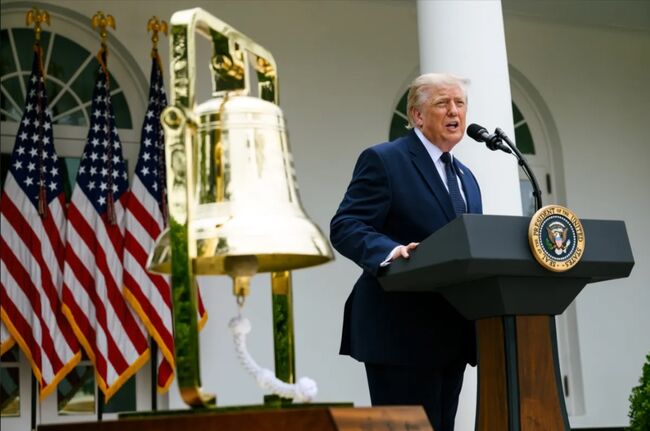 Trump pressures for rate cut again ahead of FOMC... "Should be the lowest in the world"
U.S. President Donald Trump. [Photo = The White House] U.S. President Donald Trump once again pressured the Federal Reserve, the U.S. central bank, to lower interest rates on the 27th (local time
Trump pressures for rate cut again ahead of FOMC... "Should be the lowest in the world"
U.S. President Donald Trump. [Photo = The White House] U.S. President Donald Trump once again pressured the Federal Reserve, the U.S. central bank, to lower interest rates on the 27th (local time
 “Ignoring crisp ballots and damaged seals”… Tongyeong mayoral recount concludes with ‘no change in outcome,’ leaving suspicions and public outrage behind
Suspected counterfeit ballots discovered in Tongyeong [GIF from social media of Representative Hwang Kyo-ahn / Attorney Park Joo-hyun]During a recount of the Tongyeong mayoral election in South Gyeong
“Ignoring crisp ballots and damaged seals”… Tongyeong mayoral recount concludes with ‘no change in outcome,’ leaving suspicions and public outrage behind
Suspected counterfeit ballots discovered in Tongyeong [GIF from social media of Representative Hwang Kyo-ahn / Attorney Park Joo-hyun]During a recount of the Tongyeong mayoral election in South Gyeong
 President Yoon, regarding the first-instance ruling on the Public Official Election Act: “An excessive political verdict that distorts the facts… We will appeal immediately.”
The first-instance sentencing hearing for President Yoon Suk Yeol regarding violations of the Public Official Election Act is being broadcast live at Seoul Station on the 27th. [Photo=Yonhap News]Pres
President Yoon, regarding the first-instance ruling on the Public Official Election Act: “An excessive political verdict that distorts the facts… We will appeal immediately.”
The first-instance sentencing hearing for President Yoon Suk Yeol regarding violations of the Public Official Election Act is being broadcast live at Seoul Station on the 27th. [Photo=Yonhap News]Pres
 WSJ: "SK Hynix ADR Premium Is a Sign of AI Trading Overheat"
Advertisement for SK Hynix ADR listing in New York's Times Square [Reuters=Yonhap News file photo]The Wall Street Journal (WSJ) has pointed out that the price of SK Hynix’s American Depositary Recei
WSJ: "SK Hynix ADR Premium Is a Sign of AI Trading Overheat"
Advertisement for SK Hynix ADR listing in New York's Times Square [Reuters=Yonhap News file photo]The Wall Street Journal (WSJ) has pointed out that the price of SK Hynix’s American Depositary Recei
 'Godfather of Japanese Mystery Novels' Keigo Higashino Passes Away After Battle with Cancer at 68
Famous Japanese mystery novelist Keigo Higashino [AFP=Yonhap News]It has been belatedly reported that Keigo Higashino, the "godfather of Japanese mystery novels" and author of bestsellers such as "The
'Godfather of Japanese Mystery Novels' Keigo Higashino Passes Away After Battle with Cancer at 68
Famous Japanese mystery novelist Keigo Higashino [AFP=Yonhap News]It has been belatedly reported that Keigo Higashino, the "godfather of Japanese mystery novels" and author of bestsellers such as "The
 [Park Pil-kyu Security Column] To the Ignorant Trying to Clothe a Beast in Sheep's Clothing
Rep. Kim Byung-joo of the Democratic Party of Korea [Photo=Yonhap News]“The Air Force Academy doesn't teach you how to fly a plane!” “The Army, Navy, and Air Force academies are exactly the
[Park Pil-kyu Security Column] To the Ignorant Trying to Clothe a Beast in Sheep's Clothing
Rep. Kim Byung-joo of the Democratic Party of Korea [Photo=Yonhap News]“The Air Force Academy doesn't teach you how to fly a plane!” “The Army, Navy, and Air Force academies are exactly the
 [Issue Diagnosis] Two Effects of the Election Petition Review
 [Photo] Evidence of Election Fraud Flooding U.S. Media… Trump Had 2.7 Million Votes Stolen
 [Video] U.S. Semiquincentennial Air Show... 'Art in the Sky' streaks across New York
 [Editorial Cartoon] A Draconian Law That Undermines Freedom of Expression

 List
List









