Lee Jae-myung and Xi Jinping walk at the official welcoming ceremony held at Gyeongju National Museum in Gyeongbuk on November 1 last year. Yonhap News
Lee Jae-myung will visit China from the 4th to the 7th as a state guest. With the heads of major domestic conglomerates such as Samsung, SK, Hyundai, and LG, and representatives from about 200 mid-sized companies accompanying him, this visit is not merely a diplomatic schedule but carries significant implications for South Korea's overall diplomatic, security, and economic path.
The issue is whether this visit at this particular time truly serves the national interest. On the contrary, there are concerns that it is akin to digging one's own political and national grave.
Let us recall the past APEC summit. While stating to the United States that it "does not support China's invasion of Taiwan," Lee Jae-myung simultaneously told Xi Jinping that he "unwaveringly supports the one-China principle." While this might appear as diplomatic balance on the surface, it is in reality a contradictory stance that fails to earn the trust of either the United States or China.
South Korea is a nation that thrives on exports. Economic cooperation with the free democratic bloc, including the EU and Southeast Asia, led by the United States, is the lifeline of our economy. However, if this visit to China leads these core allies to perceive South Korea not as a strategic partner but as a nation leaning towards China, the consequences will inevitably be severe. The impact on the overall economy, including reduced exports, weakened investment, and restricted technological cooperation, will be unavoidable.
Then, can China fill that void? This is merely a delusion that ignores reality. China has already revealed its intention to bring South Korea's history and identity within its sphere of influence through its Northeast Project. The expectation that China will respect Korea as a truly independent sovereign nation and treat it as an equal is overly naive.
Nevertheless, it is highly probable that after this visit, Lee Jae-myung will promote it as a "successful diplomacy," highlighting outcomes such as the resumption of yuan swaps or economic cooperation with China. However, the world's reserve currency remains the US dollar, and the assertion that China can replace it in the international financial order lacks realism.
The greater problem is security. During the Trump administration, the United States has a precedent of incapacitating regimes and nations through economic sanctions and pressure against various countries, including Venezuela. Even a mere signal that the ROK-US alliance is faltering could make South Korea a target of critical pressure.
This visit to China is not simply a diplomatic move; it can be interpreted as a signal that effectively weakens the ROK-US alliance. This is not an issue that a single politician can handle, but rather a matter directly linked to the survival of the nation. Does an individual truly possess the authority to make such a decision?
It may sound like an exaggeration, but this issue could be the most significant strategic turning point South Korea has faced since the Korean War. I strongly warn that visiting China could become Lee Jae-myung's political grave and a choice that inflicts deep wounds upon South Korea.
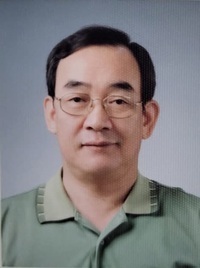
◆ Professor Maeng Ju-seong
Professor Emeritus, College of Engineering, Hanyang University
Chairman, Network for Rule of Law and Democratic Solidarity (NPK)
- 관련기사
-
What do you think of this article?

 [Statement by the Seo-beo-kka Korea Military Academy Save-the-Nation Comrades Association] ㉛ Recount the Votes Publicly, as the Previous Recount Concealed Election Fraud
Tongyeong Mayoral Election Recount [Photo=Yonhap News]South Korea's liberal democracy is dying. The National Election Commission (NEC) and the judiciary, which have plummeted into criminal syndicates
[Statement by the Seo-beo-kka Korea Military Academy Save-the-Nation Comrades Association] ㉛ Recount the Votes Publicly, as the Previous Recount Concealed Election Fraud
Tongyeong Mayoral Election Recount [Photo=Yonhap News]South Korea's liberal democracy is dying. The National Election Commission (NEC) and the judiciary, which have plummeted into criminal syndicates
 What is the significance of the "Trump 2028" red hats that keep making a comeback?
It is noteworthy that President Donald Trump is "intentionally" fueling controversy over whether he can actually run in the 2028 presidential election, even though it is "highly likely he is seriously
What is the significance of the "Trump 2028" red hats that keep making a comeback?
It is noteworthy that President Donald Trump is "intentionally" fueling controversy over whether he can actually run in the 2028 presidential election, even though it is "highly likely he is seriously
 Jin Cummings: "North Korea says it will increase the number of spies, so what is the government doing?"
U.S. political columnist Gene Cummings has publicly questioned the South Korean government, asking, "North Korea is announcing plans to increase its number of spies, yet what is the South Korean
Jin Cummings: "North Korea says it will increase the number of spies, so what is the government doing?"
U.S. political columnist Gene Cummings has publicly questioned the South Korean government, asking, "North Korea is announcing plans to increase its number of spies, yet what is the South Korean
 Attorney Do Tae-woo: “Discrepancies in Voter Count and Improper Sealing Confirmed in Tongyeong Mayoral Recount… Official Request for Additional Verification Submitted to Gyeongnam Election Commission”
A bundle of mail-in early voting ballots captured by lawyer Do Tae-woo at the Tongyeong mayoral election recount site. A clear solid line, raising suspicions of election fraud, is visible on the side
Attorney Do Tae-woo: “Discrepancies in Voter Count and Improper Sealing Confirmed in Tongyeong Mayoral Recount… Official Request for Additional Verification Submitted to Gyeongnam Election Commission”
A bundle of mail-in early voting ballots captured by lawyer Do Tae-woo at the Tongyeong mayoral election recount site. A clear solid line, raising suspicions of election fraud, is visible on the side
 Stock Market Crash 'Black Tuesday'… KOSPI down 10.8%, KOSDAQ down 7.7%
The KOSPI fell by more than 5% in early trading on the 28th, triggering a sell-side sidecar.On the 28th, the KOSPI plunged by more than 10%.Due to the sharp decline, a sell-side sidecar—a temporary
Stock Market Crash 'Black Tuesday'… KOSPI down 10.8%, KOSDAQ down 7.7%
The KOSPI fell by more than 5% in early trading on the 28th, triggering a sell-side sidecar.On the 28th, the KOSPI plunged by more than 10%.Due to the sharp decline, a sell-side sidecar—a temporary
 [World Heritage Committee] 25 New World Heritage Sites Inscribed in Busan… South Korea Successfully Expands 'Getbol' Listing
The Chairperson of the World Heritage Committee speaks at the plenary session of the 48th session of the World Heritage Committee, held at BEXCO in Busan on the 20th. [Photo: Yonhap News]A total of 25
[World Heritage Committee] 25 New World Heritage Sites Inscribed in Busan… South Korea Successfully Expands 'Getbol' Listing
The Chairperson of the World Heritage Committee speaks at the plenary session of the 48th session of the World Heritage Committee, held at BEXCO in Busan on the 20th. [Photo: Yonhap News]A total of 25
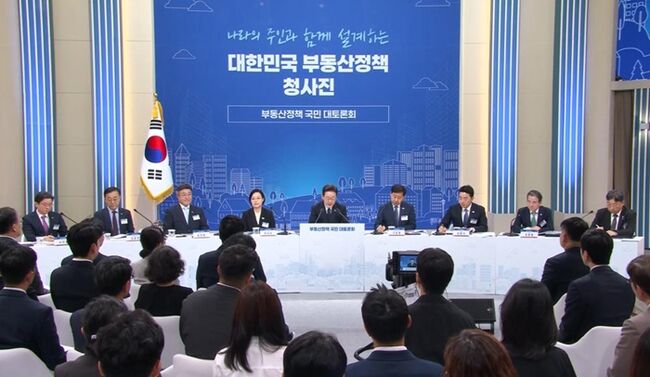 [Liberal Democratic Party Statement] Calling it a Grand Real Estate Debate… It Was Nothing More Than a Private Party Among Themselves
The 'National Grand Debate on Real Estate Policy' held on July 23rd and 27th. [Photo=Yonhap News]The 'National Grand Debate on Real Estate Policy,' hosted by the Lee Jae-myung administration under the
[Liberal Democratic Party Statement] Calling it a Grand Real Estate Debate… It Was Nothing More Than a Private Party Among Themselves
The 'National Grand Debate on Real Estate Policy' held on July 23rd and 27th. [Photo=Yonhap News]The 'National Grand Debate on Real Estate Policy,' hosted by the Lee Jae-myung administration under the
 [Photo] Evidence of Election Fraud Flooding U.S. Media… Trump Had 2.7 Million Votes Stolen
 [Video] U.S. Semiquincentennial Air Show... 'Art in the Sky' streaks across New York
 [Editorial Cartoon] A Draconian Law That Undermines Freedom of Expression

 List
List