The Strait of Hormuz, a choke point for world energy. [Screenshot from a Vox YouTube video]
The net of heaven is vast and without mesh, but nothing escapes.
This phrase comes from Chapter 73 of Lao Tzu's Tao Te Ching: "The net of Heaven is vast and without mesh, yet it misses nothing" (天網恢恢 疎而不漏). It is used to mean that even if one commits evil deeds, they will eventually be punished. This profound ancient truth appears to apply equally to the war against Iran.
On the 13th (local time), the White House posted an article on its website titled, "CNN is Lying to Smear the Immense Success of Operation 'Epic Fury'."
This was a rebuttal to a report published by CNN the previous day, which stated, "President Donald Trump underestimated Iran's threat to blockade the Strait of Hormuz and failed to take any countermeasures in advance."
Are the many media outlets criticizing the United States and Israel for waging war to eliminate the Iranian nuclear threat and liberate the Iranian people groaning under oppression, instead supporting and cheering for totalitarian Iran, which threatens Middle Eastern and global peace through its export of terrorism?
Criticizing the justification or progress of a war is only possible with an understanding of the war command's strategy and sufficient information and analytical capabilities.
This war should be viewed as a full-scale conflict following the ongoing war in the Middle East centered around Gaza since the Hamas attack on Israel on October 7, 2023, the 12-day war in June 2025 involving the bombing of Iranian nuclear facilities, and most recently, the breakdown of nuclear negotiations between the United States and Iran.
China's air defense system installed in Iran was neutralized by U.S. electronic warfare, which enabled precision strikes on U.S. targets. Furthermore, the CC-TV installed by China was used in reverse to track the movements of key Iranian figures.
It is reported that as soon as the war began and U.S. missile attacks commenced, Russian nuclear technicians in Bushehr and Chinese military advisors in Bandar Abbas, where the Iranian Navy headquarters is located, urgently escaped by land.
Russia and China, which had military and civilian cooperation as allies, abandoned Iran like a worn-out shoe and provided no military support.
Iran's Theocratic Totalitarian Dictatorship
The roots of the Iranian regime lie in the theory of 'Velayat-e Faqih (Guardianship of the Jurist)' established by Ayatollah Khomeini, the leader of the 1979 Islamic Revolution.
According to the theory of the deputy of God, an Islamic jurist holds absolute power of the state with religious authority until the return of the hidden Imam (Mahdi). Did Mohammed in heaven truly grant absolute power to Iranian religious leaders?
Religion became law (Sharia), and through morality police and other means, it has become a totalitarian dictatorship where the state strictly regulates citizens' private lives, dress codes like the hijab, and even thought.
To consolidate internal unity, the Iranian regime has incited hostility by designating the United States as the "Great Satan" and Israel as the "Little Satan." It politically reinterprets the suffering and spirit of martyrdom in Shia history, glorifying terrorism and sacrifice for regime preservation.
Iranian Islamic extremism has become a source of anti-civilization and violence, denying Western Christianity.
Rather than its regular army, Iran relies on its proxy forces – Hamas, Hezbollah, the Houthi rebels, and the Assad regime in Syria – providing them with funding and weapons to conduct terrorism and guerrilla warfare, which it disguises as 'Jihad'.
Furthermore, to seize hegemony in the Middle East, it constantly threatens global energy security and peace through threats to blockade the Strait of Hormuz and interference in the Israeli-Palestinian conflict.
The so-called "New Totalitarian Alliance" stretching from Iran, China, Russia, and North Korea has emerged as a significant threat to subvert the global liberal democratic order, going beyond mere diplomatic cooperation. In particular, through oil and energy trade among these countries, they are not only ensuring their own survival but also challenging U.S. energy and dollar hegemony.
The Strait of Hormuz, a Choke Point for World Energy
The narrowest point of the Strait of Hormuz is about 33 km. However, large oil tankers cannot travel freely. Due to reefs, water depth issues, and to avoid ship collisions, they must follow internationally designated shipping lanes. This constitutes the Traffic Separation Scheme (TSS), which is about 11 km wide.
According to the U.S. Energy Information Administration (EIA), approximately 20 million barrels of oil are transported through this strait daily, accounting for about 20% of global oil consumption, about 30% of global seaborne crude oil transportation, and about 20% of global LNG trade.
China, allied with Iran, has an average of 20-30 ships passing through the strait daily (out of a total of 135-150 ships), accounting for about 35% of the total volume. China relies on this strait for 45-50% of its total energy supply, making it of vital importance.
Some oil-producing countries in the Persian Gulf have constructed alternative transport routes. Saudi Arabia's East-West Pipeline (connecting eastern oil fields to the Red Sea port of Yanbu) transports about 5 million barrels per day, and the UAE's Abu Dhabi-Fujairah Pipeline transports about 1.5 million barrels per day. This represents one-third of the 20 million barrels passing through the strait.
Currently, due to various threats from Iran, normal navigation of ships is not possible, and if the strait is completely blocked, oil prices will skyrocket, and the global economy will suffer a fatal blow.
Iran is expected to use all possible means it has long prepared, including asymmetric warfare with small high-speed boats, mine-laying, and launching anti-ship missiles (ASCMs) and drones from coastal or inland areas.
In response to Iran's strategy, the United States is preparing to protect merchant ships by warships of the U.S. and allied forces through military means, including airstrikes on all possible targets on the coast and inland, deploying mine-clearing vessels, and deploying ground forces on the coast (mobilizing amphibious assault ships).
Harg Island, Iran's "Jewel in the Crown"
Located deep in the Persian Gulf, this island serves as an energy export base, processing and storing 90-95% of Iran's oil. It is the jewel and Achilles' heel of Iran, accounting for over 50% of Iran's economy.
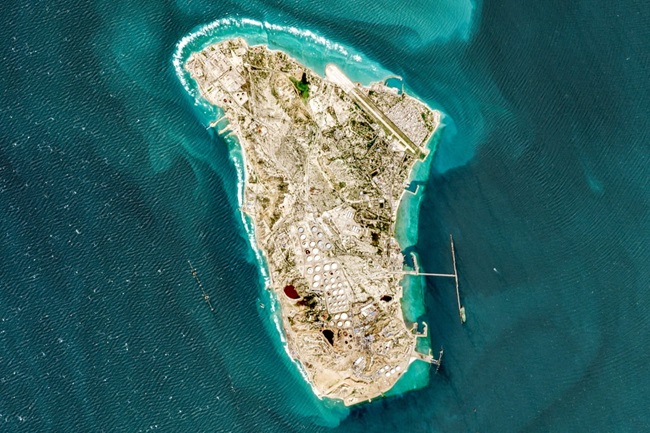 An aerial photograph of Iran's Harg Island, taken by a European Space Agency (ESA) satellite. [AFP=Yonhap News]
In a 1988 interview with The Guardian, Trump stated his intention to destroy the island's oil facilities and take control of the island. Airstrikes have already been conducted excluding oil-related facilities, and he is threatening to destroy all oil facilities on the island if Iran blocks the Strait of Hormuz.
It is known that significant preparation and time are required for merchant ships to obtain insurance and for the escort of merchant vessels by multinational warships to become possible to prevent the blockade of the Strait of Hormuz.
Meanwhile, the United States is making efforts to stabilize oil prices by releasing 172 million barrels of strategic petroleum reserves. Asia-Pacific countries, including South Korea, have signed energy contracts worth $56 billion with U.S. companies from March 14-15, securing large amounts of U.S. LNG and clean energy technology, accelerating the trend of diversifying energy supply chains away from Russia and the Middle East.
We hope for the realization of free and open navigation in the Strait of Hormuz as soon as possible.
Growing Demand for K-Defense Industry
The recent escalation of tensions in the Middle East originating from Iran and the accumulation of real-world combat data paradoxically present an unprecedented opportunity for the K-defense industry. Middle Eastern countries (UAE, Saudi Arabia, etc.) have directly experienced drone and missile attacks from Iran and its proxy forces and are making every effort to build multi-layered defense systems with anti-air weapons. The disabling of China's air defense systems by U.S. attacks has caused shock and awakening.
There is consistent demand for the Cheongung-II, which has proven its worth as a "cash cow" of the K-defense industry with an interception rate of over 90% in actual combat, as well as the L-SAM (Long-range Surface-to-Air Missile) and the Singung (man-portable air-defense system).
There is a continuous replacement demand for ground weapons such as the K2 Black Panther tank, K9 self-propelled howitzer, and the K239 Chunmoo. The KF-21 (Boramae), FA-50 (light attack aircraft), and the Bigung (Poniard) are considered key weapons for future battlefields.
Timing of the End of the War
Trump has stated that the timing of ending the war is determined by his own perception. Considering the U.S. midterm elections in November this year, domestic issues, and the impact on the global economy, it is unlikely that any of the involved parties desire a prolonged war.
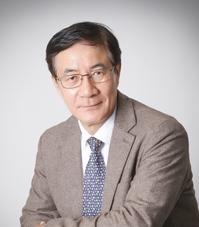
◆ Dr. Shin Dong-choon
Ph.D. in Public Administration, Representative of the National Union for Freedom and Unification. After passing the 21st Higher Civil Service Examination, he served in public office before becoming a CEO, university professor, media contributor, author, and active in various capacities, including Chairman of the Global Aerospace Industry Association.

 Trump pressures for rate cut again ahead of FOMC... "Should be the lowest in the world"
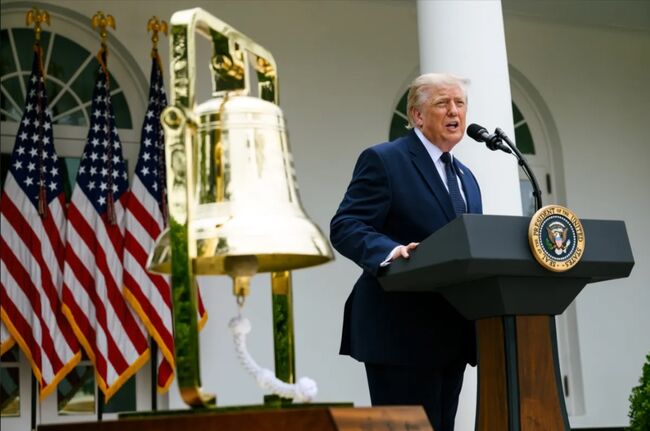
U.S. President Donald Trump. [Photo = The White House] U.S. President Donald Trump once again pressured the Federal Reserve, the U.S. central bank, to lower interest rates on the 27th (local time
Trump pressures for rate cut again ahead of FOMC... "Should be the lowest in the world"
U.S. President Donald Trump. [Photo = The White House] U.S. President Donald Trump once again pressured the Federal Reserve, the U.S. central bank, to lower interest rates on the 27th (local time
 “Ignoring crisp ballots and damaged seals”… Tongyeong mayoral recount concludes with ‘no change in outcome,’ leaving suspicions and public outrage behind
Suspected counterfeit ballots discovered in Tongyeong [GIF from social media of Representative Hwang Kyo-ahn / Attorney Park Joo-hyun]During a recount of the Tongyeong mayoral election in South Gyeong
“Ignoring crisp ballots and damaged seals”… Tongyeong mayoral recount concludes with ‘no change in outcome,’ leaving suspicions and public outrage behind
Suspected counterfeit ballots discovered in Tongyeong [GIF from social media of Representative Hwang Kyo-ahn / Attorney Park Joo-hyun]During a recount of the Tongyeong mayoral election in South Gyeong
 President Yoon, regarding the first-instance ruling on the Public Official Election Act: “An excessive political verdict that distorts the facts… We will appeal immediately.”
The first-instance sentencing hearing for President Yoon Suk Yeol regarding violations of the Public Official Election Act is being broadcast live at Seoul Station on the 27th. [Photo=Yonhap News]Pres
President Yoon, regarding the first-instance ruling on the Public Official Election Act: “An excessive political verdict that distorts the facts… We will appeal immediately.”
The first-instance sentencing hearing for President Yoon Suk Yeol regarding violations of the Public Official Election Act is being broadcast live at Seoul Station on the 27th. [Photo=Yonhap News]Pres
 WSJ: "SK Hynix ADR Premium Is a Sign of AI Trading Overheat"
Advertisement for SK Hynix ADR listing in New York's Times Square [Reuters=Yonhap News file photo]The Wall Street Journal (WSJ) has pointed out that the price of SK Hynix’s American Depositary Recei
WSJ: "SK Hynix ADR Premium Is a Sign of AI Trading Overheat"
Advertisement for SK Hynix ADR listing in New York's Times Square [Reuters=Yonhap News file photo]The Wall Street Journal (WSJ) has pointed out that the price of SK Hynix’s American Depositary Recei
 'Godfather of Japanese Mystery Novels' Keigo Higashino Passes Away After Battle with Cancer at 68
Famous Japanese mystery novelist Keigo Higashino [AFP=Yonhap News]It has been belatedly reported that Keigo Higashino, the "godfather of Japanese mystery novels" and author of bestsellers such as "The
'Godfather of Japanese Mystery Novels' Keigo Higashino Passes Away After Battle with Cancer at 68
Famous Japanese mystery novelist Keigo Higashino [AFP=Yonhap News]It has been belatedly reported that Keigo Higashino, the "godfather of Japanese mystery novels" and author of bestsellers such as "The
 [Park Pil-kyu Security Column] To the Ignorant Trying to Clothe a Beast in Sheep's Clothing
Rep. Kim Byung-joo of the Democratic Party of Korea [Photo=Yonhap News]“The Air Force Academy doesn't teach you how to fly a plane!” “The Army, Navy, and Air Force academies are exactly the
[Park Pil-kyu Security Column] To the Ignorant Trying to Clothe a Beast in Sheep's Clothing
Rep. Kim Byung-joo of the Democratic Party of Korea [Photo=Yonhap News]“The Air Force Academy doesn't teach you how to fly a plane!” “The Army, Navy, and Air Force academies are exactly the
 [Issue Diagnosis] Two Effects of the Election Petition Review
 [Photo] Evidence of Election Fraud Flooding U.S. Media… Trump Had 2.7 Million Votes Stolen
 [Video] U.S. Semiquincentennial Air Show... 'Art in the Sky' streaks across New York
 [Editorial Cartoon] A Draconian Law That Undermines Freedom of Expression

 List
List