'Hamlet' performed at the UK's National Theatre (NT) in 2016 to mark the 400th anniversary of William Shakespeare's death. [Photo=NT]
Philosophy establishes propositions, and history arranges events. Literature, however, creates people.
Literature reveals the writer's mind. And the reader enters that mind. Literature always thinks through characters.
1. Why Do Characters Think Instead of Us?
Shakespeare: Why does Hamlet hesitate for us?
William Shakespeare's 'Hamlet' (first performed around 1603-1604) is a textbook example of character identification. Hamlet is a character who thinks more than he acts. He is commanded to avenge his father. However, he does not immediately draw his sword. He soliloquizes, "To be, or not to be." To exist, or not to exist.
This soliloquy is a sentence that captures the reader's thoughts. While Hamlet hesitates, the reader also pauses. When Hamlet doubts, the reader doubts too. He is not just a character in a play; he is a conduit for thought.
We watch Hamlet with frustration, and at the same time, we understand him. Because his hesitation resembles our own. The person who delays decisions. The person who falls into overthinking. At this point, Hamlet becomes a character who thinks on our behalf.
Goethe: Why does Werther despair for us?
Johann Wolfgang von Goethe's 'The Sorrows of Young Werther' (1774). This work is a prime example of character identification causing societal ripples. Werther fails in love and commits suicide. The problem is that readers imitated him. The 'Werther craze' swept through Europe in the 18th century. Actual suicide incidents were reported.
Why did this happen? Werther elaborately describes his suffering. He explains his emotions in letter form. The reader follows his pain day by day. At some point, his choice no longer feels strange.
This is an extreme case of identification. The character feels for us, despairs for us, and makes decisions for us. The reader follows that thought process. And then replicates that process in reality.
Literature does not directly impose ideas. Instead, it allows us to experience them. Experience remains longer than judgment.
Dostoevsky: Why does Raskolnikov rationalize his crime for us?
Fyodor Dostoevsky's 'Crime and Punishment' (1866). Raskolnikov murders an old woman. He is not a simple criminal. He is a character with the theory that great men can transcend the law.
 Fyodor Dostoevsky, author of 'Crime and Punishment' (1866).
The reader witnesses his murder. But cannot immediately condemn him. Because we have already followed his poverty, isolation, and pride sufficiently.
The murder is not sudden. It seems like a prepared outcome. Raskolnikov pushes a dangerous thought to its extreme for us. We conduct thought experiments through his body that we cannot perform in reality.
At this point, identification creates ethical tension. We understand him, yet we reject him. Understanding and rejection occur simultaneously. This tension is the power of literature.
2. The Trap of "If It Were Me"
Tolstoy: Why does Anna Karenina shake our standards?
Leo Tolstoy's 'Anna Karenina' (1877). Anna commits adultery. In Russian aristocratic society at the time, this was a fatal transgression. However, the reader cannot simply condemn her.
Why? We sufficiently follow her loneliness, her thirst for love, and the hypocrisy of society. Her choice appears to be the result of accumulation rather than impulse. The reader says, "I wouldn't have gone that far."
But at the same time, they also say, "Given the situation, it's understandable." Judgment becomes dual. Identification makes ethical standards flexible. This is precisely the trap.
Albert Camus: Why does Meursault become indifferent for us?
Camus's 'The Stranger' (1942). Meursault does not shed tears even at his mother's funeral. He kills a person by chance. And he shows no great remorse.
The reader feels uncomfortable. But at the same time, feels a strange pull. Meursault rejects societal hypocrisy. He does not pretend. This honesty connects with the hidden indifference within the reader. He becomes callous for us. We experience his coldness. And we reconsider the standards of social norms.
3. When Another's Choice Becomes Our Standard
George Orwell: Why does Winston Smith resist for us?
George Orwell's '1984' (1949). Winston resists the totalitarian regime. He keeps a diary. He engages in forbidden love. The reader follows his inner monologue. His resistance is not grand. It is small.
However, the reader finds that smallness to be great. Because they have experienced his fear and isolation together. At this point, the reader does not directly participate in the act of resistance but experiences the inner life of resistance. That experience becomes a standard for judgment in reality.
Han Kang: Why does Yeonghye remain silent for us?
Han Kang's 'The Vegetarian' (2007). Yeonghye suddenly declares she will not eat meat. Subsequently, she gradually withdraws from social relationships. She does not explain. She remains silent. The reader feels frustrated. But at the same time, they are drawn into that silence. She does not resist societal demands with words. She refuses with her body.
This work shows another form of identification. Not only talkative characters but also silent characters can occupy the reader's inner world. We project our experiences of oppression into her silence.
4. How Does Identification Expand to a Collective?
Literature does not end with individual experience. Through school textbooks, film adaptations, and popular quotations, it moves into collective memory. Hamlet becomes a symbol of humanity, not just a personal tragedy. Werther becomes a model for the romantic youth. Anna becomes a symbol of the oppressed woman.
At this point, identification transcends the individual level and becomes a cultural standard. Literature does not directly present norms. However, by repeatedly glorifying or criticizing certain types through characters, that type becomes a social symbol. Symbols are shortcuts to judgment.
5. Why Is Identification Dangerous Yet Necessary?
Identification is a thought experiment. It allows us to safely experience choices we cannot make in reality. Murder, betrayal, resistance, despair, silence. We experience them through characters.
However, characters are fictional. The author controls the outcome. Reality is uncontrolled. If fictional choices are directly transferred as standards to reality, conflict arises.
Therefore, identification requires two stages. First, follow deeply. Second, step back. Without following, literature does not come alive. Without stepping back, the reader is absorbed by the character.
Ultimately, character identification is connected to the instincts of human thought. We learn through stories, and we judge through stories. Literature broadens humanity. At the same time, it adjusts direction. Characters think for us. But we must examine those thoughts.
Although literature calls itself a story, it is in reality a conduit for thought. Without overt declarations, it convincingly portrays a human type, leads us to follow that type's judgments, and ultimately makes those judgments feel familiar.
Characters are fictional, but the choices and attitudes repeatedly shown by those characters accumulate within the reader. Thus, literature implants direction without forcing ideology. It transports ideas by presenting characters instead of propositions, and experiences instead of arguments. This is because the thoughts that remain longest are not explanations but lived experiences.
Therefore, character identification is not mere emotional empathy but a pathway for the infiltration of ideas. When we say we understand a character, in reality, we are partially endorsing that character's logic. Literature does not shout. Instead, it quietly changes standards.
This is why readers must always read twice. Once with the character, and again to check where that character has led them. We should think through characters, but not entrust our thinking to them.

◆ Songsan
Poet and researcher of history and philosophy. Former director of the Syngman Rhee Institute. Currently serves as the honorary advisor for research at the Korean Modern and Contemporary History Research Association and as the representative of the philosophy forum Lyceum. He has published four poetry collections, co-translated 'Heroes of Hook Island,' and published the historical psychology commentary 'Joseon, the Myth' (2026). He is actively engaged in research and practice for the liberal cultural movement. Songsan is a pen name.

 Trump pressures for rate cut again ahead of FOMC... "Should be the lowest in the world"
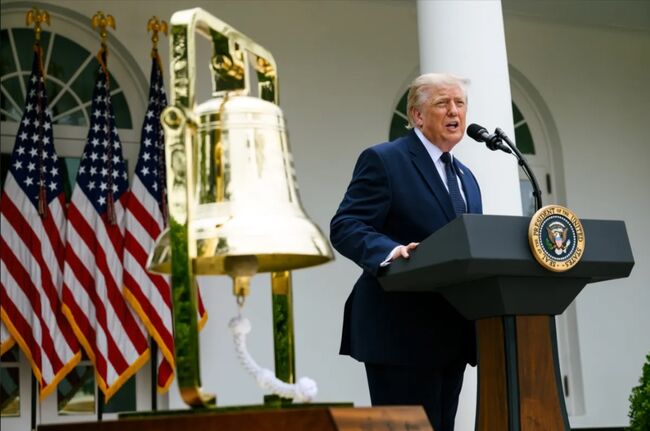
U.S. President Donald Trump. [Photo = The White House] U.S. President Donald Trump once again pressured the Federal Reserve, the U.S. central bank, to lower interest rates on the 27th (local time
Trump pressures for rate cut again ahead of FOMC... "Should be the lowest in the world"
U.S. President Donald Trump. [Photo = The White House] U.S. President Donald Trump once again pressured the Federal Reserve, the U.S. central bank, to lower interest rates on the 27th (local time
 “Ignoring crisp ballots and damaged seals”… Tongyeong mayoral recount concludes with ‘no change in outcome,’ leaving suspicions and public outrage behind
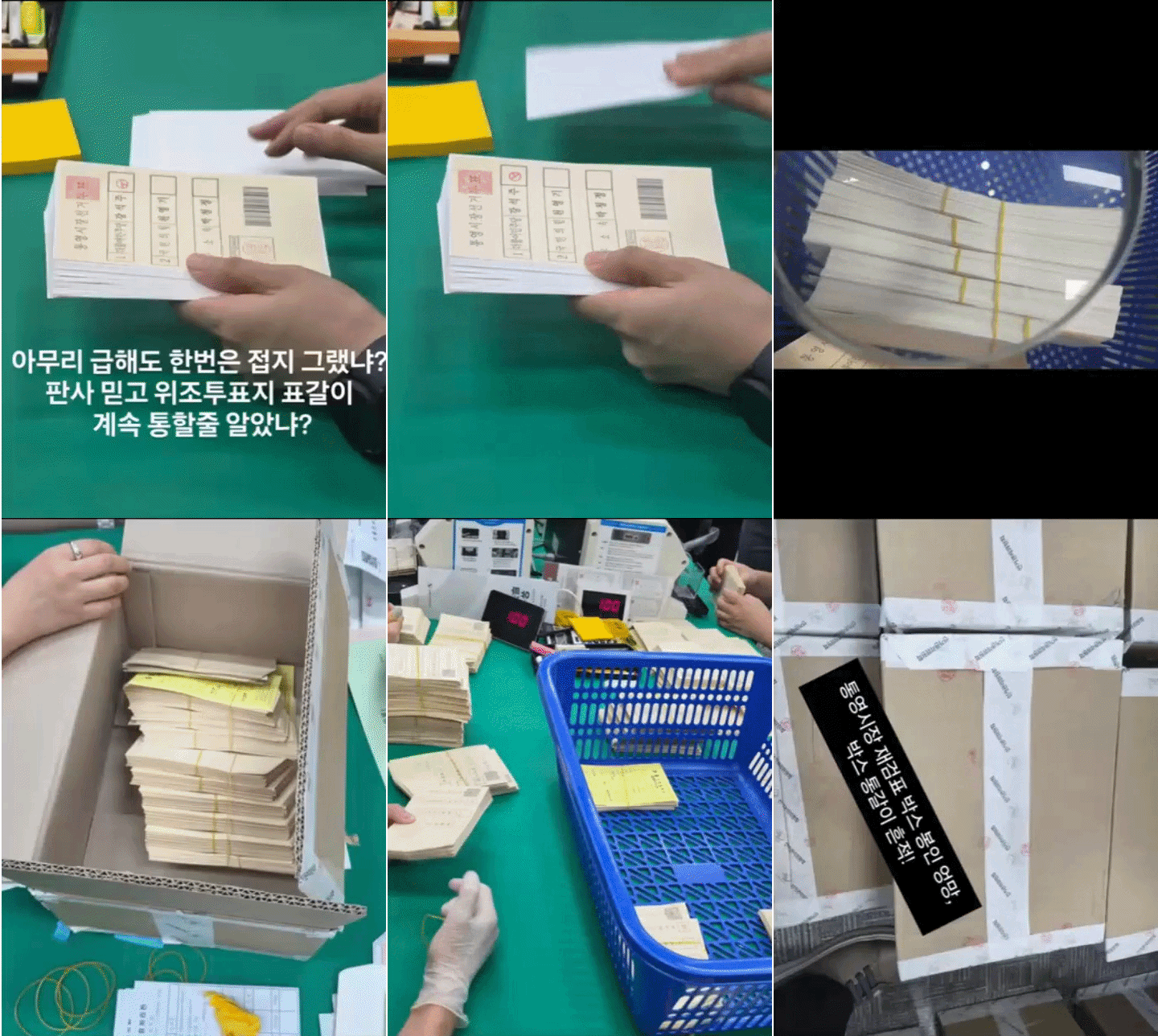
Suspected counterfeit ballots discovered in Tongyeong [GIF from social media of Representative Hwang Kyo-ahn / Attorney Park Joo-hyun]During a recount of the Tongyeong mayoral election in South Gyeong
“Ignoring crisp ballots and damaged seals”… Tongyeong mayoral recount concludes with ‘no change in outcome,’ leaving suspicions and public outrage behind
Suspected counterfeit ballots discovered in Tongyeong [GIF from social media of Representative Hwang Kyo-ahn / Attorney Park Joo-hyun]During a recount of the Tongyeong mayoral election in South Gyeong
 President Yoon, regarding the first-instance ruling on the Public Official Election Act: “An excessive political verdict that distorts the facts… We will appeal immediately.”
The first-instance sentencing hearing for President Yoon Suk Yeol regarding violations of the Public Official Election Act is being broadcast live at Seoul Station on the 27th. [Photo=Yonhap News]Pres
President Yoon, regarding the first-instance ruling on the Public Official Election Act: “An excessive political verdict that distorts the facts… We will appeal immediately.”
The first-instance sentencing hearing for President Yoon Suk Yeol regarding violations of the Public Official Election Act is being broadcast live at Seoul Station on the 27th. [Photo=Yonhap News]Pres
 WSJ: "SK Hynix ADR Premium Is a Sign of AI Trading Overheat"
Advertisement for SK Hynix ADR listing in New York's Times Square [Reuters=Yonhap News file photo]The Wall Street Journal (WSJ) has pointed out that the price of SK Hynix’s American Depositary Recei
WSJ: "SK Hynix ADR Premium Is a Sign of AI Trading Overheat"
Advertisement for SK Hynix ADR listing in New York's Times Square [Reuters=Yonhap News file photo]The Wall Street Journal (WSJ) has pointed out that the price of SK Hynix’s American Depositary Recei
 'Godfather of Japanese Mystery Novels' Keigo Higashino Passes Away After Battle with Cancer at 68
Famous Japanese mystery novelist Keigo Higashino [AFP=Yonhap News]It has been belatedly reported that Keigo Higashino, the "godfather of Japanese mystery novels" and author of bestsellers such as "The
'Godfather of Japanese Mystery Novels' Keigo Higashino Passes Away After Battle with Cancer at 68
Famous Japanese mystery novelist Keigo Higashino [AFP=Yonhap News]It has been belatedly reported that Keigo Higashino, the "godfather of Japanese mystery novels" and author of bestsellers such as "The
 [Park Pil-kyu Security Column] To the Ignorant Trying to Clothe a Beast in Sheep's Clothing
Rep. Kim Byung-joo of the Democratic Party of Korea [Photo=Yonhap News]“The Air Force Academy doesn't teach you how to fly a plane!” “The Army, Navy, and Air Force academies are exactly the
[Park Pil-kyu Security Column] To the Ignorant Trying to Clothe a Beast in Sheep's Clothing
Rep. Kim Byung-joo of the Democratic Party of Korea [Photo=Yonhap News]“The Air Force Academy doesn't teach you how to fly a plane!” “The Army, Navy, and Air Force academies are exactly the
 [Issue Diagnosis] Two Effects of the Election Petition Review
 [Photo] Evidence of Election Fraud Flooding U.S. Media… Trump Had 2.7 Million Votes Stolen
 [Video] U.S. Semiquincentennial Air Show... 'Art in the Sky' streaks across New York
 [Editorial Cartoon] A Draconian Law That Undermines Freedom of Expression

 List
List