 The Board of Audit and Inspection of Korea [Photo=Yonhap News]
Whoever Holds the Records Determines Trust
There is only one situation where controversies persist, even when identity verification is strengthened, when the electronic processing is recorded, and when the movement and storage of ballot boxes are managed with electronic seals, GPS, and a chain of custody.
This occurs when the institution that creates the records also stores them, maintaining a structure where it explains itself as having no issues.
A significant portion of the election fraud controversies that have repeatedly occurred until now have arisen from this structure, prior to the establishment of facts. Explanations were provided, but there was no avenue to verify those explanations.
The issue of records is a matter of ‘distance,’ not ‘authority.’
A common concern raised when discussing who should store records is the constitutional independence of the National Election Commission (NEC). However, this issue is not about removing authority. It is about creating distance between the records and the judgment.
If the NEC is the body that manages and executes elections, then the original copies of the key records generated during the process should be kept outside of the NEC.
This is what enables verification.
Why the Board of Audit and Inspection?
The most rational institution to store these records is the Board of Audit and Inspection (BAI).
The BAI is a constitutional body without investigative or prosecutorial powers, making it suitable for the role of storing and submitting records without making judgments.
What the BAI should store are not the contents of the votes.
• Logs of unalterable electronic processing
• Records of electronic seal status
• GPS movement records
• Original access logs and CCTV footage
• Continuous record of the entire process of receipt, storage, and transfer (Chain of Custody)
These records do not alter election results. Instead, they prove how the election was managed.
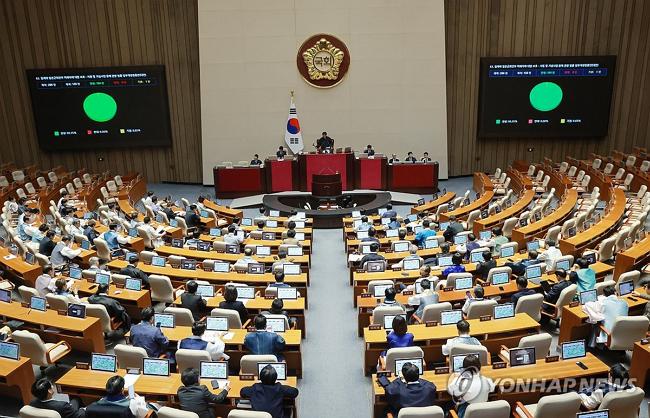
Investigations by Request, Enforcement by the National Assembly
If disputes or investigations surrounding the records become necessary, the records will be submitted through the BAI.
The key here is who compels the submission.
That role belongs not to investigative agencies, but to the National Assembly of the Republic of Korea. The National Assembly's right to request the submission of materials is the most powerful disclosure mechanism under the Constitution.
When records are submitted following a request from the National Assembly and undergo public verification, suspicions become subjects of public review, not conspiracy.
In this structure, the roles are separated as follows: △ The BAI as the custodian △ The National Assembly as the requester of disclosure △ Investigative agencies as requesters when necessary.
What Happens If the BAI Refuses?
The strength of this structure is revealed here.
If the BAI refuses to submit the data, the issue immediately shifts to the realm of political and public accountability. If the National Assembly requests disclosure and that request is not fulfilled, that in itself becomes the issue.
In other words, the moment the records are concealed, the fact that remains is not that "there are no records," but that "the records were not disclosed."
How Much Legal Amendment is Needed?
Extensive legal revisions are not required to implement this entire structure. Within the framework of the current Public Official Election Act, a single provision to fix the accountability path is sufficient.
“Continuous records of the entire process of receipt, storage, and transfer, generated throughout the entire casting and counting process to verify election integrity, including the sealing, transfer, and storage of ballot boxes, access logs, video records, and electronic processing records, shall be generated and managed by the National Election Commission. However, unalterable copies of these records shall be stored separately by the Board of Audit and Inspection. The Board of Audit and Inspection shall submit these records upon a lawful request from the National Assembly or the court.”
This provision does not infringe upon the independence of the National Election Commission.
This is because it separates the path of verification while leaving the authority intact.
When Records Are Separated, Trust Is Also Separated
The distrust surrounding elections does not stem from individuals within the NEC or specific incidents. It arose from a structure where explanations and verification resided in the same place.
When records are separated, explanations remain explanations, and verification becomes verification.
[Series Conclusion] How to End Election Fraud Controversies
Election fraud controversies do not end with claims. They do not end with rebuttals either.
They persist only when there is no possibility of verification.
• Fix the starting point with fingerprint-based auxiliary authentication.
• Link electronic processing and physical movement to records.
• Implement a structure where external entities store these records and the National Assembly requests their public disclosure.
This system is not a mechanism for a specific faction. It is a minimal safeguard to protect the election itself.
Now, the question boils down to this:
“Is there any reason to refuse even this level of verification?”
■ Click here to reserve your subscription to Weekly Hanmiilbo
Inquiries: 02-2088-1201

 Iranian Foreign Ministry: "Continuing Message Exchanges with the U.S. and Activities of Mediating Countries"
Esmaeil Baghaei, Spokesperson for the Iranian Ministry of Foreign Affairs [Xinhua, Yonhap News file photo]Esmaeil Baghaei, spokesperson for the Iranian Ministry of Foreign Affairs, stated on the 26th
Iranian Foreign Ministry: "Continuing Message Exchanges with the U.S. and Activities of Mediating Countries"
Esmaeil Baghaei, Spokesperson for the Iranian Ministry of Foreign Affairs [Xinhua, Yonhap News file photo]Esmaeil Baghaei, spokesperson for the Iranian Ministry of Foreign Affairs, stated on the 26th
 President Yoon: "Do You Think You Are Safe from the Special Counsel?"... Final Statement Video Released
President Yoon Suk Yeol rebuking the special prosecutor on the 24th. [Court video / @birds_justice X account subtitle GIF] A video of President Yoon Suk Yeol's closing statement at his trial rega
President Yoon: "Do You Think You Are Safe from the Special Counsel?"... Final Statement Video Released
President Yoon Suk Yeol rebuking the special prosecutor on the 24th. [Court video / @birds_justice X account subtitle GIF] A video of President Yoon Suk Yeol's closing statement at his trial rega
 President Yoon, regarding the first-instance ruling on the Public Official Election Act: “An excessive political verdict that distorts the facts… We will appeal immediately.”
The first-instance sentencing hearing for President Yoon Suk Yeol regarding violations of the Public Official Election Act is being broadcast live at Seoul Station on the 27th. [Photo=Yonhap News]Pres
President Yoon, regarding the first-instance ruling on the Public Official Election Act: “An excessive political verdict that distorts the facts… We will appeal immediately.”
The first-instance sentencing hearing for President Yoon Suk Yeol regarding violations of the Public Official Election Act is being broadcast live at Seoul Station on the 27th. [Photo=Yonhap News]Pres
 WSJ: "SK Hynix ADR Premium Is a Sign of AI Trading Overheat"
Advertisement for SK Hynix ADR listing in New York's Times Square [Reuters=Yonhap News file photo]The Wall Street Journal (WSJ) has pointed out that the price of SK Hynix’s American Depositary Recei
WSJ: "SK Hynix ADR Premium Is a Sign of AI Trading Overheat"
Advertisement for SK Hynix ADR listing in New York's Times Square [Reuters=Yonhap News file photo]The Wall Street Journal (WSJ) has pointed out that the price of SK Hynix’s American Depositary Recei
 'Godfather of Japanese Mystery Novels' Keigo Higashino Passes Away After Battle with Cancer at 68
Famous Japanese mystery novelist Keigo Higashino [AFP=Yonhap News]It has been belatedly reported that Keigo Higashino, the "godfather of Japanese mystery novels" and author of bestsellers such as "The
'Godfather of Japanese Mystery Novels' Keigo Higashino Passes Away After Battle with Cancer at 68
Famous Japanese mystery novelist Keigo Higashino [AFP=Yonhap News]It has been belatedly reported that Keigo Higashino, the "godfather of Japanese mystery novels" and author of bestsellers such as "The
 [Park Pil-kyu Security Column] To the Ignorant Trying to Clothe a Beast in Sheep's Clothing
Rep. Kim Byung-joo of the Democratic Party of Korea [Photo=Yonhap News]“The Air Force Academy doesn't teach you how to fly a plane!” “The Army, Navy, and Air Force academies are exactly the
[Park Pil-kyu Security Column] To the Ignorant Trying to Clothe a Beast in Sheep's Clothing
Rep. Kim Byung-joo of the Democratic Party of Korea [Photo=Yonhap News]“The Air Force Academy doesn't teach you how to fly a plane!” “The Army, Navy, and Air Force academies are exactly the
 [Issue Diagnosis] Two Effects of the Election Petition Review
 [Photo] Evidence of Election Fraud Flooding U.S. Media… Trump Had 2.7 Million Votes Stolen
 [Video] U.S. Semiquincentennial Air Show... 'Art in the Sky' streaks across New York
 [Editorial Cartoon] A Draconian Law That Undermines Freedom of Expression

 List
List










