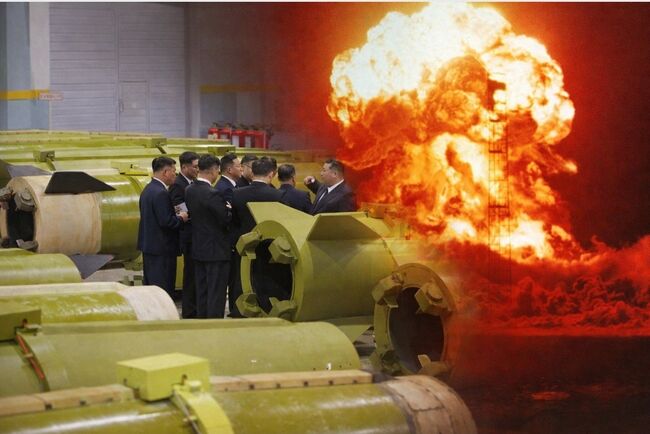
The US airstrike on Iran is not a simple act of retaliation. It is an event that has redefined the international community's tolerance for a nation reaching the "brink of nuclear capability." While Iran has denied developing nuclear weapons, its accumulation of highly enriched uranium, expansion of high-performance centrifuges, and increased missile range suggest a deliberate build-up of nuclear capacity.
In international security studies, there is a concept of the "nuclear threshold." This refers to a state where, even without assembling a nuclear weapon, a country possesses the core capabilities—such as highly enriched uranium, centrifuges, and missile systems—to complete one at any moment. The moment a nation reaches this stage, deterrence calculations change entirely. The nuclear threshold is also the point that elicits the most sensitive reaction from the international community.
North Korea, which is already in the process of nuclear armament, is structurally more dangerous than Iran. North Korea's complete nuclearization is not merely a military issue but a structural variable that could shake the entire Northeast Asian order. Threats backed by nuclear weapons could stimulate calls for nuclear armament in South Korea and Japan, test the US's willingness to intervene on the Korean Peninsula in case of conflict, and experts even worry about the possibility of North Korea transferring nuclear technology to third countries.
If North Korea, which already has experience exporting missiles and weapons, were to proliferate nuclear technology externally, the international non-proliferation regime would effectively collapse. A completed North Korean nuclear arsenal would not be a deterrent but a permanent source of instability.
The INSS (Institute for National Security Studies) categorizes North Korea and Iran as "proliferating nuclear challengers of the same type." If Iran faced sanctions and strikes at the "brink stage," North Korea could face even stronger pressure before solidifying its status as a nuclear-armed state. The US airstrike on Iran serves as a message to anti-US Middle Eastern nations and a final warning to all potential nuclear proliferators, including North Korea.
Three-Pronged Strategy for Resolving the North Korean Nuclear Issue
▶ Physical and Fusion-Based Elimination Before Nuclear Completion.
The completion of North Korea's nuclear program would be an international catastrophe, and it must be stopped before it is finalized. This requires enhancing supply chain control by tracking Kim Jong Un's movements and real-time surveillance through combined intelligence assets, precisely targeting North Korea's nuclear facilities with high-value targets updated in real-time, preparing military response measures, and tightening control over the supply of materials that can be used for both military and civilian purposes, as well as their alternative procurement networks. For the current regime friendly to North Korea, physical elimination remains a theoretical option only.
The United States and other Western nations must impose immediate punitive costs on all of North Korea's nuclear activities by linking financial and cyber sanctions, block foreign currency earnings through maritime interdiction and logistical pressure. A signal that further nuclear construction will lead to Kim Jong Un's death must be sent to make extended deterrence visible, and a system must be institutionalized where sanctions and retaliation are automatically triggered the moment North Korea crosses the nuclear threshold into nuclear armament, making it clear that "nuclear weapons are an existential choice that threatens the survival of the North Korean regime."
▶ Regime Change in North Korea Through Internal Collapse.
Even if the current regime consented to physical elimination, we would have to bear sacrifices. While Israel and Iran are over 1,500 km apart, the physical distance between North and South Korea is less than 40 km, with Seoul and all major facilities located within this range. The secondary objective of eliminating North Korea's nuclear weapons should be a "managed transition" that aligns with nuclear control and Korean Peninsula stability, rather than "collapse itself." Various means should be explored to promote the autonomous change of the North Korean people, such as expanding information inflow into North Korea, creating divisions among North Korean elites, and weakening legitimacy through human rights and economic sanctions.
Pursuing collapse without a governance structure for the post-regime change period, a nuclear control mechanism, and coordination with neighboring countries will create a dangerous vacuum. The options of internal collapse and regime change should be used as long-term strategies to add pressure for regime change on top of military deterrence and negotiation tracks.
▶ Elimination After Compensation.
North Korea has a history of repeating instances where it received compensation first and only took symbolic measures in denuclearization negotiations. In the 1994 Agreed Framework, it received promises of light-water reactors and heavy fuel oil but concurrently pursued a secret enriched uranium program. In the 2007 Six-Party Talks, it publicly blew up the cooling tower at Yongbyon but subsequently resumed nuclear tests. The demolition of the Punggye-ri nuclear test site in 2018 also involved the 폐기 of only some tunnels without expert verification, failing to be recognized as a substantive denuclearization measure.
The "elimination after compensation" card may be effective when Kim Jong Un feels the crisis of potentially dying like "Khamenei" by clinging to nuclear weapons. Any compensation is impossible without prior actions such as submitting a complete list of nuclear-related items, removing nuclear materials, dismantling facilities, and allowing unannounced inspections. A system where sanctions and military readiness are automatically restored upon violation is essential.
If the compensation card is used, cash and fungible resources must be excluded, and only compensation directly benefiting the residents, administered by international organizations, should be allowed to prevent time-buying. Phased compensation should only be provided upon confirmation of substantive reduction in nuclear capabilities.
For North Korea, its nuclear program is a gamble with the fate of its regime, and for us, it is a matter of future survival. The international order is moving towards controlling the "brink of nuclear completion." As the case of Iran shows, pressure and management are possible before crossing the nuclear threshold, but once crossed, options disappear.
The North Korean nuclear issue cannot be resolved by military strikes, compensation, or expectations of collapse alone. It can only be deterred by the consistency of denuclearization policy, which insists that North Korea's nuclear program must be stopped, coupled with complex deterrence, carrot-and-stick approaches, and managed regime pressure operating simultaneously.
Our military and policymakers must continuously deter North Korea's nuclear weapons based on the ROK-US alliance, keeping in mind the normalization of the Republic of Korea. At the same time, we must have the courage to demand our own nuclear armament as part of nuclear deterrence.

◆ Park Pil-gyu
Editorial Board Member, Hankook Ilbo
ROK Army Academy, Class of 40

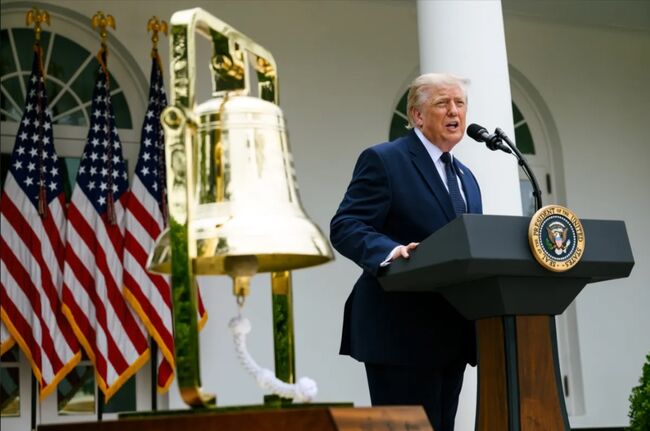 Trump pressures for rate cut again ahead of FOMC... "Should be the lowest in the world"
U.S. President Donald Trump. [Photo = The White House] U.S. President Donald Trump once again pressured the Federal Reserve, the U.S. central bank, to lower interest rates on the 27th (local time
Trump pressures for rate cut again ahead of FOMC... "Should be the lowest in the world"
U.S. President Donald Trump. [Photo = The White House] U.S. President Donald Trump once again pressured the Federal Reserve, the U.S. central bank, to lower interest rates on the 27th (local time
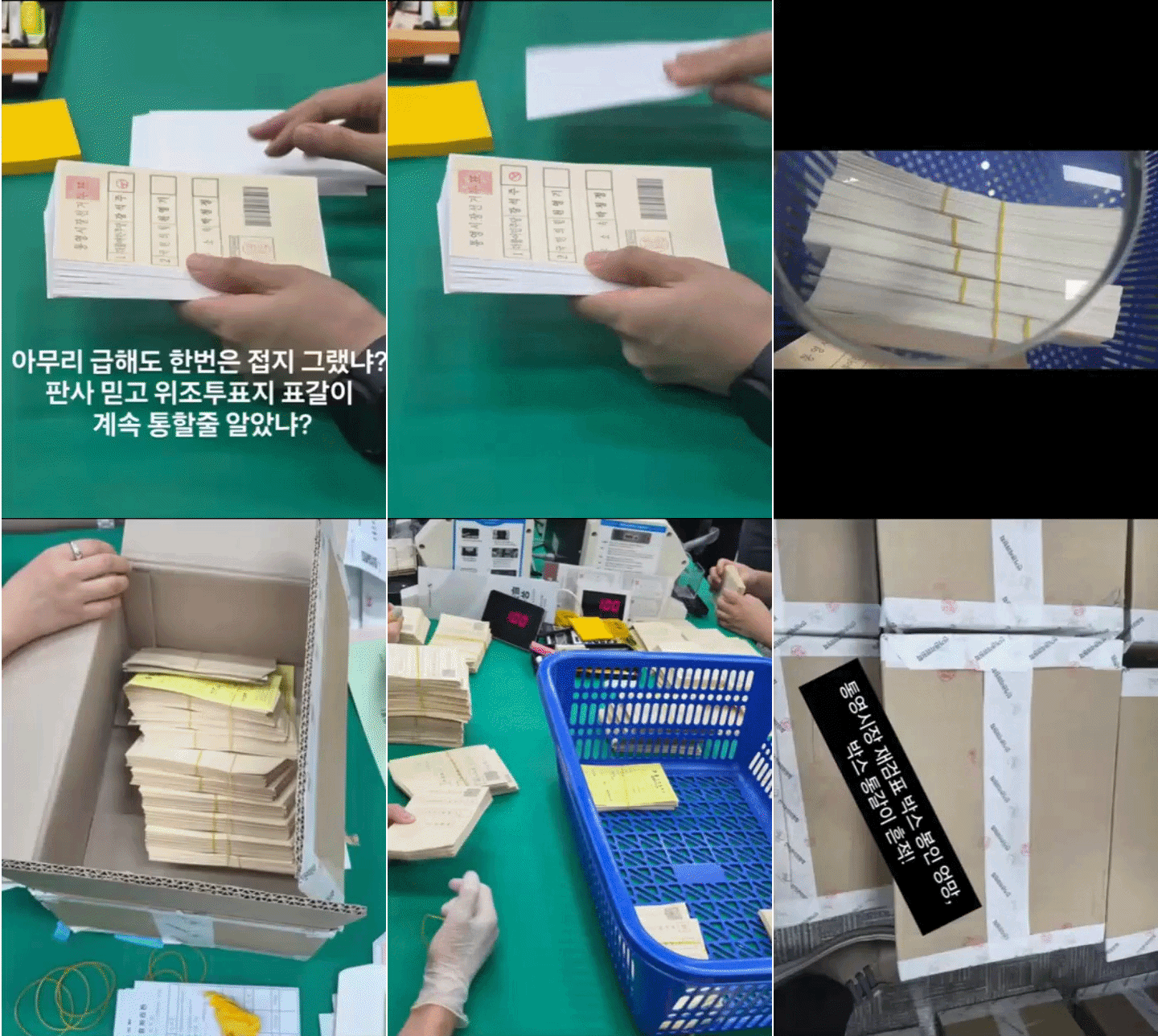 “Ignoring crisp ballots and damaged seals”… Tongyeong mayoral recount concludes with ‘no change in outcome,’ leaving suspicions and public outrage behind
Suspected counterfeit ballots discovered in Tongyeong [GIF from social media of Representative Hwang Kyo-ahn / Attorney Park Joo-hyun]During a recount of the Tongyeong mayoral election in South Gyeong
“Ignoring crisp ballots and damaged seals”… Tongyeong mayoral recount concludes with ‘no change in outcome,’ leaving suspicions and public outrage behind
Suspected counterfeit ballots discovered in Tongyeong [GIF from social media of Representative Hwang Kyo-ahn / Attorney Park Joo-hyun]During a recount of the Tongyeong mayoral election in South Gyeong
 President Yoon, regarding the first-instance ruling on the Public Official Election Act: “An excessive political verdict that distorts the facts… We will appeal immediately.”
The first-instance sentencing hearing for President Yoon Suk Yeol regarding violations of the Public Official Election Act is being broadcast live at Seoul Station on the 27th. [Photo=Yonhap News]Pres
President Yoon, regarding the first-instance ruling on the Public Official Election Act: “An excessive political verdict that distorts the facts… We will appeal immediately.”
The first-instance sentencing hearing for President Yoon Suk Yeol regarding violations of the Public Official Election Act is being broadcast live at Seoul Station on the 27th. [Photo=Yonhap News]Pres
 WSJ: "SK Hynix ADR Premium Is a Sign of AI Trading Overheat"
Advertisement for SK Hynix ADR listing in New York's Times Square [Reuters=Yonhap News file photo]The Wall Street Journal (WSJ) has pointed out that the price of SK Hynix’s American Depositary Recei
WSJ: "SK Hynix ADR Premium Is a Sign of AI Trading Overheat"
Advertisement for SK Hynix ADR listing in New York's Times Square [Reuters=Yonhap News file photo]The Wall Street Journal (WSJ) has pointed out that the price of SK Hynix’s American Depositary Recei
 'Godfather of Japanese Mystery Novels' Keigo Higashino Passes Away After Battle with Cancer at 68
Famous Japanese mystery novelist Keigo Higashino [AFP=Yonhap News]It has been belatedly reported that Keigo Higashino, the "godfather of Japanese mystery novels" and author of bestsellers such as "The
'Godfather of Japanese Mystery Novels' Keigo Higashino Passes Away After Battle with Cancer at 68
Famous Japanese mystery novelist Keigo Higashino [AFP=Yonhap News]It has been belatedly reported that Keigo Higashino, the "godfather of Japanese mystery novels" and author of bestsellers such as "The
 [Park Pil-kyu Security Column] To the Ignorant Trying to Clothe a Beast in Sheep's Clothing
Rep. Kim Byung-joo of the Democratic Party of Korea [Photo=Yonhap News]“The Air Force Academy doesn't teach you how to fly a plane!” “The Army, Navy, and Air Force academies are exactly the
[Park Pil-kyu Security Column] To the Ignorant Trying to Clothe a Beast in Sheep's Clothing
Rep. Kim Byung-joo of the Democratic Party of Korea [Photo=Yonhap News]“The Air Force Academy doesn't teach you how to fly a plane!” “The Army, Navy, and Air Force academies are exactly the
 [Issue Diagnosis] Two Effects of the Election Petition Review
 [Photo] Evidence of Election Fraud Flooding U.S. Media… Trump Had 2.7 Million Votes Stolen
 [Video] U.S. Semiquincentennial Air Show... 'Art in the Sky' streaks across New York
 [Editorial Cartoon] A Draconian Law That Undermines Freedom of Expression

 List
List










