Port of Los Angeles, USA [Reuters Yonhap News]
The U.S. Donald Trump administration on the 11th (local time) initiated procedures to introduce new tariffs to cover the deficit in tariff revenue following the nullification of reciprocal tariffs by country.
Jamie Grier, U.S. Trade Representative (USTR), announced on the same day that an investigation under Section 301 of the Trade Act, a preliminary procedure for imposing additional tariffs, had been initiated against 16 economic entities.
The subjects of the investigation include South Korea, China, Japan, the European Union (EU), Singapore, Switzerland, Norway, Indonesia, Malaysia, Cambodia, Thailand, Vietnam, Taiwan, Bangladesh, Mexico, and India, it was reported.
Section 301 of the Trade Act empowers the administration to respond to unfair, unreasonable, and discriminatory acts, policies, and practices of foreign governments that restrict or burden U.S. trade, through measures such as imposing tariffs.
While it is nominally based on foreign unfair trade practices, it also serves as a tool for the administration to exert pressure on foreign countries through tariffs based on its arbitrary judgment.
Notably, this investigation is a measure announced to impose additional tariffs after the nullification of reciprocal tariffs under the International Emergency Economic Powers Act (IEEPA) and the "Fentanyl Tariff" (tariffs imposed for failure to cooperate in blocking the smuggling of the narcotic fentanyl into the U.S.).
President Trump, upon the Federal Supreme Court's ruling on the 20th of last month that tariff collection under IEEPA was illegal, announced at a press conference on the same day that he would impose a 10% tariff on all global trading partners under Section 122 of the Trade Act and initiate an investigation under Section 301 of the Trade Act.
Ultimately, this measure is interpreted as an attempt to fill the reduced tariff revenue in the absence of existing reciprocal and fentanyl tariff revenues, in order to realize various major domestic policies, such as tax cuts, that were previously planned.
It is also interpreted as an effort to increase influence by pressuring foreign governments and companies with tariffs, thereby sustaining large-scale investments in the U.S. manufacturing sector.
In a press release on the same day, the USTR pointed out that regarding foreign "overcapacity," it "replaces existing U.S. production or hinders investment and expansion of U.S. manufacturing production." The USTR stated, "In many sectors, the U.S. has lost significant domestic production capacity or fallen to a concerning level behind foreign competitors."
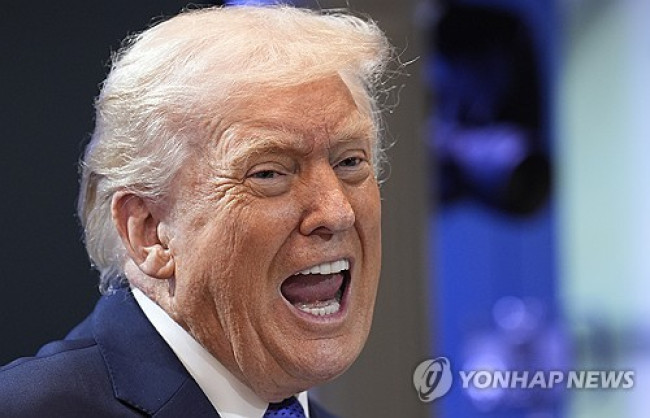 U.S. President Donald Trump [EPA Yonhap News]
In a telephone briefing on the same day, USTR Representative Grier said, "This investigation will review the structural overcapacity in the manufacturing sector of specific economic blocs and the acts, policies, and practices associated with overcapacity and overproduction." He added, "We expect this investigation to reveal various unfair trade practices related to overcapacity and overproduction."
He continued, "It is our view that major trading partners have built production capacity that is not aligned with market incentives for domestic and global demand," and pointed out, "Overcapacity leads to overproduction, persistent trade surpluses, and underutilization of manufacturing production capacity."
Grier further stated, "The investigation will focus on economic blocs where evidence of structural overcapacity is confirmed through indicators such as persistent trade surpluses, surpluses in bilateral trade with the U.S., and unused or underutilized production capacity."
The reason the U.S. has cited "overcapacity and overproduction" as the basis for its investigation appears to be to address the industrial structure or unfair practices of countries with which the U.S. has a trade deficit.
In the Federal Register notice announcing the initiation of the Section 301 investigation, the USTR explicitly stated regarding South Korea that "evidence of structural overcapacity and overproduction is shown through large or persistent trade surpluses (with the U.S.)."
The USTR also identified sectors where South Korea maintains global merchandise trade surpluses, including electronic equipment, automobiles and automotive parts, machinery, steel, and ships.
In the briefing, Grier also stated that reasons for overproduction may include "subsidies, suppressed domestic wages, non-commercial activities of state-owned enterprises, policies promoting production and exports detached from market demand, market barriers preventing the entry of foreign exports, inadequate environmental or labor protections, subsidized loans, financial repression, and currency practices."
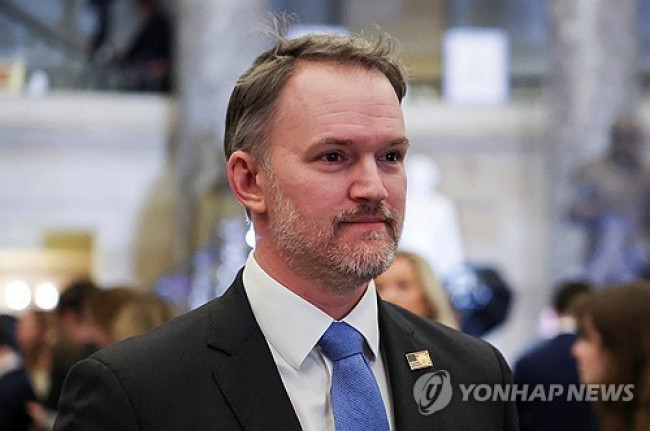 Jamie Grier, U.S. Trade Representative (USTR) [Reuters Yonhap News]
In addition, Grier mentioned that further investigations in areas other than "overcapacity and overproduction" are possible.
He stated, "We anticipate more investigations. Issues such as digital service taxes, drug prices, market access for fisheries and rice, and environmental issues like marine pollution are matters that the U.S. industry has raised." He added, "These issues could lead to further investigations."
Furthermore, Grier stated that the goal is to conclude the investigation before the 150-day deadline for the 10% tariff imposed under Section 122 of the Trade Act expires (in late July).
He said, "We are aware of the 150-day period. Our focus is on conducting the investigation as quickly as possible to reach a conclusion." He added, "We cannot prejudge the outcome of the investigation, but our goal is to complete the investigation before the Section 122 investigation expires."
Grier also presented a specific schedule, including the opening of channels for submitting written comments and requests to attend public hearings (March 17th), deadlines for submissions and requests (April 15th), public hearings (May 5th), and the submission of rebuttal comments (7 days after the public hearing).
Regarding the impact of this investigation on new trade agreements that the U.S. has already signed with countries like South Korea, Japan, and the EU, Grier stated, "The agreements remain in place. In those agreements, the counterpart countries agreed to lower tariffs and non-tariff barriers, and the U.S. adjusted specific additional tariffs. These agreements are still valid."
However, he noted, "Section 301 investigations can lead to tariffs or other measures," suggesting that additional tariffs could be imposed on countries that have concluded trade agreements based on the outcome of this investigation.
Regarding the possibility of additional investigations under Section 232 of the Trade Expansion Act, a means for the U.S. to impose tariffs on specific items, Grier stated, "We do not expect new Section 232 measures in the next few weeks, but (Section 232 investigations) remain one of the options during this administration's term."
Meanwhile, Grier announced that a separate Section 301 investigation, focusing on measures such as import bans on products manufactured through "forced labor" targeting approximately 60 countries, would be initiated after the afternoon of the 12th.

 [Statement by the Seo-beo-kka Korea Military Academy Save-the-Nation Comrades Association] ㉛ Recount the Votes Publicly, as the Previous Recount Concealed Election Fraud
Tongyeong Mayoral Election Recount [Photo=Yonhap News]South Korea's liberal democracy is dying. The National Election Commission (NEC) and the judiciary, which have plummeted into criminal syndicates
[Statement by the Seo-beo-kka Korea Military Academy Save-the-Nation Comrades Association] ㉛ Recount the Votes Publicly, as the Previous Recount Concealed Election Fraud
Tongyeong Mayoral Election Recount [Photo=Yonhap News]South Korea's liberal democracy is dying. The National Election Commission (NEC) and the judiciary, which have plummeted into criminal syndicates
 What is the significance of the "Trump 2028" red hats that keep making a comeback?
It is noteworthy that President Donald Trump is "intentionally" fueling controversy over whether he can actually run in the 2028 presidential election, even though it is "highly likely he is seriously
What is the significance of the "Trump 2028" red hats that keep making a comeback?
It is noteworthy that President Donald Trump is "intentionally" fueling controversy over whether he can actually run in the 2028 presidential election, even though it is "highly likely he is seriously
 Jin Cummings: "North Korea says it will increase the number of spies, so what is the government doing?"
U.S. political columnist Gene Cummings has publicly questioned the South Korean government, asking, "North Korea is announcing plans to increase its number of spies, yet what is the South Korean
Jin Cummings: "North Korea says it will increase the number of spies, so what is the government doing?"
U.S. political columnist Gene Cummings has publicly questioned the South Korean government, asking, "North Korea is announcing plans to increase its number of spies, yet what is the South Korean
 Attorney Do Tae-woo: “Discrepancies in Voter Count and Improper Sealing Confirmed in Tongyeong Mayoral Recount… Official Request for Additional Verification Submitted to Gyeongnam Election Commission”
A bundle of mail-in early voting ballots captured by lawyer Do Tae-woo at the Tongyeong mayoral election recount site. A clear solid line, raising suspicions of election fraud, is visible on the side
Attorney Do Tae-woo: “Discrepancies in Voter Count and Improper Sealing Confirmed in Tongyeong Mayoral Recount… Official Request for Additional Verification Submitted to Gyeongnam Election Commission”
A bundle of mail-in early voting ballots captured by lawyer Do Tae-woo at the Tongyeong mayoral election recount site. A clear solid line, raising suspicions of election fraud, is visible on the side
 Stock Market Crash 'Black Tuesday'… KOSPI down 10.8%, KOSDAQ down 7.7%
The KOSPI fell by more than 5% in early trading on the 28th, triggering a sell-side sidecar.On the 28th, the KOSPI plunged by more than 10%.Due to the sharp decline, a sell-side sidecar—a temporary
Stock Market Crash 'Black Tuesday'… KOSPI down 10.8%, KOSDAQ down 7.7%
The KOSPI fell by more than 5% in early trading on the 28th, triggering a sell-side sidecar.On the 28th, the KOSPI plunged by more than 10%.Due to the sharp decline, a sell-side sidecar—a temporary
 [World Heritage Committee] 25 New World Heritage Sites Inscribed in Busan… South Korea Successfully Expands 'Getbol' Listing
The Chairperson of the World Heritage Committee speaks at the plenary session of the 48th session of the World Heritage Committee, held at BEXCO in Busan on the 20th. [Photo: Yonhap News]A total of 25
[World Heritage Committee] 25 New World Heritage Sites Inscribed in Busan… South Korea Successfully Expands 'Getbol' Listing
The Chairperson of the World Heritage Committee speaks at the plenary session of the 48th session of the World Heritage Committee, held at BEXCO in Busan on the 20th. [Photo: Yonhap News]A total of 25
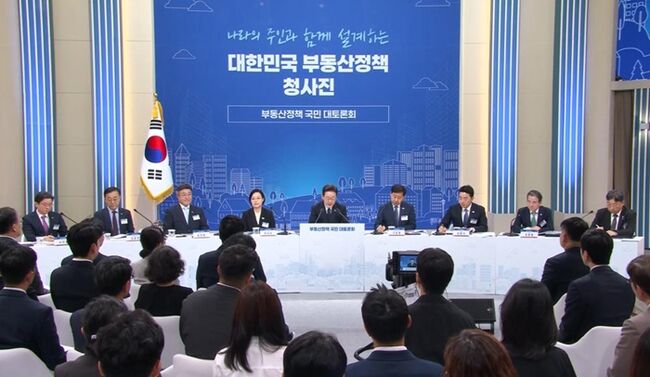 [Liberal Democratic Party Statement] Calling it a Grand Real Estate Debate… It Was Nothing More Than a Private Party Among Themselves
The 'National Grand Debate on Real Estate Policy' held on July 23rd and 27th. [Photo=Yonhap News]The 'National Grand Debate on Real Estate Policy,' hosted by the Lee Jae-myung administration under the
[Liberal Democratic Party Statement] Calling it a Grand Real Estate Debate… It Was Nothing More Than a Private Party Among Themselves
The 'National Grand Debate on Real Estate Policy' held on July 23rd and 27th. [Photo=Yonhap News]The 'National Grand Debate on Real Estate Policy,' hosted by the Lee Jae-myung administration under the
 [Photo] Evidence of Election Fraud Flooding U.S. Media… Trump Had 2.7 Million Votes Stolen
 [Video] U.S. Semiquincentennial Air Show... 'Art in the Sky' streaks across New York
 [Editorial Cartoon] A Draconian Law That Undermines Freedom of Expression

 List
List