Kharg Island oil terminal on Kharg Island in 2017 [Photo = Yonhap News]
As Middle Eastern conflicts intensify, Kharg Island, Iran's key oil export hub, is being cited as a potential target for US attacks.
As Iran hints at the possibility of blocking the Strait of Hormuz, a critical waterway for global oil transport, analyses are emerging from the international energy market and military experts suggesting that the US may directly target Iran's oil export capacity in response.
These speculations have gained further traction following strong remarks made by US President Donald Trump on the 13th.
During a public address that day, President Trump vehemently criticized the Iranian regime and issued a warning message to the effect of "See what happens today." He used strong language towards Iran, hinting at the possibility of further military action.
Within the US, strategies targeting Iran's energy export structure itself are also being discussed.
In a recent interview with Fox Business, White House advisor Jared Eagan stated, "We need to take Iran's vast oil resources out of the hands of terrorists."
He further commented, "Ultimately, we will not have to worry about the Strait of Hormuz issue," suggesting that strategies to neutralize Iran's energy export structure are under consideration.
These remarks are interpreted as an indication that the US may be considering strategies that go beyond mere naval operations in the Strait of Hormuz to target Iran's oil export capacity directly.
Kharg Island, a small island located in the northern Persian Gulf, holds significant strategic importance for the Iranian economy.
Situated approximately 30 kilometers offshore from mainland Iran, the island is Iran's largest oil export hub, concentrating supertanker terminals and storage facilities.
According to the international energy industry, approximately 80-90% of Iran's crude oil exports are handled through Kharg Island. For this reason, Kharg Island is often referred to as the "heart of the Iranian economy" or the "oil faucet."
JPMorgan Chase also emphasizes the strategic importance of Kharg Island.
In a recent report, JPMorgan analyzed that the island is a key terminal located about 30 kilometers offshore from mainland Iran and handles approximately 90% of Iran's crude oil exports.
The JPMorgan report stated, "If the island were directly attacked, most of Iran's crude oil exports could be immediately halted, potentially triggering strong retaliatory attacks on the Strait of Hormuz or Middle Eastern energy infrastructure."
The report also pointed out that Kharg Island is a core foundation of the Iranian economy and a major source of funding for the Islamic Revolutionary Guard Corps.
Iran's crude oil export volume is estimated to be around 1.5 to 2 million barrels per day.
If Kharg Island were paralyzed, a significant portion of this could be cut off, potentially sending shockwaves through the international energy market.
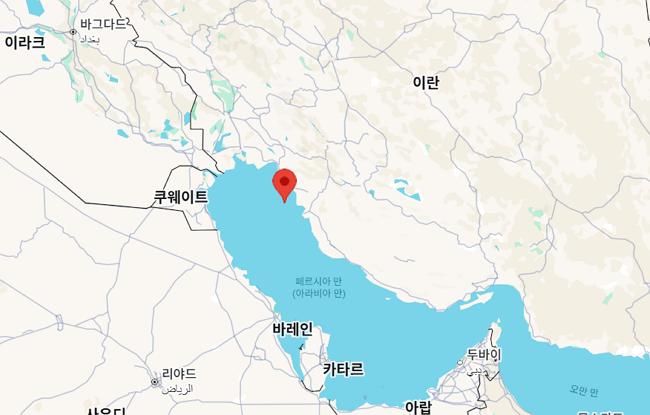 Kharg Island [Photo = Google Maps screenshot]
Militarily, Kharg Island is considered a relatively easy target.
The concentrated and fixed nature of its oil storage facilities and loading terminals makes it susceptible to precision airstrikes.
Some military experts believe that even limited airstrikes could significantly disrupt oil loading facilities for an extended period.
Military analysts suggest that in addition to Kharg Island, the port of Bandar Abbas, located at the entrance to the Strait of Hormuz, and the Lavan Island oil terminal could also be considered potential strategic targets.
Bandar Abbas is a key base for the Iranian navy and the Islamic Revolutionary Guard Corps navy and is the central port for controlling the Strait of Hormuz. Lavan Island is known as an oil export terminal second in size only to Kharg Island.
However, if Kharg Island were to become an actual attack target, the impact on the international energy market is expected to be substantial.
If Kharg Island is paralyzed, most of Iran's oil export capacity could be cut off, potentially leading to a surge in international oil prices.
In particular, such supply shocks could directly affect Asian countries with high dependence on Middle Eastern oil.
The energy market forecasts that South Korea and Japan are most likely to be significantly impacted if conflicts in the Strait of Hormuz escalate.
This is because both countries have a high reliance on Middle Eastern oil and could be exposed to a double shock of soaring oil prices and supply instability.
The Strait of Hormuz is a narrow maritime passage connecting the Persian Gulf and the Gulf of Oman, and it is known that approximately 20% of the world's crude oil transport passes through it.
If Iran were to block this strait, the international energy market could experience immediate repercussions.
Analyses from the international energy market suggest that "the Strait of Hormuz and Kharg Island could become the strategic fulcrum of this Middle Eastern conflict."
It is suggested that if Iran exerts pressure on the international energy market by blocking the Strait of Hormuz, the US could retaliate by targeting Kharg Island to cut off Iran's oil export capacity.
Furthermore, given that a significant portion of Iran's oil exports are destined for China, if Kharg Island were attacked, the impact could extend beyond the Iranian economy to the entire international energy supply chain.
In such a scenario, the nature of the Middle Eastern conflict could also change significantly.
This is because military clashes, which have so far focused on nuclear facilities and military strongholds, could escalate into a "petroleum war" centered around international energy supply chains.
Experts believe that the Strait of Hormuz and Kharg Island are emerging as key variables determining the strategic balance of the current Middle Eastern conflict.

 [Statement by the Seo-beo-kka Korea Military Academy Save-the-Nation Comrades Association] ㉛ Recount the Votes Publicly, as the Previous Recount Concealed Election Fraud
Tongyeong Mayoral Election Recount [Photo=Yonhap News]South Korea's liberal democracy is dying. The National Election Commission (NEC) and the judiciary, which have plummeted into criminal syndicates
[Statement by the Seo-beo-kka Korea Military Academy Save-the-Nation Comrades Association] ㉛ Recount the Votes Publicly, as the Previous Recount Concealed Election Fraud
Tongyeong Mayoral Election Recount [Photo=Yonhap News]South Korea's liberal democracy is dying. The National Election Commission (NEC) and the judiciary, which have plummeted into criminal syndicates
 What is the significance of the "Trump 2028" red hats that keep making a comeback?
It is noteworthy that President Donald Trump is "intentionally" fueling controversy over whether he can actually run in the 2028 presidential election, even though it is "highly likely he is seriously
What is the significance of the "Trump 2028" red hats that keep making a comeback?
It is noteworthy that President Donald Trump is "intentionally" fueling controversy over whether he can actually run in the 2028 presidential election, even though it is "highly likely he is seriously
 Jin Cummings: "North Korea says it will increase the number of spies, so what is the government doing?"
U.S. political columnist Gene Cummings has publicly questioned the South Korean government, asking, "North Korea is announcing plans to increase its number of spies, yet what is the South Korean
Jin Cummings: "North Korea says it will increase the number of spies, so what is the government doing?"
U.S. political columnist Gene Cummings has publicly questioned the South Korean government, asking, "North Korea is announcing plans to increase its number of spies, yet what is the South Korean
 Attorney Do Tae-woo: “Discrepancies in Voter Count and Improper Sealing Confirmed in Tongyeong Mayoral Recount… Official Request for Additional Verification Submitted to Gyeongnam Election Commission”
A bundle of mail-in early voting ballots captured by lawyer Do Tae-woo at the Tongyeong mayoral election recount site. A clear solid line, raising suspicions of election fraud, is visible on the side
Attorney Do Tae-woo: “Discrepancies in Voter Count and Improper Sealing Confirmed in Tongyeong Mayoral Recount… Official Request for Additional Verification Submitted to Gyeongnam Election Commission”
A bundle of mail-in early voting ballots captured by lawyer Do Tae-woo at the Tongyeong mayoral election recount site. A clear solid line, raising suspicions of election fraud, is visible on the side
 Stock Market Crash 'Black Tuesday'… KOSPI down 10.8%, KOSDAQ down 7.7%
The KOSPI fell by more than 5% in early trading on the 28th, triggering a sell-side sidecar.On the 28th, the KOSPI plunged by more than 10%.Due to the sharp decline, a sell-side sidecar—a temporary
Stock Market Crash 'Black Tuesday'… KOSPI down 10.8%, KOSDAQ down 7.7%
The KOSPI fell by more than 5% in early trading on the 28th, triggering a sell-side sidecar.On the 28th, the KOSPI plunged by more than 10%.Due to the sharp decline, a sell-side sidecar—a temporary
 [World Heritage Committee] 25 New World Heritage Sites Inscribed in Busan… South Korea Successfully Expands 'Getbol' Listing
The Chairperson of the World Heritage Committee speaks at the plenary session of the 48th session of the World Heritage Committee, held at BEXCO in Busan on the 20th. [Photo: Yonhap News]A total of 25
[World Heritage Committee] 25 New World Heritage Sites Inscribed in Busan… South Korea Successfully Expands 'Getbol' Listing
The Chairperson of the World Heritage Committee speaks at the plenary session of the 48th session of the World Heritage Committee, held at BEXCO in Busan on the 20th. [Photo: Yonhap News]A total of 25
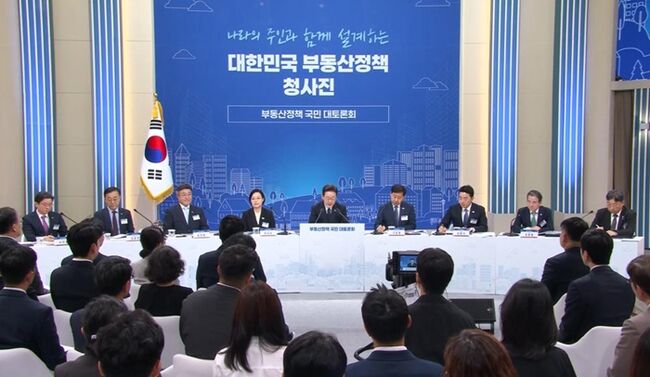 [Liberal Democratic Party Statement] Calling it a Grand Real Estate Debate… It Was Nothing More Than a Private Party Among Themselves
The 'National Grand Debate on Real Estate Policy' held on July 23rd and 27th. [Photo=Yonhap News]The 'National Grand Debate on Real Estate Policy,' hosted by the Lee Jae-myung administration under the
[Liberal Democratic Party Statement] Calling it a Grand Real Estate Debate… It Was Nothing More Than a Private Party Among Themselves
The 'National Grand Debate on Real Estate Policy' held on July 23rd and 27th. [Photo=Yonhap News]The 'National Grand Debate on Real Estate Policy,' hosted by the Lee Jae-myung administration under the
 [Photo] Evidence of Election Fraud Flooding U.S. Media… Trump Had 2.7 Million Votes Stolen
 [Video] U.S. Semiquincentennial Air Show... 'Art in the Sky' streaks across New York
 [Editorial Cartoon] A Draconian Law That Undermines Freedom of Expression

 List
List