 Joe Kent, Director of the US National Counterterrorism Center. [AP=Yonhap News]
Statements made by Joe Kent, the former head of the US National Counterterrorism Center (NCTC), upon his resignation are causing controversy.
His explanation is simple.
He claims that Iran was not an "imminent threat" to the United States and that the war was initiated due to pressure from Israel and pro-Israel lobbying groups within the US.
On the surface, this might sound like an insider's confession. However, a slightly broader view of international politics reveals this explanation to be surprisingly simplistic.
The issue lies not so much in whether his statements are incorrect, but rather in the excessively narrow perspective of an intelligence chief regarding the global order.
Let's first examine the assertion that "Iran was not an imminent threat."
National security assessments are not determined by a single criterion, such as "did they intend to attack right now," as in criminal law. Various strategic variables are considered together, including nuclear development capabilities, missile range, regional power balance, and the ability to control maritime traffic routes.
In particular, Iran's nuclear program has been a key variable destabilizing the Middle East security order for over 20 years.
It is in this context that Israel has consistently characterized it as an "existential threat."
For a long time, Benjamin Netanyahu has warned the international community that Iran's nuclear program could fundamentally alter the strategic balance in the Middle East.
This issue is not a recent debate. Israel's past preemptive strikes on nuclear facilities in Iraq and Syria also stemmed from the same strategic logic.
The so-called "Begin Doctrine," which holds that hostile states attempting to acquire nuclear weapons will not be tolerated, has already become an important pillar of Middle East security strategy.
Therefore, defining something as not a threat simply because it "did not attack immediately" is a judgment that oversimplifies strategic reality. The issue of nuclear proliferation is inherently a long-term strategic problem. Threats do not always manifest solely as "imminent attacks."
The second claim, "the responsibility of the Israel lobby," presents a similar problem.
The existence of pro-Israel lobbying in American politics is hardly new. Organizations like the American Israel Public Affairs Committee (AIPAC) have been lobbying Congress and the administration for a long time.
However, the existence of lobbying does not automatically translate into the cause of war. Decisions for US military action are made within a complex structure involving the President, the National Security Council (NSC), the Department of Defense, intelligence agencies, and Congress.
The explanation that the world's largest military power initiated a war solely due to the pressure of a foreign lobby is an overly simplistic interpretation of the US strategic decision-making process.
More importantly is the strategic significance of the Middle East region itself.
The Middle East is not merely a stage for regional conflicts. It is a space where global energy supply chains and the international financial order intersect. At the core of this structure lies the so-called petrodollar system.
Since the 1970s, most global oil transactions have been settled in US dollars. Thanks to this system, the dollar has been able to function as the central currency of the international financial system. A structure has been formed where countries need dollars to buy oil, and in turn, to acquire dollars, they are integrated into the US financial system.
There is an almost bipartisan consensus in Washington's political circles.
If the dollar's hegemony collapses, so too will America's hegemony.
Ironically, today the US is already close to energy self-sufficiency. Based on crude oil and LNG production alone, it does not need to rely on Middle Eastern oil. So why does the US still deeply intervene in the Middle East's order?
The answer lies not in oil itself, but in the currency used to settle oil transactions.
As long as energy transactions in the Middle East are conducted in dollars, the dollar remains the central currency of the international financial order. The strategic competition surrounding the Middle East is not just a war for oil, but also a competition over the monetary order.
Without understanding this point, US Middle East policy will always be misunderstood.
The explanation that war is due to lobbying, and the judgment that the threat was not imminent, both stem from the same error. Structural issues in international politics have been reduced to overly simplistic political narratives.
The most dangerous error in international politics is reducing complex strategic realities to simple stories.
The role of intelligence agencies is precisely to guard against such simplification.
In that regard, Joe Kent's remarks did not expose US strategy, but rather served as an example revealing the narrow perception of the situation by an intelligence agency chief.

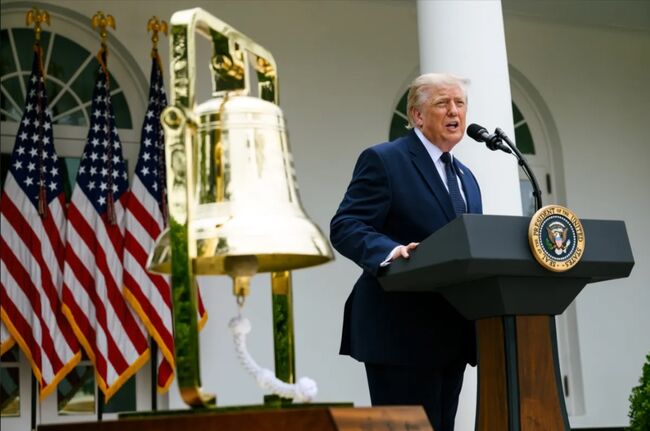 Trump pressures for rate cut again ahead of FOMC... "Should be the lowest in the world"
U.S. President Donald Trump. [Photo = The White House] U.S. President Donald Trump once again pressured the Federal Reserve, the U.S. central bank, to lower interest rates on the 27th (local time
Trump pressures for rate cut again ahead of FOMC... "Should be the lowest in the world"
U.S. President Donald Trump. [Photo = The White House] U.S. President Donald Trump once again pressured the Federal Reserve, the U.S. central bank, to lower interest rates on the 27th (local time
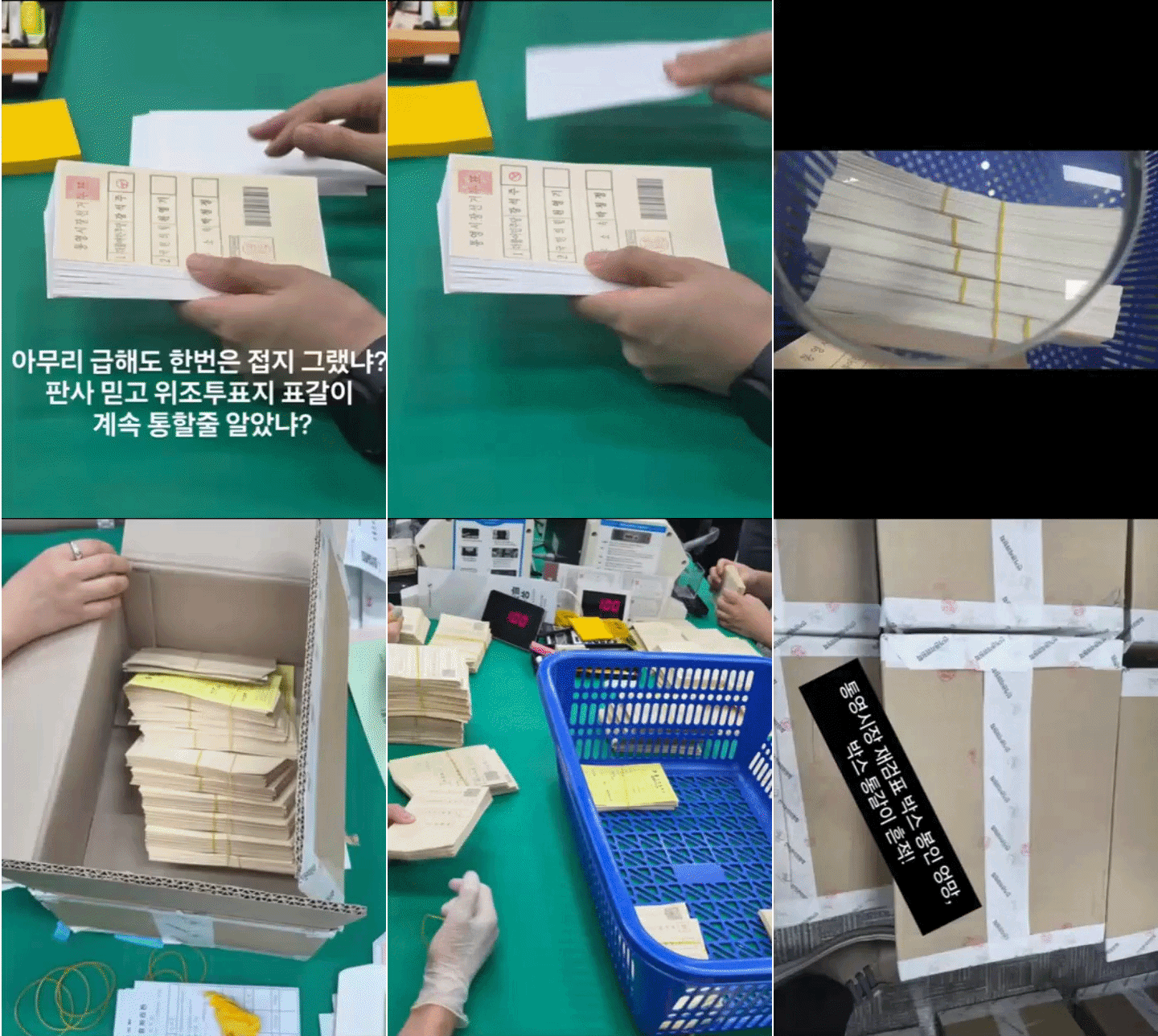 “Ignoring crisp ballots and damaged seals”… Tongyeong mayoral recount concludes with ‘no change in outcome,’ leaving suspicions and public outrage behind
Suspected counterfeit ballots discovered in Tongyeong [GIF from social media of Representative Hwang Kyo-ahn / Attorney Park Joo-hyun]During a recount of the Tongyeong mayoral election in South Gyeong
“Ignoring crisp ballots and damaged seals”… Tongyeong mayoral recount concludes with ‘no change in outcome,’ leaving suspicions and public outrage behind
Suspected counterfeit ballots discovered in Tongyeong [GIF from social media of Representative Hwang Kyo-ahn / Attorney Park Joo-hyun]During a recount of the Tongyeong mayoral election in South Gyeong
 President Yoon, regarding the first-instance ruling on the Public Official Election Act: “An excessive political verdict that distorts the facts… We will appeal immediately.”
The first-instance sentencing hearing for President Yoon Suk Yeol regarding violations of the Public Official Election Act is being broadcast live at Seoul Station on the 27th. [Photo=Yonhap News]Pres
President Yoon, regarding the first-instance ruling on the Public Official Election Act: “An excessive political verdict that distorts the facts… We will appeal immediately.”
The first-instance sentencing hearing for President Yoon Suk Yeol regarding violations of the Public Official Election Act is being broadcast live at Seoul Station on the 27th. [Photo=Yonhap News]Pres
 WSJ: "SK Hynix ADR Premium Is a Sign of AI Trading Overheat"
Advertisement for SK Hynix ADR listing in New York's Times Square [Reuters=Yonhap News file photo]The Wall Street Journal (WSJ) has pointed out that the price of SK Hynix’s American Depositary Recei
WSJ: "SK Hynix ADR Premium Is a Sign of AI Trading Overheat"
Advertisement for SK Hynix ADR listing in New York's Times Square [Reuters=Yonhap News file photo]The Wall Street Journal (WSJ) has pointed out that the price of SK Hynix’s American Depositary Recei
 'Godfather of Japanese Mystery Novels' Keigo Higashino Passes Away After Battle with Cancer at 68
Famous Japanese mystery novelist Keigo Higashino [AFP=Yonhap News]It has been belatedly reported that Keigo Higashino, the "godfather of Japanese mystery novels" and author of bestsellers such as "The
'Godfather of Japanese Mystery Novels' Keigo Higashino Passes Away After Battle with Cancer at 68
Famous Japanese mystery novelist Keigo Higashino [AFP=Yonhap News]It has been belatedly reported that Keigo Higashino, the "godfather of Japanese mystery novels" and author of bestsellers such as "The
 [Park Pil-kyu Security Column] To the Ignorant Trying to Clothe a Beast in Sheep's Clothing
Rep. Kim Byung-joo of the Democratic Party of Korea [Photo=Yonhap News]“The Air Force Academy doesn't teach you how to fly a plane!” “The Army, Navy, and Air Force academies are exactly the
[Park Pil-kyu Security Column] To the Ignorant Trying to Clothe a Beast in Sheep's Clothing
Rep. Kim Byung-joo of the Democratic Party of Korea [Photo=Yonhap News]“The Air Force Academy doesn't teach you how to fly a plane!” “The Army, Navy, and Air Force academies are exactly the
 [Issue Diagnosis] Two Effects of the Election Petition Review
 [Photo] Evidence of Election Fraud Flooding U.S. Media… Trump Had 2.7 Million Votes Stolen
 [Video] U.S. Semiquincentennial Air Show... 'Art in the Sky' streaks across New York
 [Editorial Cartoon] A Draconian Law That Undermines Freedom of Expression

 List
List










