On the 19th (local time), they held a summit meeting in Washington D.C. to discuss issues in the Middle East, including the response to the Strait of Hormuz, and ways to expand economic cooperation. Prime Minister Takei is the first national leader to meet face-to-face with President Trump among those requested to send warships to the Strait of Hormuz. [Photo=Yonhap News]
The debate over deploying troops to the Strait of Hormuz is spreading within the South Korean political sphere, triggered by U.S. President Donald Trump's demand for troop deployment. While some lawmakers from the People Power Party are publicly advocating for participation in the deployment, voices of opposition are also emerging from the Democratic Party of Korea, indicating divided stances within the political community.
Ahn Cheol-soo, a member of the People Power Party and the National Assembly's Foreign Affairs and Unification Committee, stated on Facebook on the 19th that "the deployment to Hormuz should be used as a means to secure economic and security assets."
Ahn argued that "President Trump's diplomacy is a 'package approach' that combines military, economic, and trade elements," and warned that "a passive response to troop deployment could lead to pressure in the economic and trade sectors."
He particularly emphasized that participation in the deployment should be used as an opportunity for self-reliant security strategy, demanding explicit assurances for the construction of nuclear-powered submarines and expanded rights for uranium enrichment and reprocessing of spent nuclear fuel as conditions for participation.
Park Soo-young, the opposition party's whip on the National Assembly's Budget and Fiscal Policy Committee and a member of the People Power Party, also stated at a meeting with the oil refining industry held at the National Assembly on the same day that "the situation in the Middle East is no longer a war in a foreign country." He added that "not only are our ships and citizens exposed to danger, but the civilian economy, including exchange rates, oil prices, and inflation, as well as the entire industry, are being affected."
Park argued that "we should proactively declare our military's participation in escorting operations in the Strait of Hormuz," and asserted that "through this, we can secure leadership in economic and security areas in future negotiations with the U.S."
Cho Jung-hoon, a member of the People Power Party and the opposition party's whip of the National Assembly's Korea-US Parliamentarians' Union, also expressed the stance that decisions regarding troop deployment should be proactively addressed rather than delayed. Cho expressed concern that South Korea's diplomatic position could be narrowed if Japan were to declare its deployment first.
Conversely, voices opposing the troop deployment are also emerging from the Democratic Party of Korea.
Lee Ki-heon, a member of the Democratic Party of Korea, recently held a one-person protest in front of the U.S. Embassy in Seoul, publicly stating his opposition to the deployment to Hormuz. Lee argued that unforeseen military risks could arise if the South Korean military becomes directly involved in the conflict in the Middle East.
Kim Byung-joo, a member of the Democratic Party of Korea and a former military official, also stated that careful consideration should be given to the Middle Eastern situation and military risks before making a decision on troop deployment.
In South Korean politics, overseas troop deployments have not infrequently evolved from foreign policy issues into domestic political conflicts. A prime example is the decision by the Roh Moo-hyun administration to deploy troops to Iraq in 2003.
At the time, the government pushed for deployment citing the Korea-U.S. alliance and international responsibilities, but strong opposition movements continued from within the political sphere and civil society.
Notably, opinions within the ruling party were divided, and the issue of troop deployment emerged as a political point of contention that ignited conflict not only between conservatives and progressives but also within the progressive camp.
The government has maintained its position that there has been no official request for troop deployment from the United States so far and is continuing with a cautious approach.
Earlier, on the 14th (local time), U.S. President Trump demanded through his social media platform Truth Social that allies, including NATO, South Korea, and Japan, send warships to the Strait of Hormuz to participate in maritime security operations.
Subsequently, on the 17th, he expressed disappointment with the lukewarm response from allied nations and posted a message implying that additional support was not necessary.
While voices advocating for participation in the deployment and opposing stances are emerging simultaneously within the political sphere, no clear official positions have yet been announced by the leadership of either party.
Within the People Power Party, some lawmakers have publicly mentioned the necessity of participating in the deployment, but the party leadership has not presented an official party platform.
Similarly, within the Democratic Party of Korea, some lawmakers have publicly expressed opposition, but the party's direction of response has not yet been finalized.
There is a possibility that if the situation in the Middle East further deteriorates or if the U.S. demands become more specific, the issue of deploying troops to Hormuz could emerge as a new source of conflict in South Korean politics, beyond being a diplomatic issue.

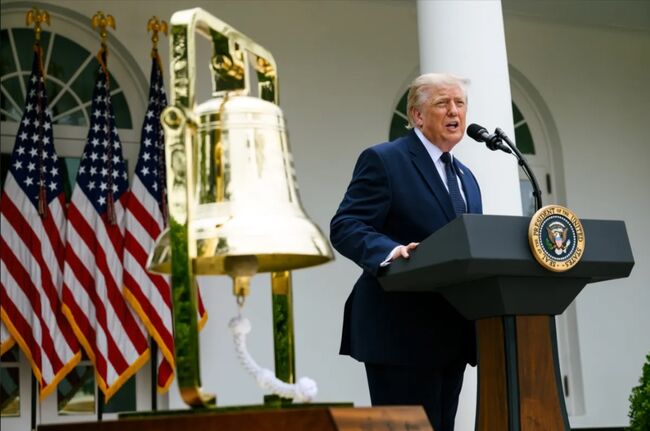 Trump pressures for rate cut again ahead of FOMC... "Should be the lowest in the world"
U.S. President Donald Trump. [Photo = The White House] U.S. President Donald Trump once again pressured the Federal Reserve, the U.S. central bank, to lower interest rates on the 27th (local time
Trump pressures for rate cut again ahead of FOMC... "Should be the lowest in the world"
U.S. President Donald Trump. [Photo = The White House] U.S. President Donald Trump once again pressured the Federal Reserve, the U.S. central bank, to lower interest rates on the 27th (local time
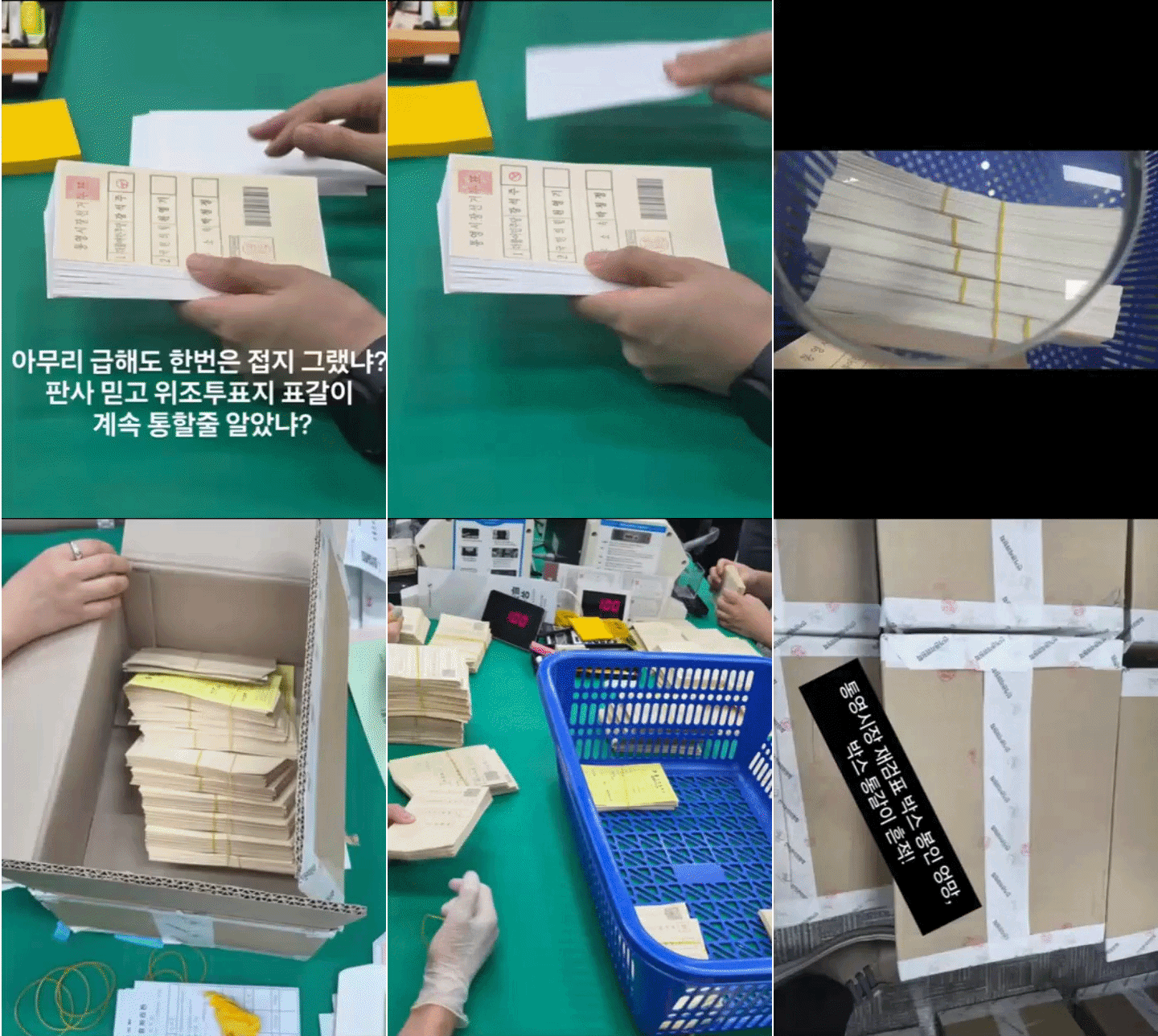 “Ignoring crisp ballots and damaged seals”… Tongyeong mayoral recount concludes with ‘no change in outcome,’ leaving suspicions and public outrage behind
Suspected counterfeit ballots discovered in Tongyeong [GIF from social media of Representative Hwang Kyo-ahn / Attorney Park Joo-hyun]During a recount of the Tongyeong mayoral election in South Gyeong
“Ignoring crisp ballots and damaged seals”… Tongyeong mayoral recount concludes with ‘no change in outcome,’ leaving suspicions and public outrage behind
Suspected counterfeit ballots discovered in Tongyeong [GIF from social media of Representative Hwang Kyo-ahn / Attorney Park Joo-hyun]During a recount of the Tongyeong mayoral election in South Gyeong
 President Yoon, regarding the first-instance ruling on the Public Official Election Act: “An excessive political verdict that distorts the facts… We will appeal immediately.”
The first-instance sentencing hearing for President Yoon Suk Yeol regarding violations of the Public Official Election Act is being broadcast live at Seoul Station on the 27th. [Photo=Yonhap News]Pres
President Yoon, regarding the first-instance ruling on the Public Official Election Act: “An excessive political verdict that distorts the facts… We will appeal immediately.”
The first-instance sentencing hearing for President Yoon Suk Yeol regarding violations of the Public Official Election Act is being broadcast live at Seoul Station on the 27th. [Photo=Yonhap News]Pres
 WSJ: "SK Hynix ADR Premium Is a Sign of AI Trading Overheat"
Advertisement for SK Hynix ADR listing in New York's Times Square [Reuters=Yonhap News file photo]The Wall Street Journal (WSJ) has pointed out that the price of SK Hynix’s American Depositary Recei
WSJ: "SK Hynix ADR Premium Is a Sign of AI Trading Overheat"
Advertisement for SK Hynix ADR listing in New York's Times Square [Reuters=Yonhap News file photo]The Wall Street Journal (WSJ) has pointed out that the price of SK Hynix’s American Depositary Recei
 'Godfather of Japanese Mystery Novels' Keigo Higashino Passes Away After Battle with Cancer at 68
Famous Japanese mystery novelist Keigo Higashino [AFP=Yonhap News]It has been belatedly reported that Keigo Higashino, the "godfather of Japanese mystery novels" and author of bestsellers such as "The
'Godfather of Japanese Mystery Novels' Keigo Higashino Passes Away After Battle with Cancer at 68
Famous Japanese mystery novelist Keigo Higashino [AFP=Yonhap News]It has been belatedly reported that Keigo Higashino, the "godfather of Japanese mystery novels" and author of bestsellers such as "The
 [Park Pil-kyu Security Column] To the Ignorant Trying to Clothe a Beast in Sheep's Clothing
Rep. Kim Byung-joo of the Democratic Party of Korea [Photo=Yonhap News]“The Air Force Academy doesn't teach you how to fly a plane!” “The Army, Navy, and Air Force academies are exactly the
[Park Pil-kyu Security Column] To the Ignorant Trying to Clothe a Beast in Sheep's Clothing
Rep. Kim Byung-joo of the Democratic Party of Korea [Photo=Yonhap News]“The Air Force Academy doesn't teach you how to fly a plane!” “The Army, Navy, and Air Force academies are exactly the
 [Issue Diagnosis] Two Effects of the Election Petition Review
 [Photo] Evidence of Election Fraud Flooding U.S. Media… Trump Had 2.7 Million Votes Stolen
 [Video] U.S. Semiquincentennial Air Show... 'Art in the Sky' streaks across New York
 [Editorial Cartoon] A Draconian Law That Undermines Freedom of Expression

 List
List