 Writers affiliated with the Korean Literature Writers Association leaving their offices to attend the preliminary meeting for the inter-Korean writers' conference at Panmunjom in March 1989. They were arrested by the police en route.
There is a long-standing lineage within the Korean literary scene. Its starting point is November 18, 1974. The beginning was the formation of the Writers for Freedom of Expression Conference, established amidst the Yushin regime with the "Declaration of 101 Literary Figures."
This organization emerged in opposition to the Park Chung-hee regime's media censorship and suppression of expression. Among the participants were poet Ko Un, novelist Hwang Sok-yong, and critic Baek Nak-chung. They undoubtedly played a significant role in the context of that era. It is a historical fact that literature became a channel of resistance in a system where freedom of expression was limited.
However, from its inception, this organization did not define literature as an autonomous area of creation. Literature was a tool for intervention in reality. This starting point became the origin of all subsequent problems.
2007: From ‘Minjok Munhak Writers Association’ to ‘Korean Writers Association’
In March 1980, just before the expansion of martial law, the magazine "Practicing Literature" was launched. As its name suggests, this magazine defined literature as a means of "practice." Following this, after the June Democratic Struggle in 1987, the Writers for Freedom of Expression Conference was reorganized into the Minjok Munhak Writers Association.
Here, the concept of "Minjok Munhak" (National Literature) came to the forefront. This was not merely a literary theory but a political declaration. Subsequently, grand narratives such as anti-dictatorship, anti-foreign influence, unification, and national liberation were established as criteria for literature.
At this point, the nature of literature clearly changed. Instead of exploring individuals' inner lives or complex human experiences, it became a tool for expressing collective goals. Works began to function as means of conveying messages rather than as explorations.
In the early 1990s, internal conflict arose within this group. As a result, the "Practicing Literature" faction split, forming the Writers Association of Practicing Literature. However, this split was not a change in direction. It was merely a difference between pushing the existing line more strongly or adjusting it. The fundamental structure of combining literature with politics remained intact.
This lineage was later reorganized again. In 2007, the Minjok Munhak Writers Association changed its name to the Korean Writers Association. Ostensibly, this appeared to be a change. By removing the word "Minjok" (National), it was an attempt to transition to a more neutral image. However, looking at their actual activities, the essence did not change significantly.
The Korean Writers Association has continuously expressed collective stances on political issues since then. Let's look at a specific example. On December 4, 2024, following an emergency martial law situation, the organization issued an urgent statement demanding the nullification of martial law and the impeachment of the president.
Subsequently, in April 2025, they issued a statement to the Constitutional Court demanding "immediate dismissal." These two events are not mere expressions of opinion. They are clear examples of a literary organization repeatedly intervening directly in real-world politics.
What is important here is not the content of the positions. The problem is the method. When a literary organization systematically takes a stance on specific political issues and repeats this, it is difficult to consider that organization a purely literary one anymore. The boundary with political organizations becomes blurred.
This structure impacts the entire literary scene. When one lineage occupies the center for a long period, its direction becomes the de facto standard. National Literature, Practicing Literature, and politically engaged literature are considered "normal," while other trends are pushed to the periphery. Liberal perspectives, viewpoints that affirm the market economy, narratives that view the nation positively, or even works that simply aim for non-political literature are all marginalized.
This is not natural competition. It is structural bias.
Return to a Structure Where Questions Precede Conclusions
Another issue is the weakening of literary form itself. When political objectives take precedence, works become easily schematized. Characters become spokespersons for a position, and events transform into devices for conveying a message. Complex humans disappear, leaving behind simple structures. Texts resembling manifestos rather than literature are repeated.
This phenomenon has been pointed out repeatedly since the 1980s. It is a criticism that formal experimentation and linguistic tension have weakened due to literature's preoccupation with real-world engagement. However, the lineage has not changed significantly. While there have been splits, the direction has been maintained.
Ultimately, this trend creates a formula: literature is a tool of politics. This formula, which began with the Writers for Freedom of Expression Conference in 1974, has been maintained through the Minjok Munhak Writers Association in 1987, the Practicing Literature faction in the 1990s, and the Korean Writers Association in 2007.
The problem is that this formula is no longer valid. We are not in the 1970s. Freedom of expression is institutionally guaranteed. There is no necessity for literature to function as a tool of political practice. Rather, it is the opposite. It has become a more important task to maintain distance from politics and explore humanity.
Despite this, this lineage continues to operate in the same manner. Statements on current affairs, political participation, expressing collective positions. This repetition pushes literature into an increasingly narrow domain.
Literature is not a domain that can be organized in one direction. It comes alive when different perspectives collide and coexist. However, when a specific lineage dominates the center, its diversity cannot be sufficiently guaranteed.
Now, different criteria are needed. Criteria that return literature to literature. A structure where works precede positions, humans precede slogans, and questions precede conclusions.
The lineage up to this point will remain a scene from modern Korean history. However, there is no reason it must continue into the future. What is needed is not another name change, but a completely different direction. A direction that returns literature to the realm of freedom.
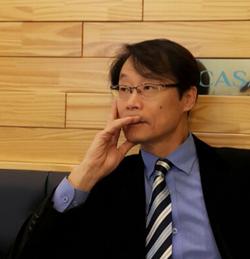
◆ Songsan
A poet and researcher of history and philosophy. Former director of the Rhee Syngman Academy. Currently serves as a senior researcher at the Korean Modern and Contemporary History Research Association and as the representative of the philosophy forum Lyceum. He has published four poetry collections, co-translated "Heroes of Cape Horn," and authored the historical psychology commentary "Joseon Becomes Myth" (2026). He is actively engaged in research and practice of liberal cultural movements. Songsan is a pen name.

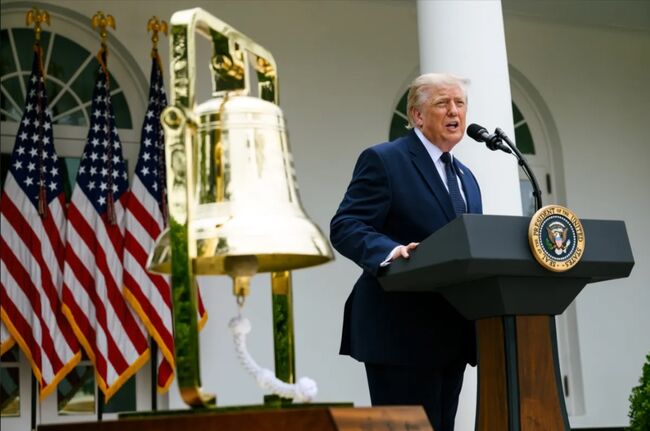 Trump pressures for rate cut again ahead of FOMC... "Should be the lowest in the world"
U.S. President Donald Trump. [Photo = The White House] U.S. President Donald Trump once again pressured the Federal Reserve, the U.S. central bank, to lower interest rates on the 27th (local time
Trump pressures for rate cut again ahead of FOMC... "Should be the lowest in the world"
U.S. President Donald Trump. [Photo = The White House] U.S. President Donald Trump once again pressured the Federal Reserve, the U.S. central bank, to lower interest rates on the 27th (local time
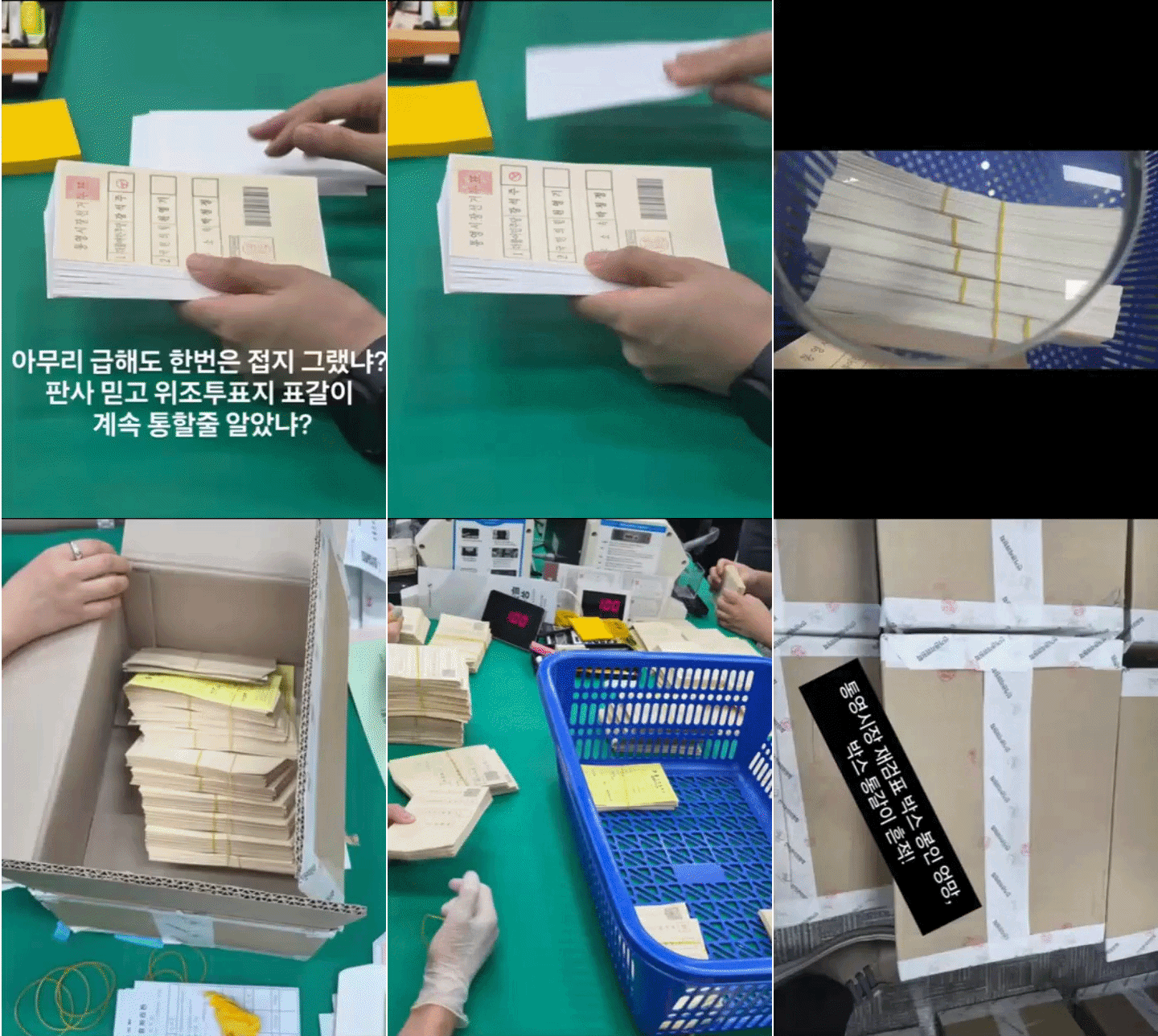 “Ignoring crisp ballots and damaged seals”… Tongyeong mayoral recount concludes with ‘no change in outcome,’ leaving suspicions and public outrage behind
Suspected counterfeit ballots discovered in Tongyeong [GIF from social media of Representative Hwang Kyo-ahn / Attorney Park Joo-hyun]During a recount of the Tongyeong mayoral election in South Gyeong
“Ignoring crisp ballots and damaged seals”… Tongyeong mayoral recount concludes with ‘no change in outcome,’ leaving suspicions and public outrage behind
Suspected counterfeit ballots discovered in Tongyeong [GIF from social media of Representative Hwang Kyo-ahn / Attorney Park Joo-hyun]During a recount of the Tongyeong mayoral election in South Gyeong
 President Yoon, regarding the first-instance ruling on the Public Official Election Act: “An excessive political verdict that distorts the facts… We will appeal immediately.”
The first-instance sentencing hearing for President Yoon Suk Yeol regarding violations of the Public Official Election Act is being broadcast live at Seoul Station on the 27th. [Photo=Yonhap News]Pres
President Yoon, regarding the first-instance ruling on the Public Official Election Act: “An excessive political verdict that distorts the facts… We will appeal immediately.”
The first-instance sentencing hearing for President Yoon Suk Yeol regarding violations of the Public Official Election Act is being broadcast live at Seoul Station on the 27th. [Photo=Yonhap News]Pres
 WSJ: "SK Hynix ADR Premium Is a Sign of AI Trading Overheat"
Advertisement for SK Hynix ADR listing in New York's Times Square [Reuters=Yonhap News file photo]The Wall Street Journal (WSJ) has pointed out that the price of SK Hynix’s American Depositary Recei
WSJ: "SK Hynix ADR Premium Is a Sign of AI Trading Overheat"
Advertisement for SK Hynix ADR listing in New York's Times Square [Reuters=Yonhap News file photo]The Wall Street Journal (WSJ) has pointed out that the price of SK Hynix’s American Depositary Recei
 'Godfather of Japanese Mystery Novels' Keigo Higashino Passes Away After Battle with Cancer at 68
Famous Japanese mystery novelist Keigo Higashino [AFP=Yonhap News]It has been belatedly reported that Keigo Higashino, the "godfather of Japanese mystery novels" and author of bestsellers such as "The
'Godfather of Japanese Mystery Novels' Keigo Higashino Passes Away After Battle with Cancer at 68
Famous Japanese mystery novelist Keigo Higashino [AFP=Yonhap News]It has been belatedly reported that Keigo Higashino, the "godfather of Japanese mystery novels" and author of bestsellers such as "The
 [Park Pil-kyu Security Column] To the Ignorant Trying to Clothe a Beast in Sheep's Clothing
Rep. Kim Byung-joo of the Democratic Party of Korea [Photo=Yonhap News]“The Air Force Academy doesn't teach you how to fly a plane!” “The Army, Navy, and Air Force academies are exactly the
[Park Pil-kyu Security Column] To the Ignorant Trying to Clothe a Beast in Sheep's Clothing
Rep. Kim Byung-joo of the Democratic Party of Korea [Photo=Yonhap News]“The Air Force Academy doesn't teach you how to fly a plane!” “The Army, Navy, and Air Force academies are exactly the
 [Issue Diagnosis] Two Effects of the Election Petition Review
 [Photo] Evidence of Election Fraud Flooding U.S. Media… Trump Had 2.7 Million Votes Stolen
 [Video] U.S. Semiquincentennial Air Show... 'Art in the Sky' streaks across New York
 [Editorial Cartoon] A Draconian Law That Undermines Freedom of Expression

 List
List









