A movie where only two or three people stand out and move has achieved box office success beyond imagination. [Photo=Part of the poster for 'The King and the Clown']
The movie ‘The King and the Clown’ surpassed 14.1 million viewers as of March 20th. This ranks it 5th in box office history.
The actor who played the role of King Danjong is Park Ji-hoon, who is referred to as an 'idol.' His acting was commendable. Yoo Hae-jin, who played the role of Eom Heung-do, is well-known for his masterful performance.
Was I the only one who felt that Yoo Hae-jin’s presence filled the entire screen throughout the movie? Of course, Yoo Ji-tae, who played the role of Han Myeong-hoe, also contributed significantly.
This story, with its simple composition, where only two or three characters stand out and drive the narrative, has achieved box office success beyond imagination. How was this possible?
A World Dominated by Corrupt Officials, Reflecting on the Blood of the Six Martyred Ministers
Director Jang Hang-jun stated in a television interview, “I wanted to portray the story of those who practiced righteousness in a chaotic era, those who did what was right at the risk of their lives, and those who tried to protect it.” This indicates that the director understands this era as truly a time of 'mad winds.'
When asked about the recent surge in attention towards King Danjong in an interview, popular culture critic Jeong Deok-hyeon replied:
“I think the public today is clearly much more sensitive to issues like coups and usurpation of power.”
As ‘The King and the Clown’ achieved unexpected box office success, Choonwon Lee Kwang-soo’s ‘The Tragic Story of King Danjong,’ which depicts King Danjong's tragic events, also saw a surge in sales. Books with ‘The Annals of the Joseon Dynasty’ as a keyword also experienced a sharp increase in sales.
Indeed, ‘The Annals of the Joseon Dynasty’ records the deeds of Eom Heung-do, a local official (Ho-jang), across several reigns. As one example, in the ‘Annals of King Jungjong,’ Shin Sang, a Vice-Minister of Personnel, reports to the King:
“People say that when he returned to his hometown, the entire county was in distress, and a local official named Eom Heung-do went to mourn him and prepared a coffin for his burial, and the villagers still feel deep sorrow.”
In the ‘Annals of King Hyeonjong,’ Song Si-yeol and others report to the King as follows:
“When Prince Nosan was harmed, no one took care of him. However, Eom Heung-do, a local official of that county, immediately went to mourn him and personally prepared a coffin and shroud for his burial. The current tomb of Nosan is precisely that tomb. People have spoken of Heung-do’s loyalty to this day.”
Danjong, also known as Yi Hong-wi, was demoted to Prince Nosan and exiled to Cheongnyongpo in Yeongwol. No one visited him. Only the local official Eom Heung-do secretly offered his devotion.
What the Cries from Cheongnyongpo Ask Us Today
According to the ‘Annals of King Gojong,’ Eom Ju-ho, a descendant of Eom Heung-do, submitted a petition to the King detailing the deeds of his ancestor, Eom Heung-do.
“My ancestor… Eom Heung-do served with utmost loyalty until the end during the reign of King Danjong. The year after King Danjong abdicated the throne, in the year Byeongja (1456), he was moved to Cheongnyongpo in Yeongwol. It was late spring at the time.
King Danjong, engulfed in sorrow, sat alone and recited a poem by the cuckoo. He then dozed off, and suddenly the Six Martyred Ministers appeared in his dream, lamenting their unjust circumstances as if they were alive.
King Danjong awoke with a start, weeping and deeply saddened. Eom Heung-do, watching from the mountaintop, said, ‘The light in Cheongnyongpo is bright, and I hear crying. I must go and see.’ He then took off his outer garments, crossed the river, and immediately prostrated himself before the King, coughing. King Danjong stopped crying and asked, ‘Who are you, and why have you come in the middle of the night?’
Eom Heung-do replied, ‘I am the Ho-jang of this county. Hearing the cries, I was startled and dared to rush here.’
King Danjong sighed and said, ‘I have been here for a long time, and no one has come to comfort me. Today, you have visited me, and I am deeply touched by your sincerity. I now know that there are good people even in the wilderness.’ From that day on, he visited the King every night.”
In the tenth month of the year Jeongchuk (1457), when King Danjong passed away, the local magistrate and his attendants were too afraid to perform the ritualistic enshroudment. However, Eom Heung-do immediately wailed, personally prepared a coffin and shroud, enshrouded the body, carried it on his back, and buried him on the slopes of his ancestral land. This is the site of the present-day Jangneung tomb.”
Author Lee Kwang-soo, in adapting King Danjong's 'sad story' into a novel, stated:
“Those who died with righteous indignation because of the king can be counted in the thousands, with the Six Martyred Ministers at the head. Those who gave up on worldly pursuits and lived their lives in tears of sorrow can be counted in the hundreds of thousands, with the Six Living Martyrs at the head. The courage and righteous fervor of the six loyal ministers will burn endlessly in the hearts of the Korean people throughout the ages, and King Danjong's tragic fate will forever be a subject of tragedy that draws tears from all humanity.”
What the Movie Reveals About the Current State of Public Sentiment
When Lee Kwang-soo's ‘The Tragic Story of King Danjong’ was serialized in the newspaper for 217 installments and concluded, reader feedback poured in from across the country. Among them, a person named Kim Pil-su wrote:
“The actions of Jeong In-ji and Shin Suk-ju, once again brought to life through the pen of Choonwon, are so disappointing that they make one sick. Han Myeong-hoe and others were always like that, and their actions could at least be seen as the wild impulse of a man. But for Jeong and Shin, who received the king’s dying charge, how could they do such a thing?
What is even more shocking is that when we see the cunning and corrupt officials of today, like Jeong and Shin, calmly carrying out their deeds in broad daylight and like a swarm of rats at night, striking down loyal and upright individuals, we wonder if the red blood shed by the Six Martyred Ministers is still insufficient, and if society has failed to empathize with the deep sorrow of King Danjong that has lasted for countless ages. This thought makes my heart race and my lips clench.”
Later, Park Jong-hwa (Woltan) explained that contemporary readers saw the 'oppressed Koreans' in King Danjong and 'Japanese imperialism' in Suyang-daegun (King Sejo).
Today, whom do the audiences see in King Danjong, whom do they see in Han Myeong-hoe, and whom do they see in Eom Heung-do?
In 1453 (the first year of King Danjong's reign, Gyeyu year), Suyang-daegun murdered Kim Jong-seo and Hwangbo In and seized power. Whose rebellion was the Gyeyu Coup? Was it the rebellion of the murdered senior officials? Was it King Danjong’s rebellion? Was it not the rebellion of the ambitious 'Great Suyang' driven by a lust for power?
I do not believe in opinion polls. When I receive a call from an opinion polling agency, I quickly hang up. Unexpectedly, the movie speaks to the current state of public sentiment.
This is the operation of a sympathetic force that cannot be obscured by the power of authority. It is a community of 'deep sorrow' and 'resentment,' a community of living hearts that yearn for the world to be set right. Is this not frightening and awe-inspiring?
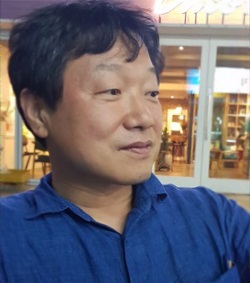
◆ Professor Bang Min-ho
Doctor of Literature, Professor of Korean Language and Literature at Seoul National University. He is the editor-in-chief of the quarterly literary magazine 'Mac' (since 2022) and is actively engaged as a poet, novelist, and literary critic. His works include 'Lover Shim Cheong' (2015), 'The Language of Pain' (2019), 'Revisiting Korean Criticism' (2021), and 'Seoul Literary Journeys' (2024).

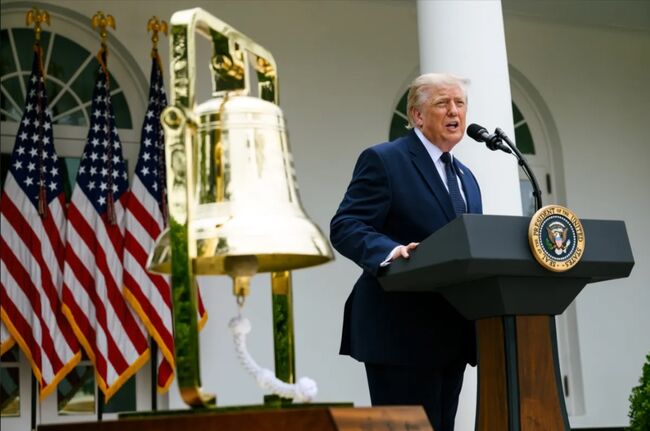 Trump pressures for rate cut again ahead of FOMC... "Should be the lowest in the world"
U.S. President Donald Trump. [Photo = The White House] U.S. President Donald Trump once again pressured the Federal Reserve, the U.S. central bank, to lower interest rates on the 27th (local time
Trump pressures for rate cut again ahead of FOMC... "Should be the lowest in the world"
U.S. President Donald Trump. [Photo = The White House] U.S. President Donald Trump once again pressured the Federal Reserve, the U.S. central bank, to lower interest rates on the 27th (local time
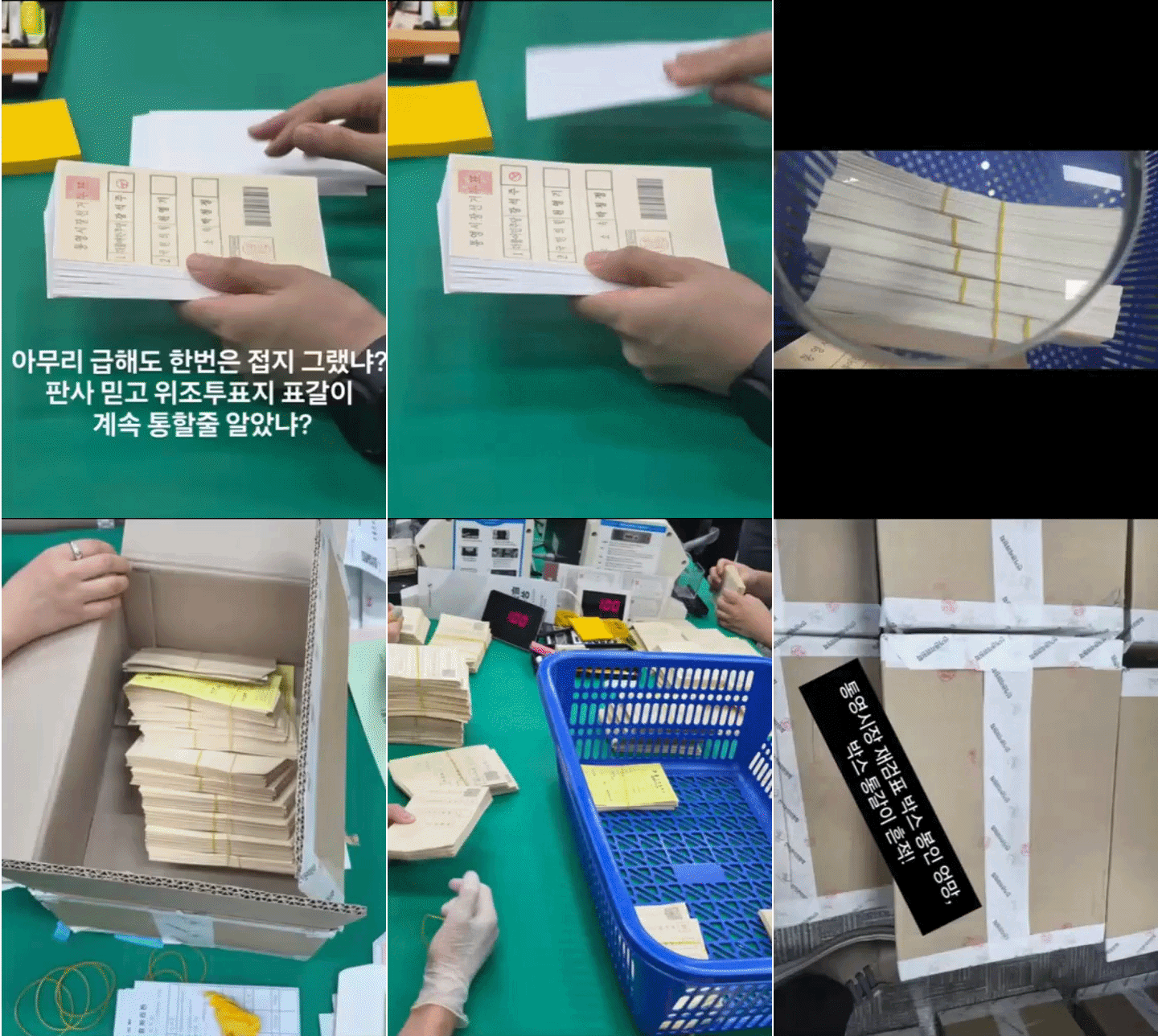 “Ignoring crisp ballots and damaged seals”… Tongyeong mayoral recount concludes with ‘no change in outcome,’ leaving suspicions and public outrage behind
Suspected counterfeit ballots discovered in Tongyeong [GIF from social media of Representative Hwang Kyo-ahn / Attorney Park Joo-hyun]During a recount of the Tongyeong mayoral election in South Gyeong
“Ignoring crisp ballots and damaged seals”… Tongyeong mayoral recount concludes with ‘no change in outcome,’ leaving suspicions and public outrage behind
Suspected counterfeit ballots discovered in Tongyeong [GIF from social media of Representative Hwang Kyo-ahn / Attorney Park Joo-hyun]During a recount of the Tongyeong mayoral election in South Gyeong
 President Yoon, regarding the first-instance ruling on the Public Official Election Act: “An excessive political verdict that distorts the facts… We will appeal immediately.”
The first-instance sentencing hearing for President Yoon Suk Yeol regarding violations of the Public Official Election Act is being broadcast live at Seoul Station on the 27th. [Photo=Yonhap News]Pres
President Yoon, regarding the first-instance ruling on the Public Official Election Act: “An excessive political verdict that distorts the facts… We will appeal immediately.”
The first-instance sentencing hearing for President Yoon Suk Yeol regarding violations of the Public Official Election Act is being broadcast live at Seoul Station on the 27th. [Photo=Yonhap News]Pres
 WSJ: "SK Hynix ADR Premium Is a Sign of AI Trading Overheat"
Advertisement for SK Hynix ADR listing in New York's Times Square [Reuters=Yonhap News file photo]The Wall Street Journal (WSJ) has pointed out that the price of SK Hynix’s American Depositary Recei
WSJ: "SK Hynix ADR Premium Is a Sign of AI Trading Overheat"
Advertisement for SK Hynix ADR listing in New York's Times Square [Reuters=Yonhap News file photo]The Wall Street Journal (WSJ) has pointed out that the price of SK Hynix’s American Depositary Recei
 'Godfather of Japanese Mystery Novels' Keigo Higashino Passes Away After Battle with Cancer at 68
Famous Japanese mystery novelist Keigo Higashino [AFP=Yonhap News]It has been belatedly reported that Keigo Higashino, the "godfather of Japanese mystery novels" and author of bestsellers such as "The
'Godfather of Japanese Mystery Novels' Keigo Higashino Passes Away After Battle with Cancer at 68
Famous Japanese mystery novelist Keigo Higashino [AFP=Yonhap News]It has been belatedly reported that Keigo Higashino, the "godfather of Japanese mystery novels" and author of bestsellers such as "The
 [Park Pil-kyu Security Column] To the Ignorant Trying to Clothe a Beast in Sheep's Clothing
Rep. Kim Byung-joo of the Democratic Party of Korea [Photo=Yonhap News]“The Air Force Academy doesn't teach you how to fly a plane!” “The Army, Navy, and Air Force academies are exactly the
[Park Pil-kyu Security Column] To the Ignorant Trying to Clothe a Beast in Sheep's Clothing
Rep. Kim Byung-joo of the Democratic Party of Korea [Photo=Yonhap News]“The Air Force Academy doesn't teach you how to fly a plane!” “The Army, Navy, and Air Force academies are exactly the
 [Issue Diagnosis] Two Effects of the Election Petition Review
 [Photo] Evidence of Election Fraud Flooding U.S. Media… Trump Had 2.7 Million Votes Stolen
 [Video] U.S. Semiquincentennial Air Show... 'Art in the Sky' streaks across New York
 [Editorial Cartoon] A Draconian Law That Undermines Freedom of Expression

 List
List