An aerial view of the exterior of Safety Industry in Daedeok-gu, Daejeon, where a major fire broke out, on the morning of the 21st. [Photo=Yonhap News]
The Daejeon fire disaster was not a result of poor management at a single factory. It was an incident that starkly exposed the inadequacy of South Korea's industrial safety system to handle the risks present in the field.
The accident was foreshadowed, but the existing system, reliant on senses, experience, and manuals, failed to detect these signals. The problem of industrial safety is not a lack of technology, but a structural issue stemming from the national system lagging behind the changing times.
The era of leaving industrial safety to "industry autonomy" must end; national management of industrial safety, with direct state intervention, is now necessary.
Most Fire Indicators Can Be Identified by AI
Most risks in industrial sites exhibit precursory signs. Increased temperature, changes in gas concentration, electrical anomalies, equipment vibrations – all such data are warning signals that foreshadow an accident. However, human senses and paper manuals cannot capture these signals in real-time.
AI Firefighting is a predictive safety technology that compensates for these limitations. By analyzing equipment and environmental data in real-time, it can detect risks at the "pre-occurrence stage" and alert not only on-site managers but also nearby fire stations before an accident escalates.
However, the mere availability of technology does not automatically guarantee safety. Without the policy decision to integrate technology into the national system, AI Firefighting will remain merely advanced equipment.
Therefore, the most urgent task is to establish a national industrial safety data network. In a structure where data is scattered across individual workplaces as it is now, the state cannot intervene even if AI analyzes risks.
We need to create a system that integrates data from industrial sites nationwide into a national cloud network, allowing AI Firefighting to analyze risk levels and immediately transmit them to the National Fire Agency, the Ministry of the Interior and Safety, local governments, and the Ministry of Employment and Labor based on relevant issues.
In the event of an accident, automatic backup of data logs should be implemented to ensure transparency in the investigation process. For workplaces accumulating risks beyond a certain level, an "AI-based Risk Rating System" should be applied, establishing institutional mechanisms for the Ministry of the Interior and Safety and the National Fire Agency to intervene proactively. Industrial safety is a public domain that cannot be left solely to private autonomy; it is infrastructure that the state must manage directly.
Strengthen National-Level Safety Control Tower Functions
AI Firefighting is not just technology but a public safety facility that the nation must build. The government must secure public trust by introducing a public algorithm certification system that transparently discloses AI judgment criteria and data processing procedures.
For small and medium-sized manufacturers and other businesses with insufficient safety management capabilities, AI Firefighting-based solutions should be provided free of charge or at a low cost to bridge the safety gap.
Furthermore, a National Industrial Safety Control Center (NSCT) should be established to integrate and monitor nationwide data and respond immediately to accidents, thereby strengthening the national-level safety control tower functions. Industrial safety is not an option but a national responsibility, and technology is a tool to fulfill that responsibility.
Disasters do not become repeated catastrophes because they are unpredictable. They are repeated because systems capable of prediction have not been implemented through policy. The future of industrial safety depends not on technology, but on policy decisions.
Korea spends over 10 trillion won annually on industrial accident compensation. If just 1 trillion won, one-tenth of the industrial accident compensation costs, were invested by the state in a virtuous cycle, industrial accidents could be drastically reduced.
AI Firefighting is the key tool that can realize such a decision. Depending on how the state utilizes it, South Korea's industrial safety level can be completely transformed.
Now, the focus of national industrial accident prevention policy must shift from post-accident response to pre-accident prediction. National management of industrial safety and the adoption of AI Firefighting as a national policy are demands of the era that can no longer be postponed.
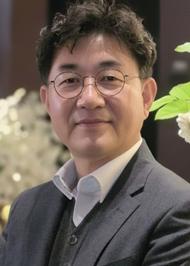
◆ CEO Cho Young-jin
CEO, RoseAI

 [Statement by the Seo-beo-kka Korea Military Academy Save-the-Nation Comrades Association] ㉛ Recount the Votes Publicly, as the Previous Recount Concealed Election Fraud
Tongyeong Mayoral Election Recount [Photo=Yonhap News]South Korea's liberal democracy is dying. The National Election Commission (NEC) and the judiciary, which have plummeted into criminal syndicates
[Statement by the Seo-beo-kka Korea Military Academy Save-the-Nation Comrades Association] ㉛ Recount the Votes Publicly, as the Previous Recount Concealed Election Fraud
Tongyeong Mayoral Election Recount [Photo=Yonhap News]South Korea's liberal democracy is dying. The National Election Commission (NEC) and the judiciary, which have plummeted into criminal syndicates
 What is the significance of the "Trump 2028" red hats that keep making a comeback?
It is noteworthy that President Donald Trump is "intentionally" fueling controversy over whether he can actually run in the 2028 presidential election, even though it is "highly likely he is seriously
What is the significance of the "Trump 2028" red hats that keep making a comeback?
It is noteworthy that President Donald Trump is "intentionally" fueling controversy over whether he can actually run in the 2028 presidential election, even though it is "highly likely he is seriously
 Jin Cummings: "North Korea says it will increase the number of spies, so what is the government doing?"
U.S. political columnist Gene Cummings has publicly questioned the South Korean government, asking, "North Korea is announcing plans to increase its number of spies, yet what is the South Korean
Jin Cummings: "North Korea says it will increase the number of spies, so what is the government doing?"
U.S. political columnist Gene Cummings has publicly questioned the South Korean government, asking, "North Korea is announcing plans to increase its number of spies, yet what is the South Korean
 Attorney Do Tae-woo: “Discrepancies in Voter Count and Improper Sealing Confirmed in Tongyeong Mayoral Recount… Official Request for Additional Verification Submitted to Gyeongnam Election Commission”
A bundle of mail-in early voting ballots captured by lawyer Do Tae-woo at the Tongyeong mayoral election recount site. A clear solid line, raising suspicions of election fraud, is visible on the side
Attorney Do Tae-woo: “Discrepancies in Voter Count and Improper Sealing Confirmed in Tongyeong Mayoral Recount… Official Request for Additional Verification Submitted to Gyeongnam Election Commission”
A bundle of mail-in early voting ballots captured by lawyer Do Tae-woo at the Tongyeong mayoral election recount site. A clear solid line, raising suspicions of election fraud, is visible on the side
 Stock Market Crash 'Black Tuesday'… KOSPI down 10.8%, KOSDAQ down 7.7%
The KOSPI fell by more than 5% in early trading on the 28th, triggering a sell-side sidecar.On the 28th, the KOSPI plunged by more than 10%.Due to the sharp decline, a sell-side sidecar—a temporary
Stock Market Crash 'Black Tuesday'… KOSPI down 10.8%, KOSDAQ down 7.7%
The KOSPI fell by more than 5% in early trading on the 28th, triggering a sell-side sidecar.On the 28th, the KOSPI plunged by more than 10%.Due to the sharp decline, a sell-side sidecar—a temporary
 [World Heritage Committee] 25 New World Heritage Sites Inscribed in Busan… South Korea Successfully Expands 'Getbol' Listing
The Chairperson of the World Heritage Committee speaks at the plenary session of the 48th session of the World Heritage Committee, held at BEXCO in Busan on the 20th. [Photo: Yonhap News]A total of 25
[World Heritage Committee] 25 New World Heritage Sites Inscribed in Busan… South Korea Successfully Expands 'Getbol' Listing
The Chairperson of the World Heritage Committee speaks at the plenary session of the 48th session of the World Heritage Committee, held at BEXCO in Busan on the 20th. [Photo: Yonhap News]A total of 25
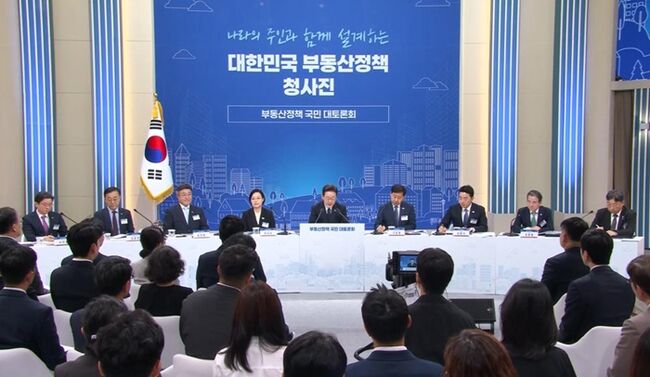 [Liberal Democratic Party Statement] Calling it a Grand Real Estate Debate… It Was Nothing More Than a Private Party Among Themselves
The 'National Grand Debate on Real Estate Policy' held on July 23rd and 27th. [Photo=Yonhap News]The 'National Grand Debate on Real Estate Policy,' hosted by the Lee Jae-myung administration under the
[Liberal Democratic Party Statement] Calling it a Grand Real Estate Debate… It Was Nothing More Than a Private Party Among Themselves
The 'National Grand Debate on Real Estate Policy' held on July 23rd and 27th. [Photo=Yonhap News]The 'National Grand Debate on Real Estate Policy,' hosted by the Lee Jae-myung administration under the
 [Photo] Evidence of Election Fraud Flooding U.S. Media… Trump Had 2.7 Million Votes Stolen
 [Video] U.S. Semiquincentennial Air Show... 'Art in the Sky' streaks across New York
 [Editorial Cartoon] A Draconian Law That Undermines Freedom of Expression

 List
List