
The recent incident where Iran fired a ballistic missile towards "Diego Garcia" in the Indian Ocean, at a range of 4,000 km, demonstrates that an era has arrived where even mid-range countries can directly threaten distant US military bases. The long-range missile used by Iran bears a striking technical resemblance to North Korea's Musudan and Hwasong-12, as well as the process of converting space launch vehicle (SLV) technology into intercontinental ballistic missiles (ICBMs), in terms of its SLV-based improvement, multi-stage structure, and rapid range extension.
Considering, in particular, North Korea's past scenario of targeting "Guam" at a range of 4,500 km, both Iran and North Korea share a commonality in elevating their anti-access and area denial capabilities to a practical level.
The Russia-Ukraine War and the Iran War Show That Modern Warfare Has Already Changed
War is no longer the exclusive domain of nations with overwhelming resources. The case of missile cooperation between Iran and North Korea illustrates the realization of "cost-effective warfare" by combining limited technology and cost to expand the battlefield. However, amidst such rapid changes in the international security environment, South Korea's security strategy has opted for a backward policy, abandoning efficiency and incurring costly consequences.
There is a story in the Buddhist scripture "The Parable of the White Lotus Sutra" and Aesop's fables about the tail of a snake asking, "Why must I follow behind the head?" The snake, trying to lead ahead of the head, gets lost and falls into a fiery pit to burn to death. The snake story is one analogy that explains current Korean security. The "head" of strategy is pushed to the back, while "political calculations and emotions" as the "tail" lead the nation. The moment the tail, unable to see ahead, takes the lead, disaster is inevitable.
The Reversal of Head and Tail is Evident in Alliance Management and Policy Deficiencies
The ROK-US alliance is not an optional diplomatic choice but the absolute foundation of South Korea's security. Military deterrence through alliances drives technological advancement, investment, and trade expansion, serving as the core that sustains South Korea's economic growth and international trust. However, alliances are not maintained automatically. If policy directions waver, as they are now with protests against US fighter jet training in the West Sea, inconsistent stances on troop deployment in the Middle East, and biased messages influenced by China, alliance trust is bound to weaken. While adversaries amplify their power by utilizing all possible alliances, we are deliberately complicating even existing alliances due to internal political factors.
International affairs have long centered on war as the primary issue. For national survival, security-focused policies must be pursued, but domestic politics, driven by a lack of security awareness, are weakening the military and moving in the opposite direction of global trends. Today's warfare has evolved to combine nations and technological networks to share power and tactics. All available means are being mobilized, and a complementary threat structure is being formed. Warfare is no longer a competition between individual nations but has become an alliance operation between interconnected systems. Despite this, the current administration has failed to promptly join even the statement condemning Iran.
The Head and Tail are Reversed in Diplomacy as Well
Confusion in defense cost sharing negotiations, denial of official proposals for troop deployment requests by stating "there is no official proposal," and inconsistencies in messaging, such as the US stating "coordination in progress" for strategic asset consultations while South Korea declares "confirmed," are prime examples of weakening alliance deterrence credibility. When domestic politics disrupt diplomacy, consistency in statements crumbles, and when distortions stemming from reversed head and tail roles are repeated, the space for diplomatic strategy narrows.
In international relations, statements carry credit; messages lacking credit only fuel anger and confusion. When the "tail" of domestic politics shakes the "head" of diplomacy with unprepared statements and inconsistent signals, the foundation of cooperation collapses, and diplomacy itself is degraded into a tool of politics. Ultimately, when the head loses its normal judgment, the manipulative "tail" that even seeks to exploit popular art for politics destroys the nation's survival and dignity.
Our Security Response System is Also Experiencing a Reversal of Head and Tail
Our security response system is also experiencing a reversal of head and tail. Inexpensive drones and short-range missiles are disrupting the cost structure of the battlefield by consuming high-cost air defense systems, and precision strike capabilities are no longer exclusive to a few powerful nations. Technology is rapidly proliferating, and the battlefield has transformed into an integrated space encompassing physical, cyber, and informational domains. We have even dismantled the drone command, which should be responding to these changes.
Despite security threats expanding to all national functions, military, industry, technology, and information, policies and systems do not address them integrally. The Ministry of Unification appears less like a ministry making security-linked judgments and more like a separate spokesperson for North Korea. Inter-ministerial silos and slow decision-making structures cannot keep pace with the speed of threats. This is not merely administrative inefficiency but reveals a lack of national strategy.
North Korean residents are, by constitution, our citizens living within our territory. Nevertheless, the attitude of ignoring the North Korean human rights issue is a counter-choice, discarding crucial information for understanding the reality of North Korea. North Korean human rights are not a matter of values but a key asset for free unification. Security is a "plus game" where even unfavorable conditions are turned to our advantage, yet the government repeatedly engages in "minus politics" that shakes even blood alliances, which is truly regrettable.
Ultimately, the Essence of Problem Solving is Simple
President Trump's America is exercising initiative on all battlefields with invisible precision, and international warfare is being reorganized around efficiency, yet we are proceeding in the opposite direction without strategy. Security is calculation, not emotion; it is design, not declaration.
Like the doomed snake with reversed head and tail roles, if the security apparatus fails to grasp the enemy's interconnected invisible network and if the structure where politics misjudges security strategy continues, the danger will escalate beyond remedy. What is needed now is not more weapons, but the reorganization of the security apparatus capable of understanding the essence of the changed battlefield and redesigning the alliance, solidarity, and deterrence structure, along with the "restoration of the head" of national functions.
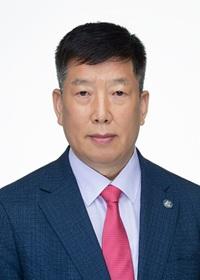
◆ Park Pil-gyu, Editor
Editorial Board Member, The Hankyoreh
ROK Army Academy, Class of '83 (40th graduating class)

 Iranian Foreign Ministry: "Continuing Message Exchanges with the U.S. and Activities of Mediating Countries"
Esmaeil Baghaei, Spokesperson for the Iranian Ministry of Foreign Affairs [Xinhua, Yonhap News file photo]Esmaeil Baghaei, spokesperson for the Iranian Ministry of Foreign Affairs, stated on the 26th
Iranian Foreign Ministry: "Continuing Message Exchanges with the U.S. and Activities of Mediating Countries"
Esmaeil Baghaei, Spokesperson for the Iranian Ministry of Foreign Affairs [Xinhua, Yonhap News file photo]Esmaeil Baghaei, spokesperson for the Iranian Ministry of Foreign Affairs, stated on the 26th
 President Yoon: "Do You Think You Are Safe from the Special Counsel?"... Final Statement Video Released
President Yoon Suk Yeol rebuking the special prosecutor on the 24th. [Court video / @birds_justice X account subtitle GIF] A video of President Yoon Suk Yeol's closing statement at his trial rega
President Yoon: "Do You Think You Are Safe from the Special Counsel?"... Final Statement Video Released
President Yoon Suk Yeol rebuking the special prosecutor on the 24th. [Court video / @birds_justice X account subtitle GIF] A video of President Yoon Suk Yeol's closing statement at his trial rega
 President Yoon, regarding the first-instance ruling on the Public Official Election Act: “An excessive political verdict that distorts the facts… We will appeal immediately.”
The first-instance sentencing hearing for President Yoon Suk Yeol regarding violations of the Public Official Election Act is being broadcast live at Seoul Station on the 27th. [Photo=Yonhap News]Pres
President Yoon, regarding the first-instance ruling on the Public Official Election Act: “An excessive political verdict that distorts the facts… We will appeal immediately.”
The first-instance sentencing hearing for President Yoon Suk Yeol regarding violations of the Public Official Election Act is being broadcast live at Seoul Station on the 27th. [Photo=Yonhap News]Pres
 WSJ: "SK Hynix ADR Premium Is a Sign of AI Trading Overheat"
Advertisement for SK Hynix ADR listing in New York's Times Square [Reuters=Yonhap News file photo]The Wall Street Journal (WSJ) has pointed out that the price of SK Hynix’s American Depositary Recei
WSJ: "SK Hynix ADR Premium Is a Sign of AI Trading Overheat"
Advertisement for SK Hynix ADR listing in New York's Times Square [Reuters=Yonhap News file photo]The Wall Street Journal (WSJ) has pointed out that the price of SK Hynix’s American Depositary Recei
 'Godfather of Japanese Mystery Novels' Keigo Higashino Passes Away After Battle with Cancer at 68
Famous Japanese mystery novelist Keigo Higashino [AFP=Yonhap News]It has been belatedly reported that Keigo Higashino, the "godfather of Japanese mystery novels" and author of bestsellers such as "The
'Godfather of Japanese Mystery Novels' Keigo Higashino Passes Away After Battle with Cancer at 68
Famous Japanese mystery novelist Keigo Higashino [AFP=Yonhap News]It has been belatedly reported that Keigo Higashino, the "godfather of Japanese mystery novels" and author of bestsellers such as "The
 [Park Pil-kyu Security Column] To the Ignorant Trying to Clothe a Beast in Sheep's Clothing
Rep. Kim Byung-joo of the Democratic Party of Korea [Photo=Yonhap News]“The Air Force Academy doesn't teach you how to fly a plane!” “The Army, Navy, and Air Force academies are exactly the
[Park Pil-kyu Security Column] To the Ignorant Trying to Clothe a Beast in Sheep's Clothing
Rep. Kim Byung-joo of the Democratic Party of Korea [Photo=Yonhap News]“The Air Force Academy doesn't teach you how to fly a plane!” “The Army, Navy, and Air Force academies are exactly the
 [Issue Diagnosis] Two Effects of the Election Petition Review
 [Photo] Evidence of Election Fraud Flooding U.S. Media… Trump Had 2.7 Million Votes Stolen
 [Video] U.S. Semiquincentennial Air Show... 'Art in the Sky' streaks across New York
 [Editorial Cartoon] A Draconian Law That Undermines Freedom of Expression

 List
List










