The world order has entered an era of massive fissures. The Russia-Ukraine war has completely transformed the landscape of modern warfare.
The core of modern warfare has shifted from troop engagements to asymmetric technological warfare led by drones, precision strikes, and cyberattacks. Tensions in the Middle East have starkly revealed how fragile nuclear non-proliferation and geopolitical risk management are.
The Rapid Reshuffling of the Security Landscape is More Serious Than the Economic Shock
Amidst this, the United States is making a bold move by deploying strategic assets to the Middle East. This is a measure to deter Iran's nuclear capabilities and, simultaneously, a pincer movement to check China's potential invasion of Taiwan. The U.S. is clearly sending a message to adversarial forces: "We can control multiple fronts simultaneously." The problem is that this troop movement could lead to a relative void in the defense capabilities of the Korean Peninsula.
The crisis originating from Iran has already hit South Korea hard. The financial markets reeled on the mere possibility of conflict, and the value of the Korean won wavered instantly. Coupled with energy supply instability, the Korean economy has fallen into the triple pressure of high inflation, high exchange rates, and high interest rates. Considering that the majority of South Korea's crude oil imports pass through the Strait of Hormuz, the Middle East crisis is not simply an external variable but a structural risk that threatens national survival.
What is more serious than the economic shock is the rapid reshuffling of the security landscape. Gordon Chang, a prominent hawk on China and North Korea from the U.S. conservative camp, recently argued in an influential political media outlet, The Hill, that South Korea's democracy and the ROK-U.S. alliance are in serious danger, pointing to President Lee Jae-myung's anti-American sentiment.
He specifically characterized the search and seizure of the Osan Air Base as a grave violation of the SOFA, warning that if such incidents accumulate, even the continuity of the ROK-U.S. Mutual Defense Treaty could be shaken. He also pointed out that the weakening of the alliance could lead to miscalculations by North Korea and China, ultimately increasing the possibility of conflict on the Korean Peninsula.
The dispersion of U.S. strategic assets and the current government's internal and external security vulnerabilities will present North Korea with an opportunity it cannot afford to miss. North Korea has long shared missile and military technology with the Middle East, and it is highly likely to engage in various forms of complex provocations, such as localized skirmishes, nuclear threats, and cyberattacks, by exploiting international turmoil.
As global political instability deepens, the Korean Peninsula will inevitably emerge as a theater of great power conflict, just as Gordon Chang argued.
A Crossroads for National Survival: Only Preparation Guarantees Peace
What we need now is the following "comprehensive preparedness."
First, innovative integration of the national crisis management system. Modern warfare is a total war of hyper-connectivity where the distinction between the front and rear has disappeared. North Korea's provocations can unfold simultaneously in various forms, not just through nuclear and missile attacks, but also through drones, cyberattacks, and fake news in the cognitive warfare domain. We must redesign a national command center capable of real-time response, viewing military and non-military threats as a single integrated battlefield.
Second, strengthening the combined defense posture based on the ROK-U.S. alliance. In a situation where the U.S. military's operational flexibility is increasing, relying on "automatic alliance maintenance" is dangerous. We must actively consider U.S. requests from the perspective of our maritime security, request and enhance our military's independent response capabilities from the U.S., and build a mutually complementary defense posture.
Third, reviewing and strengthening economic security, including finance, energy, and logistics. To prepare for worst-case scenarios such as the blockade of the Red Sea and the Strait of Hormuz, we must expand our navy's blue-water operational capabilities and pursue the stockpiling of strategic materials and the securing of alternative logistics routes from a national survival perspective. An intelligent crisis management system that can block not only external threats but also internal market disruptions is also essential.
South Korea stands at a critical crossroads in history. The narrower the scope of strategic choices becomes, the more we need the courage to face reality and unwavering policy consistency. Above all, actions that shake the military, the ultimate bastion of national security, for political purposes are tantamount to national self-harm.
Peace is maintained only on the foundation of overwhelming strength and the unified will of the people. The current crisis is not a mere warning but a final signal demanding immediate action and internal cohesion.
Depending on the preparations we choose, South Korea may face an opportunity for a new leap forward, or conversely, fall into an irreversible crisis. It is time to respond not with words but with practical preparedness. The current administration's security line must make a 180-degree turn to overcome the current accumulated crisis. We must prevent the "security response vacuum" of the current administration, which fails to read international affairs, and the outbreak of a second Korean War due to the political calculations of surrounding great powers.
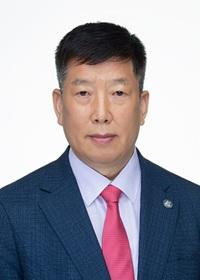
◆ Park Pil-gyu
Editorial writer for The Hankyoreh
40th graduating class of Korea Military Academy

 Iranian Foreign Ministry: "Continuing Message Exchanges with the U.S. and Activities of Mediating Countries"
Esmaeil Baghaei, Spokesperson for the Iranian Ministry of Foreign Affairs [Xinhua, Yonhap News file photo]Esmaeil Baghaei, spokesperson for the Iranian Ministry of Foreign Affairs, stated on the 26th
Iranian Foreign Ministry: "Continuing Message Exchanges with the U.S. and Activities of Mediating Countries"
Esmaeil Baghaei, Spokesperson for the Iranian Ministry of Foreign Affairs [Xinhua, Yonhap News file photo]Esmaeil Baghaei, spokesperson for the Iranian Ministry of Foreign Affairs, stated on the 26th
 President Yoon: "Do You Think You Are Safe from the Special Counsel?"... Final Statement Video Released
President Yoon Suk Yeol rebuking the special prosecutor on the 24th. [Court video / @birds_justice X account subtitle GIF] A video of President Yoon Suk Yeol's closing statement at his trial rega
President Yoon: "Do You Think You Are Safe from the Special Counsel?"... Final Statement Video Released
President Yoon Suk Yeol rebuking the special prosecutor on the 24th. [Court video / @birds_justice X account subtitle GIF] A video of President Yoon Suk Yeol's closing statement at his trial rega
 President Yoon, regarding the first-instance ruling on the Public Official Election Act: “An excessive political verdict that distorts the facts… We will appeal immediately.”
The first-instance sentencing hearing for President Yoon Suk Yeol regarding violations of the Public Official Election Act is being broadcast live at Seoul Station on the 27th. [Photo=Yonhap News]Pres
President Yoon, regarding the first-instance ruling on the Public Official Election Act: “An excessive political verdict that distorts the facts… We will appeal immediately.”
The first-instance sentencing hearing for President Yoon Suk Yeol regarding violations of the Public Official Election Act is being broadcast live at Seoul Station on the 27th. [Photo=Yonhap News]Pres
 WSJ: "SK Hynix ADR Premium Is a Sign of AI Trading Overheat"
Advertisement for SK Hynix ADR listing in New York's Times Square [Reuters=Yonhap News file photo]The Wall Street Journal (WSJ) has pointed out that the price of SK Hynix’s American Depositary Recei
WSJ: "SK Hynix ADR Premium Is a Sign of AI Trading Overheat"
Advertisement for SK Hynix ADR listing in New York's Times Square [Reuters=Yonhap News file photo]The Wall Street Journal (WSJ) has pointed out that the price of SK Hynix’s American Depositary Recei
 'Godfather of Japanese Mystery Novels' Keigo Higashino Passes Away After Battle with Cancer at 68
Famous Japanese mystery novelist Keigo Higashino [AFP=Yonhap News]It has been belatedly reported that Keigo Higashino, the "godfather of Japanese mystery novels" and author of bestsellers such as "The
'Godfather of Japanese Mystery Novels' Keigo Higashino Passes Away After Battle with Cancer at 68
Famous Japanese mystery novelist Keigo Higashino [AFP=Yonhap News]It has been belatedly reported that Keigo Higashino, the "godfather of Japanese mystery novels" and author of bestsellers such as "The
 [Park Pil-kyu Security Column] To the Ignorant Trying to Clothe a Beast in Sheep's Clothing
Rep. Kim Byung-joo of the Democratic Party of Korea [Photo=Yonhap News]“The Air Force Academy doesn't teach you how to fly a plane!” “The Army, Navy, and Air Force academies are exactly the
[Park Pil-kyu Security Column] To the Ignorant Trying to Clothe a Beast in Sheep's Clothing
Rep. Kim Byung-joo of the Democratic Party of Korea [Photo=Yonhap News]“The Air Force Academy doesn't teach you how to fly a plane!” “The Army, Navy, and Air Force academies are exactly the
 [Issue Diagnosis] Two Effects of the Election Petition Review
 [Photo] Evidence of Election Fraud Flooding U.S. Media… Trump Had 2.7 Million Votes Stolen
 [Video] U.S. Semiquincentennial Air Show... 'Art in the Sky' streaks across New York
 [Editorial Cartoon] A Draconian Law That Undermines Freedom of Expression

 List
List