
The Korea Liberal Association, established in 1954 as a nationwide civic organization to protect the liberal democratic system from communist aggression, has operated with freedom as its core value. Recently, the Korea Liberal Association even discussed changing its name at a political neutrality rally. It is reportedly considering a new name, "Korean Peninsula Peace Federation," by changing "Korea" to "Korean Peninsula" and "Freedom" to "Peace."
This transcends a mere dispute over an organization's name change; it is an invasion of language that undermines the "fundamental order of liberal democracy," the bedrock of the South Korean Constitution, and a perilous gamble that sacrifices national identity for a submissive "peace."
We must coolly analyze the hidden pitfalls of various political attempts and rhetoric that seek to erase "freedom" and replace it with "peace."
Where are the confusion of terms and the sources of linguistic pollution regarding peace?
Peace, in its original sense, is not merely the absence of physical conflict. True peace presupposes the abolition of external restraint and oppression, a "state of freedom" where the danger of enemies is removed and individuals can fully realize their potential.
What we must guard against is the reality of peace as advocated by communist and totalitarian forces. For them, peace is not the coexistence and harmony we commonly think of. In their lexicon, peace means "a state where hostile classes have vanished," that is, a "state of silence" where opposing forces have been completely subdued and can no longer resist.
Amidst the grave security reality where North Korea is advancing its nuclear capabilities and threatening us by declaring the "theory of two hostile states," dismantling our internal spiritual defense mechanism of "freedom" first is akin to falling into a sophisticated frame-up tactic.
Behind the ambiguous rhetoric of "Korean Peninsula peace" lies an intention to overlook the contradictions of the North Korean regime and to portray the legitimate desire for freedom as "peace disruption." Peace without freedom is the peace of a prison for slaves. We must never hand over the key to that prison to totalitarian forces.
Why are they trying to erase freedom?
Freedom is a fundamental right that realizes human dignity. It is the foundation that supports the liberal democratic order, which guarantees freedoms of the body, residence, occupation, privacy, conscience, religion, expression, assembly, association, academic and artistic pursuits, and property rights. Freedom is the fundamental atom that constitutes peace, its root, and the highest common value of humanity.
However, in some parts of our society today, this clear causal relationship, where peace arises from freedom, is being subtly twisted. It's as if freedom can be temporarily suspended for the sake of peace. This is an attempt to cover the individualistic and combative image of the word "freedom" with the wrapping paper of "peace."
The attempt to remove "freedom" during the constitutional amendment discussions under the Moon Jae-in administration aligns with this trend. The reason they find the supreme value of "freedom" burdensome is clear: freedom breeds "unpredictable, autonomous individuals" who do not conform to the blueprints of the state or specific groups.
For those who dream of collectivist and totalitarian utopias, free individuals who think, critique, and act for themselves are merely the most troublesome variables and cells in a control system. Ultimately, the act of erasing "freedom" appears to be the prelude to a totalitarian conception that seeks to erase individual identity and increase the efficiency of state management.
If we lose the identity of freedom, the constitution crumbles and it becomes a playground for zombies.
For the MZ generation, freedom is by no means an outdated slogan. For them, freedom is perceived as a very precious and essential value: "individual choice," "self-determination," and "guarantee of creative activities." What the Korea Liberal Association should do is reinterpreting the value of freedom in modern language and persuading and proving, through songs and videos, how freedom enriches the lives of future generations.
True peace comes when we protect the language of freedom. Freedom is like air; we don't realize its value when we have it, but the moment it disappears, we grasp the desperation of survival. All attempts to castrate "freedom" under the guise of "peace" are dangerous provocations aimed at turning South Korea into a "spiritually demilitarized zone."
The Korea Liberal Association must immediately cease its humiliating name change attempt. Returning to its original mission of "defending liberal democracy" against the trend of erasing freedom is the only way to prove the organization's reason for existence. We must not forget that freedom and peace are not conflicting values; peace can only blossom on the soil of freedom.
There are rumors that a constitutional amendment will be put to a national referendum along with the 6.3 local elections. Will there be an attempt to reduce the constitution to a private property of a certain faction by reflecting a specific history in its preamble, and to change "liberal democracy" to "democracy"? We must remain vigilant in our highest state of awareness. What we need now is the clear and strong language of freedom. We must protect all freedoms enshrined in the constitution.
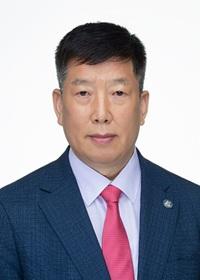
◆ Park Pil-gyu
Editorial Board Member, Hankook-Ilbo
40th graduating class, Korea Military Academy

 Iranian Foreign Ministry: "Continuing Message Exchanges with the U.S. and Activities of Mediating Countries"
Esmaeil Baghaei, Spokesperson for the Iranian Ministry of Foreign Affairs [Xinhua, Yonhap News file photo]Esmaeil Baghaei, spokesperson for the Iranian Ministry of Foreign Affairs, stated on the 26th
Iranian Foreign Ministry: "Continuing Message Exchanges with the U.S. and Activities of Mediating Countries"
Esmaeil Baghaei, Spokesperson for the Iranian Ministry of Foreign Affairs [Xinhua, Yonhap News file photo]Esmaeil Baghaei, spokesperson for the Iranian Ministry of Foreign Affairs, stated on the 26th
 President Yoon: "Do You Think You Are Safe from the Special Counsel?"... Final Statement Video Released
President Yoon Suk Yeol rebuking the special prosecutor on the 24th. [Court video / @birds_justice X account subtitle GIF] A video of President Yoon Suk Yeol's closing statement at his trial rega
President Yoon: "Do You Think You Are Safe from the Special Counsel?"... Final Statement Video Released
President Yoon Suk Yeol rebuking the special prosecutor on the 24th. [Court video / @birds_justice X account subtitle GIF] A video of President Yoon Suk Yeol's closing statement at his trial rega
 President Yoon, regarding the first-instance ruling on the Public Official Election Act: “An excessive political verdict that distorts the facts… We will appeal immediately.”
The first-instance sentencing hearing for President Yoon Suk Yeol regarding violations of the Public Official Election Act is being broadcast live at Seoul Station on the 27th. [Photo=Yonhap News]Pres
President Yoon, regarding the first-instance ruling on the Public Official Election Act: “An excessive political verdict that distorts the facts… We will appeal immediately.”
The first-instance sentencing hearing for President Yoon Suk Yeol regarding violations of the Public Official Election Act is being broadcast live at Seoul Station on the 27th. [Photo=Yonhap News]Pres
 WSJ: "SK Hynix ADR Premium Is a Sign of AI Trading Overheat"
Advertisement for SK Hynix ADR listing in New York's Times Square [Reuters=Yonhap News file photo]The Wall Street Journal (WSJ) has pointed out that the price of SK Hynix’s American Depositary Recei
WSJ: "SK Hynix ADR Premium Is a Sign of AI Trading Overheat"
Advertisement for SK Hynix ADR listing in New York's Times Square [Reuters=Yonhap News file photo]The Wall Street Journal (WSJ) has pointed out that the price of SK Hynix’s American Depositary Recei
 'Godfather of Japanese Mystery Novels' Keigo Higashino Passes Away After Battle with Cancer at 68
Famous Japanese mystery novelist Keigo Higashino [AFP=Yonhap News]It has been belatedly reported that Keigo Higashino, the "godfather of Japanese mystery novels" and author of bestsellers such as "The
'Godfather of Japanese Mystery Novels' Keigo Higashino Passes Away After Battle with Cancer at 68
Famous Japanese mystery novelist Keigo Higashino [AFP=Yonhap News]It has been belatedly reported that Keigo Higashino, the "godfather of Japanese mystery novels" and author of bestsellers such as "The
 [Park Pil-kyu Security Column] To the Ignorant Trying to Clothe a Beast in Sheep's Clothing
Rep. Kim Byung-joo of the Democratic Party of Korea [Photo=Yonhap News]“The Air Force Academy doesn't teach you how to fly a plane!” “The Army, Navy, and Air Force academies are exactly the
[Park Pil-kyu Security Column] To the Ignorant Trying to Clothe a Beast in Sheep's Clothing
Rep. Kim Byung-joo of the Democratic Party of Korea [Photo=Yonhap News]“The Air Force Academy doesn't teach you how to fly a plane!” “The Army, Navy, and Air Force academies are exactly the
 [Issue Diagnosis] Two Effects of the Election Petition Review
 [Photo] Evidence of Election Fraud Flooding U.S. Media… Trump Had 2.7 Million Votes Stolen
 [Video] U.S. Semiquincentennial Air Show... 'Art in the Sky' streaks across New York
 [Editorial Cartoon] A Draconian Law That Undermines Freedom of Expression

 List
List










