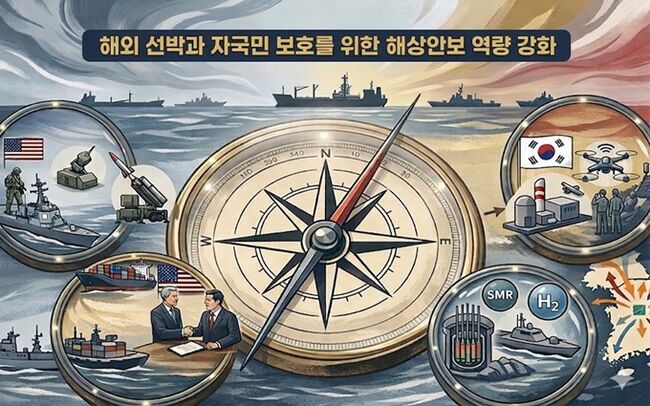
U.S. President Trump's remarks, "Let each country secure its own oil," are not a mere warning. They are closer to a declaration of the U.S.'s intention to no longer bear the costs of global security on behalf of others.
The U.S.-centric international order maintained since World War II is undergoing structural changes. Allies have entered a phase where they must bear the costs of these changes themselves.
The shift in the U.S. stance is not accidental. Following the shale revolution, the U.S. has secured its energy self-sufficiency, reducing its incentive to invest heavily in Middle Eastern stability.
In the past, the structure was such that the U.S. was responsible for the security of its allies. Now, the scope of protection provided to allies not aligned with U.S. interests is limited. The public criticism of the UK and France is in the same vein. The era of the U.S. security umbrella being automatically provided is already drawing to a close.
In this situation, the choice for Korea is clear. Instead of hesitating or avoiding decisions, we must reorganize our strategy to reduce structural vulnerabilities and secure new opportunities. First, we need to reflect on the causes of discord so far and transition cooperation with the U.S. to a more substantial form.
Strengthening Maritime Security Capabilities for the Protection of Overseas Vessels and Citizens
President Trump has declared the early termination of the Hormuz operation and stated that the U.S. will effectively step away from the Middle East waters. Although the U.S.-led strait stabilization operation has disappeared, the risks in the region have not.
The Strait of Hormuz remains a critical choke point for Korea's oil and gas transportation, and maritime instability directly impacts our economy and industry. What is now needed is to strengthen our maritime security capabilities to protect our vessels.
Unmanned systems capable of securing maritime control without human casualties, autonomous navigation technology, and long-range surveillance and reconnaissance capabilities will be core assets in future maritime security.
Securing these technological foundations for our own maritime security at an early stage, and reducing our dependence on the Middle East through strategies such as △utilizing Arctic shipping routes △full operation of nuclear power plants △small modular reactors (SMRs) △and hydrogen-based energy transition are essential strategies for long-term stability.
Realigning Realistic Alliances Based on Common Interests
Ultimately, President Trump's remarks are akin to a demand for Korea to strengthen its security capabilities and redesign the win-win structure with the U.S. This is a time that calls for realistic alliances based on common interests, not emotional ones.
As the international order rapidly realigns, Korea must enhance its cooperation with the U.S. while simultaneously developing its own capabilities. Nations must embrace their unavoidable destinies.
The current environment presents us with both opportunities and risks. Strengthening ties with the U.S. can ensure stability in both security and economy. However, in a situation where we cannot surpass the U.S. without independent capabilities, attempting to distance ourselves from the U.S., including concerning the transfer of wartime operational control, will only increase uncertainty across diplomacy, security, and the economy.
Diversification Policy for the Energy Structure from an Economic Security Perspective
The Strait of Hormuz is a key global oil transit route and a strategic lifeline through which most of Korea's oil imports pass. Instability in this region poses a structural risk that threatens national survival. Indeed, regional tensions alone have caused financial markets to fluctuate, the won's value to falter, and simultaneously pressured the economy with high inflation, high exchange rates, and high interest rates.
This has demonstrated that economic security, where energy, logistics, components, and finance are interconnected like a single circuit, is as important as military security.
Investing directly in U.S. energy infrastructure, such as shale gas fields and LNG terminals, to become part of the supply chain signifies strategic solidarity beyond a simple buyer-seller relationship. This would enhance our resilience against energy price fluctuations and help stabilize the Korean won within the dollar-centric financial system.
By creating a structure where the value of U.S. energy assets rises in tandem with international oil prices, we can resolve the dual burden of energy costs and financial instability.
Developing a Multi-faceted Security Strategy Aligned with Evolving Warfare Dynamics
The wars in Russia-Ukraine and Iran have shown that low-cost drones can neutralize high-cost weaponry, and that precision strike, electronic warfare, and AI-based weapons have moved to the forefront of warfare. We too must urgently prepare for new warfare dynamics, including battlefield awareness, drone and AI capabilities, and electronic warfare and interception systems.
This is not merely about augmenting military power but a structural transformation for national survival. As we strengthen cooperation with the U.S. and the international environment rapidly changes, we must diversify diplomatic channels to distribute risks and enhance our negotiating power.
The military and security apparatus are not politicians. They must be strategists who judge and execute strategies for national survival. We must firmly maintain deterrence and combat readiness, and make professional judgments free from political calculations and influences.
The ROK-U.S. alliance must be maintained through accurate information and consistent strategy. We must cease anti-national security wrangling and military undermining, and rectify the chain of command.
The military must strive to foster a strong force capable of winning in the transformed warfare landscape, and the security apparatus must act as security strategists, securing national safety and devising measures to prevent war.
We earnestly hope for a day when the public no longer worries about security.
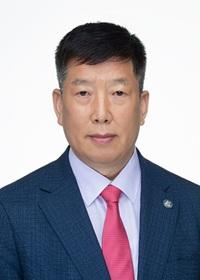
◆ Park Pil-gyu, Committee Member
Editorial Writer, The Hankyoreh
40th graduating class, Korea Military Academy

 Iranian Foreign Ministry: "Continuing Message Exchanges with the U.S. and Activities of Mediating Countries"
Esmaeil Baghaei, Spokesperson for the Iranian Ministry of Foreign Affairs [Xinhua, Yonhap News file photo]Esmaeil Baghaei, spokesperson for the Iranian Ministry of Foreign Affairs, stated on the 26th
Iranian Foreign Ministry: "Continuing Message Exchanges with the U.S. and Activities of Mediating Countries"
Esmaeil Baghaei, Spokesperson for the Iranian Ministry of Foreign Affairs [Xinhua, Yonhap News file photo]Esmaeil Baghaei, spokesperson for the Iranian Ministry of Foreign Affairs, stated on the 26th
 President Yoon: "Do You Think You Are Safe from the Special Counsel?"... Final Statement Video Released
President Yoon Suk Yeol rebuking the special prosecutor on the 24th. [Court video / @birds_justice X account subtitle GIF] A video of President Yoon Suk Yeol's closing statement at his trial rega
President Yoon: "Do You Think You Are Safe from the Special Counsel?"... Final Statement Video Released
President Yoon Suk Yeol rebuking the special prosecutor on the 24th. [Court video / @birds_justice X account subtitle GIF] A video of President Yoon Suk Yeol's closing statement at his trial rega
 President Yoon, regarding the first-instance ruling on the Public Official Election Act: “An excessive political verdict that distorts the facts… We will appeal immediately.”
The first-instance sentencing hearing for President Yoon Suk Yeol regarding violations of the Public Official Election Act is being broadcast live at Seoul Station on the 27th. [Photo=Yonhap News]Pres
President Yoon, regarding the first-instance ruling on the Public Official Election Act: “An excessive political verdict that distorts the facts… We will appeal immediately.”
The first-instance sentencing hearing for President Yoon Suk Yeol regarding violations of the Public Official Election Act is being broadcast live at Seoul Station on the 27th. [Photo=Yonhap News]Pres
 WSJ: "SK Hynix ADR Premium Is a Sign of AI Trading Overheat"
Advertisement for SK Hynix ADR listing in New York's Times Square [Reuters=Yonhap News file photo]The Wall Street Journal (WSJ) has pointed out that the price of SK Hynix’s American Depositary Recei
WSJ: "SK Hynix ADR Premium Is a Sign of AI Trading Overheat"
Advertisement for SK Hynix ADR listing in New York's Times Square [Reuters=Yonhap News file photo]The Wall Street Journal (WSJ) has pointed out that the price of SK Hynix’s American Depositary Recei
 'Godfather of Japanese Mystery Novels' Keigo Higashino Passes Away After Battle with Cancer at 68
Famous Japanese mystery novelist Keigo Higashino [AFP=Yonhap News]It has been belatedly reported that Keigo Higashino, the "godfather of Japanese mystery novels" and author of bestsellers such as "The
'Godfather of Japanese Mystery Novels' Keigo Higashino Passes Away After Battle with Cancer at 68
Famous Japanese mystery novelist Keigo Higashino [AFP=Yonhap News]It has been belatedly reported that Keigo Higashino, the "godfather of Japanese mystery novels" and author of bestsellers such as "The
 [Park Pil-kyu Security Column] To the Ignorant Trying to Clothe a Beast in Sheep's Clothing
Rep. Kim Byung-joo of the Democratic Party of Korea [Photo=Yonhap News]“The Air Force Academy doesn't teach you how to fly a plane!” “The Army, Navy, and Air Force academies are exactly the
[Park Pil-kyu Security Column] To the Ignorant Trying to Clothe a Beast in Sheep's Clothing
Rep. Kim Byung-joo of the Democratic Party of Korea [Photo=Yonhap News]“The Air Force Academy doesn't teach you how to fly a plane!” “The Army, Navy, and Air Force academies are exactly the
 [Issue Diagnosis] Two Effects of the Election Petition Review
 [Photo] Evidence of Election Fraud Flooding U.S. Media… Trump Had 2.7 Million Votes Stolen
 [Video] U.S. Semiquincentennial Air Show... 'Art in the Sky' streaks across New York
 [Editorial Cartoon] A Draconian Law That Undermines Freedom of Expression

 List
List










