President Lee Jae-myung delivers a commemorative address on the day of the West Sea Defense on March 27 at the National Daejeon Memorial Cemetery. [Photo=Yonhap News]
What a president must say at a national memorial ceremony is not beautiful words, but accurate words.
It is the dignity of a president to clearly state who provoked, who was sacrificed, what the nation remembers, and how it will respond.
However, it is difficult to say that President Lee Jae-myung's commemorative address at the 11th Day of the West Sea Defense ceremony held at the National Daejeon Memorial Cemetery on March 27, 2026, met this standard.
The theme of this year's ceremony was "Our West Sea, Towards Peace and Prosperity." Even before the event, this phrase raised questions as to whether it prioritized a message of peace over the original purpose of remembrance.
In his commemorative address on this day, President Lee Jae-myung expressed his respect and remembrance for the heroes of the West Sea Defense and pledged to honor the bereaved families and participating soldiers.
However, the sentence that was more strongly highlighted was, "Peace is food, peace is the people's livelihood, and peace is the best security." He also said, "It is important to fight and win. It is even more important to win without fighting. But more important than that is peace, where there is no need to fight."
There is no problem with the president speaking of peace itself. The problem lies in the context in which those words were placed.
The Day of the West Sea Defense is not a place to sing about abstract peace, but a place for the nation to remember the sacrifices of soldiers who died in North Korean provocations.
There is a bigger problem.
This commemorative address lacked an apology for his past remarks regarding the Cheonan sinking.
During the Lee Kyung-jae controversy in 2023, President Lee Jae-myung stated, "The government's announcement about the Cheonan incident is an official announcement, and I trust that announcement."
On the Day of the West Sea Defense in 2025, he also said, "We remember the heroes who defended the West Sea against North Korea's surprise attacks and provocations." The expression was different from before.
However, in this commemorative address, there was no part where he directly addressed or apologized for his past controversies regarding the Cheonan sinking, nor did he express regret or apology to the bereaved families and soldiers. There was remembrance, but no apology.
In this regard, this commemorative address resembles the attitude shown at the commemorative event for the birthday of the founding president Syngman Rhee.
It is a method of adopting current symbolic actions without addressing past aggressive language and negative evaluations.
It is about borrowing symbols that fit current political needs without taking responsibility for past remarks. While he attended, there was no resolution; he showed respect, but no apology. This approach is closer to managing symbols than to a shift in perception.
Furthermore, the reality of West Sea security is not so leisurely as to accept the president's rhetoric of peace so lightly.
In recent years, North Korea has repeatedly carried out artillery shelling and various military provocations in the West Sea area. The premise for tension management has also been significantly shaken after the suspension of the inter-Korean military agreement. Not long ago, North Korea's Kim Jong Un called us the primary enemy.
In this situation, the language first needed in the president's speech on the Day of the West Sea Defense is not the moral statement "peace is the best security."
It is a statement from the nation that clearly assigns responsibility for provocation and confirms the will for deterrence and retaliation. Peace can be a goal, but it cannot be a premise. Peace in the West Sea is not maintained by prayer, but only on the basis of deterrence.
This is where the term "flattering words and deceitful appearance" comes from.
There were many pleasant-sounding words. The words about transforming the sea of conflict into a land of peace and prosperity, and that peace where there is no need to fight is more important, are difficult to find fault with on the surface.
However, at the scene of tragedy that the nation must remember, those words were too smooth and too safe. Instead of clearly engraving the subject of provocation and clarifying the nation's anger and responsibility in the face of sacrifice, the speech was filled with words that anyone could applaud.
This is closer to political evasion than to dignity.
A president's dignity does not come from soft expressions. It comes from not avoiding uncomfortable truths. This is especially true at national memorial ceremonies like the Day of the West Sea Defense.
What is needed in the face of the memories of the Cheonan and Yeonpyeong incidents is not flowery language. It is to clearly state who attacked, what was sacrificed, and what posture the nation will adopt to ensure that sacrifice is never repeated.
Peace must come after that. If the order is reversed, peace becomes rhetoric, not value.
Therefore, we cannot help but ask.
Was President Lee Jae-myung's commemorative address today truly a speech for the heroes of the West Sea Defense? Or was it political rhetoric to polish his image against the backdrop of their sacrifice?
Dignity is not proven by the total amount of good words spoken.
Dignity is proven by never avoiding the words that must be taken responsibility for.
What remained in this commemorative address was the formality of remembrance.
However, apology, responsibility, and the language of reality—the core elements that build the dignity of a national leader—were ultimately left as empty spaces.

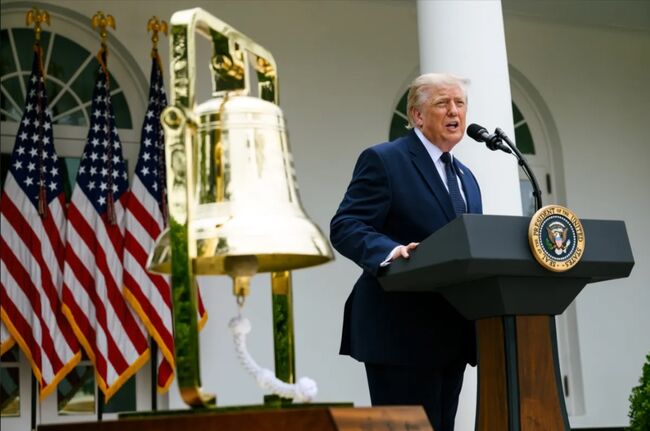 Trump pressures for rate cut again ahead of FOMC... "Should be the lowest in the world"
U.S. President Donald Trump. [Photo = The White House] U.S. President Donald Trump once again pressured the Federal Reserve, the U.S. central bank, to lower interest rates on the 27th (local time
Trump pressures for rate cut again ahead of FOMC... "Should be the lowest in the world"
U.S. President Donald Trump. [Photo = The White House] U.S. President Donald Trump once again pressured the Federal Reserve, the U.S. central bank, to lower interest rates on the 27th (local time
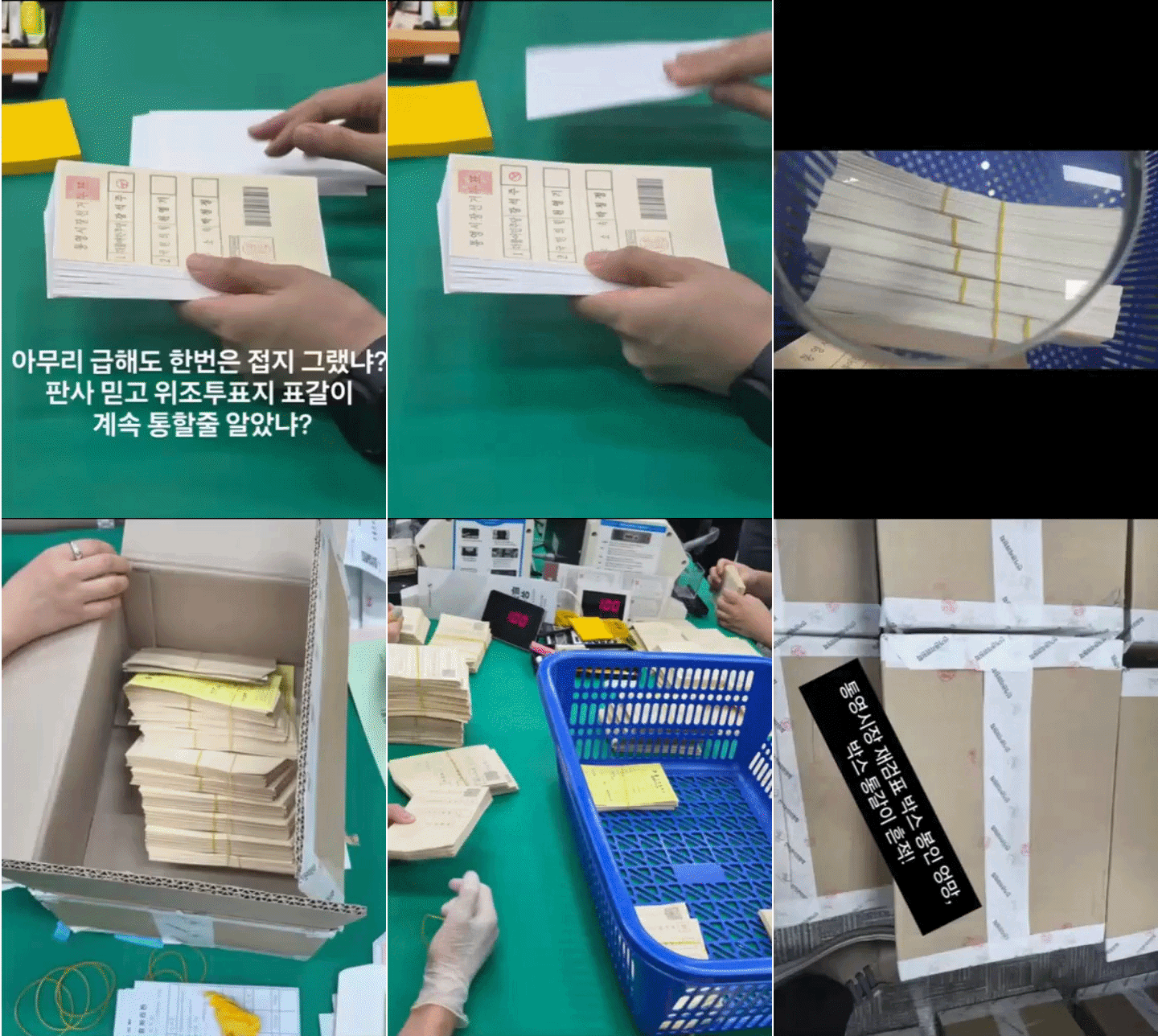 “Ignoring crisp ballots and damaged seals”… Tongyeong mayoral recount concludes with ‘no change in outcome,’ leaving suspicions and public outrage behind
Suspected counterfeit ballots discovered in Tongyeong [GIF from social media of Representative Hwang Kyo-ahn / Attorney Park Joo-hyun]During a recount of the Tongyeong mayoral election in South Gyeong
“Ignoring crisp ballots and damaged seals”… Tongyeong mayoral recount concludes with ‘no change in outcome,’ leaving suspicions and public outrage behind
Suspected counterfeit ballots discovered in Tongyeong [GIF from social media of Representative Hwang Kyo-ahn / Attorney Park Joo-hyun]During a recount of the Tongyeong mayoral election in South Gyeong
 President Yoon, regarding the first-instance ruling on the Public Official Election Act: “An excessive political verdict that distorts the facts… We will appeal immediately.”
The first-instance sentencing hearing for President Yoon Suk Yeol regarding violations of the Public Official Election Act is being broadcast live at Seoul Station on the 27th. [Photo=Yonhap News]Pres
President Yoon, regarding the first-instance ruling on the Public Official Election Act: “An excessive political verdict that distorts the facts… We will appeal immediately.”
The first-instance sentencing hearing for President Yoon Suk Yeol regarding violations of the Public Official Election Act is being broadcast live at Seoul Station on the 27th. [Photo=Yonhap News]Pres
 WSJ: "SK Hynix ADR Premium Is a Sign of AI Trading Overheat"
Advertisement for SK Hynix ADR listing in New York's Times Square [Reuters=Yonhap News file photo]The Wall Street Journal (WSJ) has pointed out that the price of SK Hynix’s American Depositary Recei
WSJ: "SK Hynix ADR Premium Is a Sign of AI Trading Overheat"
Advertisement for SK Hynix ADR listing in New York's Times Square [Reuters=Yonhap News file photo]The Wall Street Journal (WSJ) has pointed out that the price of SK Hynix’s American Depositary Recei
 'Godfather of Japanese Mystery Novels' Keigo Higashino Passes Away After Battle with Cancer at 68
Famous Japanese mystery novelist Keigo Higashino [AFP=Yonhap News]It has been belatedly reported that Keigo Higashino, the "godfather of Japanese mystery novels" and author of bestsellers such as "The
'Godfather of Japanese Mystery Novels' Keigo Higashino Passes Away After Battle with Cancer at 68
Famous Japanese mystery novelist Keigo Higashino [AFP=Yonhap News]It has been belatedly reported that Keigo Higashino, the "godfather of Japanese mystery novels" and author of bestsellers such as "The
 [Park Pil-kyu Security Column] To the Ignorant Trying to Clothe a Beast in Sheep's Clothing
Rep. Kim Byung-joo of the Democratic Party of Korea [Photo=Yonhap News]“The Air Force Academy doesn't teach you how to fly a plane!” “The Army, Navy, and Air Force academies are exactly the
[Park Pil-kyu Security Column] To the Ignorant Trying to Clothe a Beast in Sheep's Clothing
Rep. Kim Byung-joo of the Democratic Party of Korea [Photo=Yonhap News]“The Air Force Academy doesn't teach you how to fly a plane!” “The Army, Navy, and Air Force academies are exactly the
 [Issue Diagnosis] Two Effects of the Election Petition Review
 [Photo] Evidence of Election Fraud Flooding U.S. Media… Trump Had 2.7 Million Votes Stolen
 [Video] U.S. Semiquincentennial Air Show... 'Art in the Sky' streaks across New York
 [Editorial Cartoon] A Draconian Law That Undermines Freedom of Expression

 List
List